REVIEW · OSAKA
Osaka Okonomiyaki Cooking Class “Learn here and make it at home”
Book on Viator →Operated by WashokuYanen · Bookable on Viator
Griddle smoke in Osaka, in your hands. This hands-on cooking class makes okonomiyaki and takoyaki feel doable, not mysterious, with step-by-step coaching and a proper finished plating moment. I like how structured it is from prep to tasting, and I also like the small-group vibe that keeps you from getting lost in the noise. One possible drawback: if you’d rather watch a show than cook, this format may feel a bit hands-on.
You’ll be taught how to build Japanese savory pancakes and octopus-filled dough balls from scratch, not just assemble ingredients. The class also leans on practical learning tools like written recipes and ingredient packaging details that help you shop later.
The kitchen base is right by Osaka Metro lines, and you’ll end with a relaxed tasting that can include sake and beer (with an age rule) alongside soft drinks. Because everything is provided, the real requirement is simple: come ready to cook.
In This Review
- Key things to know before you go
- Osaka’s Okonomiyaki and Takoyaki, Practiced Like a Local
- The 3-Hour Flow: From Prep, to Cooking, to Tasting
- Orientation and preparation (about 30 minutes)
- Cooking session (about 1 hour 30 minutes)
- Tasting and drinks (about 1 hour)
- Get Help in English, Japanese, or Spanish
- Where the Class Starts: Near Shinsaibashi and Honmachi
- What You Pay for: Value at $70 with Real Inclusions
- Learning to Recreate It at Home: Recipes and Ingredient Clues
- Vegetarian or Allergy Needs: Plan for a Quick Message
- Who This Class Fits Best (and who it might not)
- Price, Time, and the Practical Trade-Offs
- Should You Book This Osaka Okonomiyaki and Takoyaki Class?
- FAQ
- How long is the Osaka okonomiyaki and takoyaki cooking class?
- What dishes will I make during the class?
- What is included in the $70 price?
- Do instructors speak languages besides English?
- Can the class accommodate vegetarian or food allergy options?
- Are alcoholic drinks included, and is there an age limit?
Key things to know before you go
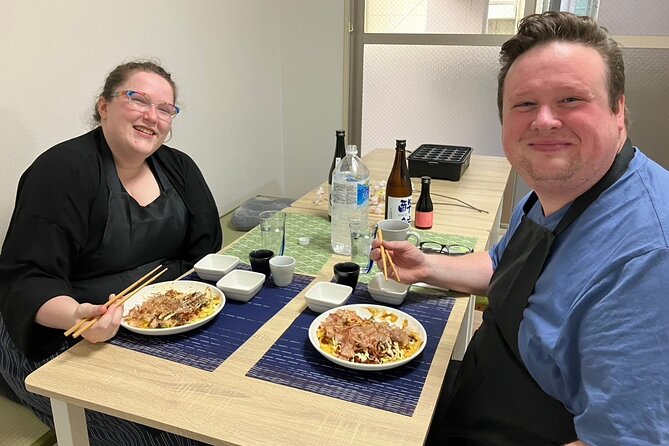
- Small group (up to 8 people) means more attention while you cook
- Two Osaka favorites in one session: okonomiyaki and takoyaki
- Written recipes plus ingredient packaging help so you can recreate it at home
- Instructors support English, Japanese, and Spanish (with options to request)
- A tasting hour with drinks includes sake and beer for adults 20+
Osaka’s Okonomiyaki and Takoyaki, Practiced Like a Local
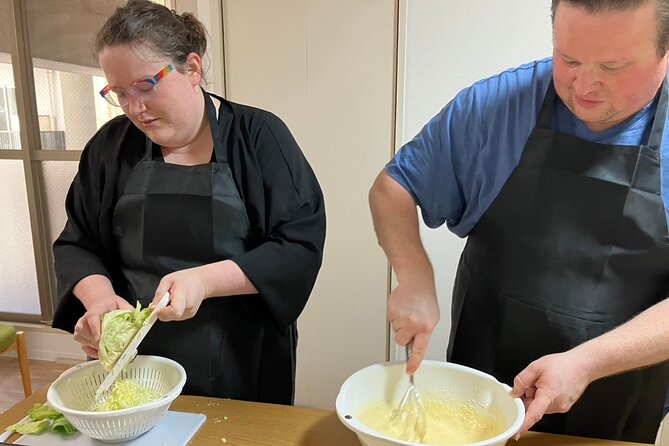
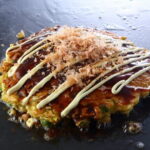
Osaka’s food culture is all about comfort, technique, and a little showmanship. Okonomiyaki is a savory pancake built from batter and cabbage, then loaded with fillings like pork or seafood and finished with sauce, bonito flakes, and more toppings. Takoyaki are bite-size fried dough balls filled with octopus, typically finished with sauce, bonito flakes, and seaweed powder.
What makes this class worth your time is that it treats both dishes as skills you can learn in a single evening, not just recipes you can copy. You get the full arc: orientation, actual cooking time, then a tasting where your work becomes a meal.
And you don’t need special background. Even if Japanese cooking isn’t your thing at home, the step-by-step flow is built to get you from raw ingredients to a finished plate without leaving you to guess.
You can also read our reviews of more tours and experiences in Osaka.

The 3-Hour Flow: From Prep, to Cooking, to Tasting
The class runs about 3 hours total, and the pacing makes sense for busy travel days.
Orientation and preparation (about 30 minutes)
You start with a short orientation and prep session. This is where you get the basics that matter later: how the cooking station works, how the ingredients connect, and what you’ll be doing during the cooking portion.
This part is also important because both dishes can look intimidating if you’ve never made them. The class format uses early guidance so you don’t lose time when the griddle starts heating up.
Cooking session (about 1 hour 30 minutes)
This is the main event. You’ll make both:
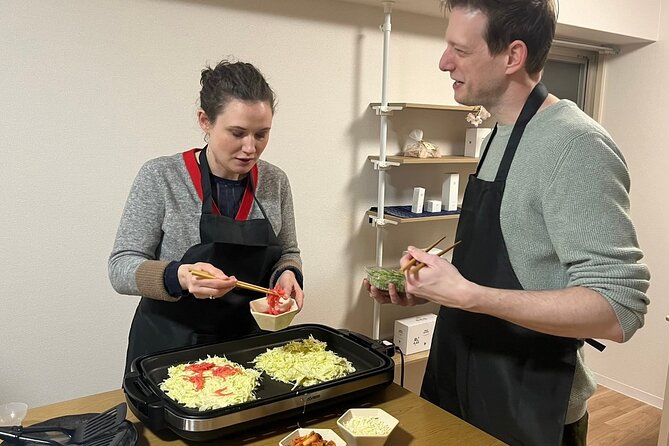
- Okonomiyaki: batter mixed with cabbage and fillings, then cooked on a griddle, and finished with the classic toppings (including sauce and bonito flakes).
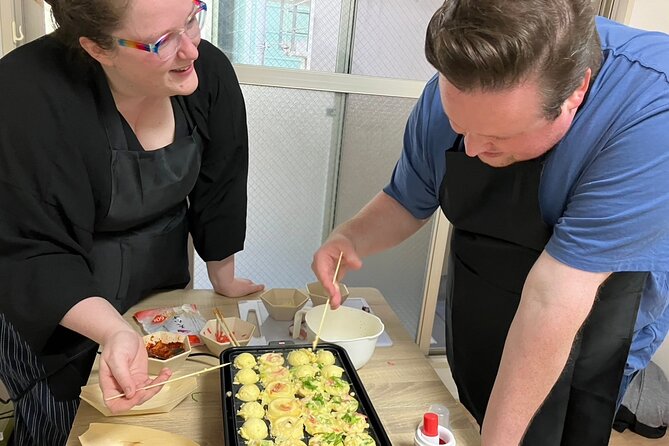
- Takoyaki: a dough batter cooked in a takoyaki pan, shaped into round balls and filled with octopus, then topped with sauce, bonito flakes, and seaweed powder.
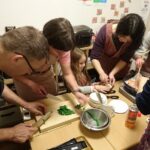
The biggest value here is that you learn technique under supervision. For okonomiyaki, getting the texture right is key, and for takoyaki the shape and doneness come from timing and repeated turning. The class structure is designed so you can actually practice, not just “help” while someone else does the work.
Tasting and drinks (about 1 hour)
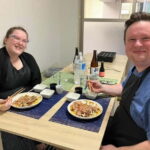
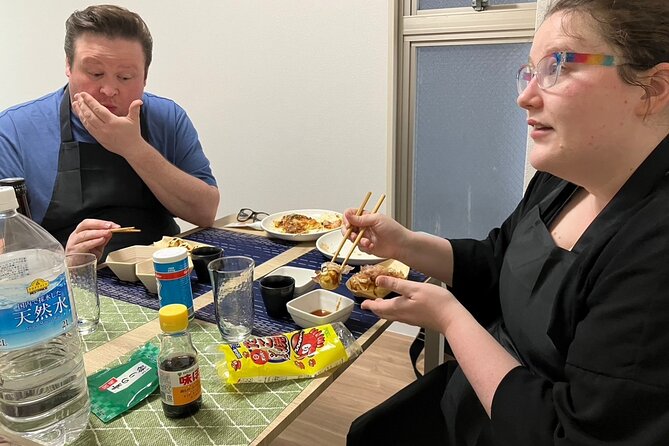
After cooking, you get a tasting session where you relax and enjoy what you made. Drinks are part of this hour, including Japanese sake and beer, plus soft drinks.
This is a nice payoff moment. It turns your effort into something you can eat immediately, while the instructor-style tips are still fresh in your head. It also makes the evening feel like a true experience rather than a workshop that ends the second you wipe down the station.

Get Help in English, Japanese, or Spanish
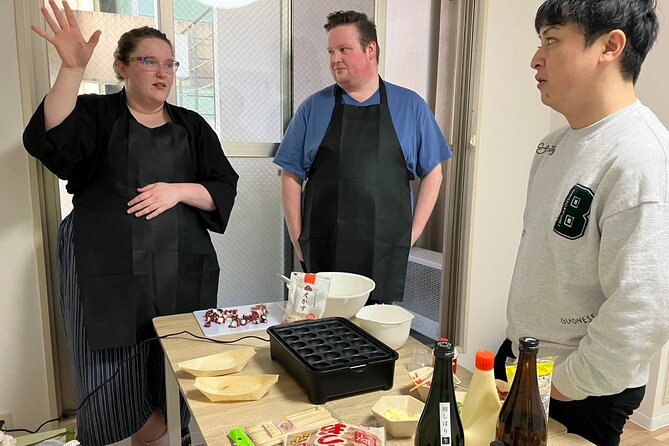
One of the smartest parts of this class is the language setup. Instructors are fluent in English, Japanese, and Spanish, and you’ll be guided throughout.
If you’re the kind of person who likes to confirm details—ingredient types, topping choices, or what to look for when cooking—you’ll appreciate having support in your comfort language. And because the class notes that language options can be requested (Japanese speaking instructor or Spanish speaking instructor), it’s easier to ask follow-up questions without feeling stuck.
A small group size (maximum 8 people) also matters here. With fewer people at the table, you’re more likely to get the kind of quick correction that makes the difference between average and great okonomiyaki or takoyaki.
Where the Class Starts: Near Shinsaibashi and Honmachi
The meeting point is in the Namba/Semba area of Chuo Ward, close to two Osaka Metro hubs: Shinsaibashi and Honmachi. The kitchen is described as about a 5-minute walk from both.
What I like about this setup is the practical convenience. You can pair this with a normal Osaka evening plan—shopping, streetside food browsing nearby, or a drink in the area—without needing complicated transfers or long commutes.
The area is also described as quiet and peaceful despite being central. That matters when you’re doing something hands-on. You want a calm workspace where people can focus on cooking rather than battling noise or congestion.
What You Pay for: Value at $70 with Real Inclusions
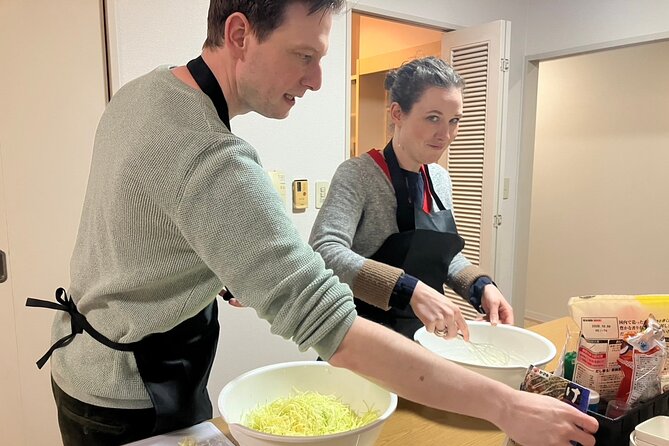
At $70 per person, you’re paying for more than a recipe sheet. The class includes:
- All ingredients for the cooking lesson
- Kitchen tools
- Aprons and disposable plastic gloves
- An English-speaking instructor
- Optional instructor language support in Japanese or Spanish (upon request)
- Drinks during the tasting: sake, beer, and soft drinks
This is where the value calculation gets interesting. If you tried to recreate both dishes on your own in Osaka, you’d still have to hunt down ingredients, figure out equipment, and spend time learning technique from scratch. Here, the technique is guided, and the equipment is already set up.
Also, the tasting drink portion doesn’t hurt. Sake and beer are included as part of the experience for adults 20 and above, with non-alcoholic drinks provided for people under 20.
The small group cap (up to 8 people) also supports the price. In a class like this, attention is the “hidden ingredient,” and the format keeps it more personal.
Learning to Recreate It at Home: Recipes and Ingredient Clues
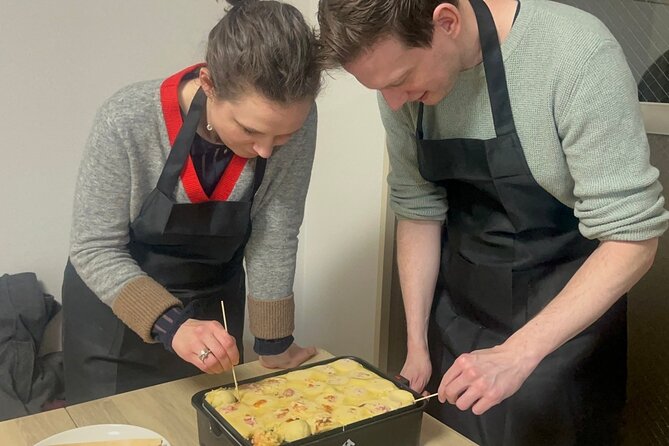
One of the most practical takeaways is the way the class supports home cooking. A strong theme from the experience is the inclusion of written recipes and the opportunity to see ingredient packaging. That helps because many of the products used for finishing—sauces, bonito flakes, seaweed powder—are easier to find when you know exactly what you’re looking for in a supermarket.
If you’ve ever bought Japanese ingredients abroad and then struggled to match them later, this is the fix. You can bring those notes home and rebuild the flavor profile rather than guessing.
And because you cook in front of an instructor, you also learn how the batter behaves, how the cooking surface affects texture, and what “done” looks like. That’s usually the hard part when people try to copy a recipe later.
Vegetarian or Allergy Needs: Plan for a Quick Message
The class states there are vegetarian or food allergy options available, but you need to contact them after booking to arrange it.
This is exactly the kind of detail you’ll want to handle early, because okonomiyaki and takoyaki can include common non-vegetarian ingredients in both fillings and finishing layers. If you have restrictions, it’s worth messaging right away so you’re not relying on a last-minute fix.
If you don’t have restrictions, you can simply show up and cook—everything is provided.
Who This Class Fits Best (and who it might not)
This is a great fit for:
- Couples or small groups who want a shared activity in Osaka
- Solo travelers who like a social dinner at the end
- People who want a guided way to learn street-food style cooking
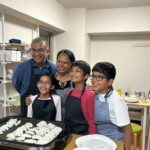
- Families, since the experience notes it can work even with younger kids (so long as you’re comfortable with an interactive kitchen setting)
It might be less ideal if:
- You hate hands-on cooking tasks and prefer watching only
- You’re looking for a quiet museum-style experience rather than active participation
- You need a fully private, custom menu (the class is capped at a small maximum and is not described as private)
Price, Time, and the Practical Trade-Offs
The timing is one of the easiest parts to slot into a trip. About 3 hours is long enough to learn technique and eat, but short enough that you can still plan a full evening around it.
The trade-off is that you’re paying for guided cooking plus ingredients plus a drink-included tasting. If your goal is only to taste, a restaurant meal might be cheaper. But if your goal is to take home the ability to cook these dishes, the class structure is the point.
Also, remember it’s not a private experience. With a maximum of 8 people, you’ll still get attention, but it’s a shared kitchen flow.
As for weather: the class notes that it requires good weather, and if it’s canceled due to poor weather, you’ll be offered a different date or a full refund.
Should You Book This Osaka Okonomiyaki and Takoyaki Class?
I’d book it if you want a practical Osaka food lesson you can repeat later. The combination of hands-on cooking, guided language support, and the home-use tools like written recipes and ingredient packaging details makes it a strong value at $70.
Skip it only if you’re the type who wants to observe instead of participate, or if you have restrictions and you’re not willing to message ahead for vegetarian or allergy arrangements.
If you’re in Osaka looking for an evening that feels like real food culture—not just a generic tasting—this class is one of the most straightforward ways to learn it with your hands, your questions, and a plate you get to eat right after.
FAQ
How long is the Osaka okonomiyaki and takoyaki cooking class?
It runs for about 3 hours. The structure includes roughly 30 minutes for orientation and preparation, about 1.5 hours of cooking, and about 1 hour for tasting with drinks.
What dishes will I make during the class?
You’ll make two Osaka specialties: okonomiyaki (Japanese savory pancakes) and takoyaki (Japanese savory dough balls filled with octopus).
What is included in the $70 price?
The price includes all ingredients, kitchen tools, aprons and disposable plastic gloves, an English-speaking instructor, and drinks during the tasting (sake and beer for adults 20+ plus soft drinks). You can also request Japanese or Spanish speaking instructor support.
Do instructors speak languages besides English?
Yes. Instructors are fluent in English, Japanese, and Spanish, and Japanese-speaking or Spanish-speaking instructor support can be provided upon request.
Can the class accommodate vegetarian or food allergy options?
Vegetarian or food allergy options are available, but you need to contact the provider after booking to arrange it.
Are alcoholic drinks included, and is there an age limit?
Alcoholic drinks are part of the tasting, including Japanese sake and beer, but only for people age 20 and above. Minor participants under 20 will be served non-alcoholic drinks.