REVIEW · KYOTO
Kyoto Udon and Tempura Cooking Class with Professional Chefs
Book on Viator →Operated by MagicalTrip Inc. · Bookable on Viator
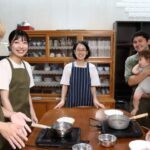
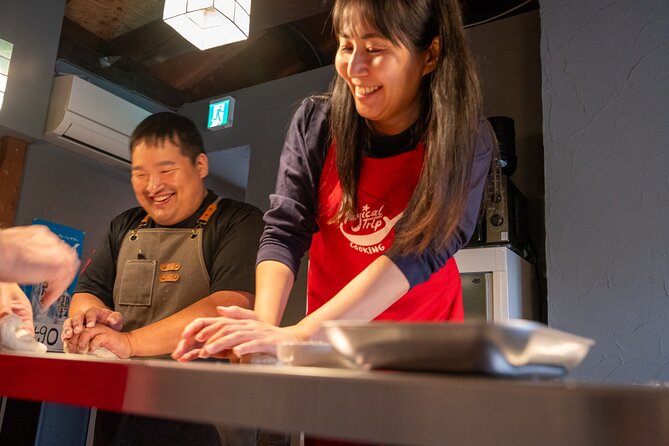
That first knead tells you this is hands-on. Kyoto’s udon master guides you through making chewy noodles from flour and water, while English-speaking guide Josh and Nakajima-san keep things moving and friendly. You’re not watching cooking from behind glass.
I like that the class hits four iconic dishes in one go: udon (hot and cold), onigiri, inari sushi, and tempura. It’s fun even if you’ve never cooked Japanese food before, and you’ll finish by eating everything you made, plus a mini sake tasting. The only real drawback is time: it’s about 2.5 hours, and it’s active—plan to skip a heavy meal beforehand.
In This Review
- Key Highlights You’ll Care About
- Why This Kyoto Class Starts With Flour and Water
- Handmade Udon: Knead, Roll, Cut, and Taste Hot and Cold
- Onigiri and Inari Sushi: Rice Shaping Without the Stress
- Tempura Frying With a Pro: Crispy Technique, Not Luck
- Sake Pairing, Recipes by Email, and Photos You Can Keep
- Price and What You Actually Get for $85.39
- Logistics: The 7-Eleven Meeting Point and a 10:00 Start
- Who This Kyoto Udon and Tempura Class Fits Best
- Should You Book This Kyoto Udon and Tempura Class?
- FAQ
- What dishes will I make in the class?
- How long is the cooking class?
- Is there an English guide during the class?
- Do I need prior cooking experience?
- Where does the class meet, and what time does it start?
- Can I get a refund if my plans change?
Key Highlights You’ll Care About
- From dough to noodles by hand: knead, roll, and cut your udon
- Hot and cold udon practice: you’ll learn both styles during the cooking
- Onigiri and inari sushi, not just one bite: real shaping, real technique
- Tempura frying with instant feedback: you’ll work until it’s crisp
- You take the knowledge home: easy English recipes plus tour photos by email
- Small group (max 8): more attention, less waiting around
Why This Kyoto Class Starts With Flour and Water
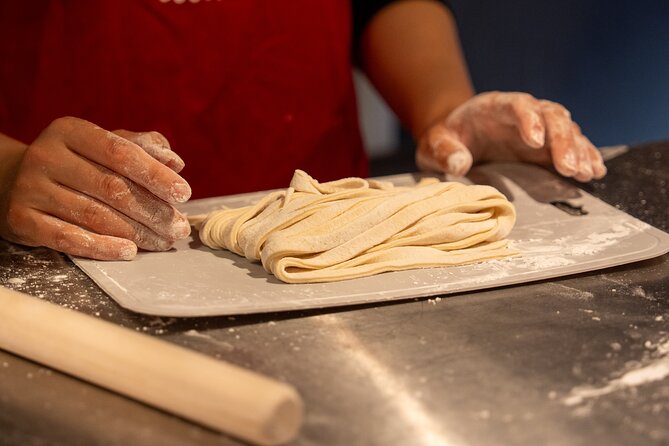
Kyoto cooking lessons can feel like a performance. This one doesn’t. You start with the basics: flour and water, then you build the dough with your own hands. That matters, because udon dough isn’t complicated in ingredients, but it is in feel. Touch is the lesson.
What makes the experience satisfying is that it follows a practical logic. You learn one core skill at a time, then you apply it immediately: noodle dough mechanics first, then rice shaping, then tempura frying. By the time you sit down to eat, you understand what you did and why it tastes the way it does.
And because you’ll be working with a local udon master and English-speaking guidance from Josh and Nakajima-san, you’re not stuck guessing. You can ask questions and adjust on the fly.
You can also read our reviews of more tours and experiences in Kyoto.
Handmade Udon: Knead, Roll, Cut, and Taste Hot and Cold
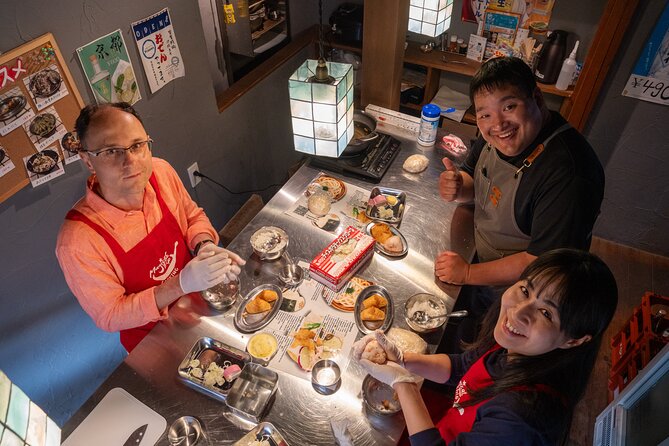
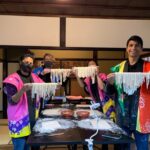
Udon is chewy by design, and the class teaches you how to get there. You’ll learn the basics of kneading, rolling, and cutting noodles by hand, not by relying on machines. The goal is texture: firm enough to stay bouncy, soft enough to eat easily.
This part is also where you’ll notice how small technique changes matter. Knead too little and the dough won’t behave. Roll unevenly and your noodles won’t cook at the same pace. Cut carelessly and everything turns chaotic when it hits the pot. It’s the rare cooking activity where you can actually feel the difference.
A neat bonus from what you’ll do in the session: you’ll work with both hot and cold udon. That’s useful if you travel in Japan and want to order with confidence back home. Hot udon is cozy and comforting. Cold udon has a different bite and serving vibe. Learning both helps you understand how ingredients and temperature shift the whole experience.
Onigiri and Inari Sushi: Rice Shaping Without the Stress
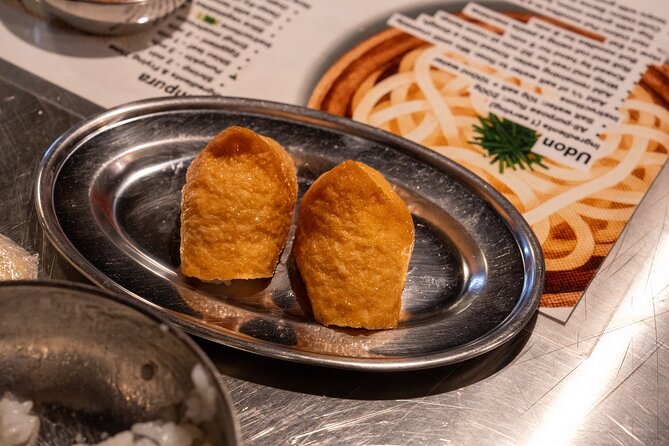
Once the noodles are underway, the class shifts to rice dishes you’ll see all over Japan. You’ll prepare onigiri and inari sushi, learning how to form and pack them so they hold together.
This section is great because it trains a different kind of skill than flour dough. Udon asks for feel. Onigiri asks for control and consistency. You’ll practice shaping until it looks right and holds properly, which is exactly the kind of thing that makes you feel like you can actually reproduce it later.
The payoff is you don’t just make one item. You’re building variety: savory rice, molded into familiar Japanese forms, then paired with what you’ll fry later. In other words, you’re learning a meal, not a demo.
Tempura Frying With a Pro: Crispy Technique, Not Luck
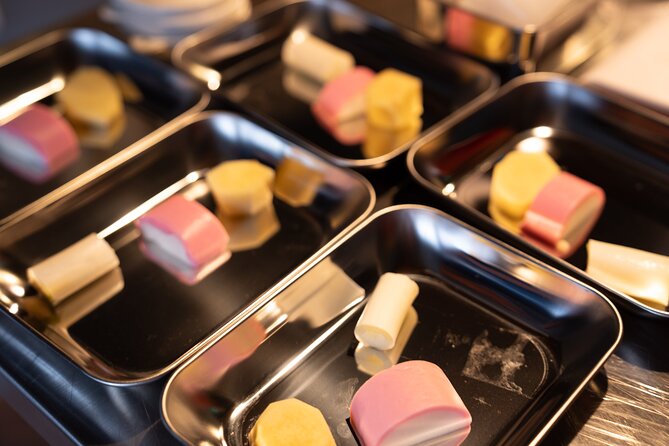
Tempura is the part that looks simple and can punish you for shortcuts. Here, you’ll learn how to fry crispy, golden tempura with direct guidance. The practical lesson is that tempura isn’t about deep-frying forever. It’s about frying correctly so the coating stays light and crisp instead of greasy or heavy.
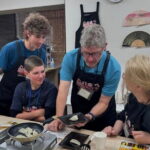
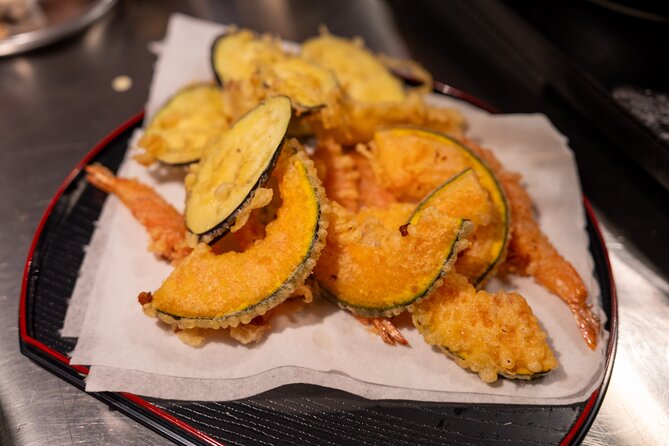
You’ll fry tempura ingredients that include shrimp and vegetables (so you get the classic texture contrast). And because you’ll be in a small group, you get real time with the instructions. That helps you avoid the common beginner trap: turning frying into a guessing game.
If you’ve ever eaten great tempura and wondered how to get that crisp snap at home, this is your chance. The class teaches you the mindset and steps so you understand what to watch for, not just what to copy.
Sake Pairing, Recipes by Email, and Photos You Can Keep
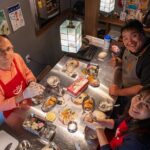
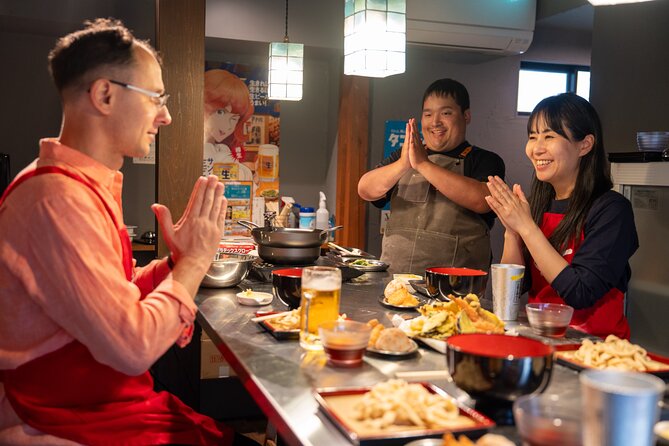
After all the cooking, you get to eat what you made: fresh udon, the rice dishes, and your tempura. That’s not just a perk. It’s the fastest way to learn. You cook, you eat, and you connect taste to technique immediately.
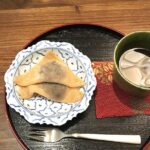
You’ll also enjoy a mini sake tasting alongside your meal. The tour includes two drinks total, and you can choose alcoholic or non-alcoholic options. For many people, this is the easiest introduction to Japanese pairing without turning the class into a night out.
One of my favorite value touches is that you don’t leave empty-handed. You’ll receive downloadable recipes in easy English, so you can try again at home. You’ll also get tour photos taken during the class emailed to you afterward. That helps if you want proof of your handiwork, or if you’re traveling with family and want keepsakes.

Price and What You Actually Get for $85.39
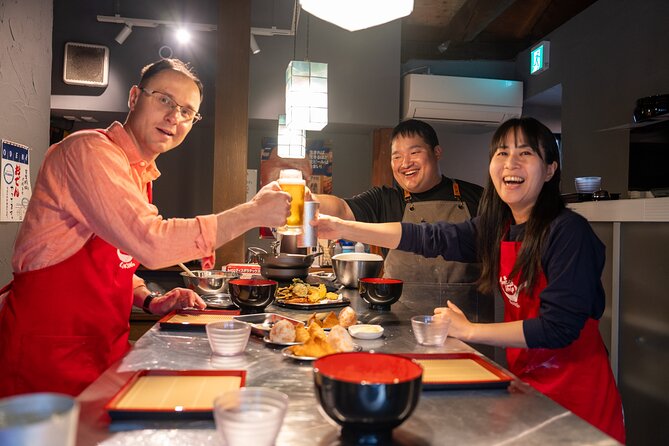
At $85.39 per person for roughly 2 hours 30 minutes, you might wonder if it’s “just cooking.” In practice, you’re paying for a lot of guided coaching and real food production.
Here’s what’s included:
- From-scratch cooking for four dishes: udon, tempura, onigiri, and inari sushi
- Two drinks, including sake options
- Time with an udon master plus an English-speaking local guide
- Downloadable recipes in English
- Tour photos emailed afterward
If you compare that to buying ingredients and trying to copy Japanese cooking alone, the value is clear. You’re not just getting food. You’re buying the shortcut that matters most: instruction plus feedback. In a small group, that coaching becomes even more valuable because you’re not waiting for the instructor to circle back.
Also, the class stays focused. You don’t get a long lecture or a quick taste and then you’re out. You actually make the meal and then eat it, which is exactly how you want cooking experiences to work.
Logistics: The 7-Eleven Meeting Point and a 10:00 Start
The class meets at 7-Eleven, 599 Uraderachō, Nakagyo Ward, Kyoto. It starts at 10:00 am and ends back at the same meeting point. Transportation to and from the meeting point isn’t included, so plan your route on your own.
The good news is it’s near public transportation. That matters in Kyoto, where you’ll likely be hopping between neighborhoods anyway. Going earlier in the day also helps if you want a later sightseeing window after lunch.
Practical tip: come hungry. One family-focused review shared that you should skip breakfast because you’ll make and taste multiple dishes. I agree with that logic. You’ll be working with dough, rice, and frying, and the meal at the end is part of the point.
Finally, the group is capped at 8 travelers, which is ideal in a kitchen setting. You’re less likely to feel rushed or stuck waiting around.
Who This Kyoto Udon and Tempura Class Fits Best
This is a strong fit for beginners. The class is built around the idea that you start with no experience and learn by doing. You’ll have hands-on instruction, and the English-speaking guide helps translate the key steps.
It also works well for families and mixed groups because:
- The food variety makes it interesting for different tastes
- You’ll be active throughout the session
- The small group size helps keep the energy friendly and controlled
If you’re the kind of traveler who likes to eat well but also wants to understand how food works, you’ll get extra satisfaction from learning both noodles and frying technique. And if you want to bring skills home, the easy English recipes make that realistic.
Should You Book This Kyoto Udon and Tempura Class?
I’d book it if you want a hands-on Kyoto meal that covers multiple classic dishes in one sitting. The combination of udon-making, sushi rice shaping (onigiri and inari), and proper tempura frying is a nice spread, and the class structure is practical from first step to last bite.
Skip it only if you’re looking for something low-effort and purely sightseeing-based. This is cooking. You’ll be involved the whole time, so it’s best when you’re ready to be hands-on.
If you want to learn real technique, eat what you make, and leave with recipes you can actually follow, this is a very solid value at $85.39.
FAQ
What dishes will I make in the class?
You’ll learn to make udon, tempura, onigiri, and inari sushi from scratch.
How long is the cooking class?
It runs for about 2 hours 30 minutes.
Is there an English guide during the class?
Yes. The experience includes an English-speaking local guide alongside a udon master.
Do I need prior cooking experience?
No. The class is designed for beginners and teaches you step by step.
Where does the class meet, and what time does it start?
The meeting point is 7-Eleven (599 Uraderachō, Nakagyo Ward, Kyoto), and it starts at 10:00 am.
Can I get a refund if my plans change?
Yes. You can cancel for a full refund if you cancel at least 24 hours before the experience’s start time.