REVIEW · OSAKA
Osaka : Cooking Class Okonomiyaki & Takoyaki course in Nanba
Book on GetYourGuide →Operated by 株式会社XLSWORLD · Bookable on GetYourGuide
Osaka tastes better when you cook. In this Namba-area class, you learn Okonomiyaki and Takoyaki step by step with friendly, multilingual Washoku professionals, including hosts like Nana and Mimi, then you eat what you make right there. I like that it is genuinely hands-on, not a demo, and I also like that you leave with recipes you can actually follow later.
My only real caution is price. The class is listed around $70 per person, but one attendee reported a final cost closer to $116, so double-check the total for your date and what is included in that checkout.
In This Review
- Key things to love about this Namba cooking class
- Cooking Osaka classics in Namba: the 2-hour rhythm
- Meeting at Dear Court Semba: finding Room 303 quickly
- Orientation and prep: learn the basics before you cook
- Hands-on cooking with a small group of 8 or fewer
- Tasting your Okonomiyaki and Takoyaki with drinks
- Take-home recipes: turning one class into a repeatable dinner
- Price and value: is $70 (or more) worth it?
- Who this Osaka okonomiyaki and takoyaki class suits best
- Should you book this Osaka cooking class in Nanba?
- FAQ
- What dishes will I learn to make?
- How long is the cooking class?
- What is included in the price?
- Are any drinks included?
- Do I need to have cooking experience?
- What languages will the instructors use?
- Is it a small group?
- Is the venue wheelchair accessible, and can I bring a pet?
Key things to love about this Namba cooking class
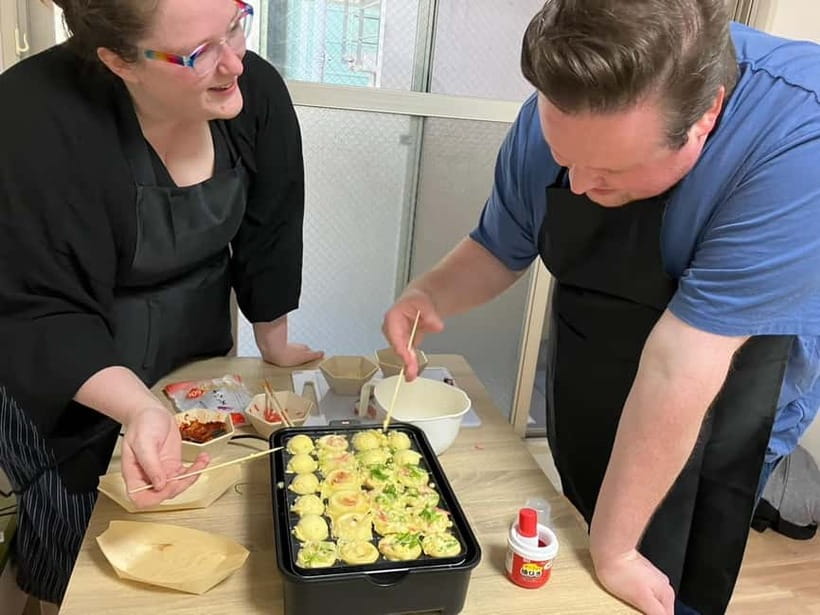
- Small group, up to 8 people, so you can get real help while you cook
- Hands-on cooking time with a clear rhythm: orientation, cooking, then tasting
- Drinks with your meal, including sake and beer, plus soft drinks
- Recipes to take home, so the experience is more than a one-night meal
- English (and Japanese) instruction, with some Spanish support depending on the instructor
Cooking Osaka classics in Namba: the 2-hour rhythm
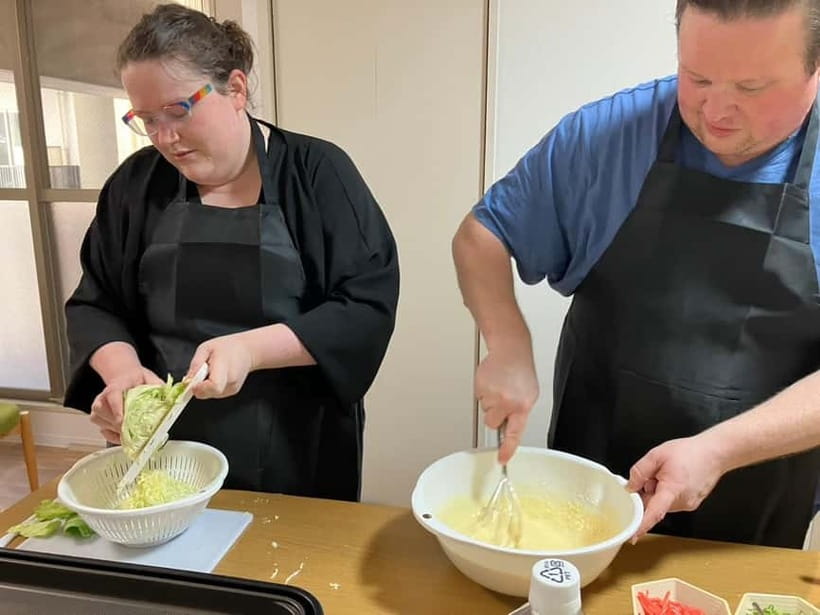
This is a straightforward, food-first Osaka experience. In about two hours, you move from getting set up to cooking on your own station, then you sit down and enjoy the dishes you made. It is designed for beginners and food lovers alike, with instructors guiding you through each step.
What makes it feel fun instead of stressful is the pacing. You get a 30-minute orientation and prep period first, then about 1.5 hours of actual cooking. After that, you get a full 1-hour tasting session with the Okonomiyaki and Takoyaki you cooked, plus drinks such as sake, beer, and soft drinks.
Also, this class is not about rushing. You are in a group setting, but it is capped small, so you have time to ask what matters. If you tend to learn best by doing, this format fits your style.
You can also read our reviews of more tours and experiences in Osaka.

Meeting at Dear Court Semba: finding Room 303 quickly
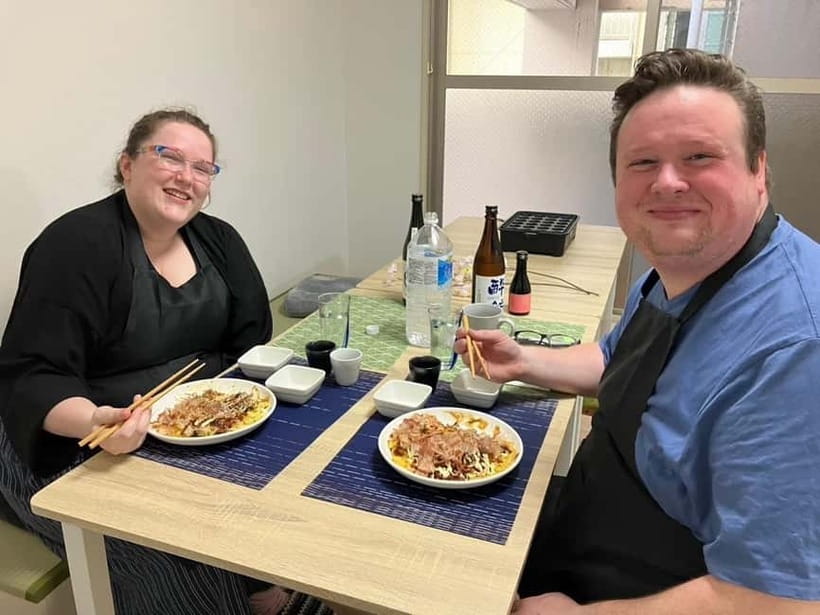
The meeting point is Dear Court Semba, Room 303 on the 3rd floor, in Chuo Ward near Bakurōmachi (541-0059). When you arrive, you will use the entrance doorbell, press 303, then tap the button labeled 呼 (Call). Once the door opens, go up to Room 303.
This matters more than it sounds. Cooking classes can start on a tight schedule, and you do not want to lose time figuring out an entrance on your first try. If you are the type who likes buffer time, plan to arrive a little early so you can settle in and meet your instructor before anything starts.
Orientation and prep: learn the basics before you cook
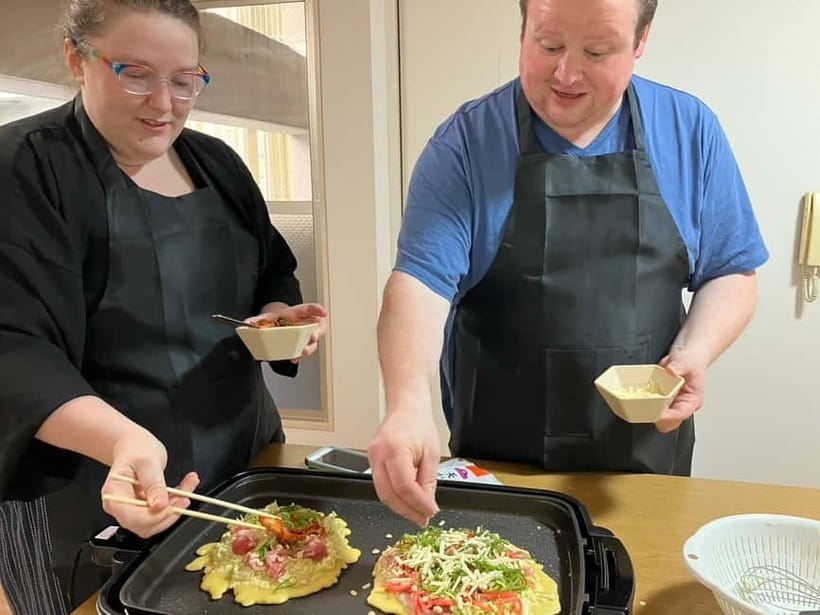
The first chunk of your time is a 30-minute orientation and preparation session. Think of it like your on-ramp: you get shown how the process works and how to handle the tools and ingredients you will use later. The goal is simple—so you can cook confidently during the main block.
A big value here is that you are not starting from zero with a hot pan in front of you. You get guided preparation so you can focus on technique during the cooking stage. And because the instruction includes English and Japanese, you can follow the steps without guessing.
This early phase also sets expectations for the group workflow. Since you cook in a group setting, knowing the station flow and what happens next keeps things smooth for everyone.
Hands-on cooking with a small group of 8 or fewer
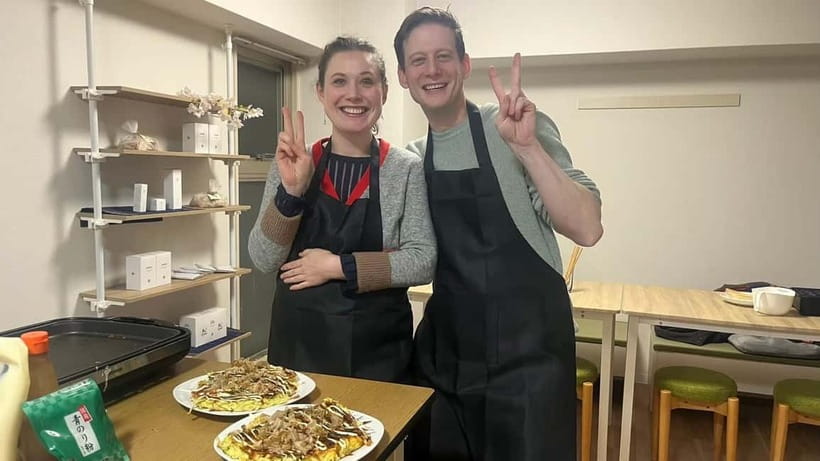
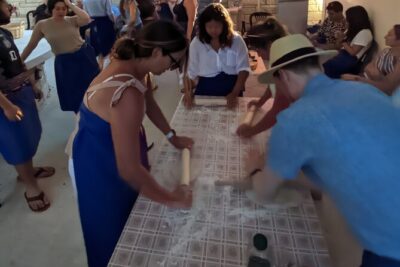
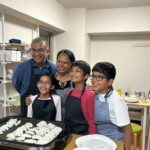
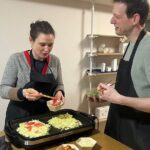
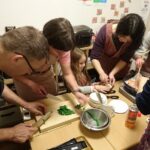
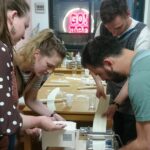
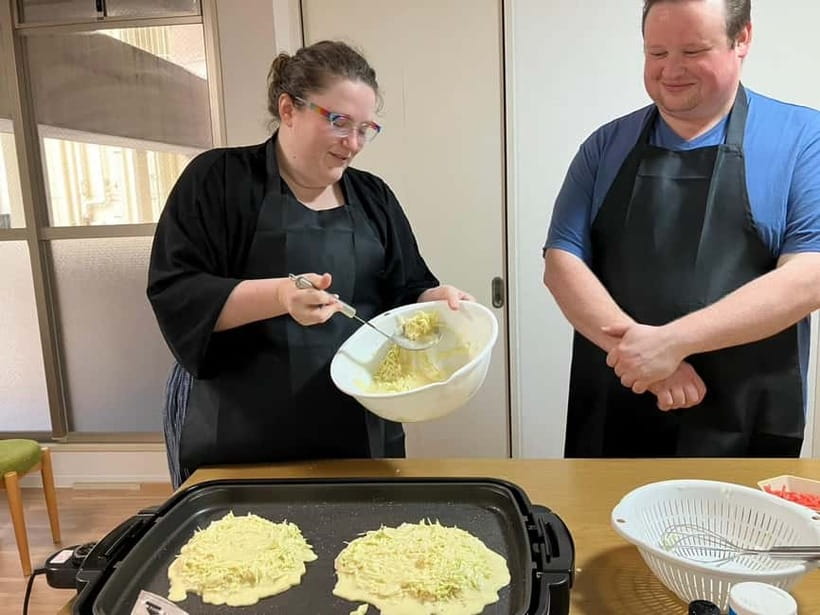
You get 1.5 hours of hands-on cooking, and that time is the heart of the class. You will be actively making the dishes, not just watching. All ingredients and tools are provided, so you are not hunting for specialty items around Osaka.
This is where the teaching quality shows. The class uses seasoned Washoku professionals, and the instruction is designed to make you feel capable by the time you finish. Many people get excited because the pace is interactive: you can ask questions, get corrections, and adjust what you are doing while you cook.
The small-group size (up to 8 participants) is not just a comfort perk. It changes the experience. With fewer people, you tend to get more direct help when something goes sideways—like a batter consistency issue or a timing problem—without feeling singled out or left behind.
Also, the language setup helps. Instruction is available in English and Japanese, and some instructors also speak Spanish. That means you are more likely to get a clear explanation even if a culinary term is new to you.
Tasting your Okonomiyaki and Takoyaki with drinks
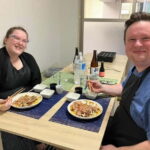
After cooking, you get a 1-hour tasting session. This is not a light snack hour. It is designed so you can actually enjoy what you made, not just taste one bite and move on.
The class pairs your dishes with drinks including sake, beer, and soft drinks. The drinks are part of the included experience, and you are not expected to buy extra during the tasting. Of course, it is also worth noting what is not included: additional food and drinks beyond the tasting set are not part of the package.
One practical tip from the vibe of the class: do not show up starving, but also do not arrive after a heavy meal. There is enough food that a too-full belly can make the tasting feel like work instead of fun. If you want the full “I cooked this and now I get to enjoy it” feeling, keep your earlier day meals light.
Take-home recipes: turning one class into a repeatable dinner
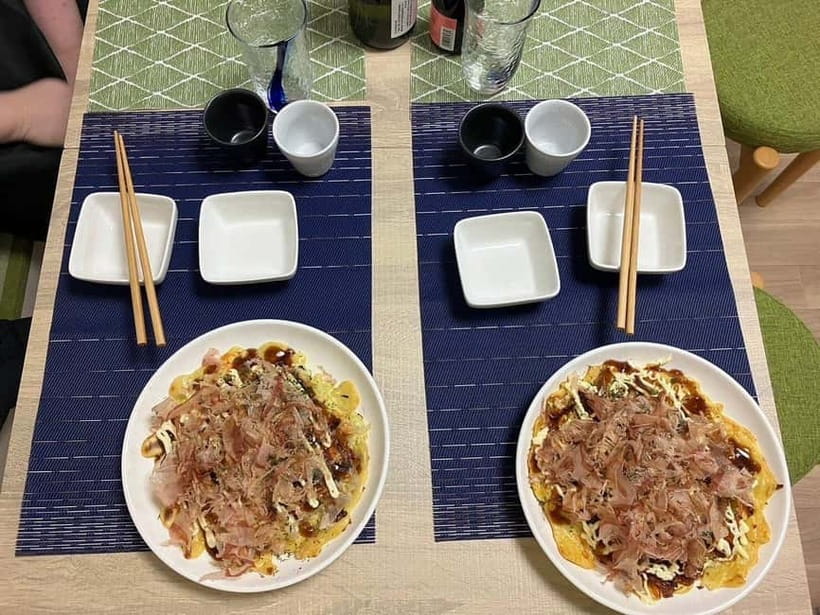
A standout feature is that you take home recipes for both dishes. That is where value goes beyond the two hours. A lot of cooking classes teach skills you can only use in that kitchen, but having recipes helps you recreate the process later with ingredients you can source at home.
You will also remember technique better when you have a reference to revisit. That is especially useful if you are traveling and you want to bring something tangible back to your routine. Even if you do not cook often, it is a great way to relive the class when the memory of Osaka food starts to fade.
If you like learning by repetition, these recipes can be your checklist. Cook once, take notes, and adjust. That is how you turn a fun night out into something you can actually own.
Price and value: is $70 (or more) worth it?
At $70 per person for a 2-hour, small-group, hands-on class, the value can be strong—especially because you get ingredients, tools, professional instruction, a cooking session, a tasting with drinks, and recipes to take home.
But here is the honest part: one attendee noted paying around $116 per person. That may come from date-to-date differences, conversion, or the final checkout total. Either way, it means you should sanity-check the final price you see on your booking screen.
So when does it make sense?
- If you want a real cooking experience in Osaka, not just food sampling
- If you like structured instruction and want recipes you can use later
- If you value English/Japanese support and a small group setting
When might it feel less worth it?
- If you are mainly looking to eat your way around Osaka quickly
- If you would rather spend on multiple neighborhoods and street food stops
In short: this is best viewed as a skill-and-meal combo, not just a tasting ticket.
Who this Osaka okonomiyaki and takoyaki class suits best
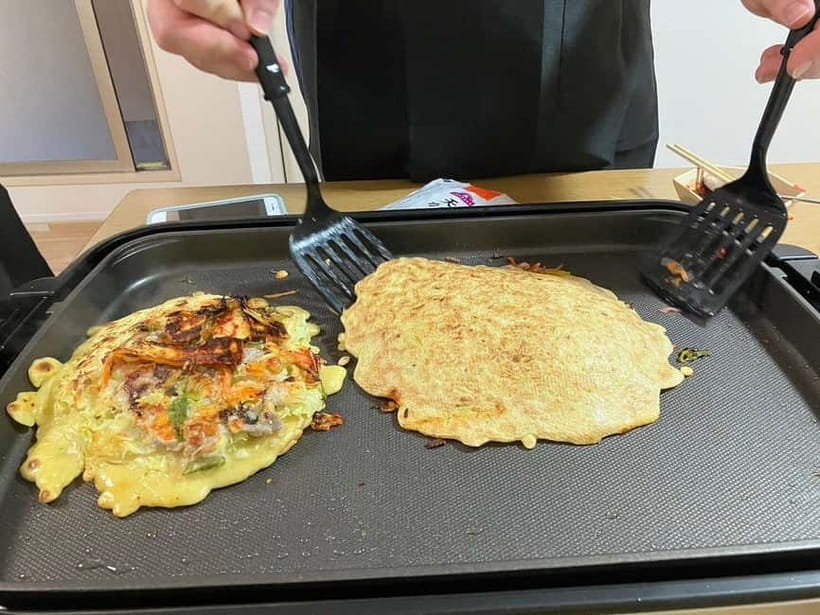
This class is a great match for beginners. You get orientation first, tools are provided, and the instructors are there to guide you. It is also a good choice if you have a food-enthusiast mindset and want to learn what makes local favorites work, even if you are not an experienced cook.
It is also a strong option if you like social travel, but not chaotic socializing. You will be cooking in a group setting, yet the class stays small, and that supports conversation without turning into noise.
If you prefer private tours or solo activities, you might still enjoy this, but it is inherently group-based. The upside is that the group size helps keep it personal.
One more practical note: pets are not allowed. If you are traveling with an animal, you will need to look at other options.
Should you book this Osaka cooking class in Nanba?
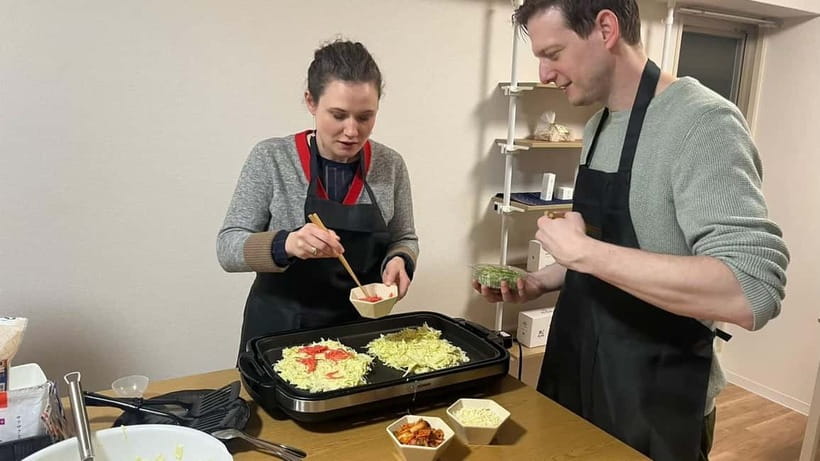
Book it if you want an Osaka food memory you can remake at home. You are getting the full package: hands-on cooking, guided instruction in English and Japanese, drinks during a tasting session, and recipes to take home. The pacing also makes it beginner-friendly: prep first, then cook, then relax and enjoy.
Skip it (or consider alternatives) if price is a big factor for you, or if you already know you do not enjoy learning through cooking. Also, if you hate group settings, you may find the class style less comfortable even with the small cap.
If you do book, arrive ready to cook and plan to keep your earlier meals reasonable. Then you can enjoy the best part: eating what you made, with a sake or beer pairing, in a room where the focus stays on food and technique.
FAQ
What dishes will I learn to make?
You will learn Okonomiyaki (Japanese savory pancakes) and Takoyaki (Japanese savory dough balls).
How long is the cooking class?
The total duration is 2 hours, including orientation, hands-on cooking, and a tasting session.
What is included in the price?
It includes all ingredients and tools, expert guidance, 1.5 hours of hands-on cooking, a 30-minute orientation and preparation session, a 1-hour tasting session with drinks (sake, beer, soft drinks), and recipes to take home.
Are any drinks included?
Yes. During the tasting session, drinks included include sake, beer, and soft drinks.
Do I need to have cooking experience?
No. The class is suitable for beginners and food enthusiasts.
What languages will the instructors use?
Instruction is available in English and Japanese. The information also notes that instructors can be fluent in English, Japanese, and Spanish.
Is it a small group?
Yes. The class is limited to 8 participants.
Is the venue wheelchair accessible, and can I bring a pet?
The activity is wheelchair accessible. Pets are not allowed.