REVIEW · SEOUL
Korea Cooking Class with 3 stars Michelin Chef & Content creators
Book on Viator →Operated by Nerdso · Bookable on Viator
Three stars, a kitchen, and Korean laughs. This Seoul class pairs a 3‑star Michelin Chef with content creator Koreanbong, and the flow runs from choosing ingredients at a local market to a hands-on dinner with only 16 people. I love the way the chef shares practical cooking life hacks, so you leave with skills you can use later, not just a fun night out.
I also like that you get recipe papers for each team, and the class is built in clear stages: a short Korea-cuisine intro, a 30-minute demo, then group cooking at four sinks. One consideration: the experience is non-refundable and can’t be changed, so choose your 7:00 pm slot carefully.
In This Review
- Key highlights worth your time
- A 3‑Star Michelin Chef and Koreanbong make Seoul cooking feel personal
- Where the night starts: Lotte World area and the road to ingredients
- Four sessions that keep you cooking, not waiting
- Session 1: intro and a Korea cuisine history talk (15 minutes)
- Session 2: 30-minute Michelin chef food demo
- Session 3: start cooking at four sinks (groups of 2–4)
- Session 4: dining time with games or events
- The group kitchen setup: why 2–4 people per station is a win
- Food and drinks included: what that changes for your budget
- What you’re really learning: technique, not just recipes
- Lotte World stops: why this isn’t just food, it’s a Seoul evening plan
- Who this class suits best
- Should you book this Korea Cooking Class with a Michelin chef and Koreanbong?
- FAQ
- How long is the cooking class?
- What time does the tour start?
- Where is the meeting point in Seoul?
- What is the group size limit?
- How many sessions does the class include?
- What food and drinks are included?
- Are recipe papers provided?
- Do I need private transportation?
- Is the experience refundable?
Key highlights worth your time
- 3‑star Michelin Chef demo focused on how you cook the day’s menus, not just showmanship
- Koreanbong hosting that keeps things chatty, friendly, and easy for first-timers
- Small group format (max 16) with hands-on cooking rather than watching from the sidelines
- Four cooking stations so groups of 2–4 can work without feeling crowded
- Recipe papers for each team, so you can repeat what you learned
- Dinner plus games/events at the end, turning the meal into part of the experience
A 3‑Star Michelin Chef and Koreanbong make Seoul cooking feel personal
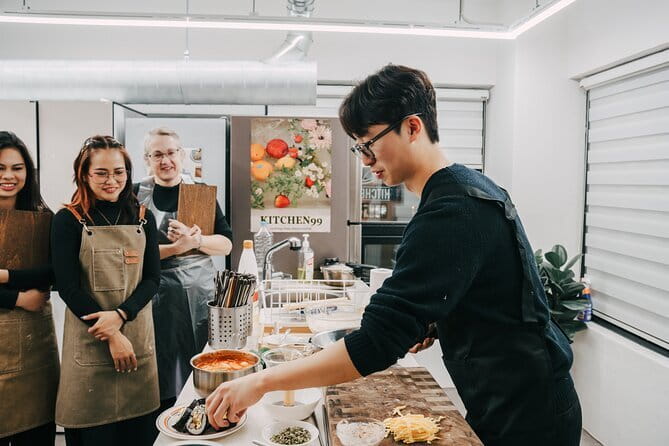
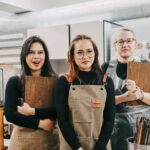
If you’ve done cooking classes before and they felt a bit stiff, this one has a different energy. You get a high-level chef on one side and Koreanbong, a content creator host, on the other, and that mix helps the room feel welcoming instead of formal.
The kitchen space is set up for a maximum of 16 participants, which matters more than it sounds. With a small group, you’re more likely to get real attention while you cook, and you can actually talk during the process instead of waiting for your turn.
You can also read our reviews of more tours and experiences in Seoul.
Where the night starts: Lotte World area and the road to ingredients
The experience meets at 175 Ogeum-ro, Songpa District, Seoul, with a start time of 7:00 pm. The evening ends back at the same meeting point, so you’re not left wondering how to get home after a full dinner.
Before cooking begins, you visit a local market and pick ingredients yourself. That part is valuable because it connects the meal to the choices people make in daily life, not just the final dish. You’ll also learn about “traditional ways of life” through how ingredients are selected and used.
On top of that, the route includes stops connected to Lotte World Tower & Mall and Lotte World. That gives you an easy way to combine food fun with a famous Seoul area, especially if you’re already exploring that part of the city.
Practical note: private transportation isn’t included, but it is near public transit. If you’re coming from elsewhere in Seoul, plan your route so you arrive a few minutes early and don’t start the night rushing.
Four sessions that keep you cooking, not waiting
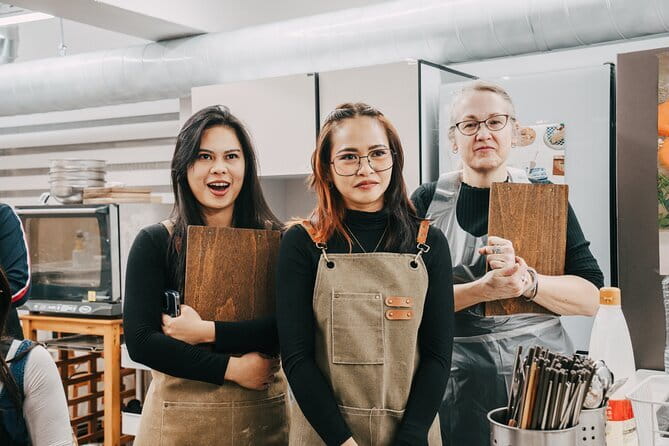
This class runs about 2 hours, and it uses a steady rhythm so you don’t spend the whole time either watching or standing around. The structure is simple and effective: intro, chef demo, cooking in groups, then eating with added cultural entertainment.
Session 1: intro and a Korea cuisine history talk (15 minutes)
You start by introducing yourself and getting everyone synced. Then you get a 15-minute presentation on Korean cuisine history.
That intro may sound like classroom time, but it’s short on purpose. It gives you a framework for what you’re about to make and why certain flavors show up again and again in Korean cooking. It’s the kind of context that helps you notice details when you’re cooking, like how seasoning builds or how textures change.
Session 2: 30-minute Michelin chef food demo
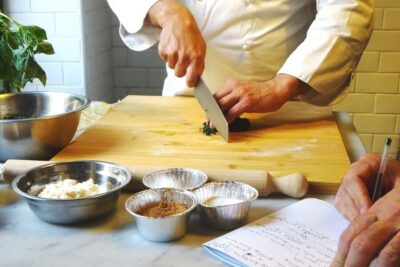
Next comes the main teaching moment: a 30-minute cooking demo by the 3 stars Michelin Chef. This is where you learn the steps behind the day’s menus, so you know what you’re aiming for before you touch ingredients yourself.
A big plus here is that they provide recipe papers per each team. If you forget a step while cooking, you can quickly check back without needing to flag someone down. That saves time and keeps the class moving.
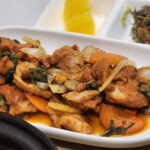
Session 3: start cooking at four sinks (groups of 2–4)
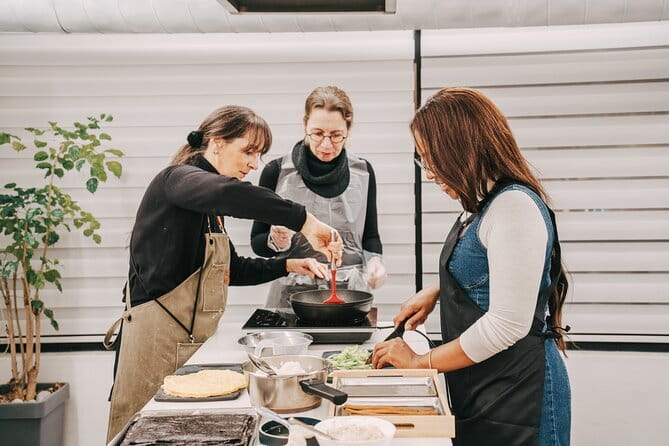
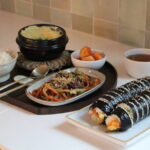
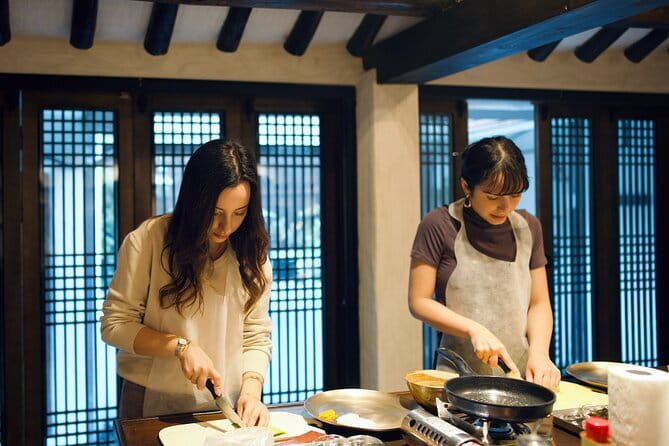
Now the class turns hands-on. You’ll work in a kitchen with four large sinks, and each sink area supports a separate cooking group. Group capacity is 2 to 4 people, so you’re not stuck in a large crowd line.
Each group cooks different menus, which is a smart setup because it spreads the workload and keeps everyone active. You’ll focus on the dishes your team makes while still learning from what’s happening nearby.
Also, before the class starts, you choose ingredients and learn to cook 3 typical dishes in advance. That doesn’t mean you’ll be cooking a single recipe over and over. It means your night has a defined set of dish targets, so you can see a complete arc from ingredients to finished plates.
Session 4: dining time with games or events
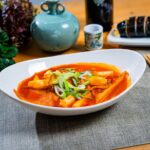
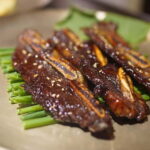
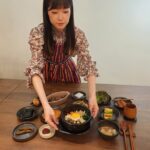
As soon as you finish cooking, you eat. The class includes a dining time, and it may feature special games or events as a bonus.
This part matters because it turns the cooking class into a shared social moment. You’re not just collecting a souvenir recipe—you’re spending time in a Korean meal setting with some light entertainment and cultural learning mixed in.
The group kitchen setup: why 2–4 people per station is a win
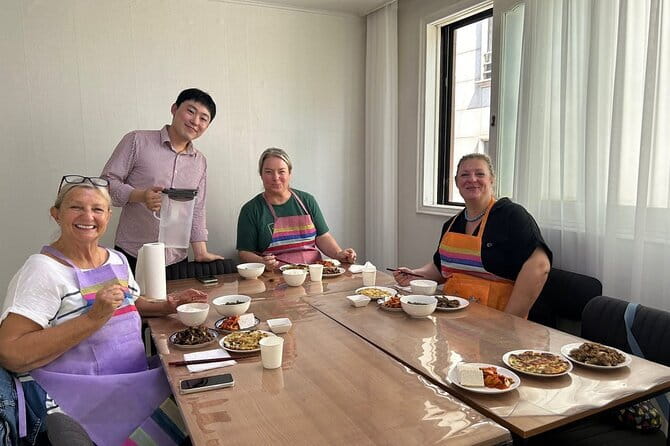
Most cooking classes fail at one thing: group size. If you’re in a huge group, you end up hovering or waiting your turn, and you don’t really learn the techniques.
Here, the format is deliberately tight: teams of 2–4 work around four sinks. That means you can take part in chopping, mixing, and managing the steps without feeling like you’re watching from the back row.
I also like that the kitchen is large enough to handle everyone comfortably up to 16 participants. In practice, that often means fewer bottlenecks around shared tools and a smoother flow from demo to cooking.
And because each team gets recipe papers, you’re not dependent on memory. You can focus on doing the work correctly instead of trying to mentally replay the demo.
Food and drinks included: what that changes for your budget
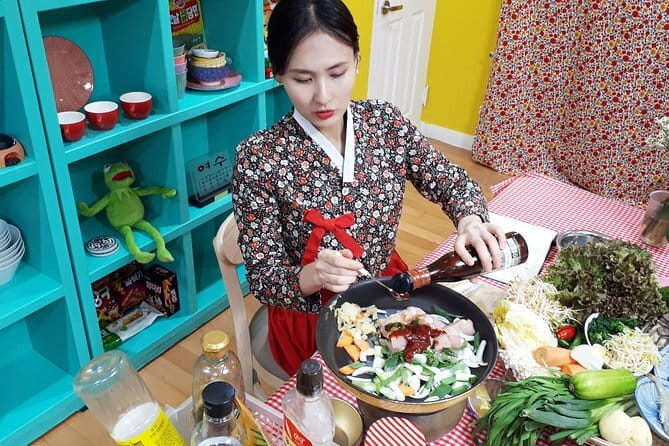
The price is $70.44 per person, and the duration is about 2 hours. The big value story is what’s included: dinner, coffee and/or tea, alcoholic beverages, and bottled water.
When a class includes food and drinks, it stops being just a cooking lesson and starts acting like a full evening meal plan. You’re paying for instructor time, ingredients, and a served dinner, not just a class where you might still need to find dinner after.
One more practical detail: confirmation happens within 48 hours of booking, subject to availability. With an average booking window of about 24 days in advance, it’s smart to lock in early if your travel dates are fixed.
Alcohol is included, so if you don’t drink, you’ll want to plan accordingly with pace and water. Bottled water is included, which helps.
What you’re really learning: technique, not just recipes
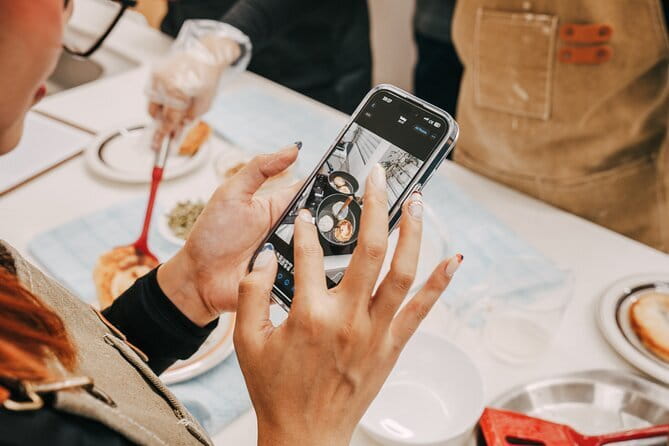
The chef’s teaching isn’t presented as a performance. It’s aimed at helping you cook better through life hacks for cooking skills, plus hands-on steps you can repeat.
The intro about Korean cuisine history is short, but it gives you a lens for what you’re tasting and making. Instead of eating and moving on, you can connect flavors to ideas about how Korean cooking is built.
And because each group makes different menus, you get variety within the class. Even if you stick to your own dishes, the room still teaches you by contrast—what happens when seasoning ratios change, how texture looks before and after cooking, and how plating comes together at the end.
Lotte World stops: why this isn’t just food, it’s a Seoul evening plan
The cooking class isn’t happening in a vacuum. The route includes Lotte World Tower & Mall and Lotte World, which can make your evening more than “one activity.”
If you’re already curious about that part of Seoul, you’ll appreciate the structure. You get a couple of meaningful landmarks tied into the night, and then the main event happens in a kitchen setting that stays focused on cooking.
That said, don’t treat this like a sightseeing tour with long stops. The core of your time is the class itself, and the extra city stops function more like a built-in way to anchor where you are during the evening.
Who this class suits best
This is a strong choice if you want:
- a hands-on Korean cooking experience with a small group
- a real chef-led demo plus recipe papers
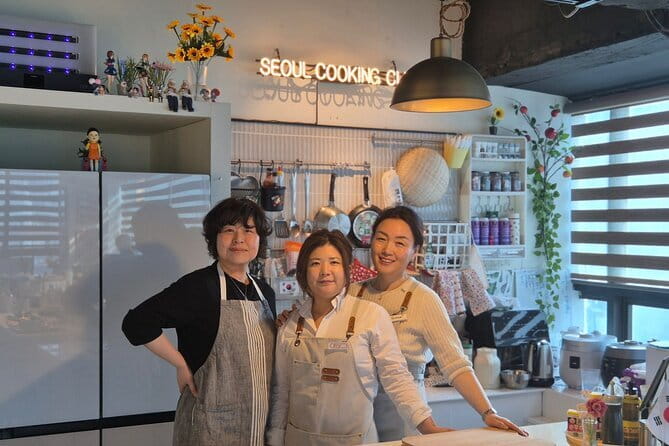
- a social host vibe through Koreanbong
- included dinner and drinks so you don’t spend your evening budgeting food afterward
It’s also a good fit if you’re traveling solo or as a couple and you like structured activities with time built in to talk. With a maximum of 16 people, you’re more likely to actually interact.
If you need a strict schedule with tons of sightseeing time, you may feel the night is tightly packed. The format is efficient by design, with about 2 hours total.
Should you book this Korea Cooking Class with a Michelin chef and Koreanbong?
I’d book it if you want a compact Seoul experience that mixes cooking practice, an expert demo, and a real meal at the end—without turning it into a big-group production. The small size, the chef-led instruction, and the fact you get recipe papers are the three reasons this works.
The main reason to pause is commitment. The experience is non-refundable and cannot be changed, so if your plans might shift, wait until you’re sure. Also remember that private transportation isn’t included, so you’ll want a clear route to the meeting point near public transit.
If you’re the type of traveler who likes learning how food is made by people who actually cook for a living, this class hits the right note.
FAQ
How long is the cooking class?
It lasts about 2 hours.
What time does the tour start?
The start time is 7:00 pm.
Where is the meeting point in Seoul?
The meeting point is 175 Ogeum-ro, Songpa District, Seoul, South Korea.
What is the group size limit?
The activity has a maximum of 16 travelers.
How many sessions does the class include?
There are 4 sessions: introduction, food demo, start cooking, and dining time.
What food and drinks are included?
Dinner is included, along with coffee and/or tea, alcoholic beverages, and bottled water.
Are recipe papers provided?
Yes. Recipe papers are shared per each team during the cooking process.
Do I need private transportation?
Private transportation is not included. The meeting point is near public transportation.
Is the experience refundable?
No. It is non-refundable and cannot be changed for any reason.