REVIEW · SEOUL
Seoul: Taste of Korea, Authentic home style Cooking class
Book on GetYourGuide →Operated by Hansik Korean Cooking Class · Bookable on GetYourGuide
Cooking Korea at home is weirdly empowering. In Seoul’s Hansik Korean Cooking Class, you get hands-on Korean cooking led by chef Jennifer, with step-by-step English guidance and plenty of encouragement. My favorite part is how you don’t just watch food happen—you make dishes like budae jjigae and haemul pajeon, then sit down to eat the whole course with Korean snacks, drinks, and desserts.
One small consideration: you’ll likely receive take-home bags, but you may want to bring your own container if you plan to carry home any soup for later. Also, plan to arrive hungry; the class is designed for a full meal, not light tasting.
In This Review
- Key points to know before you go
- Finding the studio near Gyeongbokgung Station (and why it matters)
- What you actually cook in this Seoul Korean home-style class
- Gimbap: learning the basics you can repeat
- Tteokbokki: the gochujang flavor story in one bowl
- Haemul pajeon: pancake technique with real payoff
- Budae jjigae: comfort stew and the heart of the meal
- The class flow: hands-on pace, clear guidance, and a small group vibe
- Snacks, Sikhye, Makgeolli, banchan, and dessert: the part you’ll talk about later
- A practical tip: don’t eat first
- Chef Jennifer’s teaching style (and how it helps you cook at home)
- Take-home food: what’s provided and what to bring for leftovers
- Where this class fits in your Seoul itinerary
- A note on possible extra neighborhood time
- Price and value: is $94 worth it?
- Who this cooking class is best for
- Should you book Hansik Korean Cooking Class?
- FAQ
- What dishes will I learn to make?
- How long is the cooking class?
- Who teaches the class and is English available?
- What’s included in the price?
- How big is the group?
- Where do I meet the group?
- Is there any take-home food?
- Can I cancel for a refund or pay later?
Key points to know before you go
- Chef Jennifer’s step-by-step English teaching makes Korean home cooking feel doable
- Budae jjigae and haemul pajeon are the hands-on “main event” dishes
- Sikhye and Makgeolli show up during the meal, not just as an afterthought
- Small group size (up to 10) keeps the kitchen experience personal
- All ingredients and equipment are included, plus recipes sent by email
Finding the studio near Gyeongbokgung Station (and why it matters)
Your class starts at Gyeongbokgung Subway Station (Orange Line 3, exit 2). From there, it’s a straight walk of about 5 minutes to Woori Bank, tucked into a small alley between the bank and the K-Pop Store. This matters because Korean subway stations can be huge, and you want to show up settled—not sprinting while you’re trying to orient in a side street.
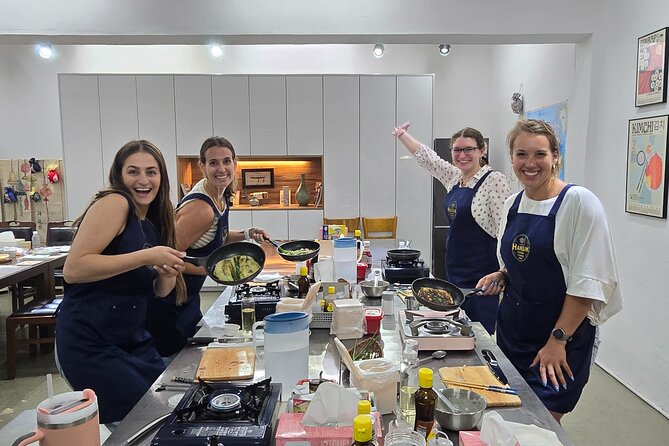
The good news is the meeting point is easy to confirm with a landmark: Woori Bank plus the K-Pop Store reference. Go early enough to slow down and follow the street cues. Once you’re in the alley, the studio setup is built for cooking—dedicated cooking stations, a clean workspace, and an arrangement that makes it simple to keep moving between chopping, mixing, cooking, and tasting.
You can also read our reviews of more tours and experiences in Seoul.
What you actually cook in this Seoul Korean home-style class
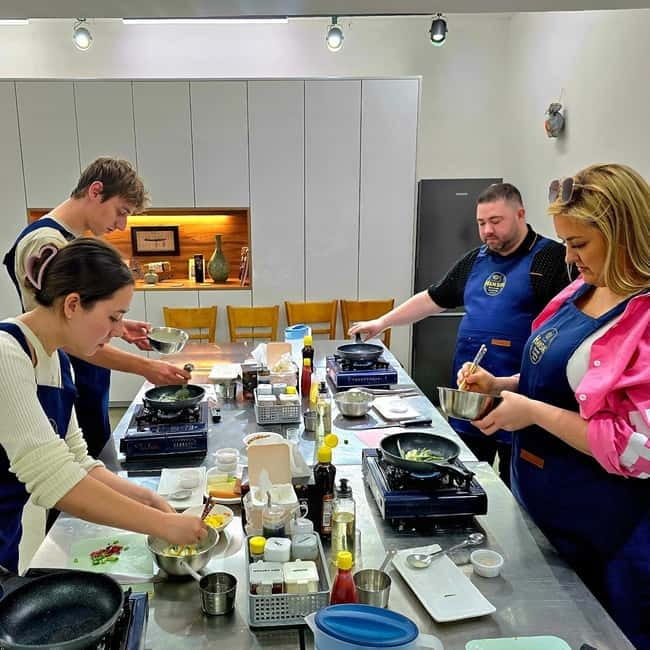
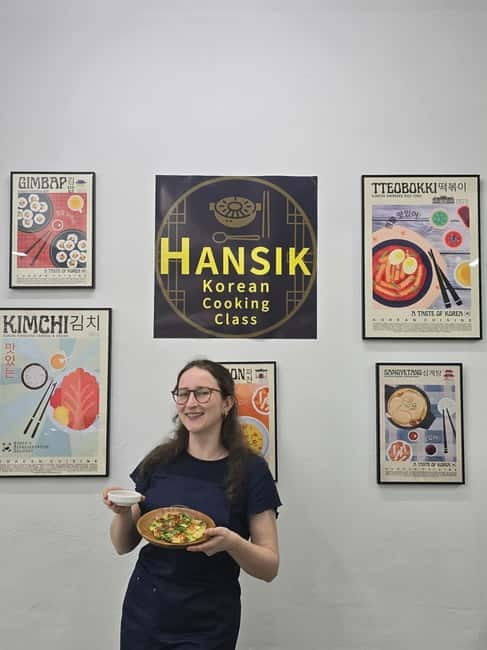
This is a true hands-on Korean cooking workshop, focused on hansik—Korean cuisine you’d expect to see at home. The menu includes a mix of comforting staples and crowd-pleasers, with dishes like gimbap, tteokbokki, haemul pajeon, and budae jjigae. You’ll follow instructions at each step, so even if you’re not a practiced home cook, you’re not stuck guessing.
Here’s how the core dishes fit together for a great first-timer experience:
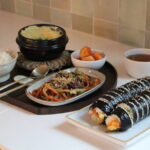
Gimbap: learning the basics you can repeat
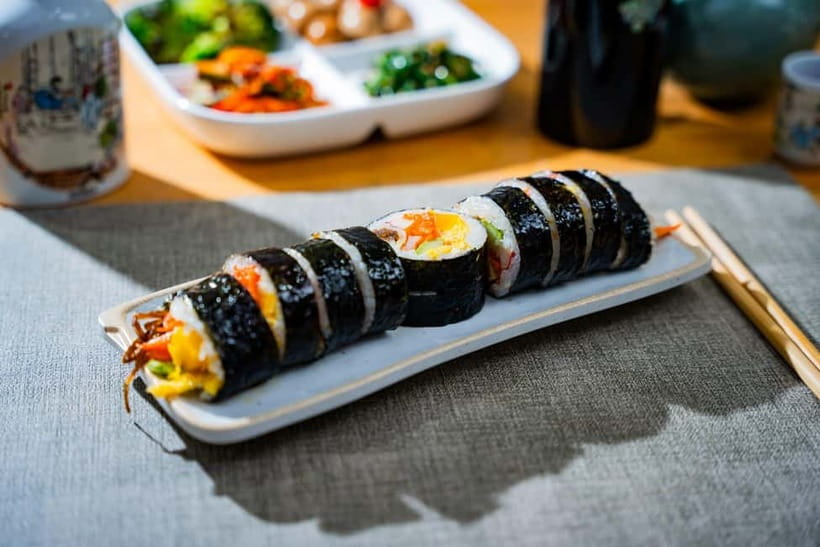
Gimbap is one of the best “start here” dishes because it teaches structure: rice, fillings, rolling technique, and the idea of balancing flavor in each bite. In a class like this, you’re not just making one roll and calling it done. You’re learning a repeatable method—so when you get back to your apartment, you can realistically recreate it without needing restaurant gear.
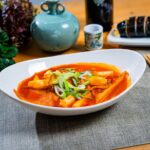
Tteokbokki: the gochujang flavor story in one bowl
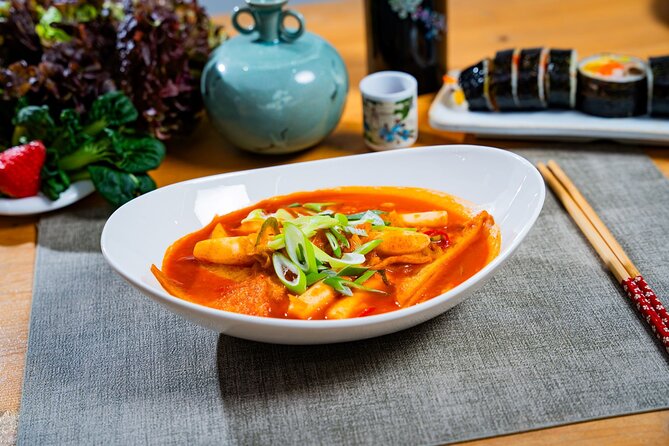
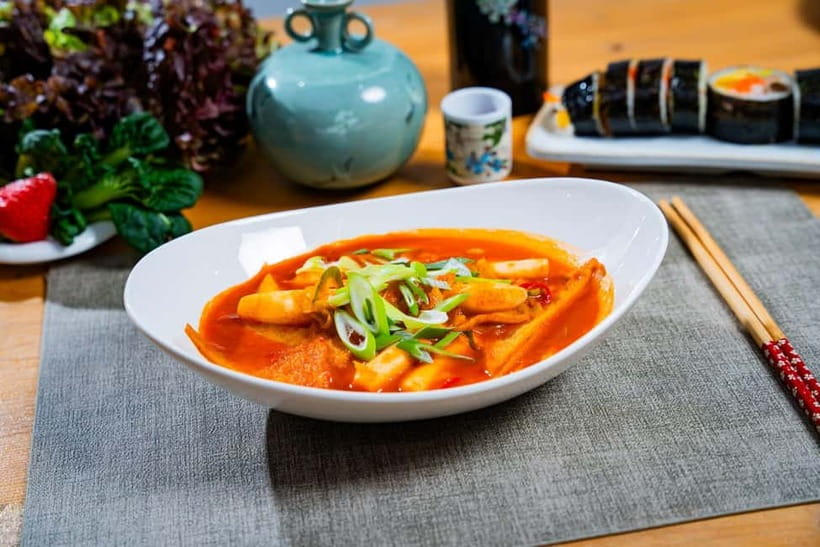
Tteokbokki is often where first-time cooks discover the power of gochujang (Korean red chili paste). You’ll get hands-on with cooking rice cakes in a savory-sweet sauce, which is a great way to understand how Korean heat often comes with sweetness and depth rather than just fire.
Haemul pajeon: pancake technique with real payoff
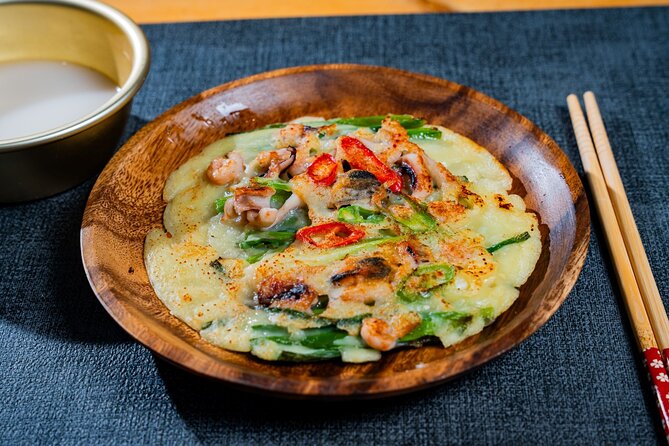
Haemul pajeon is a fun one because it rewards attention. You’re building a batter, layering in seafood and green onion, then cooking for the right texture. It’s the kind of dish where you can tell when you’ve nailed it—crispy edges, tender inside, and a flavor that tastes more complex than it looks.
Budae jjigae: comfort stew and the heart of the meal
Budae jjigae is the standout stew everyone wants to master. You’ll learn how to build a hearty pot and work with the typical ingredients that make the stew so satisfying. The reason this dish is such a good class choice is that it’s forgiving for beginners but still gives you “wow” results when you taste it at the table.
The class flow: hands-on pace, clear guidance, and a small group vibe
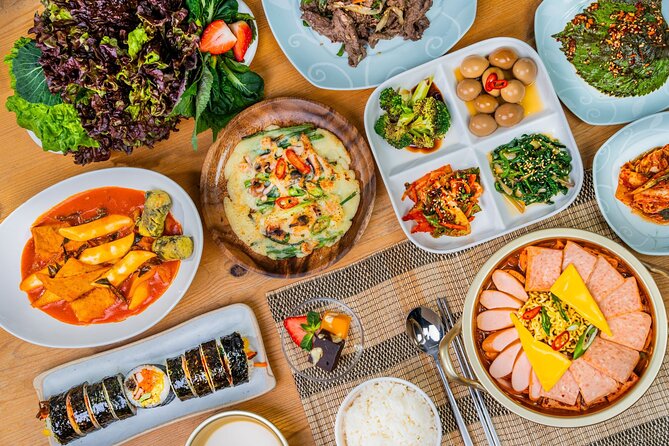
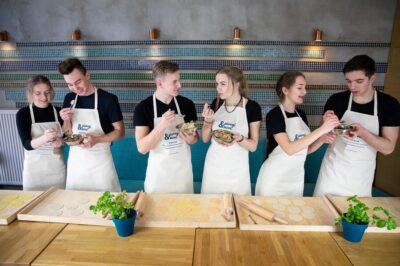
This workshop runs about 3 hours and keeps the group to 10 participants or fewer. That small size is a big deal in a cooking class. You’re close enough to your instructor to ask questions, get feedback, and adjust what you’re doing before it goes off track.
The kitchen teaching style is structured and supportive. Based on the way the class is described and how participants talk about the instruction, chef Jennifer emphasizes clarity: what to do first, what to look for, and how ingredients should behave as you cook. People specifically mention that the instructions are easy to follow, step by step, and that the kitchen time moves fast enough to stay fun.
A good sign: more than one person notes they cooked 4 dishes within roughly the same time window. That tells you the class isn’t dragging. It’s paced so you’re learning technique while also getting enough time to eat what you made.
Snacks, Sikhye, Makgeolli, banchan, and dessert: the part you’ll talk about later
Cooking is the headline, but the meal is where the whole experience lands.
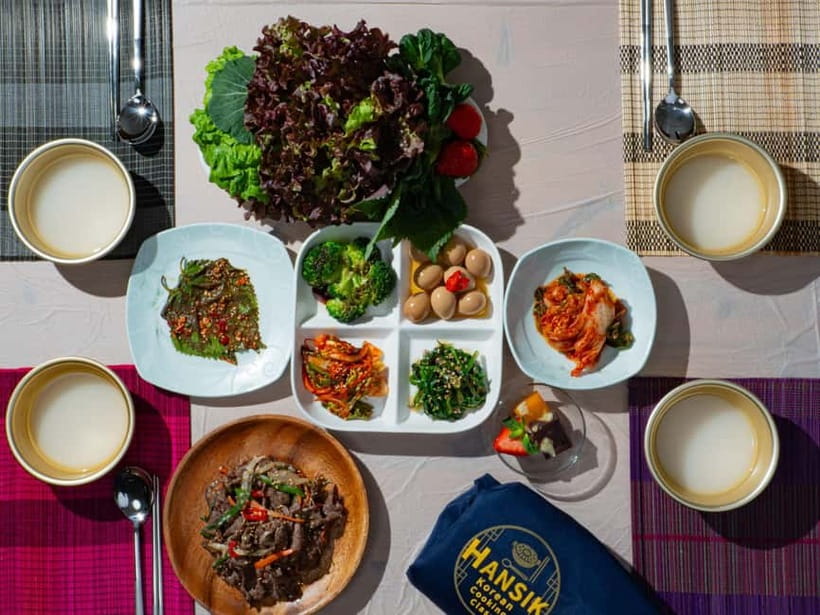
You’ll be served welcome items like Korean traditional snacks, plus drinks that include Sikhye (Korean punch) and Makgeolli (rice wine). Tea and coffee are also included, so you’re not forced to make your drink choices from just one category.
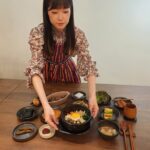
Then comes the full-course meal with seasonal banchan (side dishes). Banchan is where Korean meals become more than one main dish. You get variety in small portions—salty, crunchy, tangy, and sometimes sweet—so each bite feels different even before you finish the stew or pancake.
Finally, dessert rounds it out. Dessert isn’t always included in cooking classes, so it’s a real value add here. Also, pairing matters. People mention traditional drinks paired alongside the food, and that pairing makes the flavors feel intentional rather than random.
A practical tip: don’t eat first
If you want the full experience (and less regret), arrive with an empty stomach. Multiple participants highlight that you’ll end up eating a lot. This class is designed as a meal plus cooking lesson, not just a snack-and-learn.
Chef Jennifer’s teaching style (and how it helps you cook at home)
Chef Jennifer is the name that shows up again and again, and it’s clear the teaching approach is personal. Participants describe her as welcoming, clear, supportive, and patient. They also mention her English is strong, which matters when you’re learning technique and not just recipes.
What I like about this style is that it turns Korean cooking into something you can repeat. You’re not memorizing vague instructions. You’re learning the practical steps, what the ingredient looks like in each stage, and how to avoid common beginner mistakes (like rushing the cook or misreading sauce consistency).
Another standout: cultural context is woven in. People mention that she shares background and stories about Korean cooking traditions and the dishes themselves. That may not sound like it affects your dinner, but it does. When you understand what a dish is built to do—comfort, balance, heat, or texture—you cook with intention instead of guesswork.
Take-home food: what’s provided and what to bring for leftovers
You’re given take-away options, typically in bags so you can bring home what you can’t finish. That’s convenient for a short stay in Seoul because you can still end the day with leftovers even if you’re heading out afterward.
Still, here’s the one tweak I’d suggest: if you’re planning to pack any soup or stew, bring a small container from your hotel or carry-on stash. Some participants specifically mention that having better containers for soup would be helpful. A container makes your life easier on the ride back and helps with spill control.
Also, remember the class includes recipes sent by email. That’s perfect for leftovers because you can try the recipe again later while your notes and photos are still fresh in your head.
Where this class fits in your Seoul itinerary
This experience is a great fit for travelers who want something more practical than another museum stop. You’ll still be in the middle of Seoul, near Gyeongbokgung, but the activity is inside a real home-style kitchen workflow—ingredients, heat, timing, and finishing touches.
Because it’s about 3 hours, it also works well as a morning or evening anchor. You can pair it with sightseeing at Gyeongbokgung Palace area before you go, or wrap up the day with a cooked meal instead of scrambling for dinner plans.
A note on possible extra neighborhood time
One participant describes an extra market walk around the corner to buy items like cucumber kimchi. That kind of add-on may not be guaranteed for every session, but it’s worth knowing that at least some classes include neighborhood food exploration. If you’re the type who loves stepping into the local food rhythm, you might enjoy that bonus.
Price and value: is $94 worth it?
At $94 per person for about 3 hours, this isn’t a bargain class. It’s also not overpriced in a way that feels unfair, because the package is substantial:
- Hands-on instruction from chef Jennifer in a small group
- All ingredients and cooking equipment included
- A full-course meal with banchan, plus dessert
- Drinks including Sikhye and Makgeolli, plus tea/coffee
- Recipes sent by email so you can cook later
When you compare it to paying for ingredients plus a guided kitchen experience plus a full meal, the value starts to make sense. You’re paying for convenience and skill transfer, not just food. If you want Korean cuisine as a learning experience you can take home, this is the kind of class that can justify the price.
Who this cooking class is best for
This works especially well if you fall into one of these categories:
- You want a first-timer-friendly Korean cooking lesson with clear English
- You love home-style food and want to understand how Korean meals are built
- You’d rather learn technique than just take photos of dishes
- You’re traveling solo and want a small-group social environment
- You’re okay arriving hungry and committing to a big meal
It also seems flexible for dietary needs. One review mentions vegetarian substitutes were available, which is a promising sign if you don’t eat meat. Still, for your own peace of mind, you should ask ahead if substitutions are needed for your exact diet.
Should you book Hansik Korean Cooking Class?
Book it if you want a Seoul experience that’s hands-on, structured, and actually useful after you leave. The combination of step-by-step teaching, a small group kitchen setup, and a full course meal with Sikhye, Makgeolli, banchan, and dessert makes it more than a cooking demo.
Skip it if you’re looking for a short tasting only, or if you hate situations where you’re expected to cook for real. This is a working kitchen class. Come ready to chop, stir, cook, and eat.
If you’re torn, here’s the simple test: if you want to bring home at least a couple dishes you can reproduce, this is a strong choice.
FAQ
What dishes will I learn to make?
You’ll make Korean dishes such as gimbap, tteokbokki, haemul pajeon, and budae jjigae, with step-by-step guidance from the English-speaking instructor.
How long is the cooking class?
The class duration is 3 hours (you’ll need to check availability to see the starting times).
Who teaches the class and is English available?
The class is instructed in English, led by chef Jennifer (and the experience is delivered by Hansik Korean Cooking Class).
What’s included in the price?
Included are the hands-on cooking class, ingredients and equipment, welcome Korean snacks, tea and coffee, Sikhye, Makgeolli, Korean desserts, a full-course meal with seasonal banchan, a bottle of water, and recipes sent via email.
How big is the group?
It’s a small group limited to up to 10 participants.
Where do I meet the group?
Meet at Gyeongbokgung Subway Station (Orange Line 3, exit 2), then walk about 5 minutes to Woori Bank. The studio is in a small alley between the bank and just before the K-Pop Store.
Is there any take-home food?
Yes. You can take home what you can’t finish, and take-away items are provided in bags.
Can I cancel for a refund or pay later?
Free cancellation is offered up to 24 hours in advance for a full refund, and you can reserve and pay later to keep plans flexible.