REVIEW · SEOUL
Local Home Korean Cooking Class & Market Adventure in Seoul
Book on Viator →Operated by Hello K Cooking Class · Bookable on Viator
A market-to-table class can feel like a lot, but this one is the real thing: you shop for ingredients, cook at a local home, then sit down to a proper hanjeongsik dinner. What makes it stand out is the combo of a guided market walk plus hands-on cooking in a small group (up to 10 people). I especially liked the close attention from the host and the chance to learn Korean cooking techniques, not just follow recipes. One consideration: you’ll be on your feet for the market portion, so comfy shoes matter.
If you’re the type who wants to understand why Korean food tastes the way it does, this experience gives you the ingredients and the how-to. You’ll visit the Mangwon area market with your host, sample local street food snacks, and learn about herbs and spices you’ll actually use later in class. Then you’ll cook four dishes (often including options like bibimbap or dakgalbi) and finish with a feast that includes over 10 side dishes plus dessert and a glass of makgeolli.
In This Review
- Key Highlights That Matter
- From Mangwon Station to a Real Seoul Kitchen
- Market Adventure: Street Snacks and Ingredient Wisdom
- Hands-On Cooking in a Local Home (Not a Studio Show)
- Four Korean Dishes You’ll Actually Make
- Hanjeongsik Dinner: Over 10 Sides, Plus Dessert and Makgeolli
- What $91 Buys You in Seoul Value Terms
- Who This Works Best For (And Who Might Skip)
- My Booking Verdict: Should You Sign Up?
- FAQ
- Where is the meeting point for the class?
- How long is the experience?
- What’s the group size limit?
- What will I cook during the class?
- Do you visit a market and try street food?
- What happens when it’s time to eat?
- What’s the price and what’s included?
- Can I cancel and get a full refund?
Key Highlights That Matter
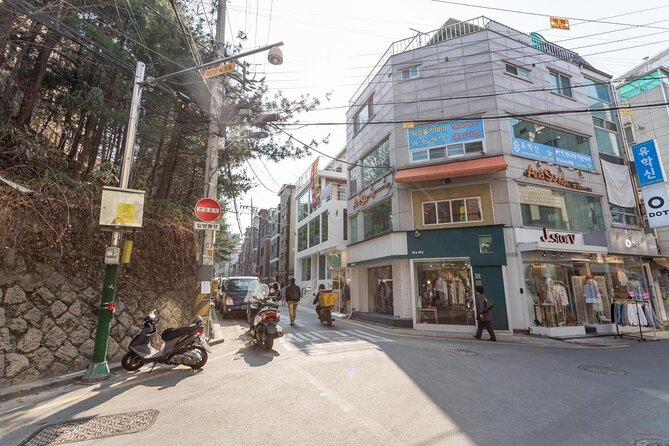
- Mangwon Station meeting setup: Start at Mangwon Station Entrance 2, so you get a clear anchor point for the afternoon.
- Market time with street-food tasting: You learn what to look for in a local market, then snack as you go.
- Small group (max 10): More hands-on help and more time for questions.
- Four made-from-scratch Korean dishes: Not a demo. You cook.
- Hanjeongsik dinner style: You eat the way Koreans do—main dishes plus lots of sides, dessert, and makgeolli.
- Recipe support: Many guests come away with repeatable know-how to recreate the meals at home.
From Mangwon Station to a Real Seoul Kitchen
The experience starts back at street level in Mapo-gu. Your meeting point is 377-20 Mangwon-dong, Mapo-gu, near Mangwon Station Entrance 2, and the whole thing wraps up back at the same meeting point. Expect a total time of about 3 hours 30 minutes, so plan this as a true afternoon block, not something to squeeze between trains.
What I like about this kind of start is how “normal” it feels. You’re not loading into a big bus or a mall restaurant. You’re starting in the neighborhood rhythm of Seoul, then stepping into a home where the cooking happens in a way that’s meant for real life—not performance.
For first-time Seoul visitors, this is also a fast way to build confidence. A market visit with a guide helps you learn what things are called, how people buy them, and what to pay attention to. And because the class is at a local chef’s home, you get practical cooking context right away.
You can also read our reviews of more tours and experiences in Seoul.
Market Adventure: Street Snacks and Ingredient Wisdom
The market portion is the value engine here. You’ll get a guided market visit to learn about street foods and ingredients, and you’ll also learn which herbs and spices show up again and again in Korean cooking. It’s not just a “look around” stroll; it’s a learning walk tied directly to what you’ll cook later.
One of the biggest takeaways from this type of market time is how ingredient names connect to real recipes. Korean cuisine can feel abstract if all you see are finished dishes. Walking through the market with your host turns those flavors into real items—something you can buy and recognize later.
You’ll also sample street food snacks during the walk. Based on guest stories, snacks like kwabaeggi (a popular Korean street snack) and even a honeydew-flavored popsicle can show up as part of the experience, especially when you’re there and it fits the weather. Even if your exact snack mix varies, the point stays the same: you get to taste while you learn, so the later cooking steps feel more obvious.
Practical note: the market is walk-focused, not sit-down. If you’re sensitive to crowds or want lots of resting time, keep that in mind. This is a hands-on, motion-heavy afternoon.
Hands-On Cooking in a Local Home (Not a Studio Show)
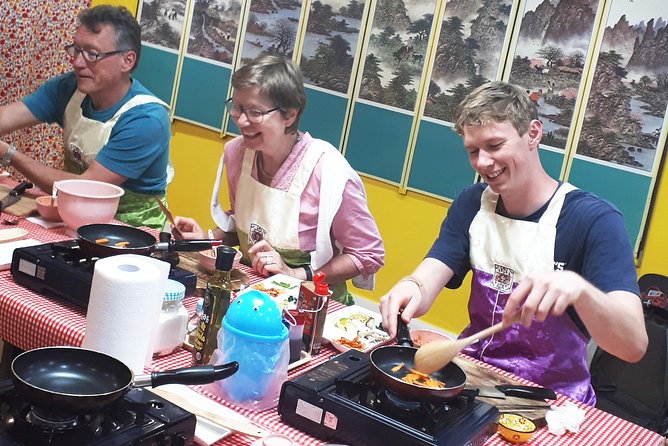
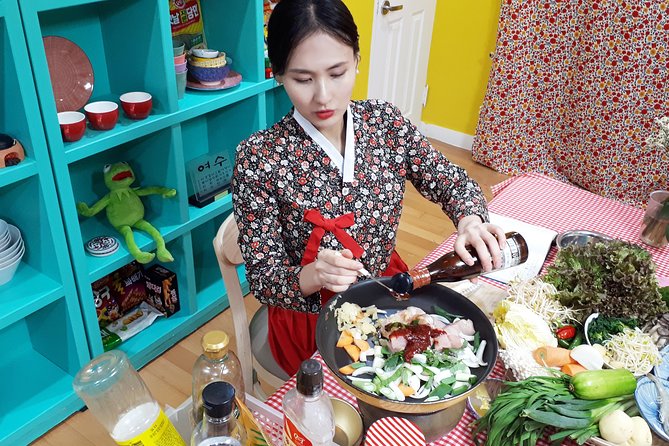
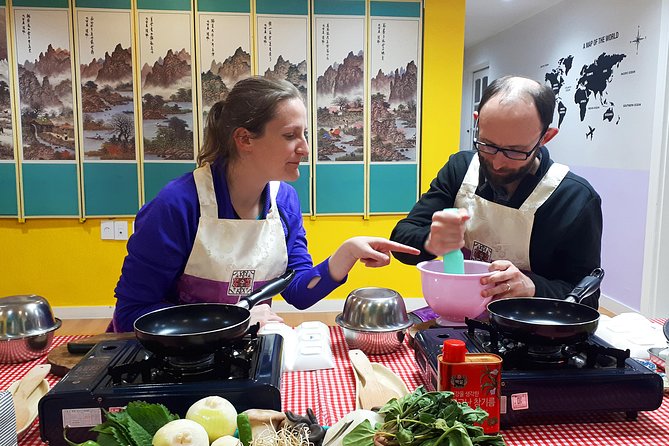
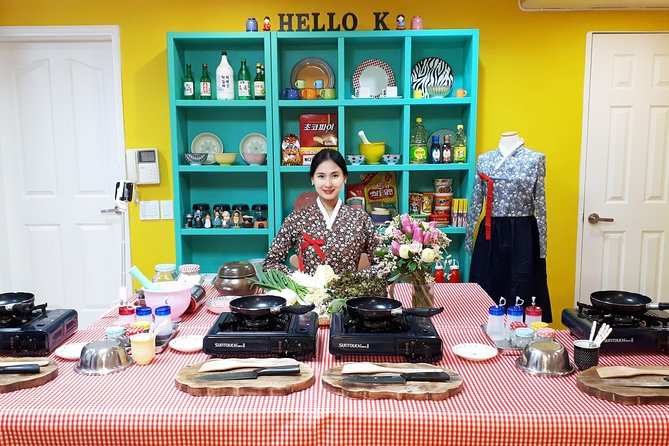
This class happens at a local home, hosted by the chef guiding the whole experience. That matters more than it sounds. In a studio setup, cooking can feel like a classroom. In a home, it turns into a lived-in, real workflow—where timing, knife work, and seasoning choices feel grounded.
You’ll cook in a way that’s 100% hands-on, meaning you’re not watching one person do everything. The group size stays small, up to 10 travelers, so you’re more likely to get direct guidance when your hand is on the pan.
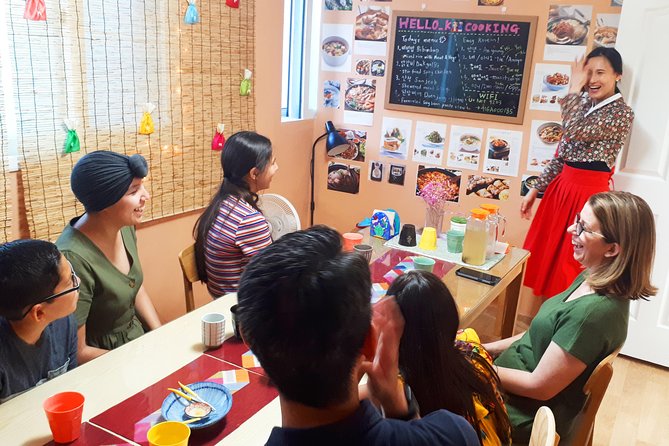
English support is a consistent praise point. Multiple guests highlight that the host speaks clearly, explains techniques well, and keeps the class friendly and interactive. Many also mention picking up basic Korean words and helpful phrases along the way, which you’ll appreciate later when you’re ordering food in Seoul.
Another benefit of a home kitchen: it’s easier to ask practical questions. Not just what to do, but why you do it that way—especially around sauces, side dishes, and seasoning balance.
Four Korean Dishes You’ll Actually Make
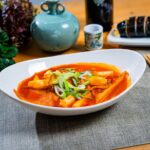
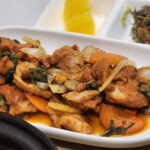
You’ll create four Korean dishes, with examples that can include bibimbap rice and dakgalbi. The exact dish set can vary, but the structure stays consistent: you learn the key technique for each, you participate in the cooking steps, and you leave with repeatable results.
Here’s how to think about the four-dish format. You’re not just cooking one meal and calling it done. You get practice with different flavor patterns and textures—hot-and-savory, fresh-and-herby, saucy-and-comforting. That’s what helps you recreate the food later instead of just repeating a single recipe.
During cooking, you’ll also learn traditional techniques in a clear, approachable way. Guests frequently mention that the class feels easygoing even while teaching real skills, so you don’t have to be a confident cook to participate.
A big plus: since you shop for ingredients first, the later cooking steps feel connected. You’re not guessing what something is or where it came from. You’ve already seen (and tasted) some of the components, so you can focus on how the chef guides the process.
Hanjeongsik Dinner: Over 10 Sides, Plus Dessert and Makgeolli
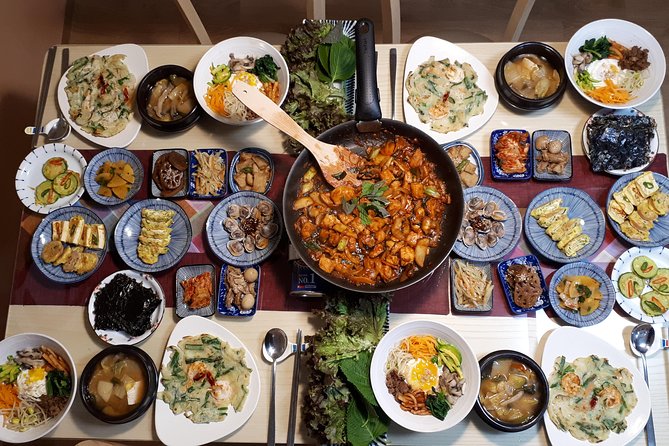
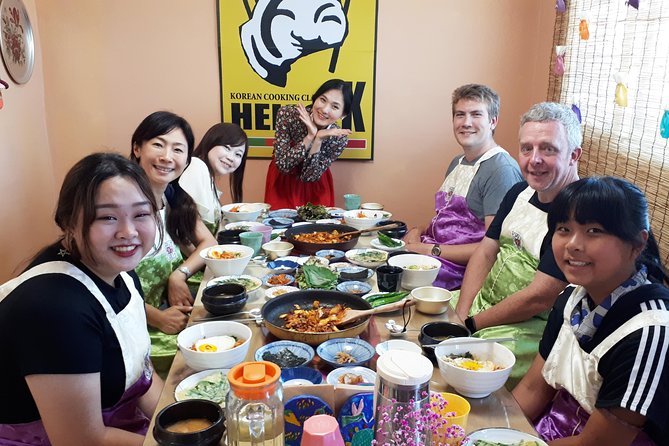
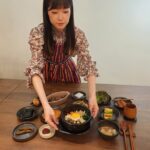
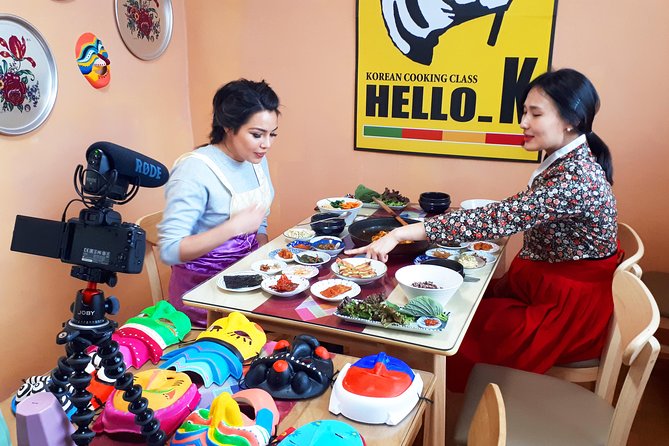
After the cooking, you sit down to eat a traditional hanjeongsik dinner. This is the part many people remember most, because the meal isn’t one plate. It’s a full set: your homemade dishes plus additional sides, and a dessert to close it out.
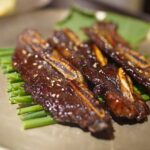
The meal includes over 10 different side dishes. That’s a lot, and it’s also the point. Hanjeongsik dining teaches you that Korean food often isn’t built around one main flavor. It’s built as a set—cool and crunchy alongside savory and hot, mild alongside bold, so your palate stays awake.
You’ll also be served a glass of makgeolli (Korean rice wine). It’s a fun cultural touch, and it pairs naturally with many Korean flavors. If you’re curious about trying it, this is one of the lower-pressure ways to do it because it comes as part of the meal rather than a random bar purchase.
What you should watch for: with a big side spread, you’ll want to pace yourself. Take a small bite of everything at first, then go back for seconds on what you liked most. If you rush, you might miss the contrast between dishes.
What $91 Buys You in Seoul Value Terms
At $91 per person for about 3.5 hours, this is priced like a premium small-group experience—but the inclusions help justify it.
You’re paying for:
- A guided market walk with street food tasting and ingredient education
- A hands-on cooking session that results in four dishes
- A full hanjeongsik-style dinner with over 10 sides, dessert, and makgeolli
- A small-group format (max 10), which tends to mean more help during cooking
If you compare this to a typical ticketed cooking class that only covers one dish, the value becomes clearer. You’re getting the whole arc: ingredient shopping, technique practice, then a meal that looks like Korean dining rather than just a class lunch.
Also, having a host guide you through Mangwon means you’re not spending your time figuring out what to buy and where. That alone can save energy and prevent “market confusion” that first-timers often hit.
Who This Works Best For (And Who Might Skip)
This is ideal if you want a Seoul experience that’s practical and cultural at the same time. You’ll get the most out of it if you like:
- Markets and food shopping
- Cooking with guidance
- Learning ingredient choices, not only recipes
- Eating a variety of small dishes at the end
It also suits families and teens reasonably well, based on how different age groups describe the experience. The class is described as fun, approachable, and interactive, so it doesn’t feel like a stiff lecture.
If you’re someone who hates walking and prefers very structured schedules, you might find the market portion a bit demanding. It’s not extreme, but it is movement-heavy, and the day is built around a steady flow.
My Booking Verdict: Should You Sign Up?
Yes, you should book this if you want more than a “cooking class.” This is a market adventure + home cooking + full hanjeongsik meal in one afternoon. The small group size and the host’s teaching style are repeat praise points, and they matter because hands-on cooking gets better when you can actually ask questions.
I’d especially recommend it if you’re staying in Seoul long enough to want at least one meal you can recreate at home. Cooking four dishes and eating a side-heavy dinner gives you both technique and reference points for flavors.
If you’re tight on time, treat the 3.5 hours as non-negotiable. If you can give it the attention it asks for, you’ll get a satisfying, authentic food story out of it.
FAQ
Where is the meeting point for the class?
The tour meets at Mangwon Station Entrance 2, at 377-20 Mangwon-dong, Mapo-gu, Seoul, South Korea.
How long is the experience?
It runs for approximately 3 hours 30 minutes.
What’s the group size limit?
The group size is capped at a maximum of 10 travelers.
What will I cook during the class?
You’ll create four Korean dishes, with examples including bibimbap rice and dakgalbi.
Do you visit a market and try street food?
Yes. You’ll have a guided market visit, and you’ll sample local street food snacks and learn about ingredients, herbs, and spices.
What happens when it’s time to eat?
You’ll have a traditional hanjeongsik-style dinner featuring your homemade dishes, additional side dishes (over 10), dessert, and a glass of makgeolli.
What’s the price and what’s included?
The price is $91.00 per person, and it includes the market visit, the hands-on cooking class, and the full dinner experience with sides, dessert, and makgeolli.
Can I cancel and get a full refund?
Yes. You can cancel up to 24 hours in advance for a full refund.