REVIEW · SEOUL
Korean Premium & Original Cooking Class Experience in Hanok
Book on GetYourGuide →Operated by O'ngo Food Communications · Bookable on GetYourGuide
Two dishes, one hanok, serious Korean comfort. A cooking class in the Bukchon area gives you a practical way to understand Korean home food—without eating your way through a whole city. You’ll work in a renovated modern hanok studio, led by a professional chef with live English support.
I really liked two things right away: Jia’s clear, step-by-step teaching (plus her humor) and the hands-on format where each person cooks their own food. I also found the class feel friendly and organized, with personal stories woven in to explain why flavors and techniques matter.
One thing to plan around: the room can run cold on arrival, and the class is easy to misunderstand because it’s only two dishes. If you’re sensitive to cold, wear a layer before you even step inside.
In This Review
- Key Things You’ll Notice in This Cooking Class
- A Renovated Bukchon Hanok Studio Where You Can Focus
- Price and Time: What $84 Buys for Two Hours
- The Two-Dish Format (and Why It’s Worth Knowing Up Front)
- Your Start: Chef Instructions, Station Cooking, and English Support
- Bibimbap: Learning the Assembly Logic Behind Korea’s Most Famous Bowl
- Your Second Dish Choice: Jeyuk-bokkeum, Japchae, or Bulgogi
- Jeyuk-bokkeum: Spicy Pork Barbecue with Gochujang Flavor
- Japchae: Non-Spicy Glass Noodle Vegetable Salad
- Bulgogi: The National-Dish Style Beef Marinade
- What the Chef Really Adds (Beyond Just Following Steps)
- Where It Feels Different from a Typical Food Tour
- Timing, Getting There, and Avoiding the Most Common Mistake
- Diet Options and Allergies: How to Make It Work for You
- Who This Class Suits Best (and Who Might Feel Limited)
- Value Check: Is $84 Reasonable for This Experience?
- Should You Book This Cooking Class?
Key Things You’ll Notice in This Cooking Class
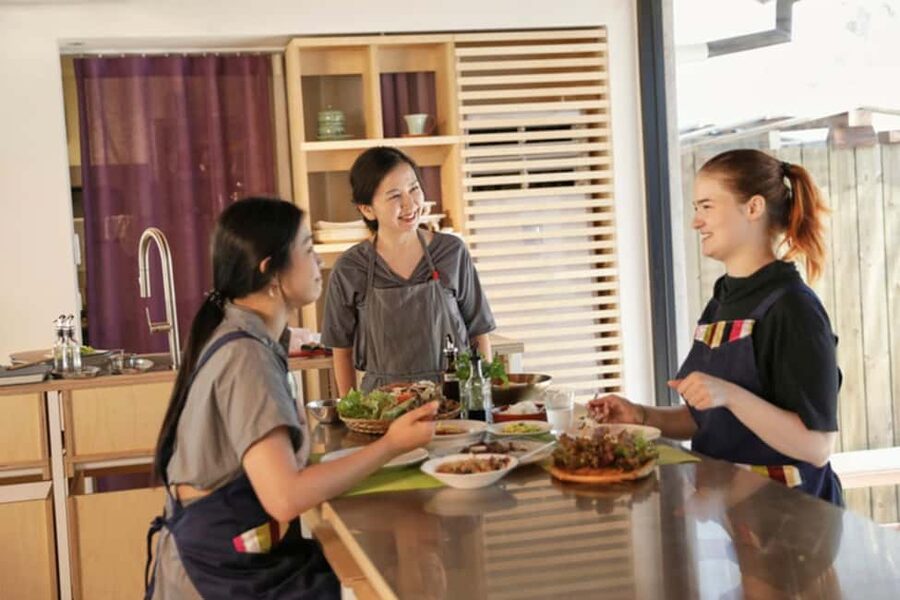
- A modern classroom inside a traditional Bukchon hanok setup, so you get atmosphere without sacrificing practicality
- Two-dish reality check: you cook exactly two dishes, even though the class talks about multiple Korean favorites
- Personal station cooking: you’re not just watching—your own portions are prepared with provided ingredients
- English guidance plus chef expertise: you get both technique and cultural context
- Diet options can be customized, if you tell the team about restrictions and allergies
A Renovated Bukchon Hanok Studio Where You Can Focus
This class takes place in the Bukchon area, in a recently renovated hanok studio. That matters because hanoks have a specific feel—traditional structure, distinct character—while “renovated modern” usually means you can actually see, prep, and cook comfortably.
You meet at O’ngo Food Communications, 137-11 Bukchon-ro, Jongno-gu, Seoul. From there, the group stays together and the class wraps back at the meeting point, which is a nice change from tours that scatter you around the city. If you want an easy Seoul plan, this is the kind of activity that feels controlled and calm.
You can also read our reviews of more tours and experiences in Seoul.
Price and Time: What $84 Buys for Two Hours
At $84 per person for a 2-hour class, you’re paying for a few things that are hard to recreate on your own: a chef-led workflow, provided ingredients, and a guided path to cooking Korean dishes correctly. It’s not a quick demo. You’re making the food yourself and then tasting what you cooked.
Two hours also means you won’t feel stuck in the kitchen for half a day. It’s long enough to learn technique for a couple dishes, but short enough to still fit into a busy Seoul itinerary.
The class runs at starting times you can check for availability. So if you’re picking between morning vs. afternoon, consider weather and your energy level—especially since the studio can feel cold when you arrive.
The Two-Dish Format (and Why It’s Worth Knowing Up Front)
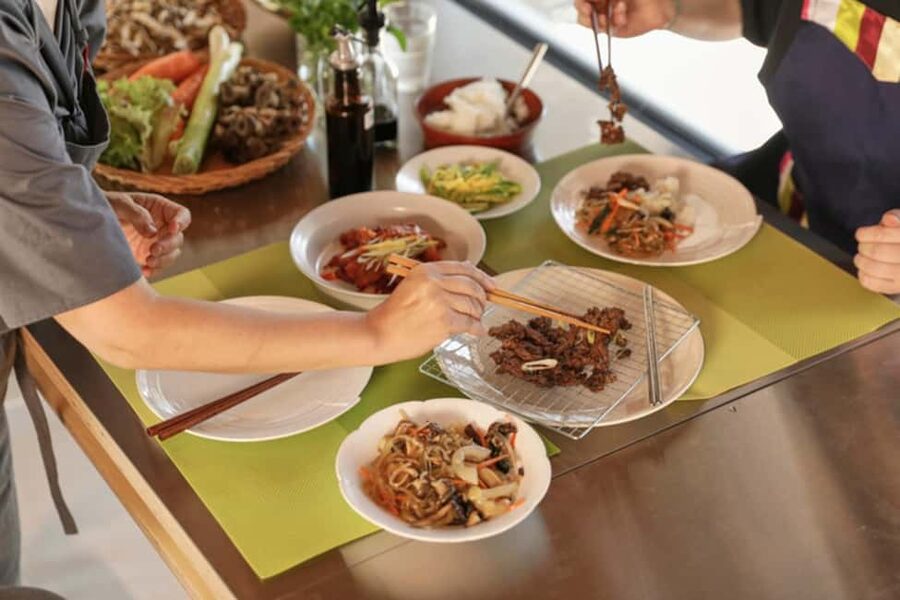
Here’s the key detail: you learn to make two of Korea’s beloved dishes. The class content mentions several favorites—bibimbap, jeyuk-bokkeum, japchae, and bulgogi—but you’ll only cook two during your session.
This is a big deal for planning your expectations. If you’re hoping to leave with skills for every dish listed, you won’t. But if your goal is confidence with a couple classics and the ability to cook them again at home, this setup is actually ideal. Two dishes gives you repetition and time to get the techniques right.
If you’re picky about spice, also pay attention to your second dish choice. Jeyuk-bokkeum is the spicy pork barbecue option described, while japchae is called a non-spicy favorite.
Your Start: Chef Instructions, Station Cooking, and English Support
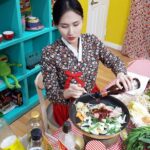
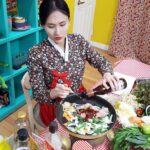
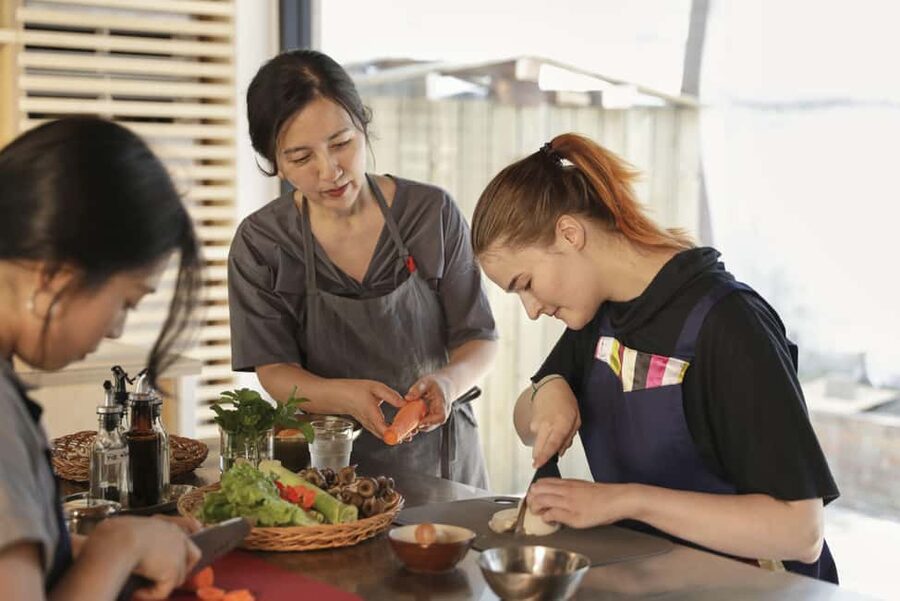
When you arrive, you’ll be in a guided cooking environment led by a professional chef, with a live English tour guide. That’s useful in Korea because even small language gaps can make cooking frustrating—measuring, timing, and seasoning all matter.
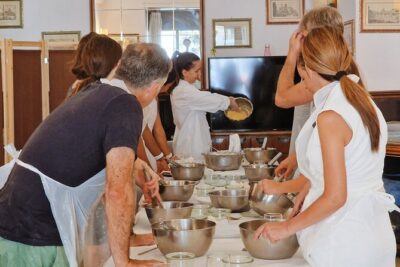
The format is simple: each participant has the ingredients and cooks their own dishes. You don’t just stand back while someone else does the work. That’s one of the reasons this class feels higher value than many “watch and taste” experiences.
Also, you’ll create and taste the dishes you make. Tasting right after cooking is where Korean sauces and seasoning decisions really click. You can immediately connect what you did—how you stirred, how hot the pan was, how the sauce clung—to the final flavor.
Bibimbap: Learning the Assembly Logic Behind Korea’s Most Famous Bowl
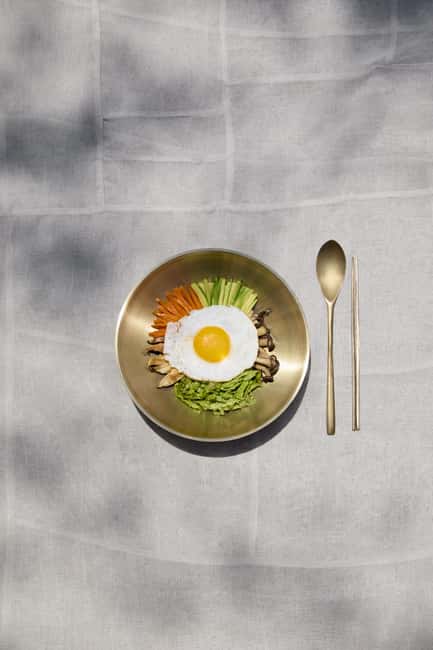
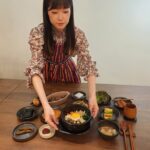
Bibimbap is one of the well-known dishes of Korean cuisine, and it’s a smart first choice. You’ll learn how to build a rice bowl with seasonal vegetables cooked and arranged on top, plus a sunny-side-up fried egg.
What I like about bibimbap as a learning dish is that it teaches you a “system,” not just a recipe. Rice plus vegetables plus egg is a base you can understand and repeat. Once you grasp how the components work together, you can adapt the vegetables at home using what’s in season.
The class description also emphasizes healthy, nutrient-packed preparation. That lines up with what makes bibimbap feel like comfort food with structure—you’re not just eating; you’re learning how balancing flavors and textures is the point.
If you’re someone who likes fresh, varied textures (crunchy veg, soft egg, warm rice), bibimbap will feel satisfying without being heavy.
Your Second Dish Choice: Jeyuk-bokkeum, Japchae, or Bulgogi
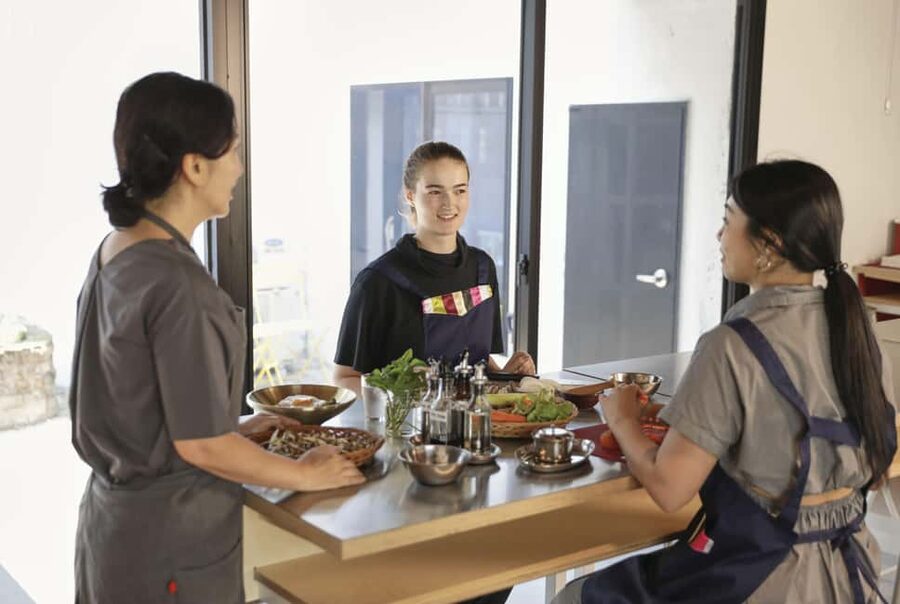
Your other dish is where the class can feel like a personal decision. You’ll choose from options described as the most popular and well-loved Korean staples:
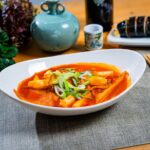
Jeyuk-bokkeum: Spicy Pork Barbecue with Gochujang Flavor
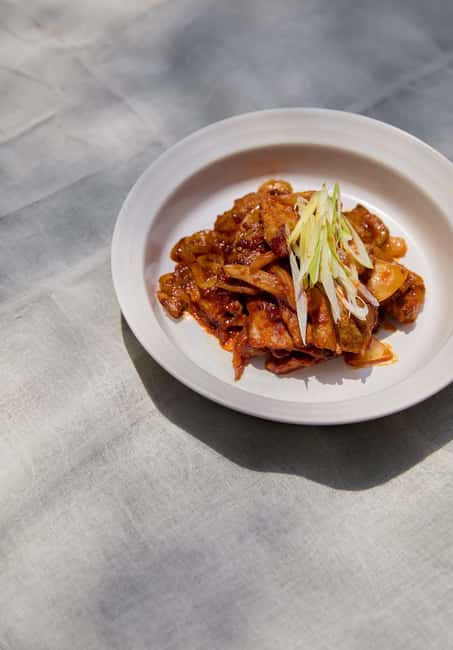
Jeyuk-bokkeum is described as the top customer request, and for good reason. It’s a marinated pork barbecue seasoned with a special gochujang sauce, which brings that deep sweet-spicy flavor Koreans love.
If you like bold heat and savory-sweet sauce, this is the kind of dish that tastes like you ordered it at a restaurant—but you’ll know exactly what steps created that flavor.
Keep in mind: gochujang is spicy, but your class is described as customizable for all diet options if you have restrictions. If spice tolerance is an issue for you, it’s smart to mention it when you share dietary needs.
Japchae: Non-Spicy Glass Noodle Vegetable Salad
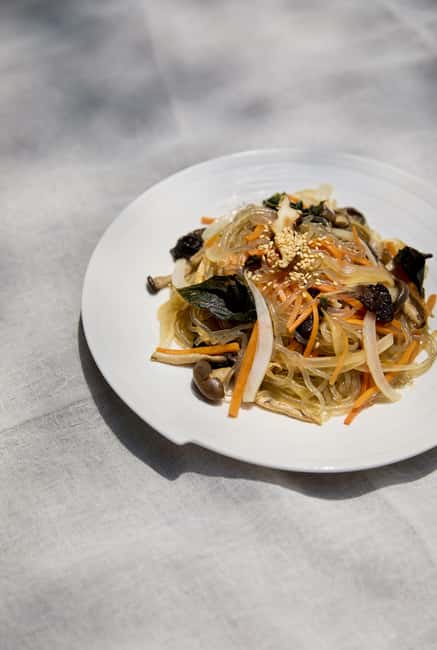
Japchae is presented as a favorite non-spicy dish. It’s made by cooking a variety of vegetables and mixing them with glass noodles to create a salad-like plate.
Why this dish is a great learning option: glass noodles can be tricky if you don’t know what “done” looks like. Japchae also teaches you how vegetables can be cooked and combined so they don’t taste flat. The result is flavorful but not aggressively spicy, so it works for more palates.
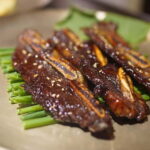
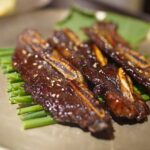
Bulgogi: The National-Dish Style Beef Marinade
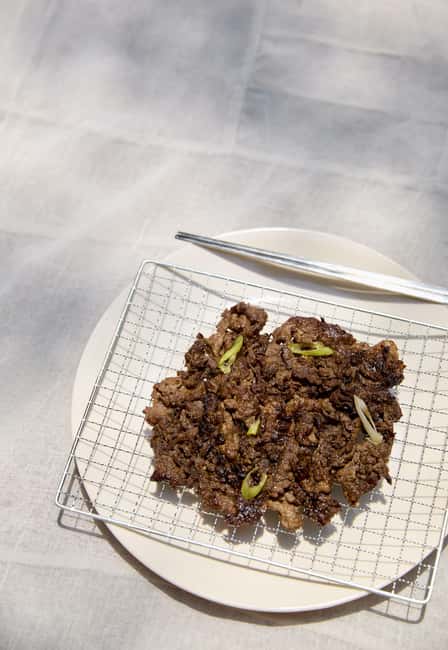
Bulgogi is described as Korea’s national dish, made with thinly sliced prime cuts of beef. The key is the marinade—soy sauce, sesame, and garlic—creating a savory, rich flavor.
This is an excellent pick if you want something that feels familiar but still distinctly Korean. The technique is also transferable: learn the rhythm of marinating and cooking thin slices, and you can adapt proteins later.
What the Chef Really Adds (Beyond Just Following Steps)
The cooking itself is only half the value. The other half is the why—how Korean home meals are prepared and why certain flavor combinations work.
Jia, the master chef from the experience, stands out in how she teaches: clear instructions, precision, and a wealth of background knowledge. She also uses humor and personal stories, which makes the class feel less like school and more like learning from a friendly expert.
Even better, the class includes recipes sent afterward (based on the experience). That turns the session from a fun event into an actual skill you can repeat at home, instead of relying on your memory of what you did.
Practical tip: if you want to cook again later, focus during class on the steps that seemed small—seasoning timing, heat level, and texture targets. Those are usually what get lost when you try to recreate a dish months later.
Where It Feels Different from a Typical Food Tour
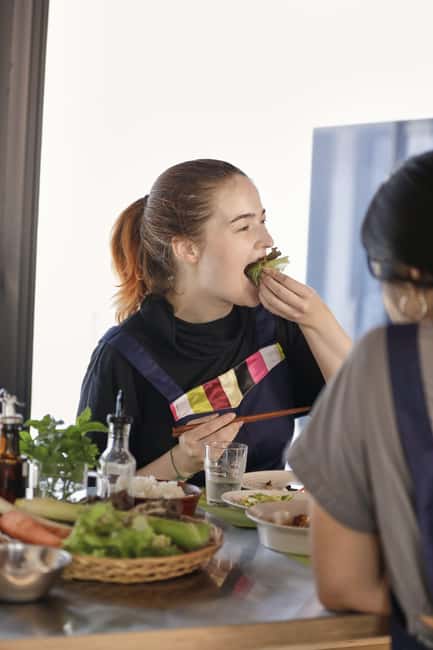
A lot of Seoul food experiences are either sightseeing-heavy or restaurant-heavy. This one is cooking-first, which changes the pace.
Because you cook at your own station, you learn the feel of the process. You understand why someone would stir in a certain way, or why sauce coats some ingredients and not others. That makes Korean food feel less mysterious the next day when you’re ordering outside.
Also, the studio being in Bukchon matters. You’re in a historic neighborhood vibe while still doing something modern and hands-on. It’s a nice contrast that keeps the trip memorable for reasons beyond eating.
Timing, Getting There, and Avoiding the Most Common Mistake
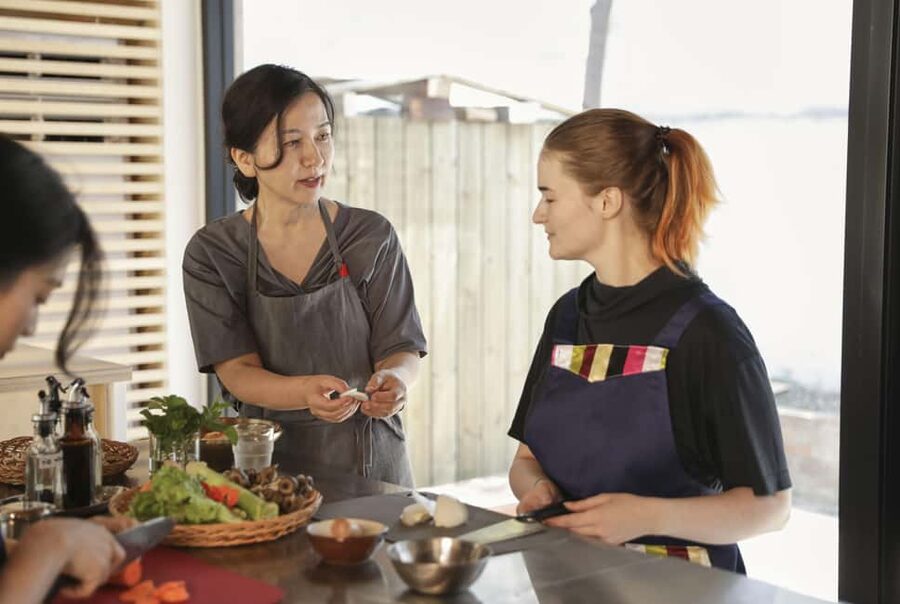
The meeting point is O’ngo Food Communications at 137-11 Bukchon-ro, Jongno-gu, Seoul. Start time depends on availability, and if you’re late, you’re responsible for missing participation in the program.
That’s worth taking seriously because once class starts, there’s no time for delays. Plan to arrive early enough to check in and settle. Also, because the classroom can feel freezing cold when you arrive, dress for that reality—especially if you’re coming from outdoor sightseeing in winter.
If you’re the type who hates rushing, add a buffer. Seoul’s streets are charming, but you still don’t want your first task to be finding the exact studio entrance while you’re already stressed.
Diet Options and Allergies: How to Make It Work for You
The class states that the dishes can be customized for all diet options. It also asks you to tell the team about dietary restrictions and allergies.
That combination is important. It means you’re not just hoping for a “maybe no seafood” situation. You’re supposed to communicate your needs up front so the chef can adjust the dish appropriately.
When you book, make sure you mention:
- allergies you must avoid
- dietary restrictions you follow
- spice tolerance if you’re sensitive
This is especially relevant for dishes like jeyuk-bokkeum (gochujang-based) where flavor profile is built around sauce.
Who This Class Suits Best (and Who Might Feel Limited)
This class is a great fit if you want practical Korean cooking skills quickly. Two hours is ideal for:
- couples or friends who want a shared activity
- solo travelers who like meeting others in a small-group feel
- anyone who prefers learning by doing, not only eating
It’s also a good match if you want dishes that are repeatable at home. Bibimbap and bulgogi especially give you systems you can adapt with different vegetables and proteins.
That said, if you love the idea of cooking every Korean dish listed on a menu, you may feel limited by the two-dish cap. The good news is you’ll leave knowing two dishes well instead of collecting vague knowledge about four.
Value Check: Is $84 Reasonable for This Experience?
For $84, you’re getting:
- a chef-led class
- an English live guide
- provided ingredients
- hands-on cooking where each participant makes their own dishes
- tasting of what you create
- and recipe materials sent afterward (based on the experience)
When I compare that to the cost of eating your way through multiple meals plus paying for cooking knowledge, this feels like solid value. You pay once, learn techniques you can reuse, and you leave with food knowledge that goes beyond what you can get from ordering a dish in a restaurant.
The only real “value risk” is expectation mismatch: you cook two dishes, not all the dishes described. If you go in knowing that, the price feels like it matches the amount of work you’ll do.
Should You Book This Cooking Class?
I’d book it if you want an authentic Korean cooking session in a hanok-style studio and you like learning by doing. The standout strength is the chef’s instruction—Jia’s clear precision, humor, and background explanations—and the fact that you actually cook and taste your own dishes.
Skip it only if you’re very sensitive to cold indoor rooms without layers, or if you specifically want to learn more than two dishes in one go. Otherwise, this is a high-satisfaction way to connect with Korean food culture, not just sample it.
If you can, pick your two dishes thoughtfully (especially if spice is a factor), share your dietary needs clearly, and arrive early so you can enjoy the class instead of fighting the clock.