REVIEW · AGADIR
From Agadir: Cooking Class, and Lunch in Berber Village
Book on GetYourGuide →Operated by Colorful Morocco Tours · Bookable on GetYourGuide
Cooking in a Berber village makes the food feel personal fast—because you’re learning on-site, not just watching from the sidelines. From Agadir, you’ll head toward the Atlas foothills, take in views of almond and palm country, and then get to cook alongside local hosts in a home or cooperative setting.
I especially like two things: the hands-on teaching (you’re actually making the dish), and the warm rhythm of the meal—starting with light mint tea and ending with lunch you prepared yourself. If you’re lucky, you’ll meet a teacher named Fatima, who’s described as organized, patient, and great at keeping the class relaxed and fun.
One thing to consider: the “village” experience may be more focused on a women’s cooperative house and an herb/spice garden than on a long wander through typical village streets. Also, the day is time-friendly, not slow and lingering, so plan to savor it rather than expect extra free time after lunch.
In This Review
- Quick hits before you go
- Why this Agadir-to-Berber cooking class is such a smart day trip
- The morning drive out of Agadir: Atlas foothills and the view factor
- Mint tea welcome: what you’re actually learning before the stove
- The Berber cooking class: make lunch, not just watch it
- Lunch: eating what you made, with the right kind of atmosphere
- The post-lunch village stroll: what you may see (and why it’s still worth it)
- Price and value: is $48 fair for pickup, cooking, and lunch?
- Who should book this cooking class from Agadir?
- Should you book this Berber village cooking day trip?
- FAQ
- How long is the cooking class and Berber village lunch tour from Agadir?
- Where does this experience take place?
- What is the price per person?
- Does the tour include pickup and drop-off from Agadir?
- What language is the guide available in?
- Is lunch included, and do you get drinks?
- Do you get mint tea during the visit?
- Is there any kitchen participation, or is it just a demonstration?
- Is there free cancellation?
Quick hits before you go
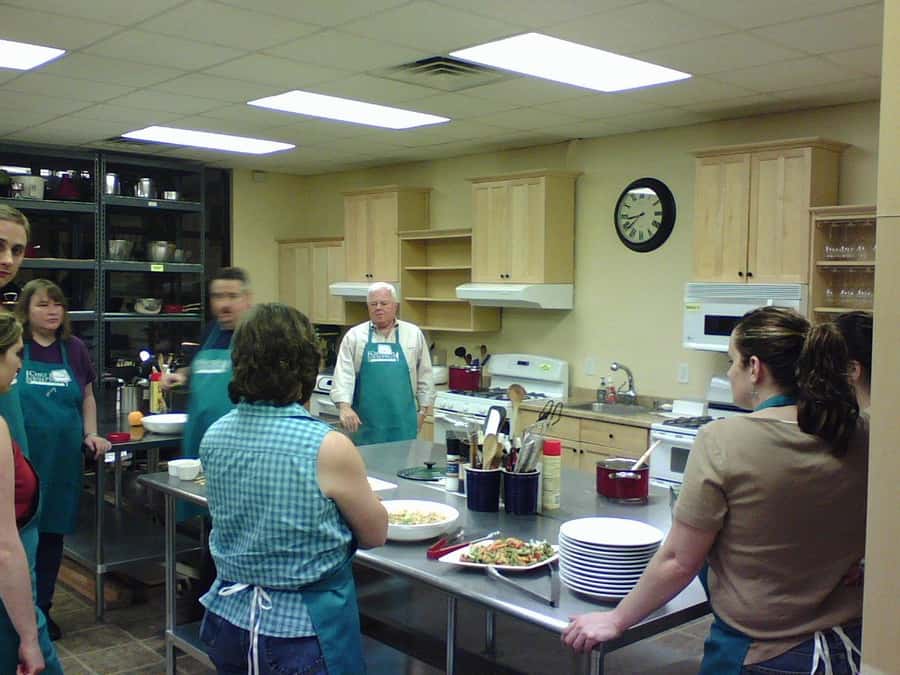
- Mint tea welcome with a light, comforting pause before you cook
- Atlas foothills drive through almond and palm country toward the High Atlas region
- Hands-on Berber lunch where you learn local technique, not just steps
- Clay cooking influence (many dishes are finished in traditional earthenware)
- Gardens and cooperatives may play a bigger role than you’d picture from the word village
Why this Agadir-to-Berber cooking class is such a smart day trip
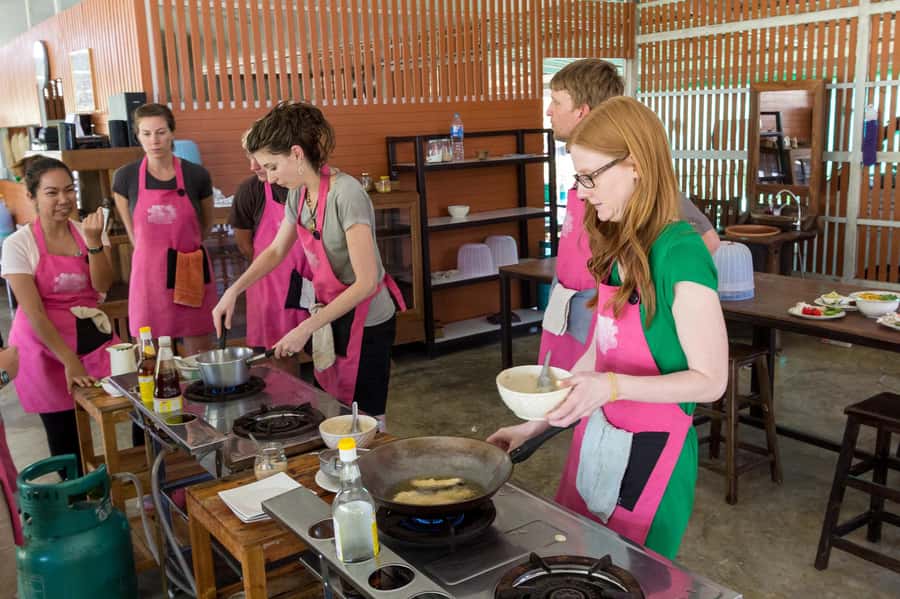
This is the kind of tour that fits real travel life: you get pickup from Agadir, you’re back after lunch (with a full meal taken care of), and the main activity is practical. Instead of collecting facts, you collect skills—how ingredients behave, how to season, and how Moroccan cooking often starts with technique and timing more than strict recipes.
What makes it especially satisfying is the sequence. You don’t jump straight into cooking. You first arrive to a Berber home or cooperative space, you’re welcomed with mint tea, and then you cook. That order matters. You start to understand the food as part of daily life, not as a performance for tourists.
And yes, it’s good value for the basic package: guide, lunch, drinks, and hotel pickup and drop-off are included. For $48 per person, you’re paying for transportation + a guided cultural meal experience, not just a cookbook session.
The morning drive out of Agadir: Atlas foothills and the view factor
Your day begins with hotel pickup in Agadir, then a morning ride into the foothills toward the High Atlas region. The area is described as mountainous and dry, with stretches of almond trees and palms—so even before you arrive, you get that shift from coastal pace to mountain pace.
Why this matters: a cooking class can feel “small” if you’re stuck indoors the whole time. Here, the drive gives your brain a reset. You’re physically in the region where the ingredients and cooking habits make sense—olive oil, herbs, spices, and the kind of slow, steady home-cooking rhythm people rely on in rural areas.
Timing-wise, you reach the village area by mid-morning. That means you’re not cooking at 9 p.m., and you’re not rushed by a late start either. It feels like a real morning event.
Mint tea welcome: what you’re actually learning before the stove
You’ll visit a Berber house or cooperative space and be served light mint tea. It sounds simple, but this first stop sets the tone for the whole experience: you’re meeting hosts, taking a seat, and getting a quick cultural primer through everyday hospitality.
What you can do with this moment:
- Watch how the tea ritual is explained or demonstrated.
- Use the tea break to ask basic questions about ingredients and daily cooking.
- Take a beat. People often forget this on tours, but tea makes you calmer—and you’ll need calm once hands are going into prep work.
If you get a host like Fatima (a name that shows up often), expect clear organization and gentle guidance. The tea stop isn’t just a perk; it’s part of how the class stays relaxed and friendly.
The Berber cooking class: make lunch, not just watch it
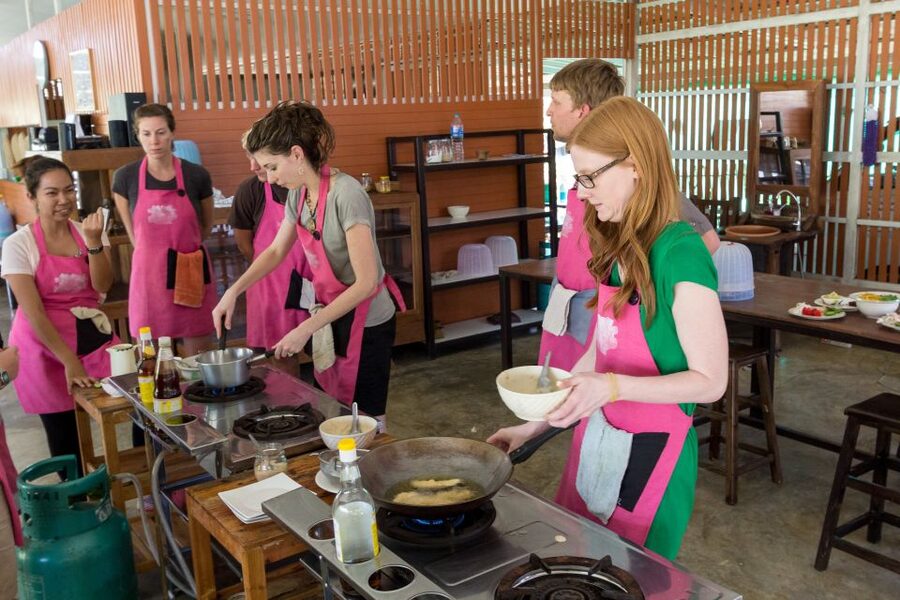
This tour’s core is a hands-on cooking class where you learn traditional Berber cuisine and help prepare the lunch. You’ll work with your host to make a Moroccan meal, commonly involving a tajine-style dish and finishing techniques that reflect local cooking habits.
A few practical notes on what “hands-on” usually means here:
- You’ll do real prep tasks (not just stand near a cutting board).
- You’ll get guidance on seasoning and how to assemble components.
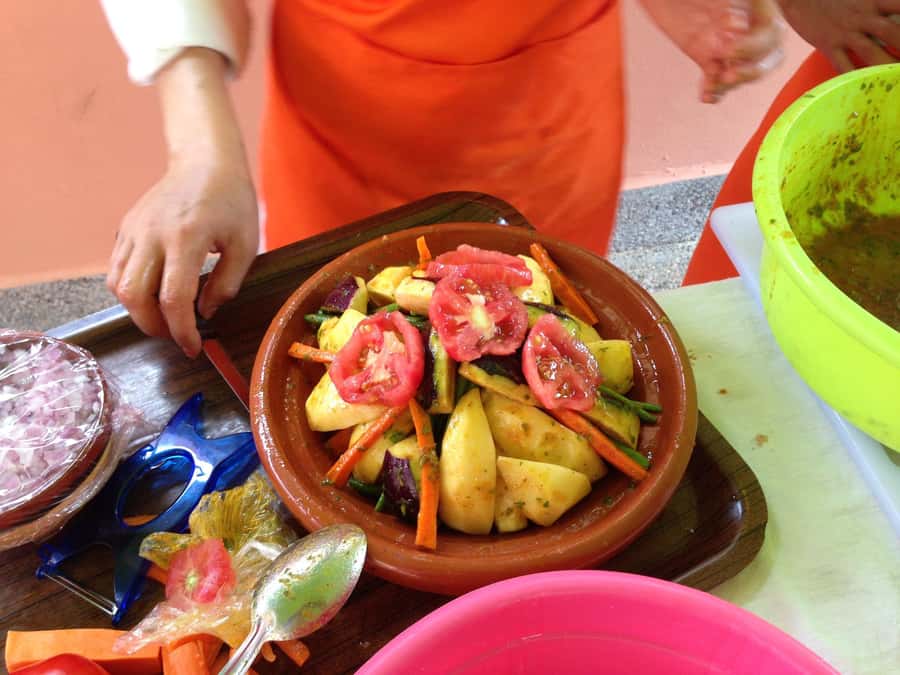
- Cooking happens in a way that reflects tradition, including the use of earthenware/clay style methods in some setups.
One review mentions preparing a tajine with women from a Berber cooperative and tasting it afterward in a peaceful setting. Another highlights delicious results thanks to fresh ingredients and a traditional clay cooking method. Even if your exact dish varies, the theme stays the same: you’ll leave knowing what you did and why it tastes the way it does.
Don’t expect a rushed, industrial “class for crowds.” The best part of these experiences is the small-scale feel: someone corrects your technique, someone answers your questions, and someone makes sure you’re not lost. That’s why teachers like Fatima are so highly praised—clear instructions, patience, and a relaxed pace.
Lunch: eating what you made, with the right kind of atmosphere
After cooking, you sit down to enjoy the lunch you helped prepare, with drinks included. This is one of the biggest wins of the day. A lot of cooking experiences turn into: cook for an hour, stand around for another hour, eat something else later. Here, you eat the results, while the food is still connected to the lesson.
You’ll also often get a peaceful setting—sometimes described as an airy terrace or garden-view environment. That matters more than it sounds. When lunch happens in a calm place, you notice flavors better. You also absorb the “order” of the meal: tea first, then food, then a slow wrap-up that feels like you’re leaving after a real visit, not after a timed performance.
If you have dietary restrictions, you should double-check with the provider when you book (the tour info doesn’t specify dietary customization). Because the experience is traditional and ingredient-driven, it may not be fully flexible on the fly.
The post-lunch village stroll: what you may see (and why it’s still worth it)
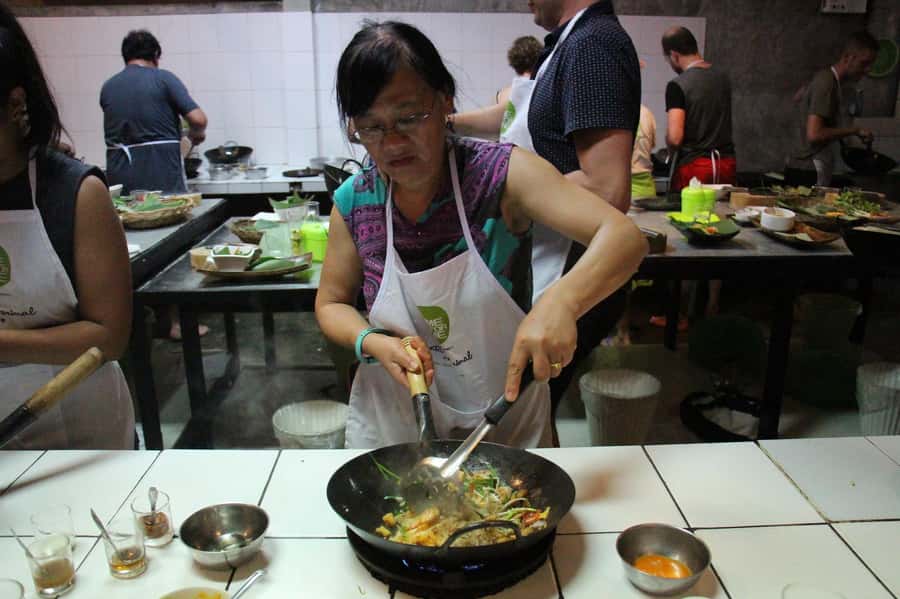
After lunch, you stroll around the village area with your guide. This is where the experience can vary slightly from what you picture at home.
Some people expect a broad village tour—houses, streets, and daily scenes. Based on what’s described, you might instead find that the visit focuses more on a women-run cooperative (often in a couple of larger houses), along with a store selling herbs and cosmetics and an herb/spice garden. In a sense, that’s not a downgrade—it’s a more direct look at how work, skills, and local products connect.
Here’s how to make the most of this walk:
- Treat it as a “context tour.” You’re seeing the environment that supports the cooking—herbs, spices, and the places where knowledge is preserved and shared.
- Ask questions about what’s grown and how it’s used.
- If time feels short, don’t fight it. The day is built around the cooking and meal more than the walking segment.
Also, keep in mind one scheduling reality: the tour runs about 5 hours, so the post-lunch wander is not long. If you’re hoping for a long, slow village hangout, you might wish there were more time. But if you want an efficient, value-packed cultural meal day, it works.
Price and value: is $48 fair for pickup, cooking, and lunch?
At about $48 per person for a 5-hour tour, the value is surprisingly solid because you’re not just buying a seat in a kitchen.
You’re getting:
- Hotel pickup and drop-off in Agadir
- An English or French-speaking guide
- Lunch and drinks
- The cooking class itself, hosted in a Berber village/cooperative context
If you were to recreate this on your own—transportation plus paying for a local guide plus arranging a cooking lunch—you’d likely spend more time and more money. The main “cost” you’re paying with this tour is comfort with structured timing. You don’t control the schedule. The payoff is that everything is set up for you.
So who benefits most from this price?
- Food-focused travelers who want to learn technique and take something practical home.
- People who want a guided cultural meal without the hassle of planning.
- Short-on-time visitors in Agadir who still want a countryside experience.
Who should book this cooking class from Agadir?
Book it if you want an experience that feels hands-on and human, with a clear reward at the end: you cook, you eat, and you understand the food better than you would from a restaurant meal.
It’s a great match if you’re:
- Interested in Berber culture through daily life and cooking
- Happy to spend a few hours outside town and then return the same day
- Looking for an organized class with a relaxed teacher who explains clearly
It may not be the best fit if:
- You want a long, free-form village exploration with lots of wandering time
- You’re expecting a huge “see everything” tour with multiple stops beyond the cooking and the immediate area
- You need very specific dietary accommodations (the tour details don’t promise customization)
Should you book this Berber village cooking day trip?
I’d book it if your priority is learning Moroccan cooking in a Berber setting and getting lunch handled for you. The strongest signals here are the teaching quality and the fact that you eat what you cook. Teachers like Fatima, described as organized and patient, make a big difference when the day is short and you want to feel confident at the stove.
If you have a flexible travel style and you’re happy with a structured 5-hour day, this is a smart way to add real food culture to your Agadir trip. Just go in expecting a focused experience—tea, cooking, lunch, and a short walk—rather than a long village immersion day.
FAQ
How long is the cooking class and Berber village lunch tour from Agadir?
The tour runs for about 5 hours.
Where does this experience take place?
It takes place in the Souss-Massa region of Morocco, in the Berber village area in the Atlas foothills.
What is the price per person?
The price is listed as $48 per person.
Does the tour include pickup and drop-off from Agadir?
Yes. Hotel pickup and drop-off are included.
What language is the guide available in?
The guide is available in English or French.
Is lunch included, and do you get drinks?
Yes. Lunch and drinks are included.
Do you get mint tea during the visit?
Yes. You’ll enjoy light mint tea as part of the experience.
Is there any kitchen participation, or is it just a demonstration?
It’s a hands-on cooking class, and you help prepare a traditional Moroccan lunch.
Is there free cancellation?
Free cancellation is available up to 24 hours in advance for a full refund.