REVIEW · TOKYO
Japanese Cooking Class for Vegans
Book on Viator →Operated by Miwa's Japanese cooking class · Bookable on Viator
You learn Japanese cooking, minus the tourist script. In this private Shinagawa home class, Miwa tailors a vegan or vegetarian menu for you and your dietary needs, then you cook and eat lunch together without rushing.
I also love the hands-on teaching style: you’re not just watching. Miwa explains ingredients and steps clearly, and she builds the class around your questions—yes, even for kids and picky eaters. A possible consideration is the price: at $705.86 per person for a 2–3 hour experience, it’s best when you want one-on-one attention and a full meal, not a quick snack tour.
In This Review
- Key things that make this class worth it
- A Private Vegan Japanese Cooking Class in Shinagawa
- Meeting at Musashikoyama Station (Tokyu Meguro Line)
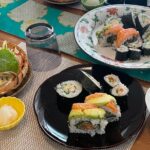
- What You’ll Cook: Vegan Sushi Plates, Tofu Courses, and Home Dishes
- Inside Miwa’s Kitchen: How the Class Feels
- The 3-Course Vegan Lunch You Actually Get to Eat
- Musashikoyama’s Local Lifestyle: Why the Neighborhood Matters
- Family-Friendly Teaching for Kids (and Adults Who Like Questions)
- Dietary Customization Is the Real Superpower
- Price and Value: When $705.86 Per Person Makes Sense
- Timing Tips for a 10:30am Start in Tokyo
- Should You Book Miwa’s Japanese Cooking Class?
- FAQ
- Where does the vegan cooking class start?
- What time does the experience begin?
- How long is the cooking class?
- Is this a private tour?
- What dietary options are available?
- What dishes might I cook?
- What’s included in the price?
- Is transportation provided?
- How soon do I get confirmation after booking?
- What’s the cancellation policy?
Key things that make this class worth it
- A truly private format where you can ask questions and adjust dishes on the fly
- Vegan-friendly options like vegan sushi plates and a tofu-focused course
- A local home base in Shinagawa, plus the Musashikoyama shopping arcade vibe
- Clear, step-by-step teaching with roles during cooking, not just a lecture
- Lunch is included as a full 3-course meal, with food tasting built in
A Private Vegan Japanese Cooking Class in Shinagawa
Tokyo has cooking classes. This one has something more useful: private time with Miwa, in a local neighborhood home setting. The goal is simple. You’ll learn an easy, healthy Japanese food style using vegetarian or vegan ingredients, then you’ll sit down and eat what you made.
What makes this feel different is how personal it can get. Miwa customizes the recipe for vegan, vegetarian, and other dietary preferences (including options with meat and fish if that’s your group’s request). If your diet is strict, that matters. If you’re traveling with mixed eaters, that also matters. You’re not stuck with one fixed menu.
You can also read our reviews of more tours and experiences in Tokyo.

Meeting at Musashikoyama Station (Tokyu Meguro Line)
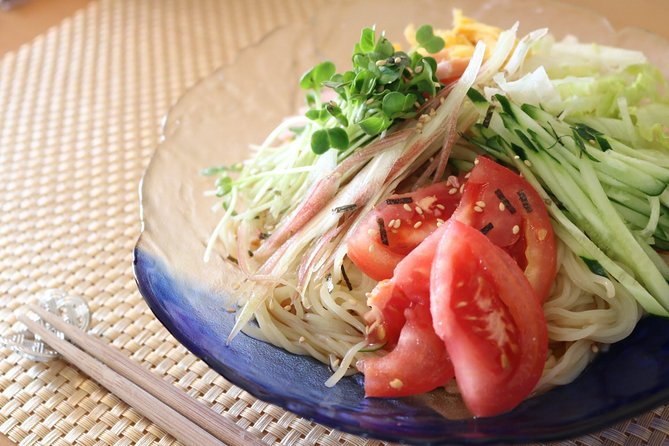
The meeting point is at Musashikoyama Station on the Tokyu Meguro Line. If you’re using transit in Tokyo, this is a nice setup because stations are easy to navigate compared with meeting points in deep residential backstreets.
You start at 10:30am, and the activity ends back at the meeting point. Expect the rhythm to be local and calm. This is not a hop-on, hop-off experience. It’s a food day built around one host, one kitchen, and one shared meal.
If you’re the type who likes to do a little pre-walk exploring, Musashikoyama has a useful bonus: Miwa mentions Musashikoyama as home to the longest shopping arcade in Japan. Even if you don’t go far, seeing that kind of everyday street life helps your brain shift from sightseeing mode into food mode.
What You’ll Cook: Vegan Sushi Plates, Tofu Courses, and Home Dishes
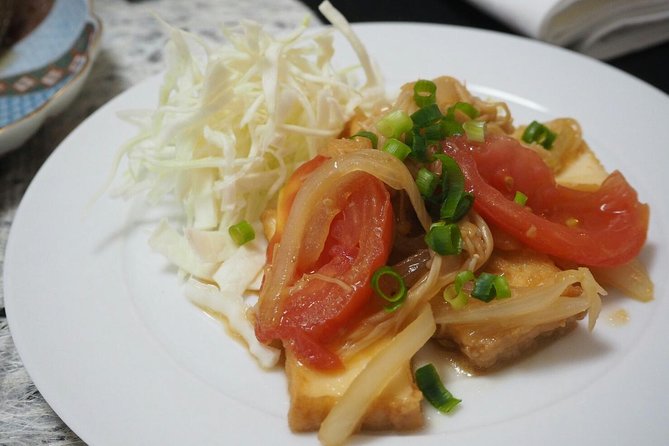
You’ll cook Japanese dishes adapted to your diet. The menu options include:
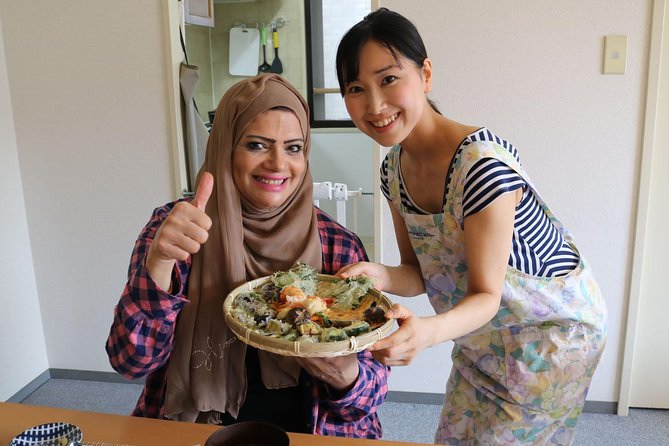
- Vegan sushi plates
- Vegan Japanese home-made dishes
- Vegan kids plate
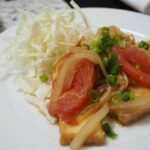
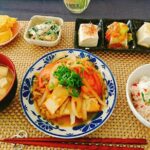
- Vegan tofu course
You can also request custom recipes. One of the most practical things about that is control. If you come hoping to learn a specific dish—something you can actually recreate later—this format gives you a better shot at getting it than standard group classes.
A tofu-focused course is especially smart in a vegan context, since tofu is one of the easiest ways to build Japanese flavor and texture without relying on meat or fish. And vegan sushi plates are a fun skill set too: sushi in Japan isn’t always complicated, but it does teach technique and assembly in a way you can repeat at home.
Inside Miwa’s Kitchen: How the Class Feels
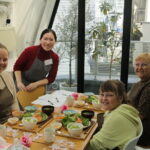
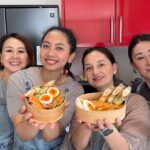
This is where the class earns its high rating. Miwa teaches in a way that keeps the room moving and makes you feel like you belong in the process.
From what you can expect:
- Miwa explains ingredients and where to find them.
- You cook step by step, with clear guidance.
- You’re given roles during the prep, so everyone participates.
That last part sounds small, but it changes everything. If you’re paying for a cooking class, you want skill, not just a meal. When you get a job in the kitchen—mixing, prepping, assembling—it sticks in your memory. You also leave with practical knowledge: what to do, what order to do it, and what to watch for when you’re cooking again later.
Miwa is also described as friendly and easy to talk with, and she takes time to explain. If you’re traveling solo or with kids, that matters. You don’t have to perform or pretend you understand everything. You can ask real questions, and she’ll answer in a way you can use.
The 3-Course Vegan Lunch You Actually Get to Eat
The included meal is a 3-course lunch, plus food tasting. That means you’re not just tasting one bite here and there. You’ll eat the results as you go (or right after cooking, depending on how your class runs).
This is a big value point. Many “demo-style” cooking classes give you a few samples and call it a day. Here, the experience is built around sitting down together after you cook. You’ll also get food tasting as part of the session, which helps you learn the flavor logic behind the dishes—not just how to make them.
There’s also something calming about lunch that’s planned and fresh. In the middle of Tokyo touring, it’s easy to eat something fast and forget it. This kind of meal anchors your day. Plus, since it’s designed for vegan or vegetarian ingredients, you can treat the menu as something you can recreate without guesswork.


Musashikoyama’s Local Lifestyle: Why the Neighborhood Matters
The address for the experience is 3-chōme-4-9 Koyama, Shinagawa City, Tokyo 142-0062, Japan. That’s a residential feel, not a “look at the skyline” postcard zone. And that’s exactly why it works.
Miwa’s base in Musashikoyama connects the class to real daily life. You’re not only learning recipes; you’re picking up how Japanese people think about ingredients and shopping—because you’re in a neighborhood where that rhythm exists every day, long before tourists arrive.
Even if you don’t spend extra time exploring, the context helps. It makes the cooking feel less like a staged performance and more like something you could do again at home.
Family-Friendly Teaching for Kids (and Adults Who Like Questions)
This class is family-friendly, and kids are welcome. There’s one rule: children must be accompanied by an adult.
What I like about that setup is that there’s a specific option for younger diners: a vegan kids plate. That signals the class is thought through, not improvised. If you’ve ever been stuck at “kid-unfriendly” food experiences in a foreign country, you know how exhausting that can be.
Also, private teaching means kids can ask questions without slowing down a big group schedule. Miwa’s teaching style is described as calm and friendly, with clear explanations—exactly the kind of atmosphere where kids can participate instead of just waiting.
Dietary Customization Is the Real Superpower
A lot of cooking classes say they can adapt. This one actually has that built into the format.
Miwa customizes recipes for:
- Vegan
- Vegetarian
- And other preferences (including meat and fish if requested for someone in your group)
That flexibility is useful in two common scenarios. First: you’re strictly vegan and you want confidence that the food fits your needs. Second: you’re traveling with mixed diets—maybe one person vegan, another vegetarian, maybe someone else wants something different.
If you’re the decision-maker for a group, this matters. You can choose dishes that align with your whole party instead of doing mental math about what everyone can eat.
Price and Value: When $705.86 Per Person Makes Sense
Let’s talk numbers in plain language. $705.86 per person is not cheap for a 2–3 hour cooking class.
So when does it feel worth it?
- When you want private attention (instead of a shared class where you’re watching more than cooking).
- When you care about diet tailoring and want a menu built for vegan/vegetarian preferences.
- When you want a real meal: a 3-course lunch with food tasting included.
- When you want to learn how to cook in a way you can repeat at home, not just eat once in Tokyo.
If your goal is budget-friendly sightseeing food, this may feel steep. But if your goal is skills, guidance, and a stress-free lunch that actually fits your diet, then the price can make sense. You’re buying instruction time plus ingredients plus a meal, in a local setting with a real host.
Timing Tips for a 10:30am Start in Tokyo
Starting at 10:30am is a smart slot for a cooking class, because you’re not hungry enough to be distracted but you’re also not stuck waiting all day. It also helps you dodge the late-afternoon “what do we eat” scramble.
One practical thing: plan your day so you can arrive ready to cook. That means:
- Wear comfy shoes. Station meeting points can involve stairs and short walks.
- Give yourself a little buffer. Tokyo transit is efficient, but it’s still Tokyo.
- Keep your afternoon flexible. Once you’ve eaten a full lunch, you may want a slower pace.
Because the experience ends back at the meeting point, you can continue your Tokyo plans without needing an extra transfer plan right after a meal.
Should You Book Miwa’s Japanese Cooking Class?
Book it if you want an actual meal and real teaching, in a private setting, with dishes designed around vegan or vegetarian ingredients. This is especially worth it when:
- Your group wants customization (not one fixed menu).
- You want skills you can repeat at home, not just photos.
- You’re traveling with kids and want a vegan kids option.
- You prefer a local neighborhood experience over the tourist circuit.
Skip it if you’re trying to keep costs low or you only want a quick taste of Japanese food. With a 2–3 hour format focused on cooking and lunch, it’s a commitment to the class—not a casual add-on.
FAQ
Where does the vegan cooking class start?
The class meets at Musashikoyama Station (Tokyu Meguro Line). The activity ends back at the meeting point.
What time does the experience begin?
Start time is 10:30am.
How long is the cooking class?
The duration is about 3 hours (with classes noted as 2–3 hours).
Is this a private tour?
Yes. It’s a private tour/activity, so only your group participates.
What dietary options are available?
The class uses vegetarian or vegan ingredients and can be customized for vegan, vegetarian, and other dietary preferences (including options with meat and fish if requested).
What dishes might I cook?
Examples include Vegan Sushi plates, Vegan Japanese home-made dishes, Vegan kids plate, and a Vegan Tofu course. Recipes can also be customized on request.
What’s included in the price?
Included are a 3-course lunch and food tasting.
Is transportation provided?
No. Transportation to and from attractions is not included.
How soon do I get confirmation after booking?
Confirmation is received within 48 hours of booking, subject to availability.
What’s the cancellation policy?
You can cancel for a full refund if you cancel at least 24 hours before the experience’s start time. If you cancel less than 24 hours before, the amount paid won’t be refunded.
If you want, tell me your group size and whether you’re strictly vegan or mixed diets. I can suggest which dish types (sushi plates vs tofu course vs home dishes) tend to match different tastes.