REVIEW · TOKYO
Japanese Cooking class in Tokyo
Book on Viator →Operated by Morimi's Home Kitchen · Bookable on Viator
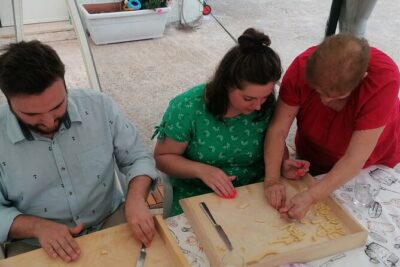
Dinner turns into a skills lesson in Tokyo. This Japanese cooking class in Setagaya puts you in Morimi’s Home Kitchen for a 3-hour, hands-on lesson built around real home techniques, starting with dashi. You’re not just watching someone cook—you’re learning the building blocks behind Japanese flavor.
I like that the class teaches method, not just recipes. You’ll practice traditional tools like the suribachi mortar and the oshizushiki pressed-sushi mold, then learn how to cook rice using a regular pot. I also like that you get English recipes so you can recreate what you make after you’re back in your own kitchen.
One thing to consider: it’s in a residential neighborhood, so you’ll want to plan how you’ll get there. Pickup is offered, but private transportation isn’t included, and your chosen course may include meat or seafood, so you should flag dietary needs early.
In This Review
- Key things worth knowing
- Morimi’s Home Kitchen in Setagaya: A Real Home Setup
- The Core Skill: Dashi and Rice (Your Future Self Will Thank You)
- Pick Your Course: Tofu, Sushi, or Curry (And What Each Really Teaches)
- Tofu Course: A Plant-Based Class That Still Feels Like Japanese Home Cooking
- Sushi Course: Temari Sushi and Pressed Sushi with Real Tools
- Curry Course: Tonkatsu Curry, Ebi Fry, and Japanese-Style Comfort
- The Tools Lesson: Suribachi and Oshizushiki Make It Stick
- What the 3 Hours Look Like (A Smooth Flow, Not a Food Marathon)
- Lunch, Tea, Optional Sake, and Wagashi: Small Extras with Big Mood
- Dietary Needs and Allergies: Tell Them Early for Peace of Mind
- Price and Value: Why $71 for 3 Hours Can Actually Be Worth It
- Who This Class Suits Best (And Who Might Want Another Option)
- Should You Book Morimi’s Japanese Cooking Class?
- FAQ
- How long is the Japanese cooking class in Tokyo?
- What time and where does the class start?
- What course options are available?
- Does the class offer vegetarian, vegan, or gluten-free options?
- Is pickup available, and what transport is included?
- What’s included in the price?
Key things worth knowing
- Choose your course: Tofu, Sushi, or Curry, each with a different cooking focus.
- You build flavor first with dashi and then apply it to rice and dishes.
- Traditional tools are part of the lesson, not a photo-op.
- English recipes are included, so the skills travel home with you.
- Optional add-ons like sake and wagashi can turn lunch into a mini celebration.
Morimi’s Home Kitchen in Setagaya: A Real Home Setup
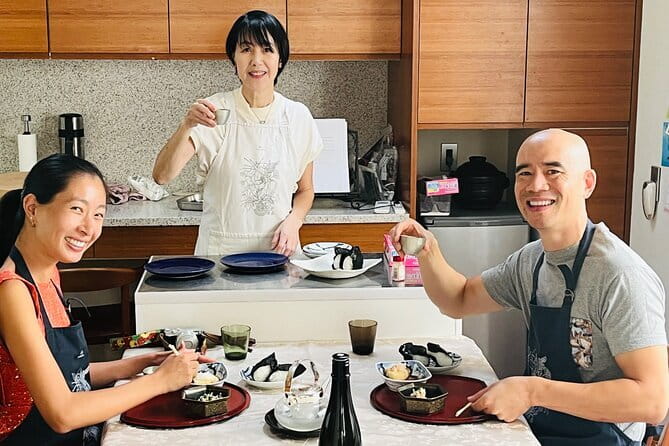
Tokyo has cooking classes everywhere, but this one is different because it’s done at Morimi’s Home Kitchen, not a big, anonymous studio. The setting is intimate and practical, which matters because Japanese cooking is detail-driven. When you learn in a calmer home-style space, you can ask questions and actually catch small “how to” moments.
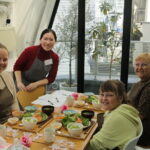
You start at 10:30 am and the activity ends back at the meeting point, so you don’t need to worry about a complicated route or transferring to a new location halfway through. It’s also set up as a private tour/activity, meaning only your group participates. If you’re traveling with a friend, partner, or small group, that private pace is a big part of the value.
Logistics-wise, you’ll meet at:
Morimi’s Home Kitchen, 3-chōme-19-5 Matsubara, Setagaya City, Tokyo 156-0043
You’ll be close to public transportation, and pickup is offered. Still, private transportation isn’t included, so you’ll want to confirm pickup details (or plan your own route) rather than assuming someone will drive you door-to-door.
You can also read our reviews of more tours and experiences in Tokyo.


The Core Skill: Dashi and Rice (Your Future Self Will Thank You)
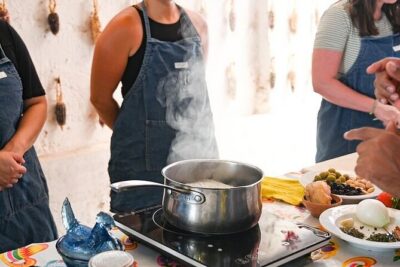
If there’s one reason Japanese home cooking tastes like Japanese home cooking, it’s the foundation: dashi. In this class, dashi isn’t treated like a mysterious broth. You learn the basics of making it and understand what it does for flavor—how it supports the rest of the dishes instead of overpowering them.
Then comes rice, and this is the part many people underestimate. You’ll learn how to cook delicious Japanese rice using a regular pot. That phrase matters because most visitors don’t own the right gear back home. Learning the method with equipment you can actually find later makes the class feel more useful, not just “fun for today.”
This combination—dashi plus rice—also ties into multiple courses. Even if you pick Sushi or Curry, you’re building the same cooking logic. That’s how you end up with food that tastes right instead of food that just looks right.
Pick Your Course: Tofu, Sushi, or Curry (And What Each Really Teaches)
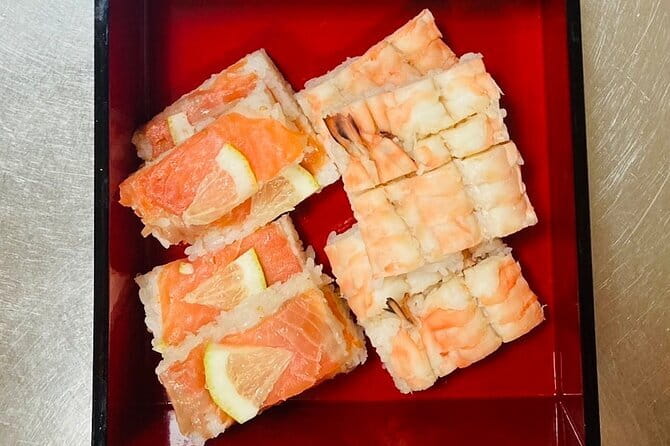
The class runs 3 hours and offers three course options. You’ll select your course when you book, and each one has a clear theme: tofu craftsmanship, sushi shaping, or Japanese curry comfort-food logic.
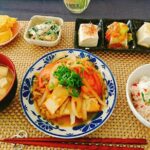
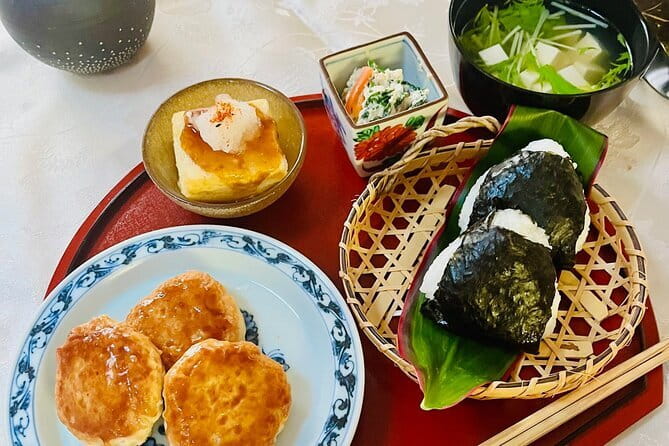
Tofu Course: A Plant-Based Class That Still Feels Like Japanese Home Cooking
The Tofu Course is the best choice if you want variety and you care about learning how tofu becomes several different textures.
You’ll make:
- tofu hamburgers
- agedashi tofu (deep-fried tofu)
- shiraae (tofu salad)
- tofu soup
- rice balls
You also learn how to prepare dashi stock and cook rice in a regular pot. That means you’re not only learning tofu recipes—you’re learning the flavor backbone that makes them taste Japanese.
Diet note: this course can accommodate vegetarian, vegan, and gluten-free needs. If your dietary requirements are strict, this is the course where you’ll likely feel the most supported.
Sushi Course: Temari Sushi and Pressed Sushi with Real Tools
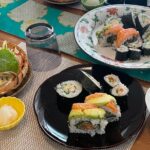
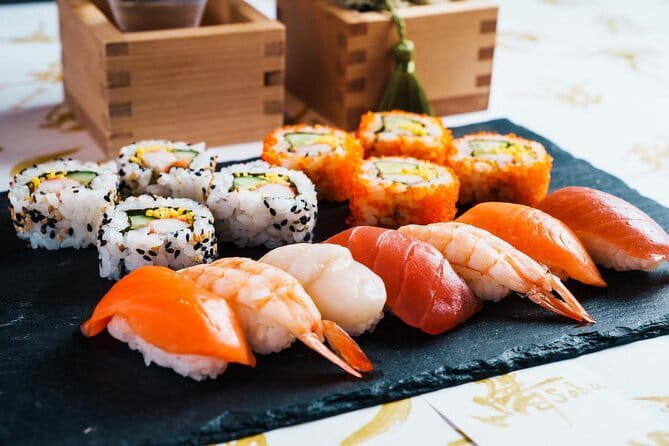
The Sushi Course is built around technique and shaping. First, you make sushi rice. Then you choose from ingredients to create six types of temari sushi. Temari are little ball-shaped bites, which are great for learning control and portioning without needing fancy rolling skills.
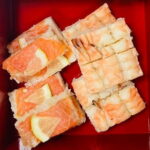
Then each participant makes one roll of oshizushi using a traditional oshizushiki pressed-sushi mold. In this course, that pressed sushi includes shrimp and smoked salmon. You’ll also get soup during the meal.
Diet note: there are gluten-free options available for the Sushi course. If you’re gluten-free, plan on discussing how the course adapts and what’s used in your portion.
If you’ve been dreaming about making sushi in Tokyo, this is the practical way to do it—by working with rice, seasoning, and shaping, not just watching someone else do it.
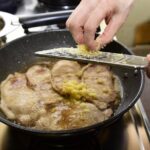
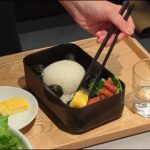

Curry Course: Tonkatsu Curry, Ebi Fry, and Japanese-Style Comfort
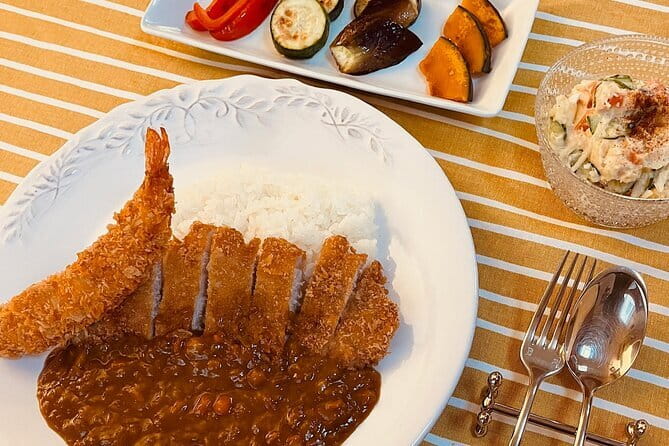
The Curry Course focuses on Japanese-style curry logic, using roux and dashi-based flavor. This is not the same curry style as what many people know from elsewhere, and that difference is part of the learning here.
You’ll prepare:
- Japanese-style curry using roux
- tonkatsu (pork cutlet)
- ebi fry (fried shrimp)
- grilled veggies
- Japanese-style potato salad
- rice
If you like food that feels familiar but distinctly Japanese, this course makes sense. You learn how Japanese curry comes across as thick, savory, and spoon-friendly, and you practice building a whole plate: curry plus crispy fried elements plus a cooling potato side.
Diet note: the Curry course includes tonkatsu and ebi fry, and no specific vegetarian or gluten-free accommodation is stated for this option. If you don’t eat pork or seafood, you may prefer Tofu or a Sushi option depending on what you can eat.
The Tools Lesson: Suribachi and Oshizushiki Make It Stick
One of the best parts of this class is that it doesn’t treat Japanese cooking tools as decorations. You actually use them.
You’ll be introduced to traditional tools such as:
- suribachi, the Japanese mortar
- oshizushiki, the pressed sushi mold
Here’s why that matters. When you use the tools, you understand the food’s texture and shape in a new way. For example, pressed sushi becomes more than a look: you learn how shaping affects how it holds together and how it bites. Mortars and grinding tools are similar: technique changes mouthfeel, and mouthfeel is often what people miss when cooking at home.
The class also emphasizes “little details and hacks.” That sounds vague until you experience it—then you realize it’s the difference between complicated and doable. It’s the small steps that turn Japanese cooking from intimidating to repeatable.
What the 3 Hours Look Like (A Smooth Flow, Not a Food Marathon)
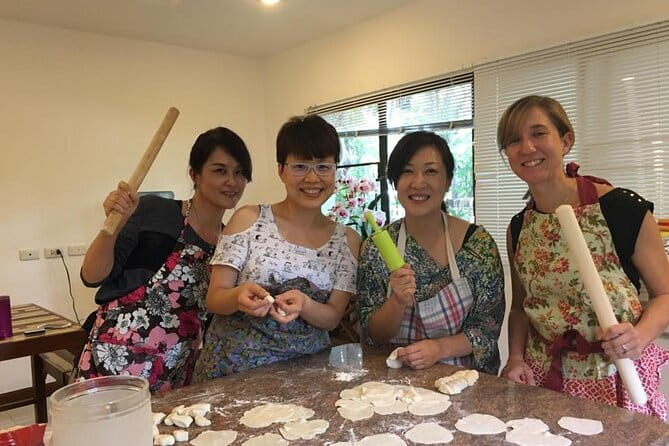
The schedule is designed to keep you active from the start to the end. It’s about 3 hours total, and the flow generally moves like this:
- Foundation lesson (dashi and/or sushi rice, depending on your course)
- Cooking practice with the tools and ingredients specific to your course
- Shaping and finishing (temari sushi, pressed sushi, or curry components)
- Lunch and tasting of what you made
The course includes lunch with the dishes aligned to your selected option. That included meal is part of the value because you’re not paying just for cooking instruction—you’re eating the results with drinks, too.
Also, recipes are provided in English. That’s not a small detail. It means you can re-create your dishes without translating everything from scratch when you get home.
Lunch, Tea, Optional Sake, and Wagashi: Small Extras with Big Mood
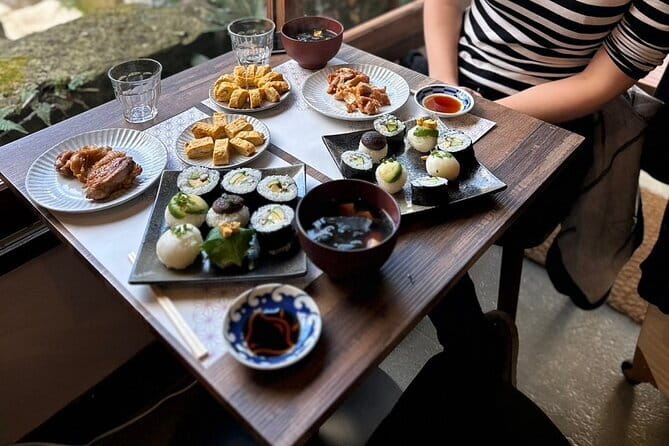
Food classes are sometimes too strict or too academic. Here, the meal feels like part of the experience.
You’ll have coffee and/or tea with green tea and mineral water unlimited. Herbal tea is also available. So even if you skip alcohol, you still get a comfortable sit-down break.
During the tasting session, optional Japanese sake and wagashi (traditional Japanese sweets) are offered. Even if you don’t add them, the class still ends with lunch that includes soup and your course dishes.
At the end, you also receive a souvenir as a small token of appreciation. It’s not a magic souvenir, but it does help mark the moment when you go from “cooking class student” back to “Tokyo traveler with a story.”
Dietary Needs and Allergies: Tell Them Early for Peace of Mind
This class is set up with dietary flexibility, but it’s not automatic for every course. The key is communication.
You should inform the provider when making your reservation if you’re:
- vegetarian or vegan (the Tofu Course can accommodate this)
- gluten-free (gluten-free options are available with the Tofu Course or Sushi Course)
- dealing with allergies or foods you cannot eat
If you choose the Sushi course, note that the pressed sushi roll in that option uses shrimp and smoked salmon. If that’s a no-go for you, you’ll want to discuss what can be adjusted.
If you choose Curry, note that it includes tonkatsu and ebi fry. Again, if your diet limits those foods, you’ll likely be better matched by the tofu-focused option.
The upside is that the class is already structured around course options for different dietary needs. The work you do ahead of time is simply telling them your boundaries so they can set you up correctly.
Price and Value: Why $71 for 3 Hours Can Actually Be Worth It
At $71 per person for about 3 hours, this is not a “budget street-food” deal. But it also isn’t in the category of expensive, fancy tasting menus. The value comes from what you receive:
- Hands-on instruction from a certified chef in a home setting
- Traditional tools used during the lesson
- Course-specific recipes in English
- Lunch included, plus tea/coffee and unlimited green tea and water
- Optional sake and wagashi
- A private format where your group is the only group participating
If you compare this to paying separately for a specialty food meal plus a generic class, the included lunch and the recipe take-home make it feel tighter and more efficient.
One more value point: this class teaches foundations like dashi and rice, which can change how you cook Japanese-style food later. That’s harder to quantify than “you got fed,” but it’s often what people remember.
Who This Class Suits Best (And Who Might Want Another Option)
You’ll probably love this class if you:
- want real home-style Japanese cooking, not just a basic “make one roll” demo
- want to learn skills (dashi, rice method, shaping), not just consume a meal
- like hands-on classes where you can ask questions and get feedback
- want an intimate experience in a residential neighborhood
It may not fit as well if:
- you strongly prefer a high-energy, big-group “show” style
- you need a course that is vegetarian/vegan/gluten-free and you’re choosing Curry without checking adjustments first
- you dislike seafood or pork and haven’t selected the tofu course
The private format also makes it a good match for couples, friend trips, and small groups who want time to ask follow-up questions without feeling rushed.
Should You Book Morimi’s Japanese Cooking Class?
Book it if you want a class that teaches Japanese cooking like you’ll use it later: dashi and rice methods, real tools like suribachi and oshizushiki, and a course that matches your diet and interests. At $71 for a private, 3-hour home-kitchen experience with lunch and English recipes, it’s a solid value—especially if you’re the kind of traveler who wants to bring cooking skills back, not just photos.
If you’re unsure which course fits you, choose based on your priorities. Want variety and diet flexibility? Go Tofu. Want sushi technique and molding? Go Sushi. Want comfort curry with fried elements and potato salad? Go Curry.
FAQ
How long is the Japanese cooking class in Tokyo?
The class runs for about 3 hours.
What time and where does the class start?
The meeting point is Morimi’s Home Kitchen in Setagaya City, Tokyo, and the start time is 10:30 am. The activity ends back at the meeting point.
What course options are available?
There are three options: Tofu Course, Sushi Course, and Curry Course. Each course has its own dishes and cooking steps.
Does the class offer vegetarian, vegan, or gluten-free options?
Yes. Vegetarian and vegan options are available with the Tofu Course (including a tofu course plan), and gluten-free options are available with the Tofu Course or Sushi Course. You should also mention allergies when booking.
Is pickup available, and what transport is included?
Pickup is offered, but private transportation is not included. The class also notes it’s near public transportation.
What’s included in the price?
Your course includes lunch (dishes vary by course), plus coffee and/or tea. Green tea and mineral water are unlimited, and herbal tea is available. Sake and wagashi are optional, and you receive a souvenir at the end.