REVIEW · TOKYO
Tokyo Keen Japanese Knife and Sashimi Workshop
Book on Viator →Operated by 割烹道 · Bookable on Viator
Sharp knives change how you eat. This workshop pairs knife skills with a real cooking class.
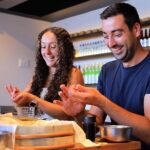
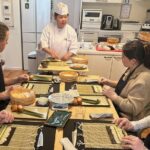
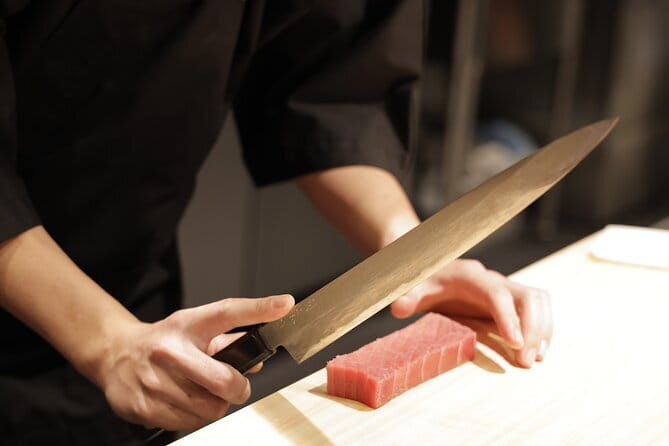
I like that the session is hands-on, not just watching, and you practice cutting sashimi with a Japanese knife. I also love the small-group setup (max 8), which keeps the pace calm enough for questions and repeated technique.
One consideration: the whole experience is about 2 hours, so you’ll leave with strong basics, not full mastery.
Chef Naoya and interpreter Hiromi (Japanese and English support) help you understand knife customs, then put that knowledge into action. You’re not just learning terminology. You’re learning how the blade feels, how to control it, and how the right prep makes sashimi cutting look effortless.
If you’re expecting a long, step-by-step training arc, you might feel it’s fast. Still, if you want a practical start you can repeat at home, this format is a great fit.
In This Review
- Key things I’d prioritize before you book
- Where You Start in Nishiazabu: Kappodo’s Kitchen Workshop
- Knife Culture First: How Japanese Knives Are Made and Used
- Sharpening on a Whetstone and Cutting Sashimi: The Core Skill Time
- Cooking zuke-don: Turning Knife Skills into Lunch
- Food, Sake, and the Little Details That Make It Feel Complete
- Price and Value: What $130.78 Really Buys You
- Who This Workshop Suits Best (and Who Might Skip It)
- Should You Book This Tokyo Knife and Sashimi Workshop?
- FAQ
- How long is the Tokyo Keen Japanese Knife and Sashimi Workshop?
- What group size should I expect?
- What’s included in the price?
- Do I get to taste sake?
- Will I learn how to sharpen a Japanese knife?
- Will I cut sashimi during the class?
- Where is the meeting point?
- Is private transportation included?
- Is there free cancellation?
Key things I’d prioritize before you book
- Small group (up to 8) means you actually get time to practice, not just watch.
- Whetstone sharpening instruction is included, and help is there even if it’s your first time.
- Sashimi zuke-don lunch ties the knife lesson to the food you’ll eat.
- Kappodo original sake tasting plus drinks means you’re not leaving hungry or thirsty.
- Certificate and 10% off at the 1F shop the same day add nice practical value.
Where You Start in Nishiazabu: Kappodo’s Kitchen Workshop
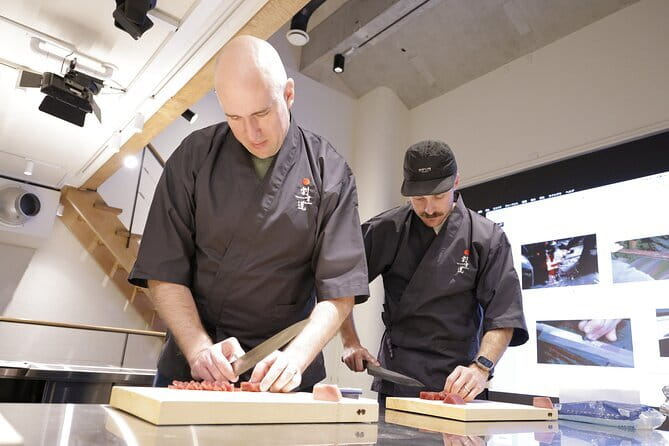
You’ll meet at Kappodo H.Q / Tokyo D kitchen Studio / Cooking Workshop/Japan in Nishiazabu (Minato City), at the DK building address listed for the experience. It’s set up for short, skill-focused classes, so the space is built around stations and hands-on work.
This matters because knife workshops can feel intimidating if there’s no clear flow. Here, the format is designed to move from instruction to demonstration to practice without you losing your place. You’ll also be close to public transportation, which helps since private transport isn’t included.
You’ll likely receive a mobile ticket, which is convenient for a city day when you don’t want to track paper.
Practical tip: plan to arrive a few minutes early. With a hands-on class, being punctual helps you settle in before tools and knives come out.
You can also read our reviews of more tours and experiences in Tokyo.


Knife Culture First: How Japanese Knives Are Made and Used
The session starts with a structured explanation of how a Japanese knife is made, plus the culture and customs around Japanese knives. This isn’t just trivia. It’s the background that helps you understand why the cutting technique feels different from what many people grow up using.
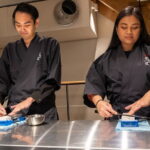
Then comes the key teaching moment: you’ll observe a demonstration of knife work by the instructor. The goal is to show the motion, the control, and the rhythm that makes slicing sashimi clean and consistent.
If you’ve only seen knives as kitchen tools, this first part reframes them as precision instruments. That mindset pays off later when you practice. You’ll be more likely to focus on what your blade is doing, not just what your hand is trying to do.
And if you’re the type who likes learning the “why” before the “how,” you’ll appreciate that the class covers both technique and etiquette around the knife.
Sharpening on a Whetstone and Cutting Sashimi: The Core Skill Time
After the demo, you’ll actually use a Japanese knife to cut sashimi. This is one of the best parts of the experience, because cutting is where concepts become muscle memory. You’ll feel the sharpness, then you’ll learn how to guide the blade with control instead of forcing it.
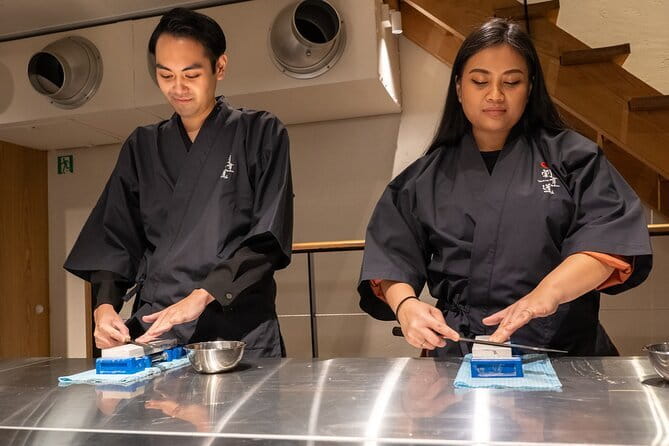
You also spend time on whetstone sharpening. While you might expect sharpening to be complicated, the instructor support is specifically there so you’re not left on your own. The class format is built for beginners: you’ll learn specialist techniques you can recreate later.
One smart detail: sharpening happens while the tuna is marinating. That timing keeps the lesson moving and gives you a reason to slow down and practice properly rather than rushing through everything at once.
What to watch for during your practice:
- How the knife responds when you use a controlled motion
- How your grip and angle change the cut
- The way clean slicing affects the look and texture of sashimi
This isn’t a “try once and done” moment. The learning format is designed so you can practice and correct along the way.
Cooking zuke-don: Turning Knife Skills into Lunch
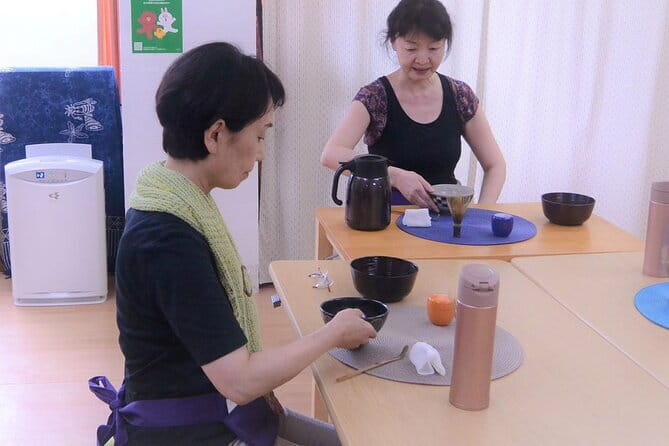
Once you’ve built some comfort with cutting, you shift into the cooking part: making sashimi zuke-don. Zuke-don is a bowl of rice topped with marinated sashimi—often tuna, though the fish may vary based on availability.
While the tuna (or the day’s fish) marinates, you learn sharpening on the whetstone. Then you use what you practiced to slice and finish your bowl.
The lunch you make includes:
- Your zuke-don bowl
- Miso soup
- Drinks
The payoff here is real: you’re tasting what good cutting and good prep produce. Even if you don’t become a home sushi chef overnight, you’ll leave with a clear idea of how sashimi cutting connects to flavor, texture, and presentation.
If you’re worried about the cooking part being too basic, don’t. The class is paced around knife learning first, then uses that foundation in the meal you assemble.
Food, Sake, and the Little Details That Make It Feel Complete
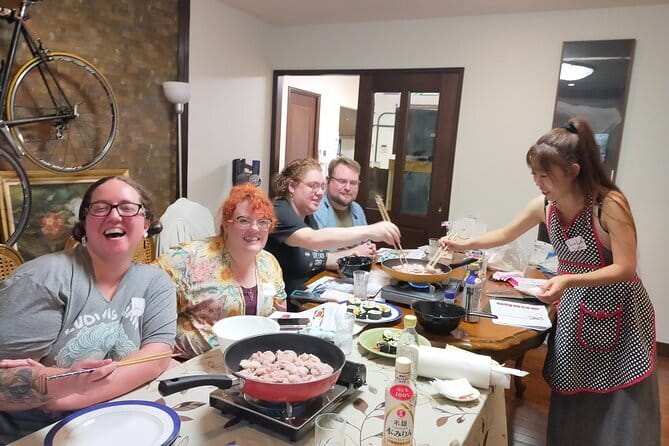
This is not just a “knife lesson that happens to include lunch.” Lunch is part of the experience arc.
You’ll get:
- Lunch: the tuna bowl you made
- Miso soup (served at the end)
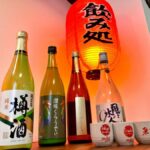
- Alcoholic beverages: a tasting of Kappodo original sake
- A certificate of participation
- Tools and aprons included for the lesson
There’s also a small incentive that’s easy to like after class: you can enjoy 10% off items at the 1F Shop on the same day you visit. That’s a practical bonus if you end up wanting to buy a knife tool, knife-related item, or a souvenir connected to what you just learned.
From a “value” standpoint, this is the part that balances the price. If you were paying purely for a cooking class, it would already be worth considering. But here, you’re paying for a skill you can keep using, plus a meal built around that skill.


Price and Value: What $130.78 Really Buys You
At $130.78 per person, the workshop sits in the mid-range for Tokyo activities, but it’s priced fairly for what’s included. The big reason is the combination: knife instruction + hands-on practice + lunch + sake tasting.
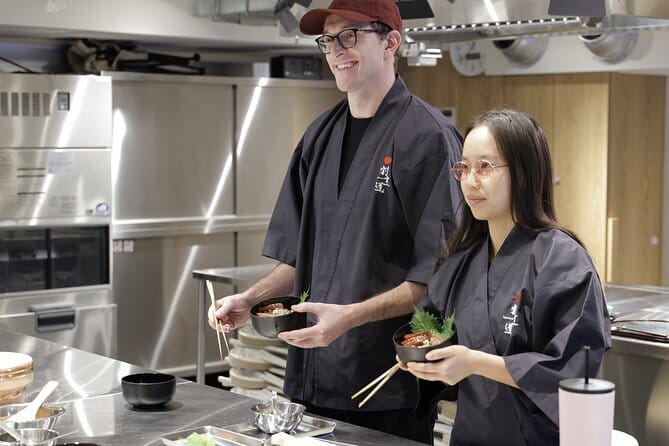
Also, the maximum group size of 8 makes the class feel less like a lecture hall and more like a guided workshop. With knives and sharpening, that ratio matters. You don’t want to stand around while others get the main teaching moments.
Another value point: you’re getting a certificate, plus the chance for same-day 10% off at the shop. Those won’t change your life, but they make the day feel organized and complete.
Finally, the experience tends to be booked ahead—on average around 46 days. If you’re traveling during busy seasons, it’s smart to lock in early rather than waiting for the last minute.
Who This Workshop Suits Best (and Who Might Skip It)
This is a great fit if you:
- Want a hands-on Tokyo experience that goes beyond sightseeing
- Are curious about Japanese knives and want a practical introduction
- Like learning by doing—cutting, sharpening, and cooking
- Want a lunch you’ll genuinely enjoy after you’ve made it
You might consider a different option if you:
- Want a longer, multi-session deep training program
- Prefer purely food-focused cooking classes with no knife practice
- Expect a full “make your own knife from scratch” workshop (this is focused on technique, sharpening, and cutting, plus knife culture)
For most first-timers, though, this is exactly the kind of class that turns interest into something you can repeat at home.
One more note: transportation isn’t included, so plan how you’ll get to Nishiazabu and back.
Should You Book This Tokyo Knife and Sashimi Workshop?
I’d book it if you want a skill-based experience that ends in a meal you helped create. The workshop’s strongest feature is how it connects the knife lesson to the lunch: sharpening and cutting aren’t separate from food here; they’re the reason the food tastes and looks the way it does.
Also, the combination of small group size, hands-on practice, and bilingual support (Chef Naoya with interpreter Hiromi) makes it feel approachable even if you’re brand-new.
If you’re on a tight schedule, remember it’s about 2 hours. Go with the mindset of learning basics you can use, not becoming an expert by the end of the day—and you’ll likely love it.
FAQ
How long is the Tokyo Keen Japanese Knife and Sashimi Workshop?
It runs for about 2 hours.
What group size should I expect?
The experience has a maximum of 8 travelers, so it stays small.
What’s included in the price?
It includes tools and aprons, a tour guide, lunch (the tuna bowl you made), miso soup, drinks, a tasting of Kappodo original sake, a participation certificate, and access to the same-day 10% off at the 1F shop.
Do I get to taste sake?
Yes. The workshop includes a tasting of Kappodo original sake.
Will I learn how to sharpen a Japanese knife?
Yes. You’ll learn how to sharpen using a whetstone, and the instructor helps even if it’s your first time.
Will I cut sashimi during the class?
Yes. You’ll use a Japanese knife to cut sashimi as part of the workshop.
Where is the meeting point?
The meeting point is Kappodo H.Q / Tokyo D kitchen Studio / Cooking Workshop/Japan, 106-0031 Tokyo, Minato City, Nishiazabu, 2-chōme2112 DKビル.
Is private transportation included?
No, private transportation is not included.
Is there free cancellation?
Yes. You can cancel for a full refund up to 24 hours before the experience starts (and after that point, the amount paid is not refunded).