REVIEW · MARRAKESH
Moroccan Cooking Class & Marrakech Market Visit with Chef Khmisa
Book on Viator →Operated by Marrakech Cooking Class With Chef Khmisa · Bookable on Viator
One walk to the market turns dinner into a story. In Marrakech, Chef Khmisa’s home-style workshop mixes an Old Souk grocery hunt with hands-on Moroccan cooking, all topped off with the famous mint tea ritual. I especially like that you get a real menu structure (starter, main, dessert) and you cook as a team instead of watching from the sidelines.
The one drawback to plan for: you may leave wanting written recipes. Several people talked about being told they’d receive recipes afterward but not getting them, so if you care about recreating dishes at home, take notes during the class.
In This Review
- Key highlights worth booking for
- Chef Khmisa and Kawtar: a Medina welcome that feels human
- Bab Doukkala meeting point and the logistics that matter
- Old Souk grocery walk: spices, ingredients, and the practical side of authenticity
- Khmisa Workshops: mint tea ritual and how the kitchen setup works
- Hands-on cooking menu: starters, a main you can actually repeat, and dessert
- Price and value: what $39.39 buys you in the medina
- Timing and group flow in a 3-hour class
- Language, notes, and the one thing you should do before you forget
- Who this Marrakech cooking class suits best
- Should you book Chef Khmisa’s cooking class in Marrakech?
- FAQ
- FAQ
- What’s included in the $39.39 price?
- How long is the cooking class in Marrakech?
- Where do I meet the group?
- Do I need hotel pickup or drop-off?
- Is the class vegetarian or vegan friendly?
- Is this a private class?
- What’s the group size?
Key highlights worth booking for
- Chef Khmisa’s 25 years focusing on Moroccan cuisine and pastry
- Old Souk shopping for fresh ingredients, away from the main tourist strip
- Mint tea ritual before cooking, plus pouring and tea-making steps
- A real family-home workshop in the medina (Khmisa Workshops)
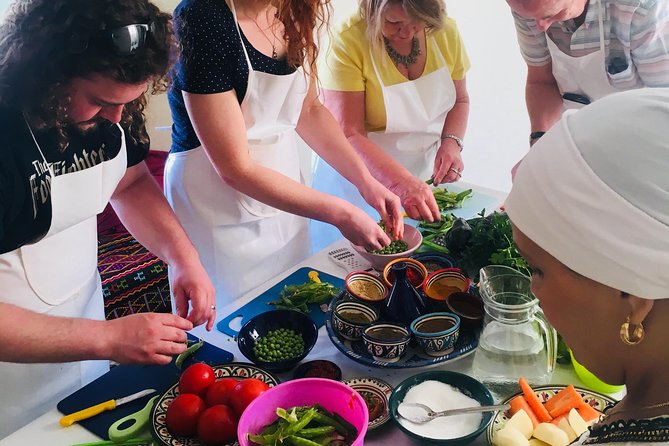
- Shared, hands-on cooking with a small cap of 15 travelers
- Vegetarian and vegan options available after you discuss dietary needs
Chef Khmisa and Kawtar: a Medina welcome that feels human
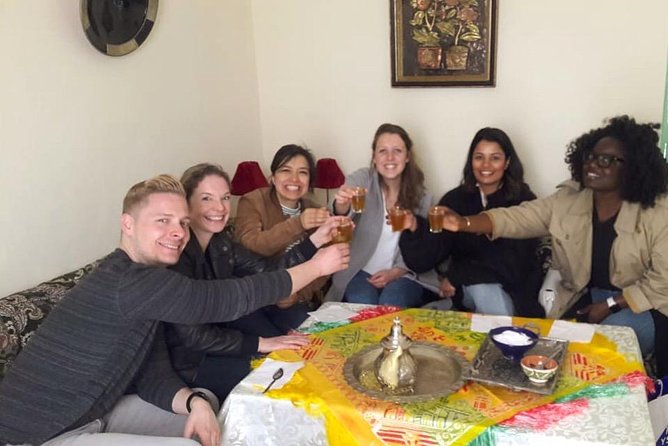
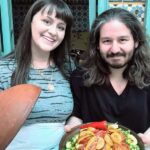
This experience is run by two Moroccan women who clearly know their way around food, hospitality, and Marrakech itself. Chef Khmisa has worked for well-known hotel kitchens in Rabat and Marrakech and brings 25 years of Moroccan cooking and pastry expertise. Kawtar supports the class too, and her background in hospitality and tourism also helps communication when language gets tricky.
When you arrive, you’re welcomed with traditional Moroccan mint tea. Then you talk through your menu choice and any allergies or restrictions before you head out for the market. That prep matters. Moroccan dishes often rely on a few key ingredients and spice blends, so the earlier you flag dietary needs, the smoother the whole cooking flow tends to be.
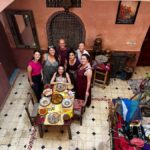
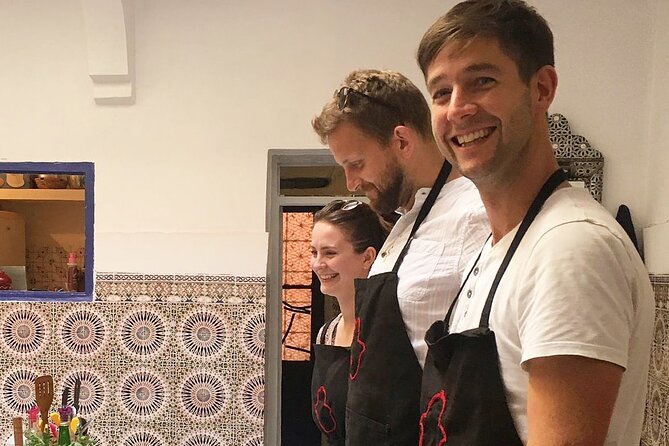
The vibe is warm and family-oriented. You’re not herded through a factory-like process. Even if you’re traveling solo, it plays like a shared table—everyone gets a job, and the day has a rhythm.
You can also read our reviews of more tours and experiences in Marrakesh.

Bab Doukkala meeting point and the logistics that matter
You start at Bab Doukkala Mosque (Mosquée Bab Doukkala) in Marrakech. The tour ends back at the same meeting point, so you don’t need to track a separate drop-off location.
A few practical points to help you plan:
- No hotel pickup or drop-off is included, so you’ll want a map pin ready.
- The start point is listed as near public transportation, which is helpful in the medina where taxis can be unpredictable.
- You’ll use a mobile ticket.
- The class is a shared session with a maximum of 15 travelers, which keeps it interactive.
Also, remember you’ll be walking in the medina area—light layers and comfortable shoes help. Even when the “short walk” is short, the streets are still narrow and active.
Old Souk grocery walk: spices, ingredients, and the practical side of authenticity
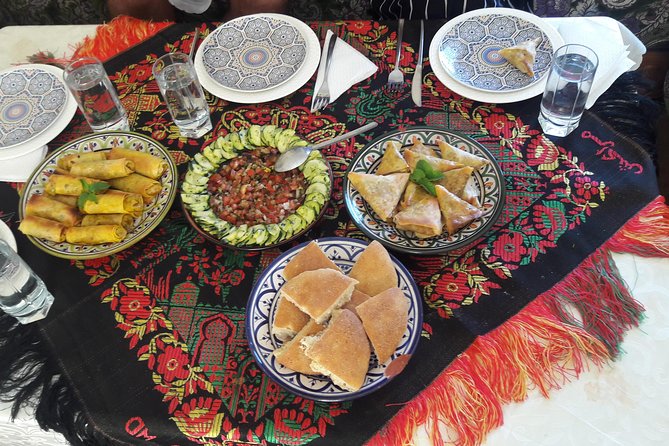
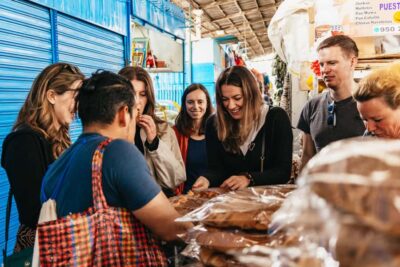
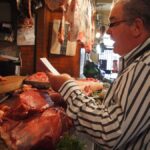
Before you cook, you shop. First, you’ll go with Chef Khmisa to the Old Souk, taking a walk through the market to buy fresh ingredients. The key detail here is that the focus is on the ingredients for the meal, not on collecting tourist souvenirs.
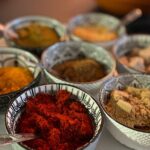
You’ll move through stalls filled with spices and local food products. This is the moment where you start learning what makes Moroccan food taste the way it does. You see whole spices, herbs, and common staples that show up later in tagines, sauces, and seasonings. Even if you’ve tasted Moroccan food before, this step can help you connect the flavors to the ingredients.
One smart thing: the class is designed to keep you away from the most overtly touristic areas. That doesn’t mean it’s “far” from Marrakech; it just means you’re more likely to interact with merchants in a normal, food-focused way.
If you’re the type who loves to cook, this market segment is the payoff. You get to go home with a shopping mindset, not just a memory.
Khmisa Workshops: mint tea ritual and how the kitchen setup works
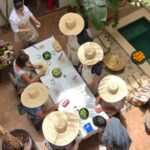
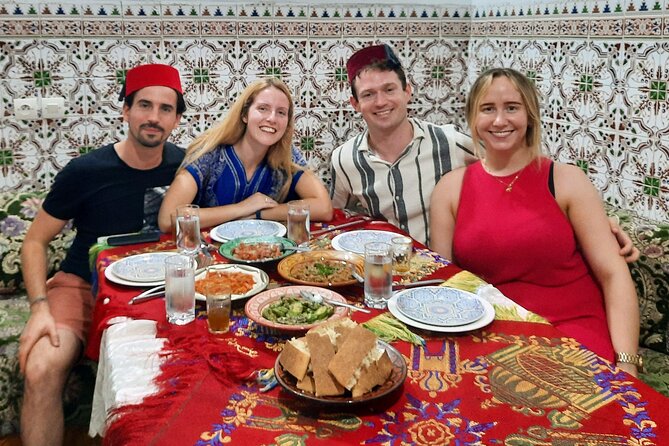
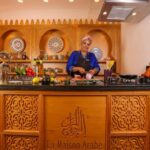
Once you return, you’re headed to Khmisa Workshops, a traditional Moroccan house in the heart of the medina. This matters more than it sounds. Cooking lessons feel different when the kitchen is set up for real life—where you’re surrounded by the tools, textures, and flow locals use every day.
Before you start cooking, you’re welcomed again with traditional mint tea and then you learn the ritual steps. That includes the tea-making process and the pouring experience. It’s not just a drinks break. It’s part of Moroccan hospitality and a quick lesson in patience and technique.
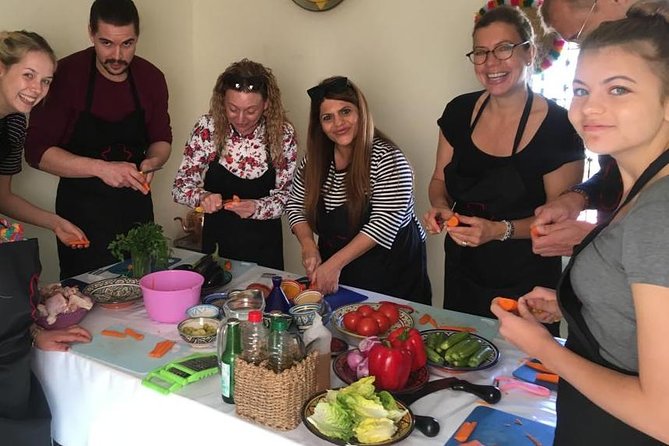
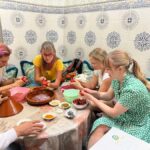
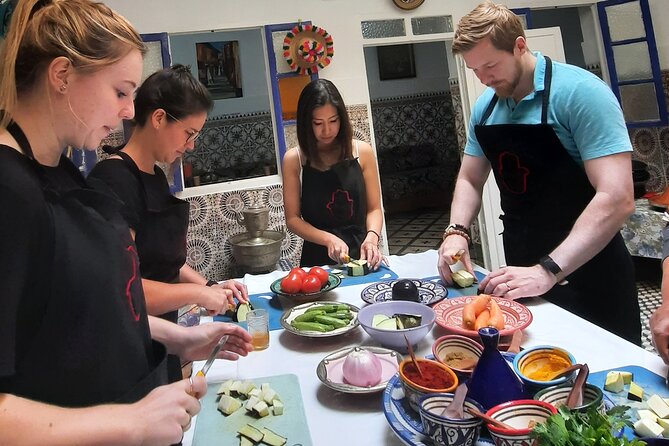
The class also starts with a clear reset: you’ll have already discussed allergies and restrictions. Then the chefs and hosts guide you into workstations so you can join the cooking as a team. Many people appreciate this because you don’t need prior cooking skills. The structure gives you something to do, and the chefs correct you fast when something needs adjustment.
Hands-on cooking menu: starters, a main you can actually repeat, and dessert
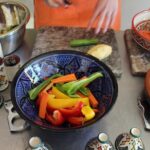
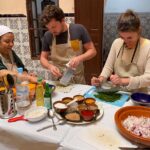
The cooking session is built around a menu that includes starter, main course, and dessert. You’ll do the work as a group, which is the best way to understand Moroccan flavor. Spices aren’t just sprinkled here; they’re combined with oils, herbs, and timing.
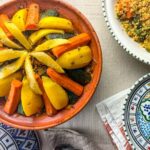
Based on what’s commonly cooked in this format, you may prepare dishes like a chicken tagine with lemon preserves and a vegetable tagine. Tagines are famous for a reason: they help ingredients cook slowly and evenly so flavors layer rather than just mix. You’ll also likely make multiple prep components for starters, since some groups do around four appetizer-style items before the main.
Here’s what I like about the teaching style from the way the day is organized:
- You’re involved early, so you learn steps in context.
- You cook as a team, so you can see how different techniques fit together.
- Spices get treated like a system, not random seasoning.
Vegetarian and vegan diners are supported too. You discuss your needs first, and then the menu adapts accordingly. If you’ve ever worried about Moroccan food being “hard to adapt,” this is one of the clearer setups.
Dessert is included as part of the menu. It might be simple compared to the main, but it keeps the class from feeling like only a savory workshop.
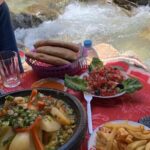
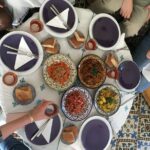
After cooking, you eat what you made. That’s important. The class isn’t finished until the food lands on the table.
Price and value: what $39.39 buys you in the medina
At $39.39 per person, this is priced like a small, high-contact experience—and it earns that cost by including the right things. You’re not just paying for instruction; you’re paying for a full shared meal day.
Included in the price:
- Lunch
- A local French & English-speaking guide and chef
- Coffee and/or tea
Not included:
- Hotel pickup/drop-off
- Gratuities (optional)
So where’s the value? You’re getting three parts most food tours charge separately for:
- Market shopping (Old Souk ingredient buying)
- Cooking instruction in a home-style workshop
- A full meal you taste right after cooking
Also, the group cap at 15 helps you feel present in the kitchen rather than lost in a crowd. If you’ve done big cooking classes before, you know what happens: you end up standing around while someone else handles the real work. Here, the format is built to keep you hands-on.
Timing and group flow in a 3-hour class
The class runs about 3 hours. That’s long enough to shop, cook, and eat without dragging. It’s also short enough to fit neatly into a Marrakech day that already has sights and walking.
You’ll likely feel the flow like this:
- Start at Bab Doukkala Mosque
- Walk to the Old Souk with Chef Khmisa
- Return to Khmisa Workshops
- Tea ritual and station setup
- Cooking as a team (starter + main + dessert)
- Tasting and eating together
Because it’s shared, you get that social energy too. Some groups end up around 10 to 13 people, and the kitchen rhythm can feel lively. If you’re traveling with friends, it’s a fun way to create a shared activity memory. If you’re solo, you’ll still be busy—there’s usually a task for everyone.
Language, notes, and the one thing you should do before you forget
The class uses a French & English-speaking guide/chef team. That helps a lot for comprehension—especially around spice mixes, technique, and what to do next.
The downside to keep in mind is recipe follow-through. Some people said they were told recipes would be sent after class, but they didn’t receive anything even after reminders. I’d treat that as a best-effort promise rather than guaranteed.
If you want to recreate the meal at home, do this:
- Take a few quick notes while you cook (especially spice combinations and steps).
- Snap photos of key stages if you can.
- Write down what you taste while it’s fresh; your memory for flavors is better than your memory for instructions.
This way, even if recipes don’t arrive later, you still leave with enough to cook again.
Who this Marrakech cooking class suits best
This is a great match if you want:
- A real medina experience that’s about food first
- Hands-on cooking rather than passive watching
- A class with a clear structure: starter, main, dessert
- A small shared group atmosphere (up to 15 people)
- Support for vegetarian or vegan needs after you disclose them
It can also work well as a “reset day” mid-trip. After eating Moroccan food in restaurants every day, cooking it in a home kitchen helps you understand what you actually liked and why.
If you’re short on time and don’t want a half-day tour bus schedule, this 3-hour format is friendly.
Should you book Chef Khmisa’s cooking class in Marrakech?
I’d book it if your goal is to go beyond tasting and actually learn how Moroccan dishes come together. The mix of Old Souk ingredient shopping, mint tea ritual, and team cooking in a traditional home makes the day feel grounded in how people really live and cook in the medina.
Skip it only if you strongly prefer a totally hands-off experience (this one is meant to be active), or if you need guaranteed written recipes after the class with no note-taking on your end.
FAQ
FAQ
What’s included in the $39.39 price?
Lunch and coffee and/or tea are included, plus a local French & English-speaking guide and chef. You’ll also eat what you cook during the session.
How long is the cooking class in Marrakech?
It’s about 3 hours.
Where do I meet the group?
You meet at Bab Doukkala Mosque (Mosquée Bab Doukkala, Marrakech 40000). The activity ends back at the same meeting point.
Do I need hotel pickup or drop-off?
No. Hotel pickup and drop-off are not included, so you’ll need to get yourself to the meeting point.
Is the class vegetarian or vegan friendly?
Yes. Vegetarian and vegan options are available, but you should discuss your allergies and restrictions first.
Is this a private class?
By default it’s a shared session. Private sessions are available on demand if you contact the provider directly.
What’s the group size?
The class has a maximum of 15 travelers.
If you want, tell me your travel dates and whether you’re vegetarian/vegan or have allergies, and I’ll suggest the best time of day to do this and how to plan your other Marrakech stops around the 3-hour slot.