REVIEW · TOKYO
Japanese Knife Skills & Tuna Don/Sushi Workshop in Tokyo
Book on GetYourGuide →Operated by 日本割烹道協会 · Bookable on GetYourGuide
Knife skills start with one precise slice. In Tokyo, you get hands-on sashimi slicing practice and real whetstone sharpening tips that make the difference between okay and truly sharp.
You’ll also learn how Japanese knives are used in everyday cooking, then move from cutting to cooking with a tuna zuke-don or a sushi set. It’s a tight, practical 2-hour format that ends with the food you made and the drinks that go with it.
One consideration: fish can vary based on availability, and the class is not suitable for people with food allergies. If that affects you, it’s worth checking with the provider before booking.
In This Review
- Key points to know before you go
- Knife skills you can actually use in Tokyo
- The 2-hour flow: from samurai-style murals to sashimi slicing
- Japanese knives and sharpening: the skill behind the clean cut
- Cutting sashimi tuna: what “knife skills” means in practice
- Zuke-don vs. sushi set: you make the meal, then you taste it
- Sake, green tea, and the meal pacing that makes it feel like dining
- What you get besides the skills: costume, certificate, and take-home recipe
- Price and value: why $127 can make sense
- Who this workshop fits best in your Tokyo plan
- Should you book this Japanese knife skills and tuna workshop?
- FAQ
- How long is the workshop?
- How many people are in the group?
- Is the class taught in English?
- What do I make during the workshop?
- Does the workshop include drinks?
- Do I practice cutting, or is it only a demonstration?
- Is knife sharpening included?
- Is fish the same for everyone?
- What should I bring?
- Is this workshop suitable for children or allergies?
Key points to know before you go
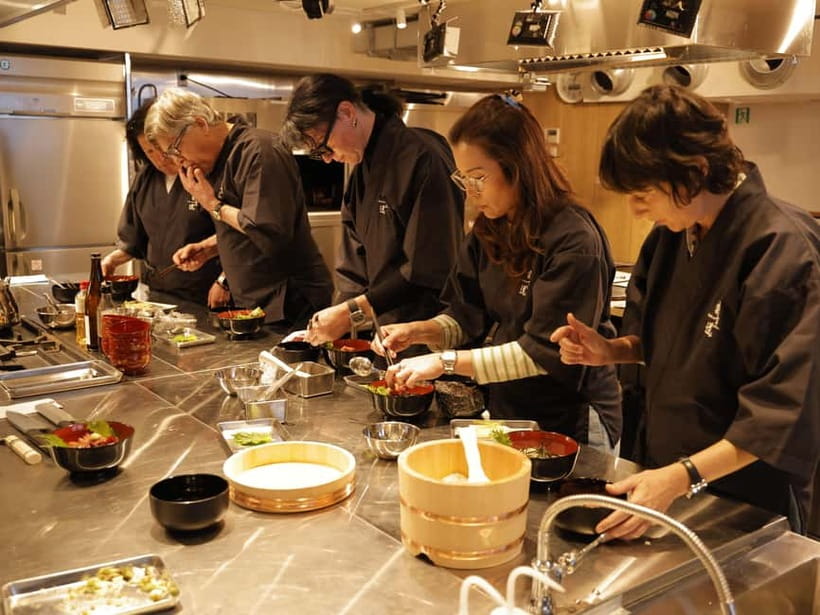
- Small group of up to 8 means you get time with the instructor while you cut.
- Knife skills performance plus your own slicing so you see the technique before you try it.
- Whetstone sharpening instruction focuses on hands-on technique you can repeat later.
- You make a full dish: tuna zuke-don or a 10-piece sushi set, plus miso soup.
- Meal and drinks are included: miso soup, sake tasting, and green tea, plus you get a take-home recipe.
Knife skills you can actually use in Tokyo
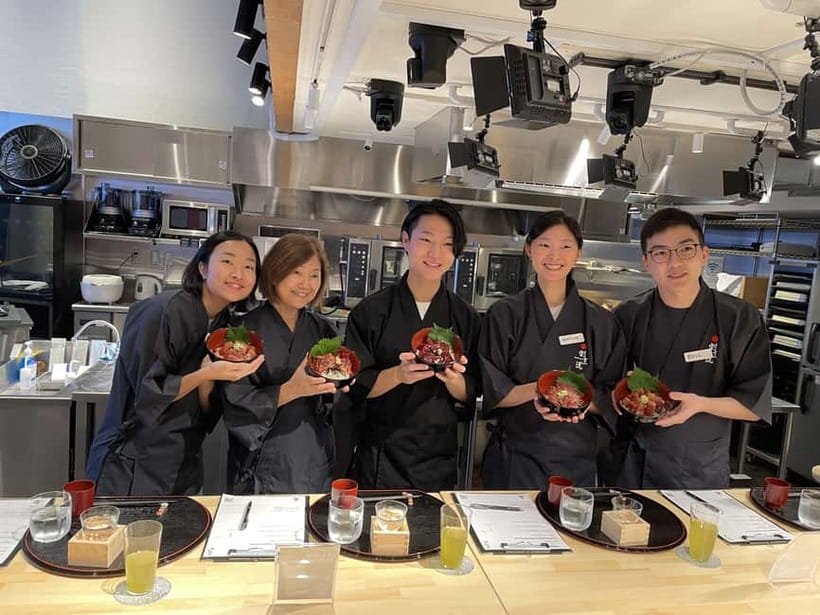
Japanese knife culture isn’t just about owning a blade. It’s about how that blade changes what you can do with food: cleaner cuts, better presentation, and more predictable results when you’re working with raw fish or precise garnishes.
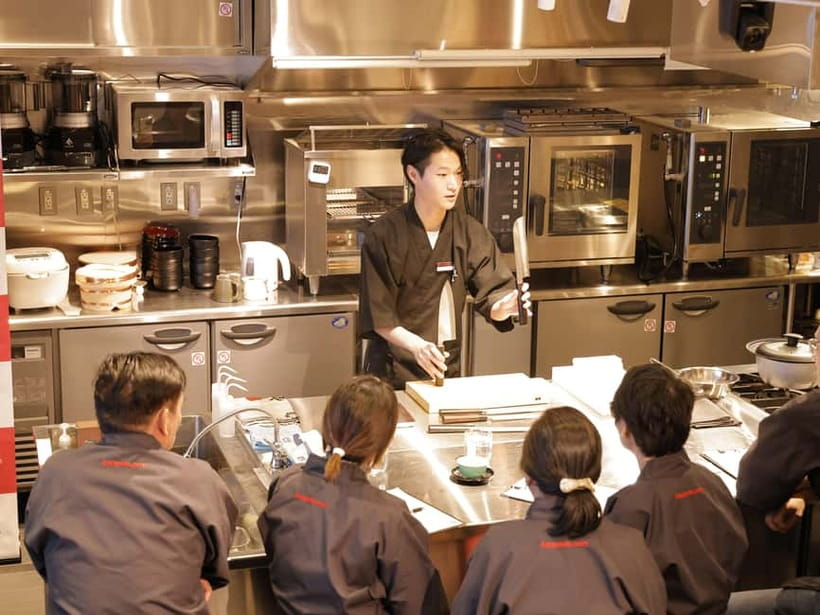
In this workshop, you start by learning the basic story of Japanese knives—why they’re prized for craftsmanship and sharpness—and you watch a live knife-skills performance first. That matters because you’re not guessing. You’re seeing what “good” looks like, then you copy the motions with your own hands.
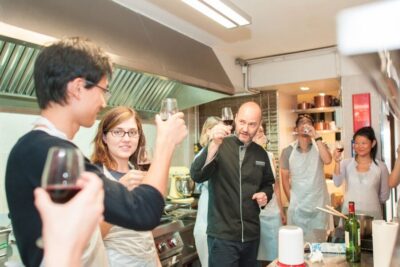
I also like the pacing. In a short class, you get both learning and doing. There’s cutting practice, then you move to cooking, then you sit down and eat what you made with miso soup and sake.
You can also read our reviews of more tours and experiences in Tokyo.

The 2-hour flow: from samurai-style murals to sashimi slicing
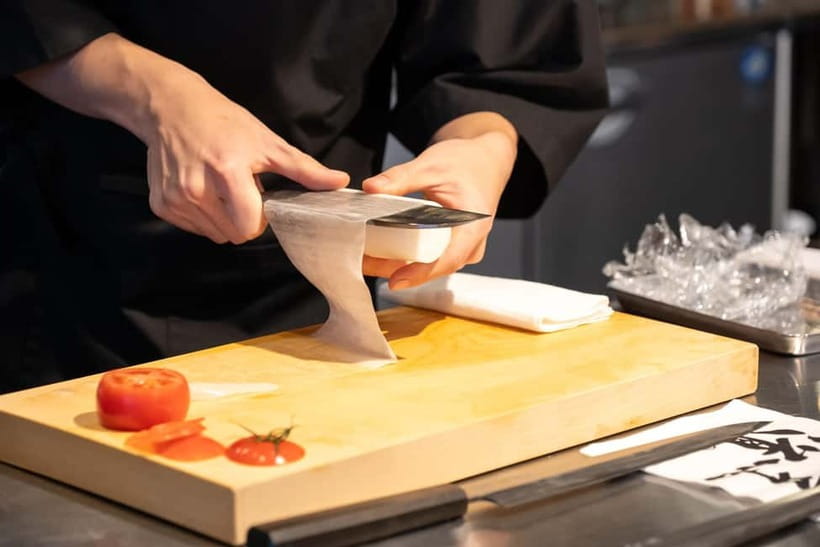
You’ll meet at a building decorated with samurai-style murals, which makes the location easy to spot even if you’re arriving in Tokyo with limited time.
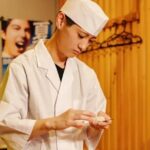
Once you’re inside, the first part is about technique and context. You get an introduction to Japanese knife culture, including how these tools are used and why sharpening matters so much. After that comes the performance: your instructor demonstrates sashimi slicing so you can understand the motion, grip, and angle that lead to clean cuts.
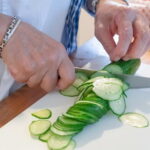
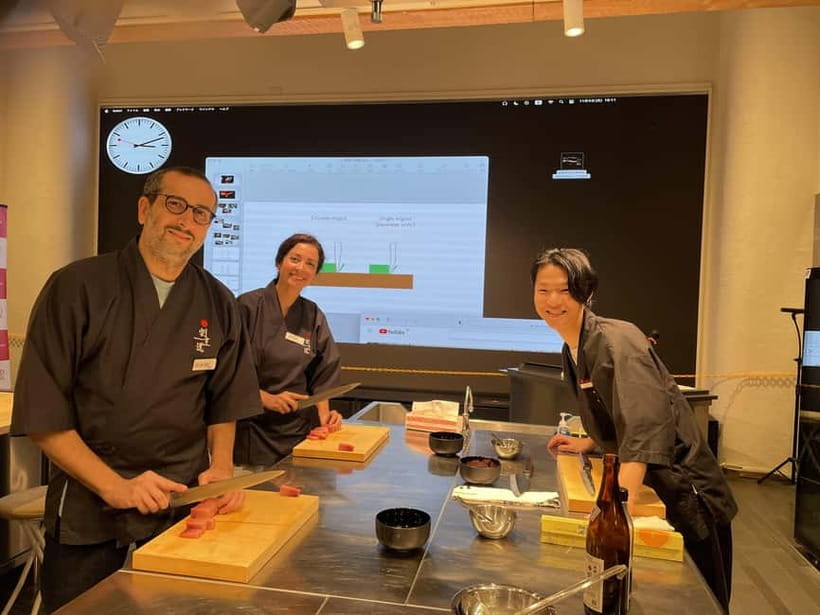
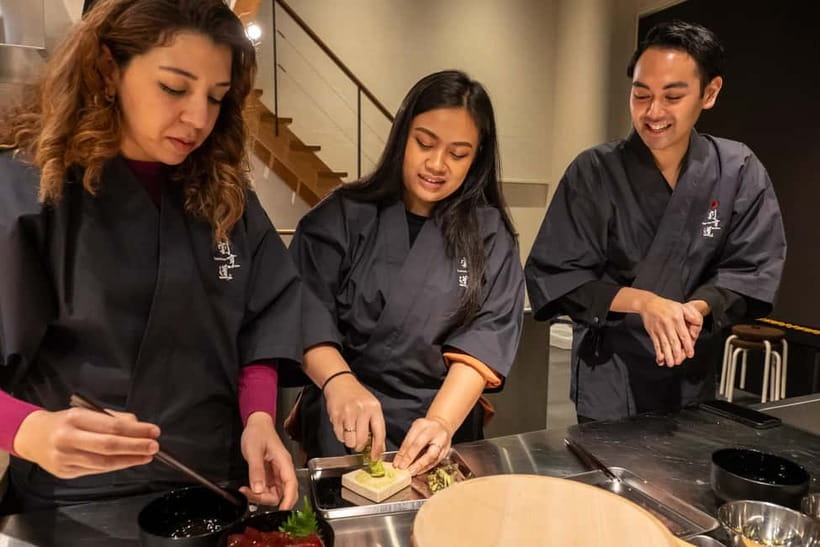
Then you take over. You practice slicing sashimi yourself, using a Japanese knife and applying the sharpening insight you just received. This is the moment most people remember, because you can feel what a correctly sharpened blade does compared to a dull one.
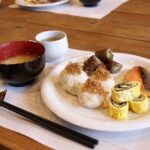
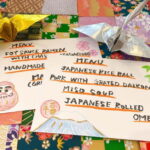
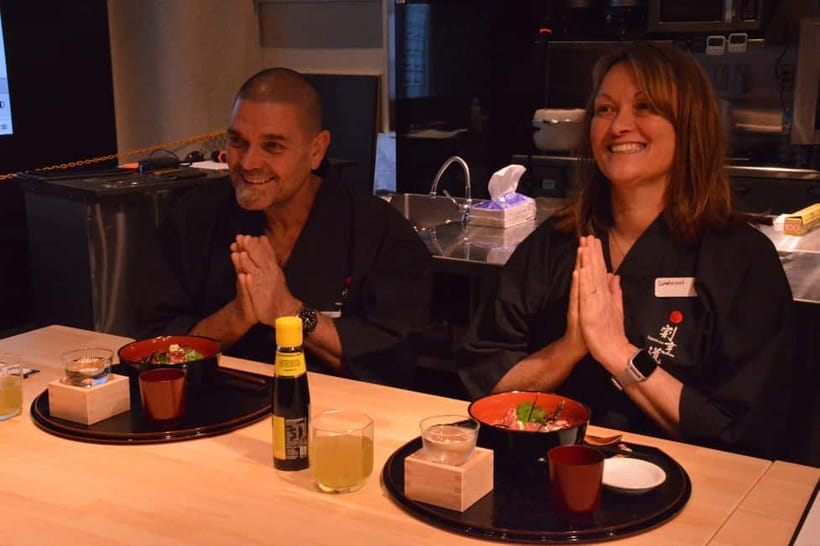
The final part shifts from raw precision to cooking. You’ll prepare either a tuna zuke-don rice bowl (marinated sashimi served over rice) or a 10-piece sushi set, and you’ll do it alongside warming miso soup. By the time you sit down, you’re no longer thinking about technique—you’re eating the results.
Japanese knives and sharpening: the skill behind the clean cut
The workshop doesn’t treat knives like magic. It treats them like tools you learn to respect.
You’ll learn about how Japanese knives are made and why sharpness is central to the cuisine. Then you get guided instruction in knife sharpening using a whetstone. Even if you’ve never sharpened anything before, the step-by-step approach helps you understand how the process affects the edge.
Here’s what makes the sharpening lesson valuable for you: you’re learning what to look for. Instead of buying a knife and hoping it stays sharp forever, you learn the basic behavior of a properly sharpened edge—so later, at home, you can maintain performance rather than constantly replace blades.
Also, it’s not only a theory class. You learn in a workshop setting with the right tools and ingredients provided, which makes the lesson easier to follow and less intimidating.
Cutting sashimi tuna: what “knife skills” means in practice
Sashimi might look simple from a distance, but it’s where knife technique shows immediately. For this class, you’ll watch sashimi slicing done by an expert, then you practice cutting fresh sashimi yourself.
This hands-on part is the core value. You’re training your hands for:
- consistent slice thickness
- controlled knife angle
- smooth motion that doesn’t tear the fish
And because fish quality and cut quality are connected, using fresh sashimi is a big deal. The workshop uses fish that can vary with availability, but the goal stays the same: you practice with high-quality sashimi for real results.
One practical note: if you have food allergies, this workshop is not suitable. The class uses fish-based ingredients, and you shouldn’t assume you can swap them out.
Zuke-don vs. sushi set: you make the meal, then you taste it
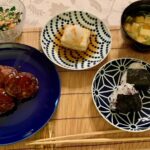
After slicing practice, you’ll cook. You’ll have a choice in what you make: a tuna zuke-don rice bowl or a 10-piece sushi set.
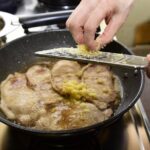
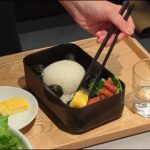
A zuke-don is a rice bowl topped with marinated tuna (marinated sashimi served over rice). Even without getting fancy, it teaches you a very Japanese approach to flavor balance: rice as the base, fish as the centerpiece, and a marinade that helps the flavors connect.
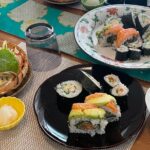
The sushi option is a 10-piece set. That adds an extra skill layer because sushi isn’t only cutting. You’re assembling and learning how the different pieces come together into a complete serving.
Either way, the workshop includes miso soup with your meal. That’s a smart pairing because it rounds out the raw and savory notes, and it also makes the class feel like a full Tokyo lunch rather than a snack-sized demo.

Sake, green tea, and the meal pacing that makes it feel like dining
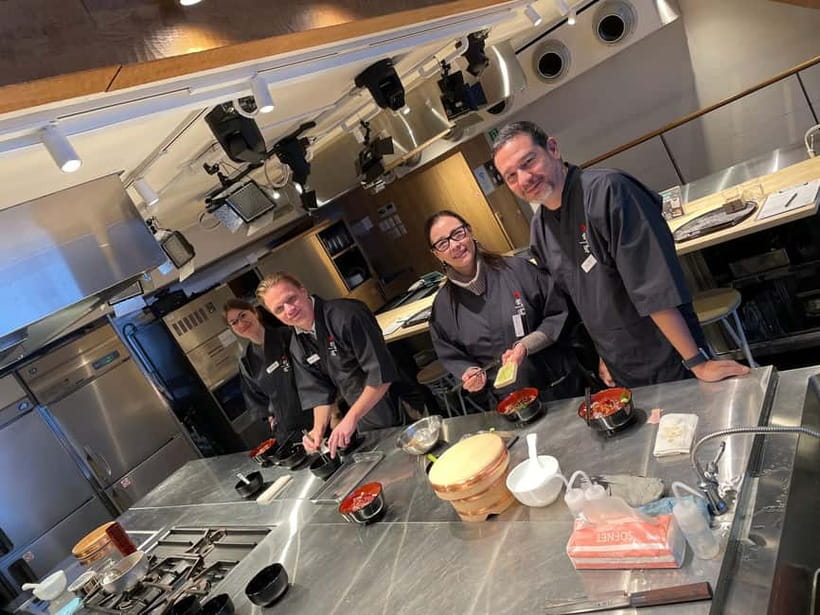
This isn’t just “hands-on class plus a bite.” You get a proper sit-down meal after you finish cooking.
Included with your food:
- sake tasting
- miso soup
- green tea
That matters because Japanese knife skills and Japanese cooking are both about timing and refinement. When you eat right after the prep, you experience how the cut and seasoning decisions change the final taste. It turns the workshop into a complete cycle: learn, do, eat, understand.
If you enjoy sake, the pairing is especially nice because it’s included as part of the experience. You’re not scrambling to find a bar afterward to complete the story.
What you get besides the skills: costume, certificate, and take-home recipe
A lot of cooking classes stop at the table. This one adds a few extra pieces that make you leave with more than memories.
Included items and extras:
- ingredients and tools
- Kappodo costume rental
- participation certificate presentation
- a recipe to recreate the dish at home
- the chance to enjoy 10% off items at the 1F shop on the same day
The Kappodo costume rental is a fun cultural touch, and it’s also a good sign that the class is built like an experience, not only a kitchen session. The certificate is small, but it makes the training feel official.
The take-home recipe is the real kicker. You’ll know what you made and how to repeat it, rather than walking away with only vague impressions of how tuna and rice should taste together.
Price and value: why $127 can make sense
At $127 per person for a 2-hour session, it’s not a cheap add-on. But when you break down what’s included, it starts to feel more fair.
You’re paying for:
- small-group instruction limited to 8 participants
- English and Japanese instruction
- knife skills coaching plus a performance before you cut
- whetstone sharpening techniques
- ingredients and tools
- your full meal (zuke-don or a 10-piece sushi set), miso soup, plus sake tasting and green tea
Most cooking classes give you a meal. This one also gives you a practical skill set: cutting sashimi and understanding sharpening enough to maintain edge performance later. If you’re the type who likes to cook at home and improve technique, that’s the difference between paying for entertainment and paying for repeatable know-how.
If you’re only looking for a quick taste of Japanese food, the price might feel heavy. But if you want the hands-on learning behind sushi and sashimi, you’re paying for the right outcome.
Who this workshop fits best in your Tokyo plan
This workshop is a strong match if you:
- want hands-on instruction instead of watching from the sidelines
- like cooking, and especially sharpening or tool skills
- enjoy sushi and sashimi and want a better understanding of why the cuts matter
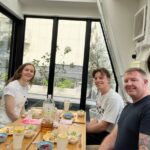
It’s also a good option for couples or small groups because you’re in a small group and can actually get feedback while you practice.
It’s not suitable for children under 12, and it’s not suitable for people with food allergies. Also, fish used varies with availability, which can matter if you’re picky about specific cuts or types of fish.
Should you book this Japanese knife skills and tuna workshop?
If you care about technique and you want a Tokyo experience you can repeat at home, I’d book it. The combination of whetstone sharpening instruction, actual sashimi slicing practice, and a full meal you make yourself is a smart use of two hours.
Skip it if allergies are an issue, or if you only want a casual meal without learning knife fundamentals. And when you decide, aim to dress for cooking with comfortable clothes. You’ll be more at ease, and it helps you focus on the cutting.
FAQ
How long is the workshop?
It lasts 2 hours.
How many people are in the group?
The group is limited to 8 participants.
Is the class taught in English?
Yes. The instructor speaks English and Japanese.
What do I make during the workshop?
You’ll make either a tuna zuke-don rice bowl or a 10-piece sushi set, along with miso soup.
Does the workshop include drinks?
Yes. You’ll have a sake tasting and green tea included.
Do I practice cutting, or is it only a demonstration?
You watch a knife skills performance and then you practice slicing sashimi yourself.
Is knife sharpening included?
Yes. You’ll learn knife sharpening techniques using a whetstone.
Is fish the same for everyone?
No. The fish used can vary depending on availability.
What should I bring?
Wear comfortable clothes suitable for cooking.
Is this workshop suitable for children or allergies?
It’s not suitable for children under 12, and it’s not suitable for people with food allergies.