REVIEW · GOREME
Cappadocia Home Cooking Experience
Book on Viator →Operated by Skyway Travel Cappadocia · Bookable on Viator
I’d trade photos for this kitchen lesson. In Goreme, a family-run home cooking school takes over a restored stone arch house, and you cook real Turkish dishes instead of watching from a seat. I love the garden-to-plate approach and how the family turns cooking into friendly conversation, not a scripted demo.
One possible drawback: the experience requires good weather, so plans may shift if conditions aren’t right.
In This Review
- Key highlights at a glance
- A Stone Arch Home Cooking School in Cappadocia’s Village Setting
- Your 3-Hour Flow: From Pickup to a Finished Meal
- The Organic Garden Stop: Picking Vegetables and Herbs That Actually Matter
- Hands-On Cooking: The Dishes That Teach Turkish Comfort Food
- Soup that sets the tone
- Starters and light dishes with texture and freshness
- Main dishes that feel like home cooking
- Dessert: Kadayıf and the honey story
- A note on dietary needs
- Village Stories Over Turkish Tea
- Meal Time: Eating What You Made (and Why It Hits Different)
- Pickup, Small Groups, and English Instruction
- Price and Value at About $114 Per Person
- Who Should Book This Home Cooking Class in Goreme
- Should You Book This Cappadocia Home Cooking Class?
- FAQ
- How much does the Cappadocia home cooking experience cost?
- How long is the cooking class?
- Where does the experience take place?
- Is pickup and drop-off included?
- What language is the class offered in?
- What is the group size limit?
- What food is included and what dishes might you cook?
- What happens if the weather is poor or I need to cancel?
Key highlights at a glance
- Stone arch house setting: a restored traditional home that feels like the real Cappadocia village life
- Harvest first: you visit the family garden and pick fresh vegetables and herbs for your meal
- Hands-on cooking rhythm: you prepare soup, entrée/main, and dessert within about three hours
- Farm-to-table ingredients: fruits, vegetables, and spices are described as organic and grown on-site
- Small group size: a maximum of 12 people keeps the class personal and practical
A Stone Arch Home Cooking School in Cappadocia’s Village Setting
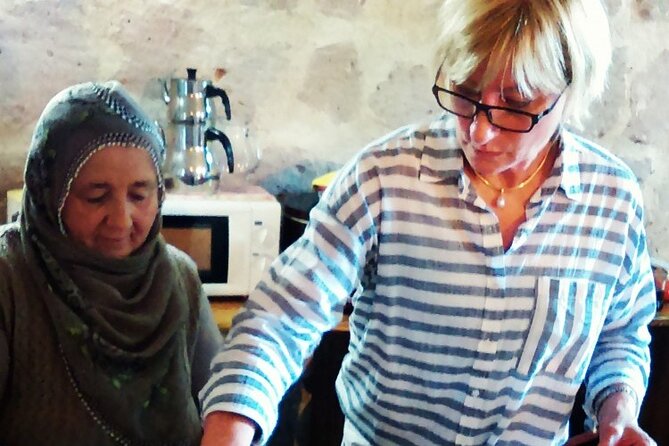
Cappadocia is famous for views, but this kind of experience gives you something sturdier to take home: a skill and a memory you can replay. The class happens in a traditional stone arch house that’s been lovingly restored. Instead of a kitchen that looks borrowed, it feels like a home that’s been opened up for learning.
What I like most is the tone. This is a family-run setup, and that shows in the way the meal unfolds. You’re not just learning recipes; you’re learning how everyday village cooking happens, with tea, conversation, and small moments that make the room feel warm.
And yes, the food is the headline. But in this case, the story behind it matters too. Ingredients come from a garden, and the class is built around using what’s fresh and in season. That makes the cooking feel logical, not like you’re following a random list of steps.
You can also read our reviews of more tours and experiences in Goreme.
Your 3-Hour Flow: From Pickup to a Finished Meal
The whole experience runs about three hours, and it moves with purpose. You start with pickup in the Goreme area, then you travel to the cooking school location in the surrounding village setting. If you’re using public transport, the area is described as near transit, but pickup is part of the deal, so you don’t have to worry about the small logistics.
Once you arrive, the class doesn’t waste time. You’ll get oriented, then you’ll head to the organic garden to choose herbs and vegetables. After that, it’s hands-on cooking: you prepare and cook your dishes in the same timeframe, then you sit down for the meal you made.
Because it’s a short format, you won’t be there all day. Instead, it’s designed to help you leave with a full table of results: soup, main dishes, and dessert, plus traditional Turkish tea. For many people, that’s the sweet spot in a busy Cappadocia itinerary.
The Organic Garden Stop: Picking Vegetables and Herbs That Actually Matter
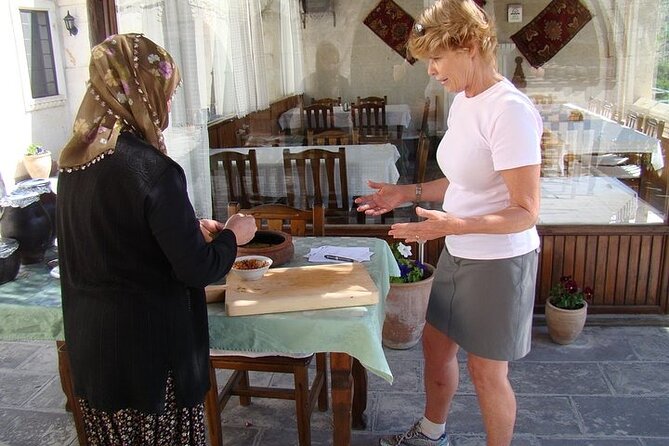
This is where the class earns its keep. Before you cook, you visit the family’s organic garden and pick fresh vegetables and herbs. The tour description emphasizes that they use natural and organic fruits, vegetables, and spices farmed in their garden.
Why does that matter to you? Because fresh herbs and picked-at-the-right-time produce change the taste of Turkish cooking fast. When you cook with what you just pulled from the garden, seasoning makes more sense. You also pay attention to smells and textures, since you’re part of the ingredient hunt.
It’s also a nice change of pace. Instead of being trapped in a kitchen, you get a bit of outdoors time, and you learn the basics of what goes into the regional dishes you’re about to make. Even if you cook at home, it’s a useful reminder that Turkish comfort food often starts with simple, high-quality ingredients.
Hands-On Cooking: The Dishes That Teach Turkish Comfort Food
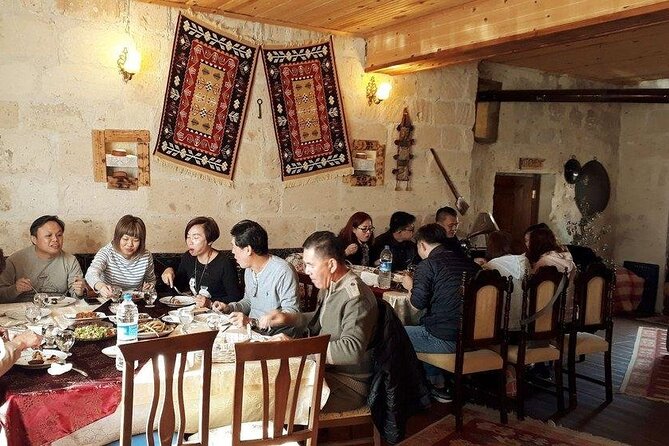
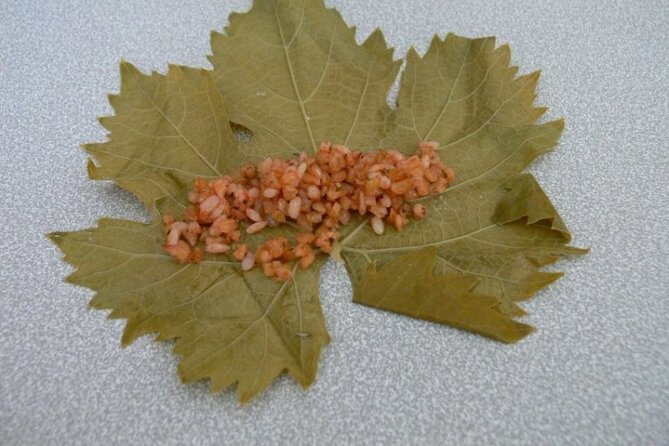
The class is structured around making multiple parts of a Turkish meal: soup, an entrée or starter-style dish, a main meal, and dessert. The menu examples include classics like Yaprak Sarma, Salata, Pilav, Börek, Mantı, Karnıyarık, and Kadayıf. In practice, you’ll participate in cooking tasks for several of these, rather than just one dish.
Here are the menu items you might see during your session, and how they fit together:
Soup that sets the tone
A standout example from the experience details is red lentil soup. Lentils are common in Turkish home cooking because they cook down into something thick, warm, and satisfying. When you make it yourself, you learn how basic ingredients turn into comfort food quickly.
Starters and light dishes with texture and freshness
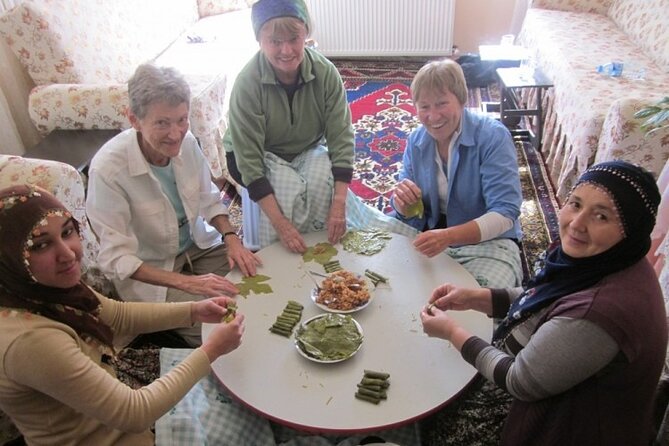
Yaprak Sarma shows up as a starter option. It’s known for its careful rolling and stuffing style. You might also make a fresh salad as a counterbalance to richer dishes. These components matter because a Turkish meal often has contrast: something tangy or crisp next to something hearty.
Main dishes that feel like home cooking
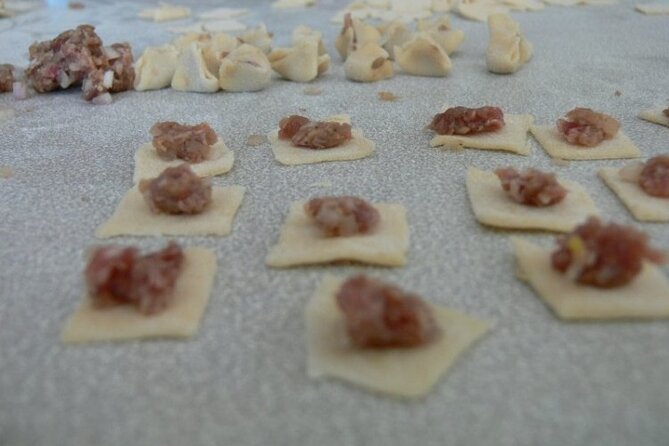
Karnıyarık is listed as a main. It’s typically eggplant-based and can be stuffed, which means you’re working with shaping, seasoning, and stuffing logic rather than just stirring a pot. Mantı is also listed, a dumpling-style dish that tends to be all about portioning and assembly.
Pilav and Börek are also in the example menu. Pilav adds a grounding base, and Börek brings the satisfying bite of pastry or layered dough cooking.
Dessert: Kadayıf and the honey story
Kadayıf is listed as dessert. One of the most memorable details from the experience descriptions is that honey can be from the family’s own hives. If your dessert includes a honey topping, that farm-grown connection can make the sweetness feel more intentional than random dessert.
A note on dietary needs
One experience description specifically notes vegetarian preference being accommodated. That’s a positive sign if you eat meat-free. Still, because the exact set of dishes can vary, I’d plan to share your dietary needs at booking so the kitchen can adjust what you cook.
Village Stories Over Turkish Tea
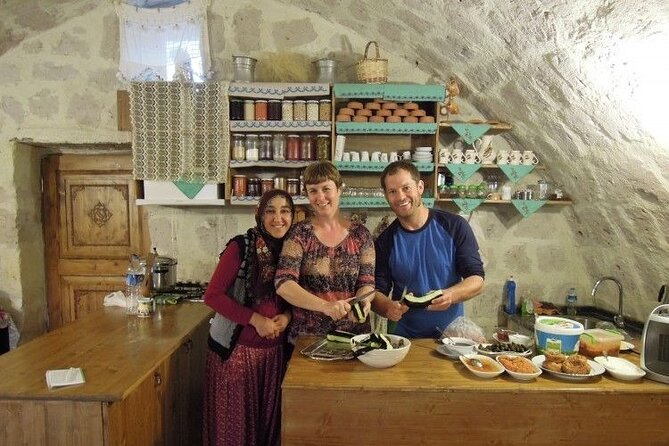
Cooking here is paired with learning about the village and its traditions. As you work, you’re not left alone with a recipe card. You’ll hear how the family lives, and the atmosphere is described as welcoming in a very personal way.
In the experience notes, there’s a charming detail: one person was given a Turkish name by a host. Small touches like that can sound minor, but they’re the reason home cooking experiences work. They make you feel like you’re inside the day-to-day of Cappadocia rather than just collecting a class certificate.
And you’ll get traditional Turkish tea during the session. Tea timing in Turkey is often a way to slow things down without making the meal feel long. In a three-hour format, that kind of break helps the cooking stay enjoyable instead of frantic.
Meal Time: Eating What You Made (and Why It Hits Different)
The big promise is that you’ll cook, then you’ll eat. Your meal includes lunch/dinner, plus snacks and coffee or tea during the class. This matters for value, but also for the experience. When you sit down to eat what you shaped and seasoned, you taste with intention.
That’s also why the setting and group size matter. The class caps at 12 people, which usually means you get more chances to ask questions and get unstuck if something feels confusing. Even if you’ve never cooked Turkish food before, you’re likely to leave knowing what you did and why it worked.
I also appreciate that the class is designed to feel complete. You’re not stuck with one dish that’s almost done while the meal ends. The structure focuses on finishing enough parts of the meal that you can actually enjoy a full plate at the end.
Pickup, Small Groups, and English Instruction
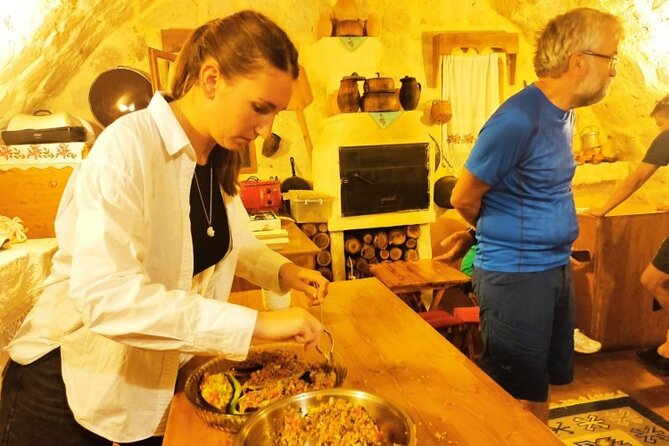
Logistics can make or break a short class day. Here, pickup and drop-off are included, and the location meeting point can be handled either by the exact address or by choosing a known place in the area. You’ll also have a mobile ticket.
The instruction language is listed as English, which is a huge deal for a hands-on class. Cooking has more nuance than it looks. If you can hear explanations in your language, you’ll waste less time guessing and spend more time working with confidence.
Group size is capped at 12 people, so the class tends to be guided rather than rushed. In smaller groups, you also get a better chance to connect with the family and ask practical questions about ingredients and techniques.
Price and Value at About $114 Per Person
At $114.39 per person, this isn’t a bargain-bin activity. But it also isn’t just a cooking show. You’re paying for several things at once:
- Pickup and drop-off in the Goreme area
- A multi-part cooking session (soup, main dishes, dessert)
- Food included: lunch/dinner plus snacks and traditional tea
- Cooking products and ingredients used for what you make
- English instruction and small-group attention (max 12 people)
When I look at value like this, the price starts to make sense. You’re not only buying a meal. You’re buying a guide who helps you produce it, plus the ingredients and the time to learn the process.
One more practical point: it’s typically booked about 22 days in advance on average. That’s a clue this class is popular enough that you shouldn’t wait for last minute. If your trip dates are fixed, earlier booking gives you better odds of matching a slot with your schedule.
Who Should Book This Home Cooking Class in Goreme
This experience is ideal if you like hands-on food moments and want something more grounded than another guided drive. You’ll enjoy it if:
- You want a short activity (about three hours) that still feels like a full meal
- You’re curious about regional Turkish dishes like Karnıyarık, Mantı, and Yaprak Sarma
- You like cooking with fresh herbs and vegetables, not just generic ingredients
- You want a small-group setting where questions are easy to ask
- You eat vegetarian (at least one documented case shows accommodation, but share needs when booking)
It may not be for you if you only want big sightseeing. This isn’t built around long views or museum stops. It’s built around a kitchen, a table, and learning why the flavors work.
Should You Book This Cappadocia Home Cooking Class?
If you like real food experiences, I’d book this. The combination of a restored stone arch house, a garden ingredient pickup, hands-on cooking across soup and mains, and the fact that you eat what you make adds up to a very complete three-hour slice of Cappadocia.
The main watch-outs are practical. Go into it expecting good weather, since the experience is tied to conditions outside. Also, if you’re sensitive to active cooking tasks, just know it’s hands-on, so wear comfortable clothes you can move in.
Bottom line: if you want a meal with a story, and you’d rather cook than just look, this home cooking class fits nicely.
FAQ
How much does the Cappadocia home cooking experience cost?
It costs $114.39 per person.
How long is the cooking class?
The duration is about 3 hours.
Where does the experience take place?
It’s in Goreme, Turkey (in the Cappadocia area).
Is pickup and drop-off included?
Yes. Pickup and drop-off are included.
What language is the class offered in?
The experience is offered in English.
What is the group size limit?
The class has a maximum of 12 travelers.
What food is included and what dishes might you cook?
Lunch/dinner is included, along with snacks and coffee and/or tea. The menu examples include Yaprak Sarma, Salata, Pilav, Börek, Mantı, Karnıyarık, and Kadayıf, plus soup as part of the cooking sequence.
What happens if the weather is poor or I need to cancel?
The experience requires good weather. If it’s canceled due to poor weather, you’ll be offered a different date or a full refund. Free cancellation is available up to 24 hours in advance for a full refund.