REVIEW · UBUD
Ubud: Organic Farm Harvest, Bali Cooking Class by Pemulan
Book on GetYourGuide →Operated by Pemulan Bali Farm Cooking School · Bookable on GetYourGuide
Cooking starts before the stove.
At Pemulan Bali Farm Cooking School in Ubud, you see where ingredients come from and then learn to cook classic Balinese dishes end-to-end, with a market stop and a step-by-step instructor.
I like the small-group feel (max 14 people) and the way stations are set up so you’re active, not just watching. I also love the harvest-your-own part on the organic farm, so your meal feels personal before you even start cooking.
One possible drawback: the cooking stations are shared by two people, so you may not get total solo control of every task. Also, this experience isn’t suitable for wheelchair users.
In This Review
- Key Highlights You’ll Care About
- What $29 Covers at Pemulan in Ubud (and Why It’s Good Value)
- Finding Pemulan: Meeting Point and Getting There Smoothly
- Morning Market Tour: Shopping Like People Who Cook Every Day
- Organic Farm Harvest: Picking Ingredients Changes How You Cook
- The Cooking Class: Step-by-Step Balinese Techniques (Not Just Recipes)
- Regular 6-Course Menu: What You’ll Actually Cook and Eat
- Vegetarian 6-Course Menu: When You Don’t Skip the Point
- Advanced Class Option: If 6 Courses Isn’t Enough
- The Best Part: Sitting Down to Eat What You Made
- Small Group Reality: Shared Stations and Friendly Pace
- What to Bring (So the Day Feels Easy)
- Communication and Rare No-Show Risk: Plan Like a Pro
- Who Should Book Pemulan, and Who Should Skip It
- Should You Book Pemulan Bali Farm Cooking School in Ubud?
- FAQ
- Where is the meeting point for Pemulan’s Bali cooking class?
- How much does the Pemulan Bali Cooking Class cost?
- What’s included in the experience?
- Is there a vegetarian option?
- Do they offer an advanced class?
- What should I bring and what should I avoid?
Key Highlights You’ll Care About
- Market tour in the morning to learn what people buy for daily meals
- Organic farm harvesting to pick some of what you’ll cook
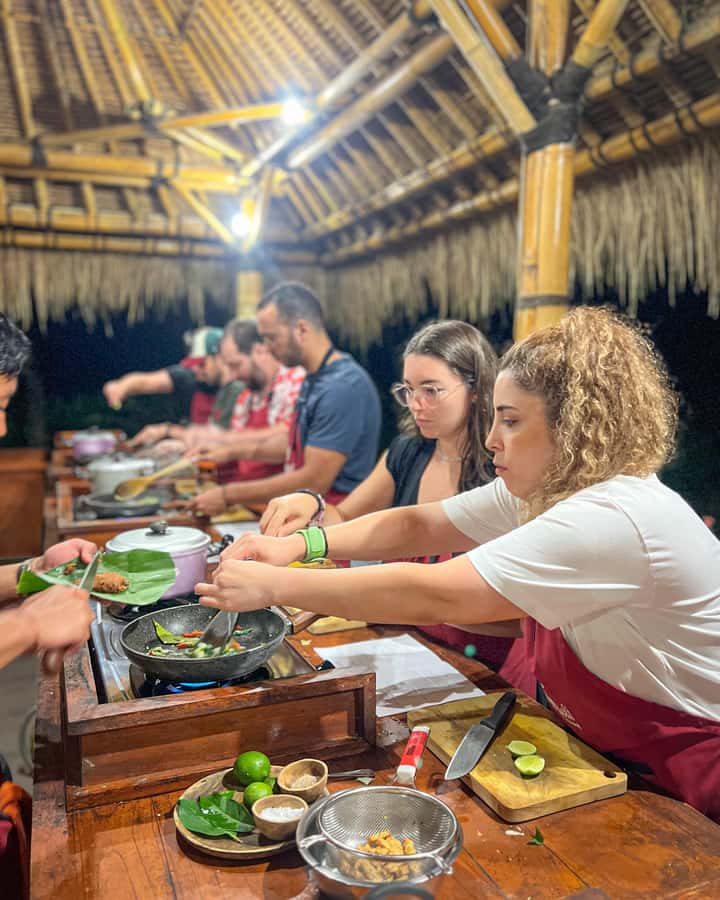
- Hands-on 6-course Balinese menu with a real sit-down meal at the end
- English-speaking instructor who teaches step-by-step and keeps things fun
- Regular, vegetarian, and advanced (8–10 course) options depending on your appetite
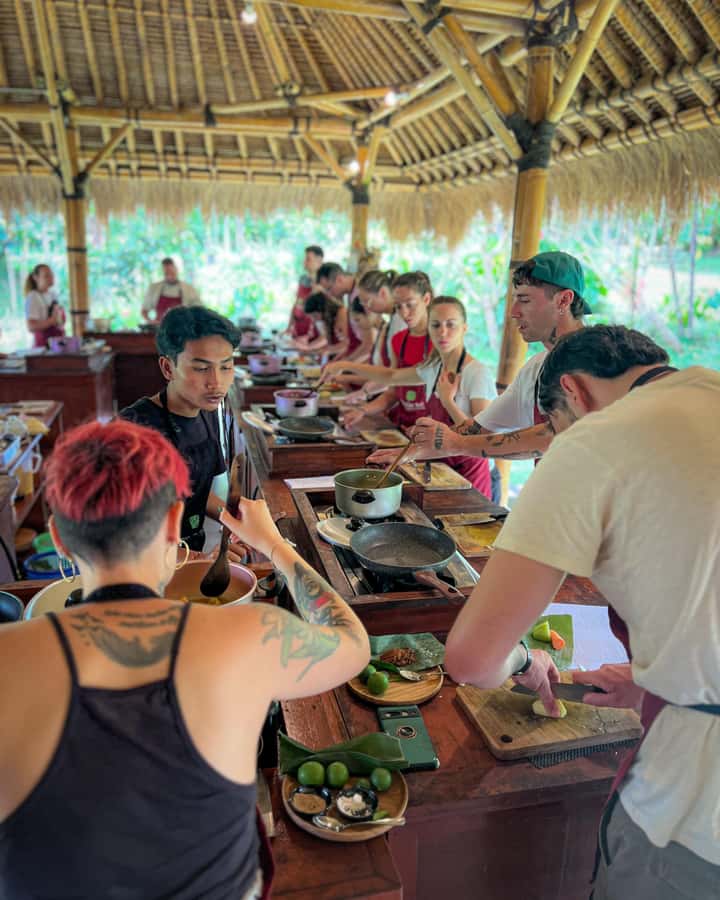
- Up to 14 people max with shared cooking stations for a guided, practical pace
What $29 Covers at Pemulan in Ubud (and Why It’s Good Value)
For $29 per person, this class packs in more than you’d expect for a single cooking day. You get air-conditioned transport from the Ubud meeting point, a morning local market tour, an organic farm visit with harvesting some ingredients, and then the actual cooking class where you prepare and eat a full menu.
Here’s the practical part: you’re not just learning recipes in theory. The class is designed so you work through ingredients first, then methods, then flavors, and finally you eat what you made. That flow matters. It helps you remember what you did, and it makes the food feel like Bali rather than a generic cooking demonstration.
The other value boost is the format. With a max group size of 14, you’re close enough to ask questions and get guidance, instead of getting lost in a crowd. Plus, you receive a downloadable PDF recipe book, which is the key to bringing the dishes home without guessing.
You can also read our reviews of more tours and experiences in Ubud.

Finding Pemulan: Meeting Point and Getting There Smoothly

Your starting point is simple: across from Sens Hotel, under the big Banyan Tree. If you’re using a map app, search those words and then look for the giant Banyan Tree landmark.
Pickup includes transportation in an air-conditioned car from the Ubud meeting point. That’s a small comfort, but it matters in Bali’s heat, especially before you’ve had breakfast and before you’re in and out of markets and a farm.
One thing to keep in mind: the class runs as a small group experience, and the station setup means the timing can be tight. Try to arrive a few minutes early, wear shoes you don’t mind getting a little dusty, and keep your phone charged. (More on what can go wrong near the end.)
Morning Market Tour: Shopping Like People Who Cook Every Day
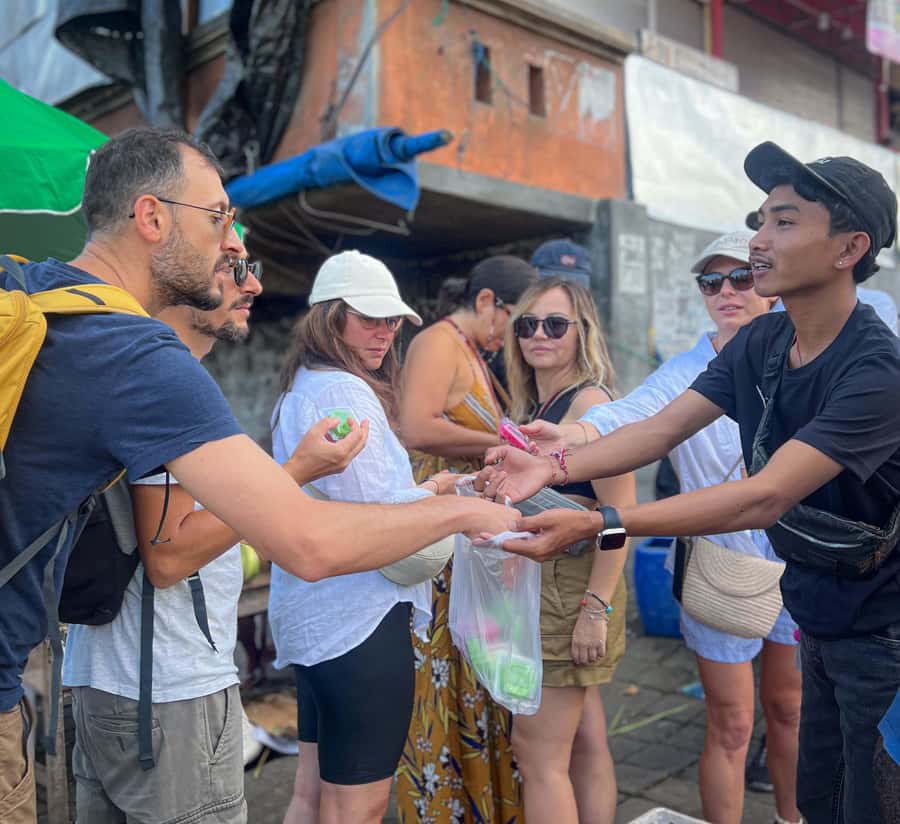
The morning portion centers on how Balinese people shop for fresh ingredients. You’ll visit a local market, learn what different produce is used for, and see the practical way ingredients are chosen.
What I’d watch for here is not just the sights. It’s the logic. Markets are where you learn what’s seasonal, what’s commonly used, and which items show up again and again in Balinese cooking.
Based on how the experience is described, you’ll also have the chance to taste some fruits and vegetables during the market stop. That’s a big help for first-timers. When you taste something before cooking, you understand why it gets used instead of treating it like a random ingredient list.
Tip: bring sunglasses and plan for sun. Even if the transport is air-conditioned, the market time won’t be. And if you’re the camera type, you’ll want it—markets are colorful and busy, and you’ll see produce you likely won’t name correctly later.
Organic Farm Harvest: Picking Ingredients Changes How You Cook
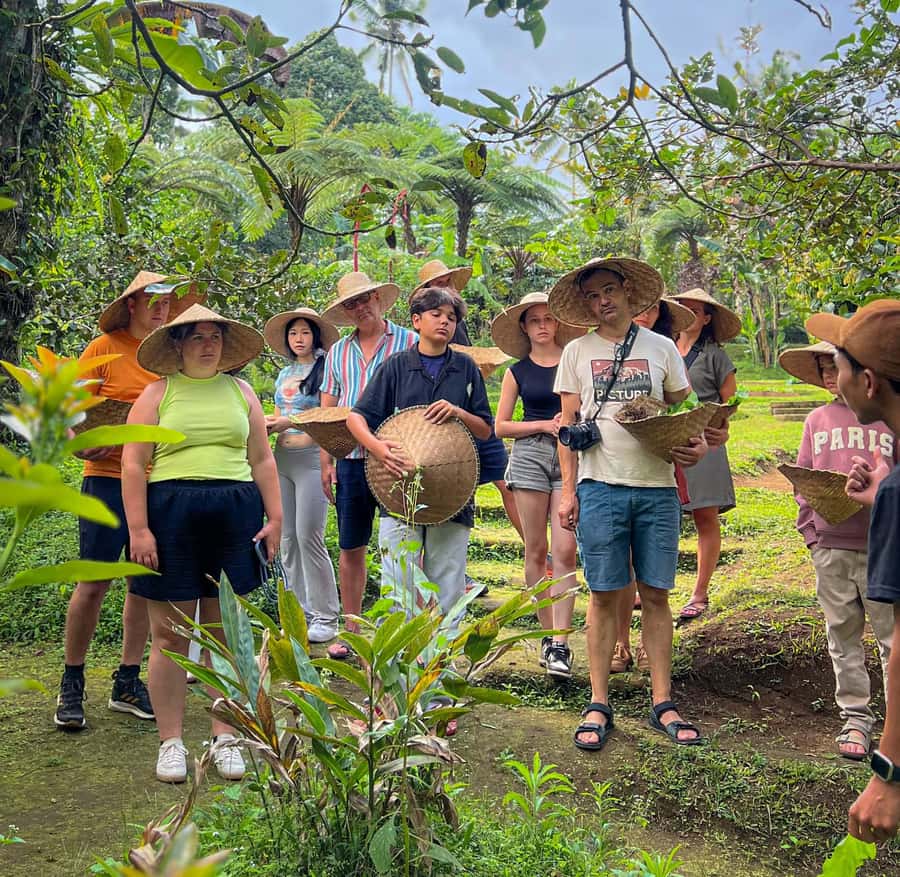
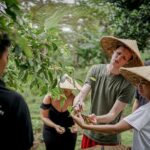
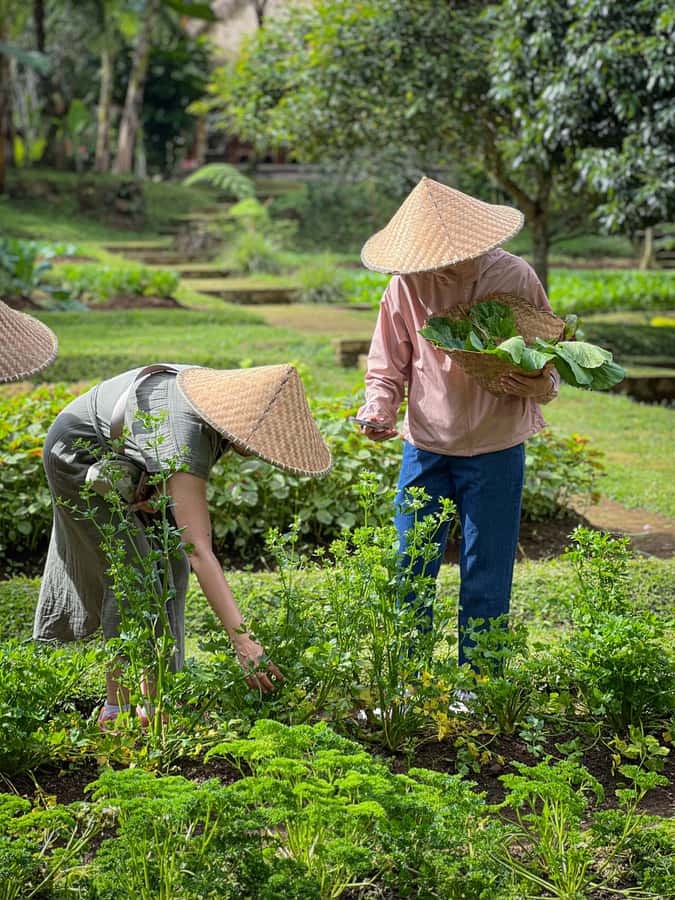
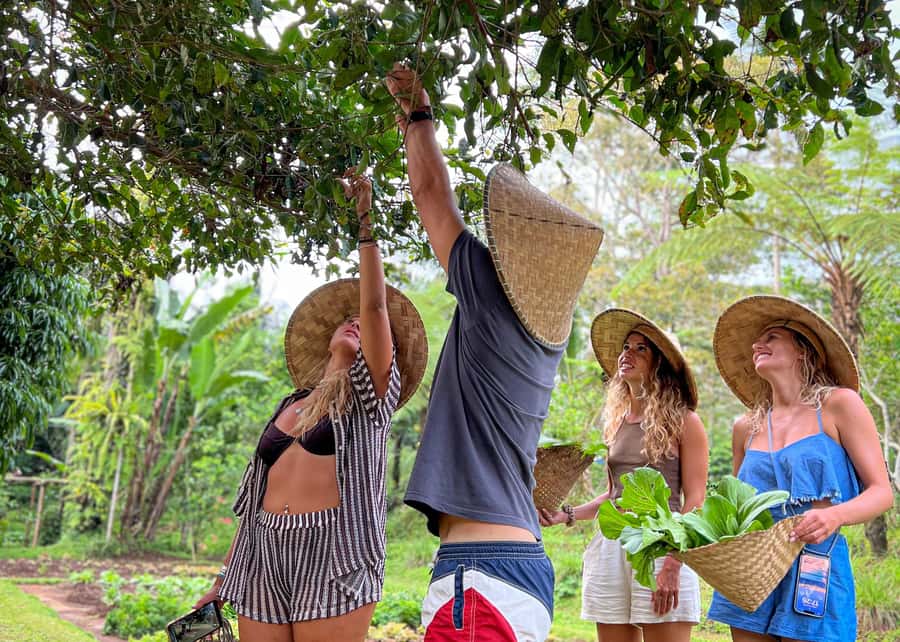
After the market, you head to an organic farm cooking school and do something most cooking classes skip: you harvest some ingredients yourself.
This part is more than a fun photo moment. When you pick your own veggies, you start noticing texture and size. You pay attention to ripeness. And you stop thinking of the dish as something that came from a grocery bag.
Also, because the farm is described as organic and you’ll be harvesting from a garden, the ingredients tend to feel fresh and directly connected to the recipes you’ll cook next. That connection is exactly why this class feels like a day in Bali rather than a generic “cook with spices” activity.
Practical note: wear comfortable shoes you can move in. You’ll likely do some walking on uneven ground between garden and cooking areas. And if you’re sensitive to insects, consider basic repellent—nothing fancy, just the usual “farm day” common sense.
The Cooking Class: Step-by-Step Balinese Techniques (Not Just Recipes)
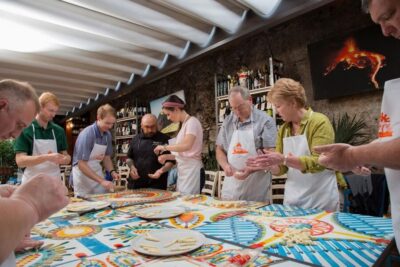
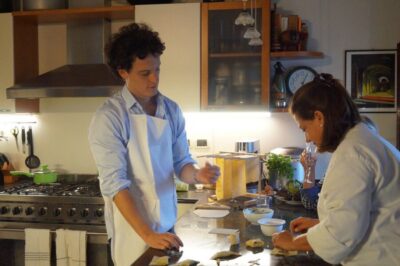
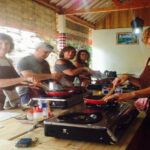
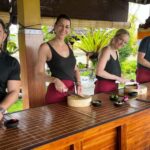
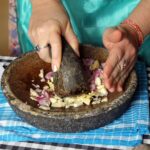
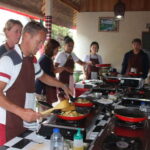
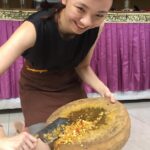
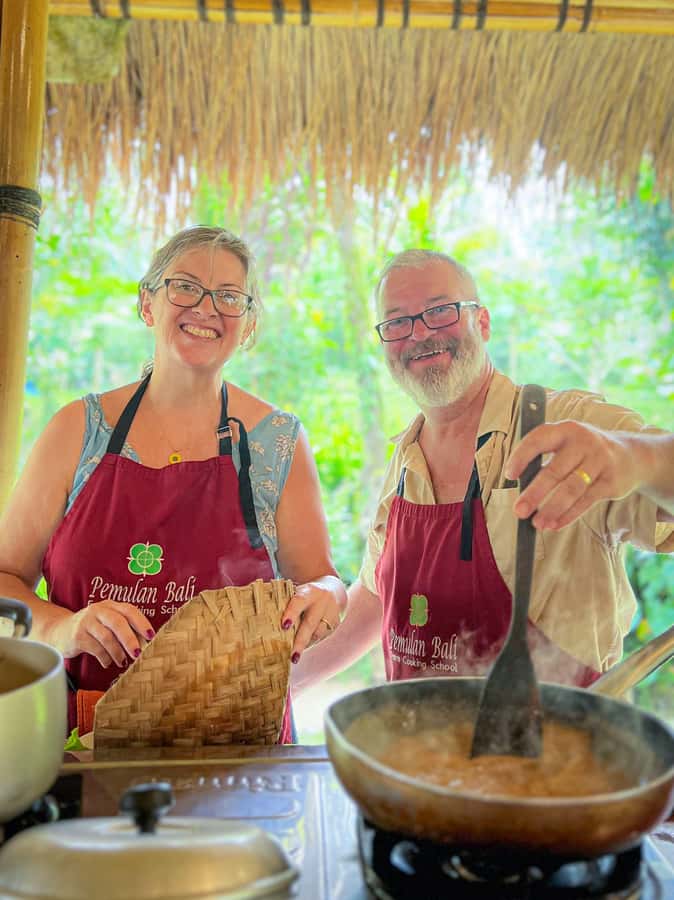
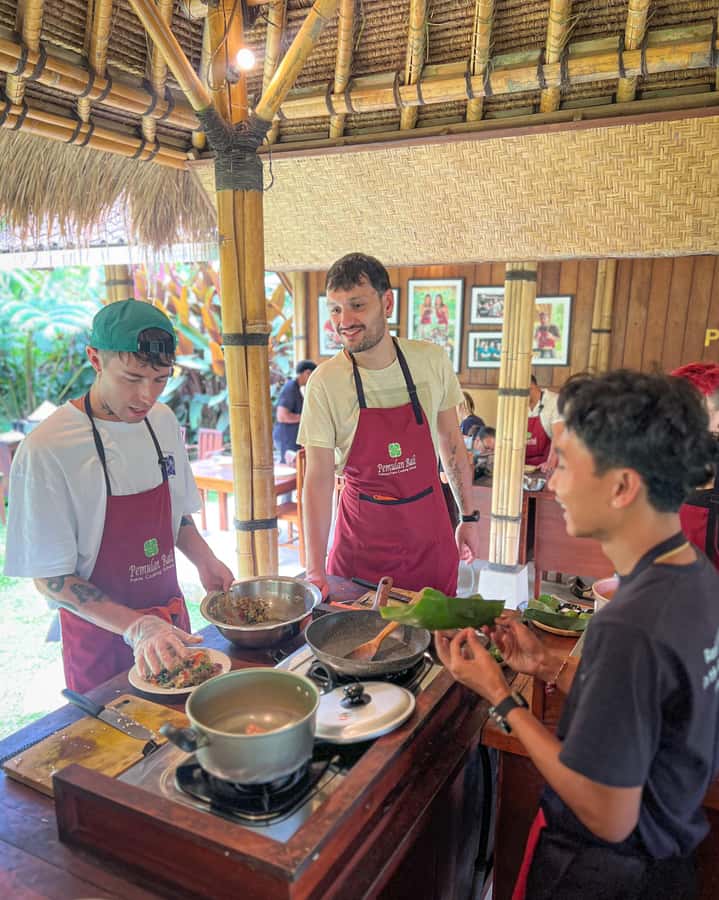
The core of the day is a fully hands-on Balinese cooking experience. You cook from start to finish, guided by a friendly instructor who teaches in English and keeps things light with humor.
What makes the teaching work is the structure. The class is built around taking you through each step slowly enough that you can actually follow along, with time for questions. That’s a big deal if you’re not confident in the kitchen. You’re not expected to already know how to chop, temper, or balance spice.
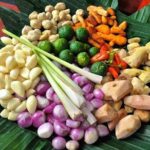
Also, the dish lineup is designed to teach you multiple flavors and methods, not only one style of cooking. You’ll move through curry work, salad prep, tempeh preparation, and frying for desserts. That range helps you learn what Balinese cuisine tastes like in different categories: savory, fresh, tangy-sweet, and dessert.
One logistical detail you should know: each cooking station is shared between two people. That means you’ll collaborate at the station, rather than being fully separated. If you’re traveling with a friend, that can be fun. If you’re traveling solo, it’s still fine, but you’ll need to be comfortable sharing workspace and passing tools.
Regular 6-Course Menu: What You’ll Actually Cook and Eat
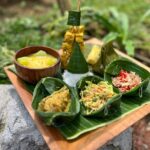
If you choose the standard option, you’ll follow a 6-course menu that covers chicken curry, pork, seafood, vegetables, tempeh, and dessert.
Here’s what’s included in the regular course list:
- Balinese chicken curry
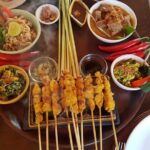
- Traditional pork kebabs
- Tuna with raw sauce
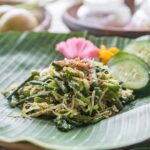
- Mixed green salad with coconut and spice
- Sweet and sour tempe
- Crispy banana fritters or black rice pudding for dessert
Even if you’ve never made Balinese food before, this lineup gives you a clear picture of the cuisine’s balance: spicy warmth, fresh crunch, creamy coconut notes, and a sweet dessert finish. You’re not just repeating one technique; you’re building a broader skill set.
Dessert is a great example. “Crispy banana fritters” suggests frying and texture control. “Black rice pudding” points to sweet, slow-cooked comfort. Either way, it’s not an afterthought. You get to end the menu with something you’d actually want to eat again later.
Vegetarian 6-Course Menu: When You Don’t Skip the Point
There’s a vegetarian 6-course menu, and it isn’t presented as a compromise. You’ll work with Balinese vegetarian dishes such as:
- Tempe curry
- Steamed vegetables with peanut sauce
- Fried corn with Balinese spices
- And dessert: banana fritters or black rice pudding
If you eat vegetarian, this is the difference between “we removed the meat” and “we built the menu around what works.” Tempe, peanut sauce, and spiced corn are all strong flavors that stand up on their own.
For me, the useful part is that you still learn the techniques. You’ll still practice sauce balance and spice handling. You’ll just do it through vegetarian pathways.
Advanced Class Option: If 6 Courses Isn’t Enough
If you’re a serious food person and want more practice, there’s an advanced class option described as 8–10 courses.
This is ideal when you already enjoy cooking at home, or when you want more chances to try different dishes and methods. The value is simple: more dishes means more technique repetition and more flavors you can reproduce later.
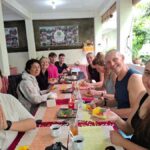
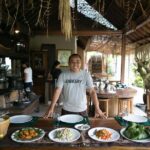
The Best Part: Sitting Down to Eat What You Made
A cooking class is only half the story until you eat. This one ends with the meal you prepared. That sit-down part matters for two reasons.
First, it’s how you judge if the flavors are balanced. You can taste and adjust in your mind for next time. Second, you get to relax. Markets and farms are active. Cooking is hands-on. Then you get to stop moving and enjoy the results.
During the class, you’ll have mineral water, coffee or tea. Soft drinks and beer are available for purchase if you want something extra.
And don’t ignore the downloadable PDF recipe book. Even if you take photos, recipes are still the fastest route back to accuracy later.
Small Group Reality: Shared Stations and Friendly Pace
With a maximum of 14 people, you get a guided pace. The class isn’t so big that you’re always waiting your turn. And instructors can check in more easily.
The shared-station setup is the main tradeoff. Each station is shared between two people, which means you’ll coordinate chopping, cooking, and plating steps. That’s not a problem if you’re flexible, but it’s worth knowing before you book.
If you’re the type who likes to do every step solo, plan to be patient. You’ll still learn. You just won’t have a private counter.
What to Bring (So the Day Feels Easy)
You don’t need fancy gear. The basics listed are smart:
- Comfortable shoes
- Sunglasses
- Camera
I’d add a tiny bit of common sense: sunscreen, and a small bag for your phone and camera so you don’t feel stressed when you’re near water and food prep.
Also, note the class isn’t suitable for wheelchair users. If mobility is limited, ask for alternatives before you commit.
Communication and Rare No-Show Risk: Plan Like a Pro
One concern shows up in the feedback: there was an incident where a participant waited at the meeting point and the class didn’t happen, tied to a Hindu holiday and a communication failure. That’s not common from the overall rating, but it’s real enough that you should act like a responsible planner.
If you book around Balinese holidays:
- keep an eye on your confirmation details
- make sure you have a way to contact the provider if your phone data fails
- arrive early, not at the exact minute
That simple safety habit protects your day.
Who Should Book Pemulan, and Who Should Skip It
This is a great match if you want:
- a hands-on Balinese cooking experience
- to learn why ingredients matter, through a market tour and organic farm harvesting
- an English-speaking instructor and a small-group atmosphere
- either a regular 6-course menu or a vegetarian 6-course menu
You might skip it if:
- you need wheelchair accessibility (it’s not suitable for wheelchair users)
- you strongly prefer solo work at cooking stations
- you’re looking only for a short snack class, since you’re building up a full menu and eating what you cook
Should You Book Pemulan Bali Farm Cooking School in Ubud?
I think this is an easy yes for most food-first Ubud visitors—especially if you enjoy cooking and want a day that connects market choices to actual meals. The value is solid at $29, because you’re not just paying for recipes. You’re paying for transport, market time, farm harvesting, cooking guidance, and a full menu you eat.
The only real “pause” comes from two situations: if shared stations would bother you, or if you need wheelchair access. And if you’re booking around Hindu holidays, do the responsible thing: confirm carefully and make sure you can reach your provider.
If your goal is to leave with skills and a menu you can recreate, Pemulan is the kind of class that gives you both.
FAQ
Where is the meeting point for Pemulan’s Bali cooking class?
The meeting point is across from Sens Hotel, under the big Banyan Tree.
How much does the Pemulan Bali Cooking Class cost?
It costs $29 per person.
What’s included in the experience?
Included items are transportation in an air-conditioned car (from the Ubud meeting point), local market tours (morning class only), organic farm tours and harvesting some ingredients, the hands-on cooking class, a downloadable PDF recipe book, mineral water plus coffee or tea during the class, and the meal you prepare.
Is there a vegetarian option?
Yes. There is a vegetarian 6-course menu with dishes like tempe curry, steamed vegetables with peanut sauce, and fried corn with Balinese spices, plus dessert (banana fritters or black rice pudding).
Do they offer an advanced class?
Yes. There is an advanced class option described as 8–10 courses for people who want more.
What should I bring and what should I avoid?
Bring comfortable shoes, sunglasses, and a camera. Pets aren’t allowed, but assistance dogs are allowed.