REVIEW · BRINDISI
Apulian cooking class and typical dinner
Book on Viator →Operated by Vigna il Castagno · Bookable on Viator
Cooking in Puglia turns dinner into a lesson. You’ll join orecchiette hands-on work, then bake on a wood-fired oven while the trulli sit in the background. Two big wins for me are the farm-to-table flow and the fact that the dinner is actually part of the class, not a separate add-on. The one thing to consider: this is a doing-focused experience in the countryside, so it’s not for you if you want a slow, purely sightseeing afternoon.
Hosted by Mother Beatrice at Vigna il Castagno, it feels more like an evening with a local food family than a classroom. You also get a vineyard tour plus an aperitif, and everything happens in an informal, small-group setting capped at 24 people. The style is practical, and you’ll leave with both recipes and a fuller sense of how Apulia eats and drinks.
In This Review
- Key highlights
- Trulli first, then the farm: what this 5-hour day actually gives you
- I Trulli di Alberobello: the quick stop that sets the mood
- The vineyard and aperitif: wine made sense of your dinner
- Hands-on cooking: orecchiette, focaccia, and wood-fired chops
- Orecchiette: more than shaping pasta
- Focaccia: a bread lesson with real payoff
- Wood-fired oven: where the “this feels real” moment happens
- The menu you cook and eat: broad beans, brasciole, and sugared almonds
- The “fresh focaccia at sunset” moment
- Group size, language, and what to expect from the vibe
- Price and value: is $113.18 worth it?
- Who should book this Apulian cooking class in Brindisi-area Puglia?
- Should you book this Apulian cooking night at Vigna il Castagno?
- FAQ
- How long is the Apulian cooking class and typical dinner?
- What is the price per person?
- Where does the experience start and end?
- Is the tour offered in English?
- How large is the group?
- What will I cook and prepare?
- What food and wine are included?
- Is there a mobile ticket and will I get confirmation?
- Are service animals allowed?
- What is the cancellation policy?
Key highlights
- Trulli at I Trulli di Alberobello (World Heritage Site) as your first taste of Puglia
- Harvest and vineyard time tied directly to what ends up on your plate
- Aperitif with the farm’s own wines during the afternoon
- Hands-on cooking for orecchiette, focaccia, and chops using a wood-fired oven
- Open sunset dinner with freshly baked focaccia right when the light changes
- Multi-course menu built from typical Apulian staples like broad beans and brasciole
Trulli first, then the farm: what this 5-hour day actually gives you
If you’ve ever tried to do Puglia in a rush, you know what’s missing. The sights are great, but the food can feel like a stop between photos. This experience stitches the two together. You start in the trulli world at I Trulli di Alberobello, then the day shifts to a working farm setting where you harvest, cook, and eat what you made.
What you’re really paying for here isn’t just the meal. It’s the sequence: vineyard and wine context first, then hands-on pasta and bread, then a dinner that follows immediately after. That order matters because it turns food into something you understand. When you shape orecchiette yourself, you don’t just taste pasta. You notice texture, thickness, and how the dish behaves in sauce.
There’s also a genuine social element. With a max group size of 24, you’re not disappearing into a huge crowd. You get help when you need it, and you’re close enough to see what others are doing without feeling like you’re in a production line. The downside is also simple: it’s an active, kitchen-and-oven kind of evening. Plan to get a little messy and expect some outdoor farm time.
You can also read our reviews of more tours and experiences in Brindisi.
I Trulli di Alberobello: the quick stop that sets the mood
Your day begins with I Trulli di Alberobello, a World Heritage Site. Even if you’ve seen trulli photos before, the real thing hits differently. The shapes feel intentional, compact, and sturdy. They look like something designed to fit the landscape rather than decorate it.
Why this stop works in the middle of a food-focused tour is timing and context. Trulli are part of the cultural backdrop of Puglia, the same region that gives you its flavors: bread and tomato, beans and herbs, pasta shapes made by hand. It’s not just an aesthetic warm-up. It’s a cue that this is a local, place-based experience.
A practical note: you’ll want comfy shoes for any walking between the trulli areas. This is still a sightseeing moment, just not a long museum-style one.
The vineyard and aperitif: wine made sense of your dinner
After the trulli start, the afternoon moves to Vigna il Castagno, a farm setting connected to the wines you’ll drink. The experience includes a vineyard tour, and you’ll have an aperitif with the farm’s own wines produced there.
This part is more valuable than it sounds because it gives you a reason to pay attention at dinner. Instead of tasting wine as a separate event, you taste it with the production story in mind. You learn what’s happening behind the scenes, then you watch how the menu builds around typical Apulian ingredients.
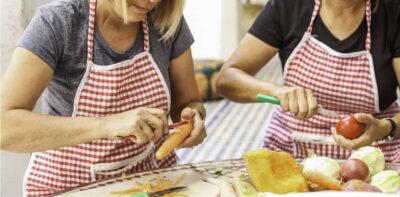
You’ll also have the “harvest from the family garden” element. That’s the connection between soil and plate. When your menu includes vegetables like broad beans and components like focaccia and tomato-based sauces, it’s helpful to know those ingredients didn’t appear by magic.
One more small-but-real benefit: the aperitif is the social bridge. It’s when people start talking, and it’s when you settle into the relaxed pace of the evening instead of rushing straight into cooking.
Hands-on cooking: orecchiette, focaccia, and wood-fired chops
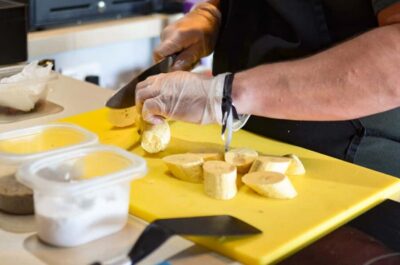
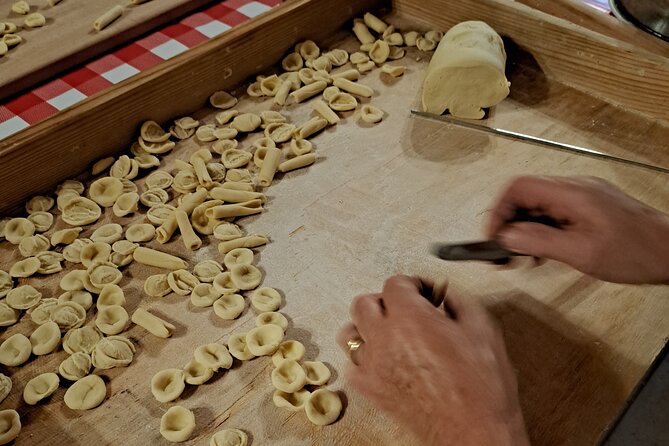
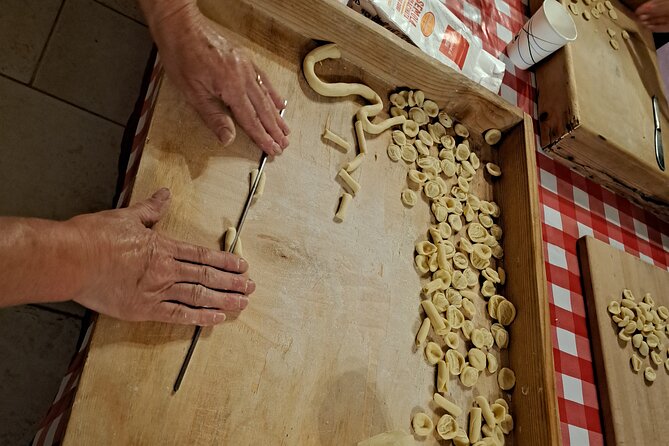
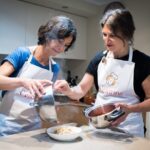
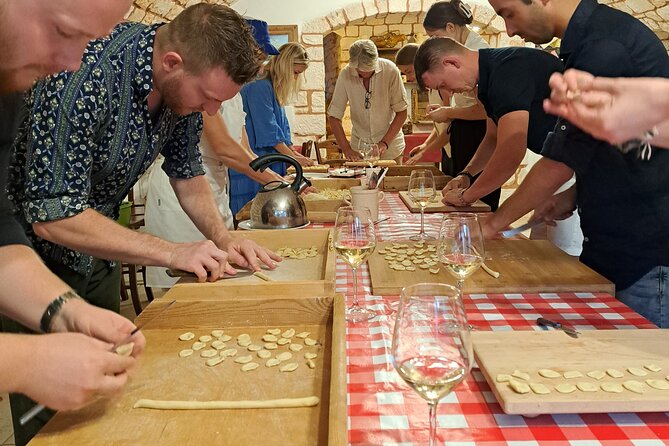
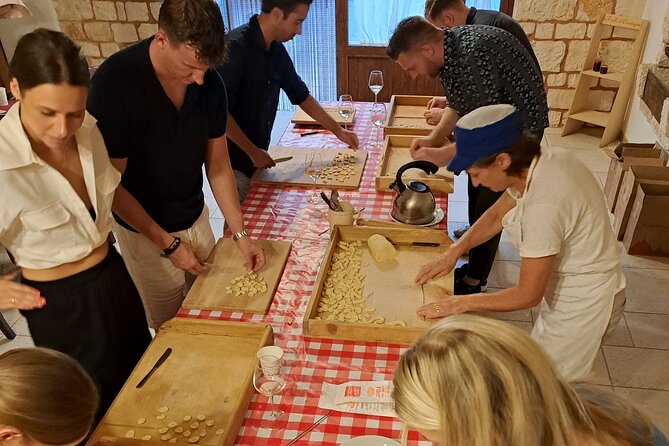
This is the core of the experience, and it’s built to be participatory. The plan includes making several typical items, including pasta types such as orecchiette and others mentioned for the menu preparation, but the hands-on focus you can count on is clear: you’ll make your own orecchiette, make focaccia, and prepare chops. You’ll also turn on and use the wood-fired oven.
Orecchiette: more than shaping pasta
Orecchiette is one of those dishes people talk about as if it’s simple. The hands-on portion helps you see what makes it work. You’re not just cooking pasta; you’re shaping it so it can catch sauce. When you make it yourself, you’ll likely notice the difference in feel and thickness, and you’ll be more alert when you eat it later.
Focaccia: a bread lesson with real payoff
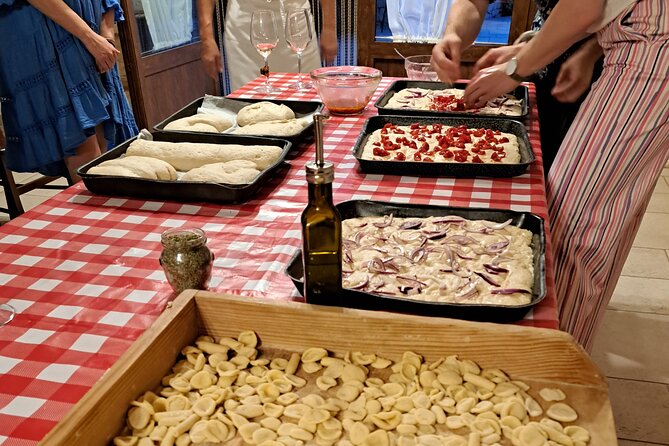
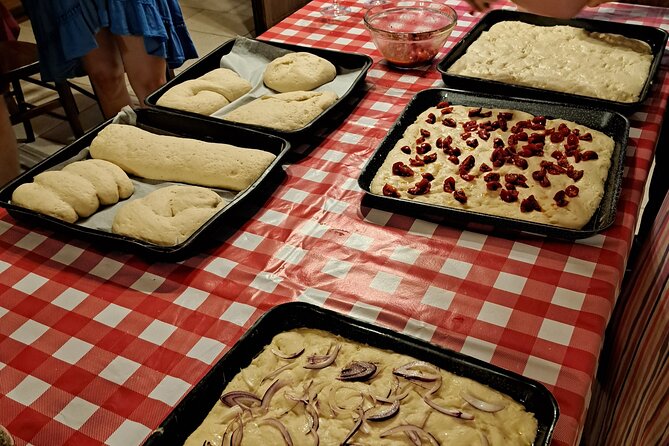
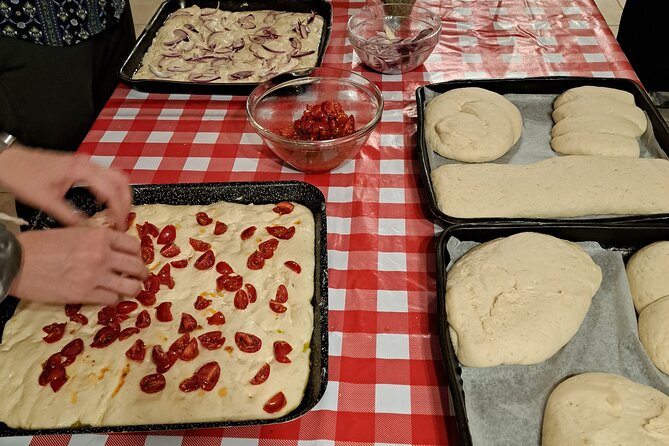
You’ll prepare focaccia (including tomato and onion style), and you’ll experience baking in the farm’s wood-fired setting. Bread is often treated like a side. Here it’s treated like a centerpiece because you’ll bake it as part of the oven experience and then serve it again at sunset.
Practical tip: keep your hands clean. You’ll be working dough, and a quick rinse policy isn’t described, so plan for flour on your sleeves and maybe your fingers.
Wood-fired oven: where the “this feels real” moment happens
Using a wood-fired oven changes the vibe. It’s not just another appliance. You’re dealing with heat and timing in a way you don’t with a standard kitchen. You’ll learn to care about the oven process, and that makes the class feel grounded.
This is also where you’ll probably spend the most energy. If you have wrist or hand issues, it’s worth considering whether shaping pasta is comfortable for you. The experience is friendly, but it’s still hands-on.
The menu you cook and eat: broad beans, brasciole, and sugared almonds
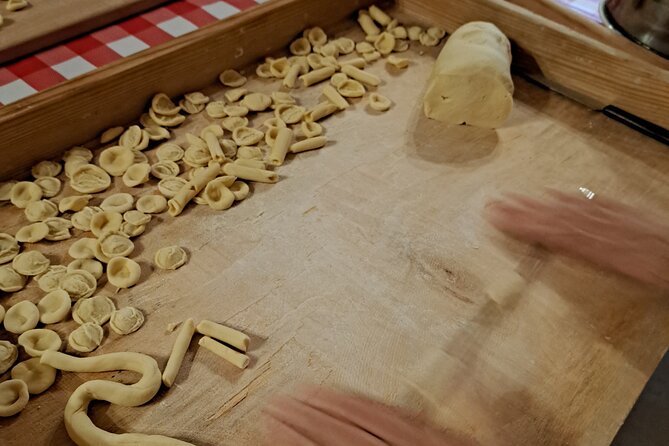
Your dinner is structured as a typical Apulian meal, with multiple courses that connect directly to what you prepared. Expect a lineup like:
- Starters: focaccia from Bari with tomato or onion, broad bean purée, and seasonal products
- Main: homemade orecchiette plus Apulian brasciole cooked in tomato sauce
- Dessert: sugared almonds
That set of dishes is exactly why this works. Broad beans and tomato-forward flavors are classic Apulia territory, and they play well with handmade pasta. Brasciola and sauce also reinforce why the orecchiette shaping matters: you want something that can hold onto sauce instead of letting it slide off.
The “fresh focaccia at sunset” moment
One of the most memorable elements is the open sunset dinner with freshly baked focaccia. This is the part where you stop thinking about the steps and just eat.
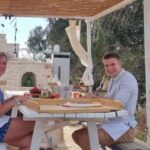
The setting matters too. The description highlights trulli in the background and a natural setting. Even without claiming anything fancy, outdoor dinner at the day’s edge tends to make simple food taste better, because your body relaxes when the meal isn’t rushed and you’re not indoors under harsh lights.
If you like food that’s plain-spoken and satisfying, this menu fits. It’s not trying to impress with tricks. It’s trying to taste like Apulia.
Group size, language, and what to expect from the vibe
This is offered in English and capped at a maximum of 24 travelers. That small cap is important. It helps keep the pace manageable when you’re cooking with others and using the oven.
The experience also includes a mobile ticket and confirmation when you book. You’ll want to show up ready to participate. The class description makes it clear you’ll handle dough and cooking tasks, so treat it like a workshop, not like a watch-and-learn demo.
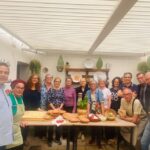
As for the vibe: informal. You’re welcomed by the host family figure, and the setting is described as natural with trulli nearby. You’ll likely find that people talk while they cook, swap tips, and compare how their focaccia looks fresh from the oven.
Price and value: is $113.18 worth it?
At $113.18 per person for about 5 hours, you’re paying for a lot more than a restaurant dinner. Here’s what you’re getting bundled together:
- Trulli sightseeing at I Trulli di Alberobello
- Vineyard tour plus an aperitif featuring the farm’s own wines
- Hands-on cooking for orecchiette, focaccia, and chops
- Use of a wood-fired oven
- A multi-course meal with starters, pasta main, and dessert (including sugared almonds)
When you price a vineyard visit plus a guided meal separately, it usually gets expensive fast. This experience stacks the activities so you get both learning and eating without paying separate admission fees or dealing with a long gap between seeing the farm and eating the results.
The biggest value indicator is that the dinner is tied directly to the cooking you do. If you’ve ever had a tour where the meal feels like an afterthought, this one doesn’t. You bake, you shape, then you eat the same day in an outdoor sunset setup.
One thing to consider: the time is about 5 hours. It’s a full block, and it’s active. If you prefer very slow days or want to maximize big-ticket sightseeing beyond trulli, you’ll want to plan the rest of your day accordingly.
Who should book this Apulian cooking class in Brindisi-area Puglia?
Book it if you want food that feels connected to place. This tour suits you if you like:
- hands-on cooking
- wine with context (vineyard tour plus tasting)
- a menu built around classic Apulian ingredients
- a small-group experience (max 24)
You might skip it if you want a passive, mostly indoor experience, or if you’d rather spend your time in long guided museum-style sightseeing instead of in a working farm kitchen.
It also helps if you enjoy sharing a meal with others. The ending dinner is described as open sunset dinner, which naturally turns into conversation time.
Should you book this Apulian cooking night at Vigna il Castagno?
I think it’s a strong choice if you want one afternoon that does three things well: shows you Puglia’s signature trulli look, gives you real farm-and-wine context, and then lets you cook and eat what you learned. The fact that you use a wood-fired oven and get hands-on with orecchiette and focaccia makes the experience more memorable than a standard meal.
If you’re on the fence, ask yourself one question: do you want to leave with skills you can repeat, or do you mainly want to eat? If you want skills plus dinner, this is a yes. If your priority is pure sightseeing with lots of downtime, you might prefer a lighter tour.
FAQ
How long is the Apulian cooking class and typical dinner?
It lasts about 5 hours.
What is the price per person?
The price is $113.18 per person.
Where does the experience start and end?
It starts at Trulli il Castagno, Strada Noci, 315 Bis, 74015 Martina Franca TA, Italy, and ends back at the meeting point.
Is the tour offered in English?
Yes, it is offered in English.
How large is the group?
It has a maximum of 24 travelers.
What will I cook and prepare?
You will make your own orecchiette, focaccia, and chops, and you will turn on and use the wood-fired oven.
What food and wine are included?
You get an aperitif with wines produced at the farm and a full dinner with courses such as focaccia, broad bean purée, homemade orecchiette, Apulian brasciole in tomato sauce, and sugared almonds.
Is there a mobile ticket and will I get confirmation?
Yes, it includes a mobile ticket, and confirmation is received at the time of booking.
Are service animals allowed?
Yes, service animals are allowed.
What is the cancellation policy?
You can cancel for a full refund up to 24 hours in advance of the experience’s start time. If it’s canceled due to minimum traveler requirements, you’ll be offered a different date/experience or a full refund.