REVIEW · UBUD
Ubud Cooking Class Bali with Balinese Chef
Book on Viator →Operated by Bali Cooking Class Ubud · Bookable on Viator
Balinese cooking starts at the market. This hands-on Ubud class pairs a short traditional market visit with an English-led cooking session where you work at your own station. You can choose the vegetarian set or the non-vegetarian set, then eat what you cooked.
I love how you get real structure: a quick art market stop plus a cooking program led by the chef team in plain English. I also like that you are not watching from the sidelines, because you get your own utensils and you cook your dishes yourself.
One thing to plan for: the experience needs good weather, and pickup is only included in Ubud center for the morning class (other areas cost extra).
In This Review
- Key highlights worth planning for
- Ubud Traditional Art Market: the short stop that sets up your flavor story
- Your cooking station setup: hands-on work, not a demo
- The Balinese menu you’ll make: peanut sauce, spice paste, and banana-leaf cooking
- Vegetarian set (what you cook)
- Non-vegetarian set (what you cook)
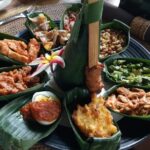
- What you actually eat
- How the class builds real skills (so you can cook again)
- Timing and transfers in Ubud: pickup rules you should know
- Price and value: what $35.79 really buys you
- What it feels like in practice: fun, step-by-step teaching, lots of help
- Tips to get more out of your Ubud cooking class
- Who should book this class, and who might skip it?
- Should you book it? My decision checklist
- FAQ
- How long is the Ubud cooking class?
- Is pickup included?
- Where do I meet for the afternoon class return?
- Do I visit a market as part of the experience?
- Is the class available in English?
- Can I choose a vegetarian menu?
- What dishes are included?
- What if the weather is bad?
Key highlights worth planning for
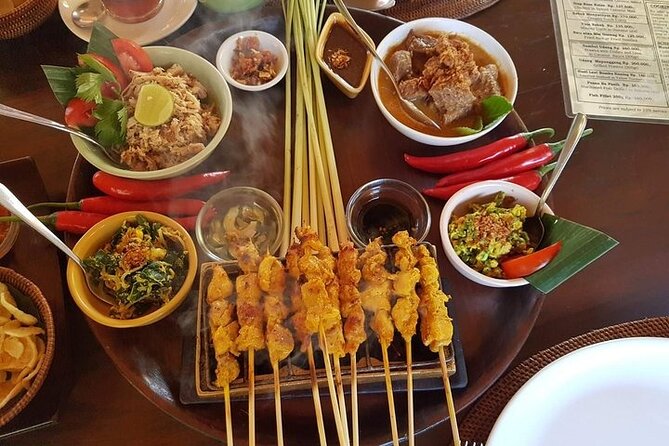
- Own cooking station and utensils so you actively cook, not just taste
- English instruction from a local Balinese chef team
- Short Ubud traditional art market stop with an included admission ticket (morning only)
- Vegetarian or non-vegetarian menu options with the same core Balinese sauces and techniques
- Dinner or lunch included since you taste what you make
- Max group size of 24, which helps you get help when you need it
Ubud Traditional Art Market: the short stop that sets up your flavor story
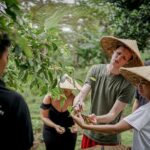
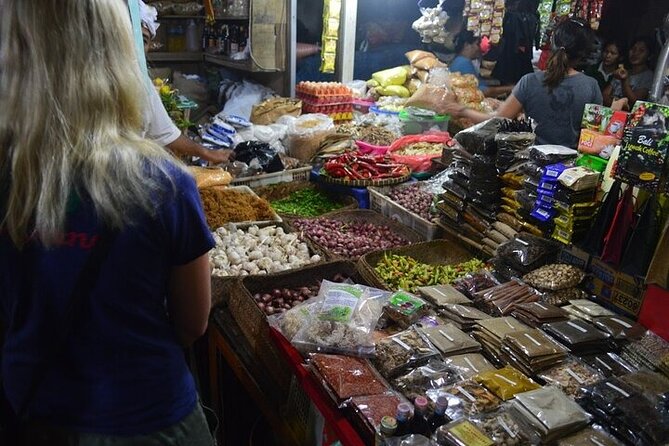
The day starts with a practical little warm-up: a visit to the Ubud Traditional Art Market on the morning trip. It is only about 30 minutes, but the point is smart. You get a sense of what ingredients look like before you start chopping, mixing spice pastes, and building sauces.
You will also have a chance to buy small extras, but personal shopping is on you. Admission for the market visit is included, so you do not need to hunt for tickets or worry about that part of the schedule.
If you like food that tastes like it belongs in the region, this stop helps. It is not a long cultural lecture. It is a quick way to get your bearings with the ingredients and the market vibe, then move straight into cooking.
You can also read our reviews of more tours and experiences in Ubud.

Your cooking station setup: hands-on work, not a demo
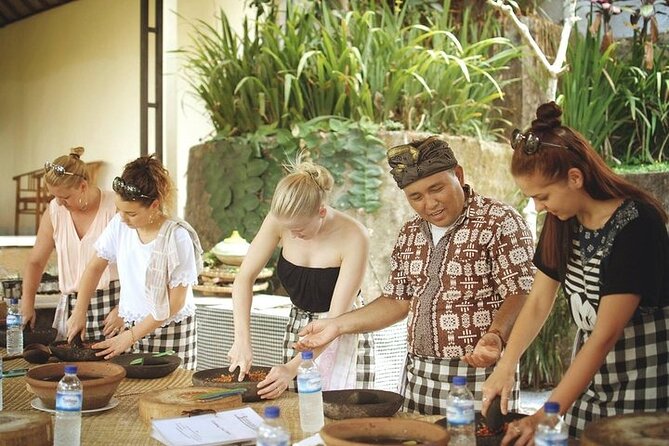
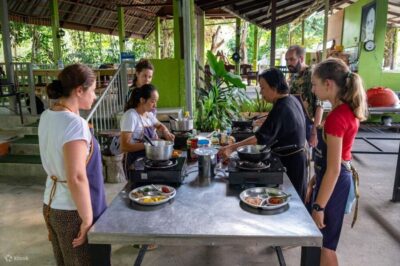
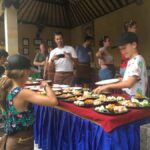
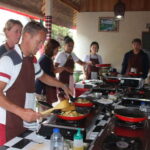
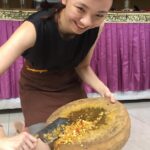
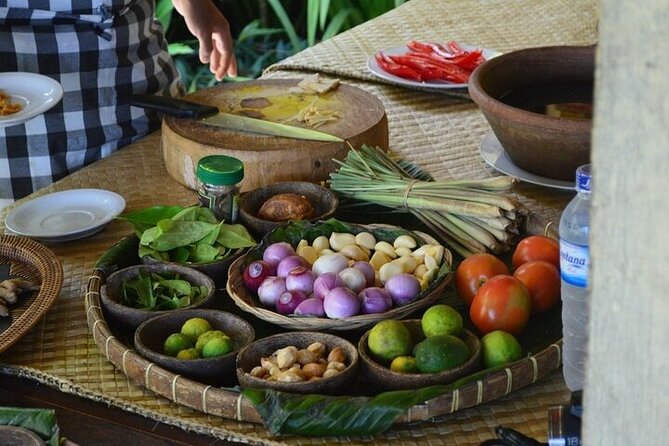
This is a true hands-on cooking class. You get your own cooking station and utensils, and you prepare and cook the dishes yourself. The chef team teaches in English, which matters in Bali because you want to understand the steps, not just copy moves.
What I like about this format is the confidence it gives you afterward. Cooking classes can be fun but forgettable if you only watch. Here, you learn by doing: measuring, grinding, mixing, pan-frying, grilling in banana leaves, and assembling the final plates.
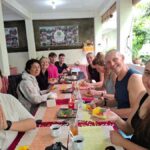
Also, the class is designed for a group of up to 24 people, and there are multiple people on hand to help. That combination usually means you can keep up even if your kitchen skills are rusty.
The Balinese menu you’ll make: peanut sauce, spice paste, and banana-leaf cooking

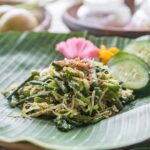
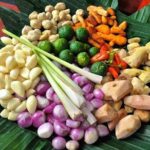
The class includes 7 dish cooking (either vegetarian or non-vegetarian) plus dessert. You also make key components like sauce kacang (peanut sauce) and bumbu Bali (Balinese spice paste), which are the backbone of a lot of the flavor.
Vegetarian set (what you cook)
For the vegetarian option, the menu includes:
- Sauce Kacang (Peanut sauce)
- Bumbu Bali (Balinese spice paste)
- Kare Sayur (Vegetable Curry)
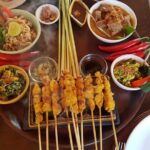
- Tempe, tofu and vegetable Sate (Vegetable Satay with peanut sauce)
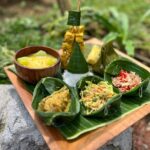
- Pepes Mushroom (Grilled mushroom in banana leaf)
- Mie Goreng (Fried noodles)
- Kolak Pisang (Braised banana saba in palm sugar gravy)
This is a great choice if you want Balinese flavor without meat, because the class still takes you through the same foundational sauces and spice work. Satay plus peanut sauce and noodle frying also give you a couple of dishes that are practical to recreate at home.
Non-vegetarian set (what you cook)
For the non-vegetarian option, the menu includes:
- Sauce Kacang (Peanut sauce)
- Bumbu Bali (Balinese spice paste)
- Ayam Bumbu Bali (Balinese fried chicken)
- Sate Ayam (Chicken satay with peanut sauce)
- Pepes Ikan (Grilled fish in banana leaf)
- Mie Goreng (Fried noodles)
- Kolak Pisang (Braised banana saba in palm sugar gravy)
What you get here is a mix of textures: crispy fried chicken, grilled banana-leaf items, and saucy peanut-based satay. If you already love Indonesian street food flavors, this menu scratches that itch while still teaching the technique.
What you actually eat
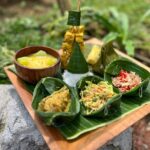
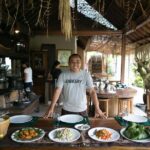
After cooking, you taste what you prepared for lunch or dinner. That part matters more than you might think. When you eat right after learning, you connect the steps you did with the final flavor you want.
How the class builds real skills (so you can cook again)
Even if you are just looking for a fun afternoon, the class is structured like a cooking lesson. You start with core flavor makers and then build outward.
You begin with bumbu Bali, which is basically your spice paste system. Once you understand how that paste works, it makes the rest of the dishes easier to follow, because you see how it turns into curry flavor, fried chicken flavor, and grilled banana-leaf flavor.
Then you learn sauce kacang, the peanut sauce that ties the satay dishes together. The sauce is also where many people realize Indonesian cooking is not just spicy. It is balanced, creamy, sweet-savory, and designed to cling to the food.
And yes, the class includes noodle-frying with mie goreng. This is one of those dishes that can feel simple until you actually try it, because timing and heat control matter. Getting a coached run-through helps you avoid the common home-kitchen problems like soggy noodles or bland seasoning.
On top of that, the banana-leaf dishes are a highlight for technique. Pepes mushroom (vegetarian) and pepes ikan (non-vegetarian) show you a cooking style that is local and practical: aromatic wrapping, gentle steaming/grilling effects, and strong flavor without relying only on heavy sauces.
Timing and transfers in Ubud: pickup rules you should know
Plan around the schedule and meeting points.
- The morning option includes a return hotel transfer in Ubud center only, using a sharing car.
- If your hotel is outside Ubud center, pickup for the cooking class area may cost extra, up to IDR 600K per car (as listed).
- For the afternoon session, you meet at 2:30pm at Lapangan Desa Ubud for pickup/return.
The tour duration is listed as about 4 hours. Your day includes the short market stop (morning) and then a cooking session that takes most of the time.
If you hate logistics, this one is still pretty manageable because the handoff points are clear. Just double-check your hotel location relative to Ubud center when you book, so you are not surprised by extra transfer costs.
Price and value: what $35.79 really buys you
At $35.79 per person, this class is strong value if you care about hands-on cooking. You are paying for more than recipes on paper.
Included in the price:
- English-speaking local chef instruction
- Market tour (morning only), with admission ticket included
- Welcome drink / mineral water
- Cooking ware and cooking ingredients
- Cooking for the vegetarian or non-vegetarian menu set
- Lunch or dinner tasting of what you cook
- A group size capped at 24 travelers
In other words, you are covering ingredients, kitchen equipment, and guided step-by-step instruction, plus you eat your results. For many people, the real payoff is that you leave with dishes you can actually repeat, because you practiced them at your station.
The only cost to watch is market spending and any extra transfer outside Ubud center for the morning class area.
What it feels like in practice: fun, step-by-step teaching, lots of help
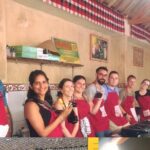
The vibe here is upbeat and organized. The chef team teaches in steps and keeps things moving, so you are not stuck waiting for your turn. You also get plenty of assistance around your station, which is important when you are handling multiple tasks at once (paste mixing, frying, wrapping, grilling, and plating).
In past sessions, a chef named Made has been part of the guiding team, and his style is described as humorous and engaging. Even if your chef is different that day, the consistent theme is clear instruction and a friendly teaching approach.
If you prefer a class where you get individual attention when the group is smaller, this one tends to work well because it caps the group and has staff support.
Tips to get more out of your Ubud cooking class
A few practical moves can make your day smoother:
- Wear comfortable clothes you can get slightly messy. Spice paste and sauces happen.
- Bring flip-flops or shoes you can slip on fast, especially if the market stop involves walking on uneven ground.
- If you have a strong preference between vegetarian and non-vegetarian, decide before you go. The menu sets are different, even though core elements like peanut sauce and spice paste are shared.
- Keep your questions ready. The chef team is using English, and asking about the key steps helps you replicate the dish later.
Also, check the weather when planning. The experience requires good weather, and if it is canceled due to poor weather, you are offered a different date or a full refund.
Who should book this class, and who might skip it?
This class is a good match if you want:
- a hands-on Ubud cooking class with an English-speaking chef
- a short market taste of local ingredients
- a real lunch or dinner where you cook and then eat
- the ability to recreate Balinese flavors at home, especially peanut sauce, spice paste, satay, and banana-leaf dishes
You might skip it if:
- you are looking for a long market walkthrough (this one is about 30 minutes)
- you want a totally free-form experience with no structure (this is guided and step-by-step)
- you have scheduling pressure that would be hard to adjust if weather forces a reschedule
Should you book it? My decision checklist
Book this if you want to leave with more than photos. For the money, you get ingredients, utensils, guided English instruction, a market stop (morning), and the best part: you taste what you made.
Do not book it if your transfer needs are complicated and you are not staying in Ubud center, unless you are fine with the extra car cost. Also, if weather could disrupt your whole Bali plan, you’ll want a little flexibility.
If your schedule fits, you are making a smart choice: you get Balinese technique and flavor patterns you can actually repeat.
FAQ
How long is the Ubud cooking class?
It runs about 4 hours (approx.), including the market stop for the morning trip.
Is pickup included?
For the morning class, return hotel transfer is included for hotels in Ubud center only (sharing car). Pickup from other areas for the cooking class only can cost extra, up to IDR 600K per car.
Where do I meet for the afternoon class return?
You meet at 2:30pm at the front of Lapangan Desa Ubud as the pickup/return point.
Do I visit a market as part of the experience?
Yes. There is a traditional art market tour on the morning trip only (about 30 minutes), and the admission ticket is included.
Is the class available in English?
Yes. The class is conducted in English with a Balinese chef.
Can I choose a vegetarian menu?
Yes. There is a vegetarian menu option and a non-vegetarian menu option.
What dishes are included?
The menu includes items like sauce kacang (peanut sauce), bumbu Bali (Balinese spice paste), satay (tempe/tofu or chicken), banana-leaf dishes (mushroom or fish), mie goreng (fried noodles), and dessert kolak pisang (braised banana in palm sugar gravy).
What if the weather is bad?
The experience requires good weather. If it is canceled due to poor weather, you will be offered a different date or a full refund.