REVIEW · CHIANG MAI
Team Aim Thai Cooking School (#1 Cooking Class in Chiang Mai)
Book on Viator →Operated by Local Tours Center · Bookable on Viator
Thai cooking starts in the market. I love the way Somphet Market gets you oriented fast, especially with Cindy’s shopping stops and ingredient-to-dish explanations, and I also love the hands-on one person per wok setup that makes you actually cook, not just watch. The one thing to consider is timing: it’s a solid 5.5 hours, and you’ll want to arrive hungry.
This class is built around variety in a stunning open-air setting in Chiang Mai, with you making several dishes plus curry paste and mango sticky rice. You can keep it vegetarian/vegan, and adjust spice to your level, so it feels flexible even if your group has mixed preferences.
In This Review
- Key Highlights Worth Signing Up For
- From Somphet Market To Your Wok: How the Class Flows
- Morning vs Evening Courses and Picking the Right Time
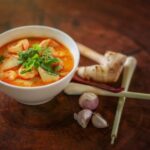
- What You Actually Cook: Curries, Spring Rolls, Soup, Thai Tea, and More
- Meet Cindy and Aim: The Teaching Style That Keeps It Fun
- Open-Air Kitchen Logistics: One Wok Per Person, Plus Real-Time Adjustments
- Price and Value: Is $34.01 a Good Deal?
- Who This Cooking Class Is Best For
- Practical Tips Before You Go
- Should You Book Team Aim Thai Cooking School?
- FAQ
- How long is the Chiang Mai cooking class?
- Are there different course times?
- What dishes will I cook?
- Can the class be vegetarian or vegan?
- Is pickup and transportation included?
- What is the cancellation policy?
Key Highlights Worth Signing Up For
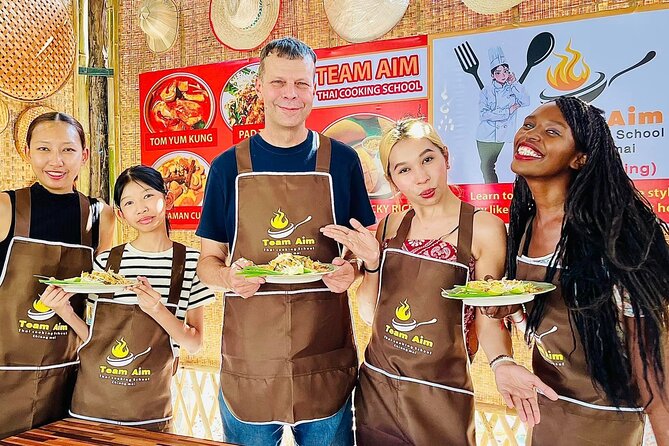
- Somphet Market ingredient shopping so you know what you’re buying and why
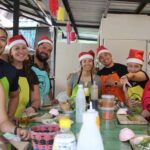
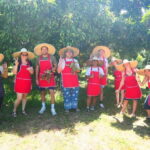
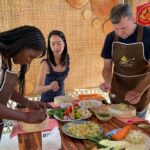
- Small class size (2–9 people) for more attention at each step
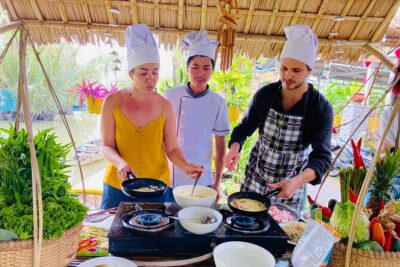
- One person per wok makes it truly hands-on from start to finish
- You choose your menu: 4 dishes + 1 curry paste + sticky rice with mango
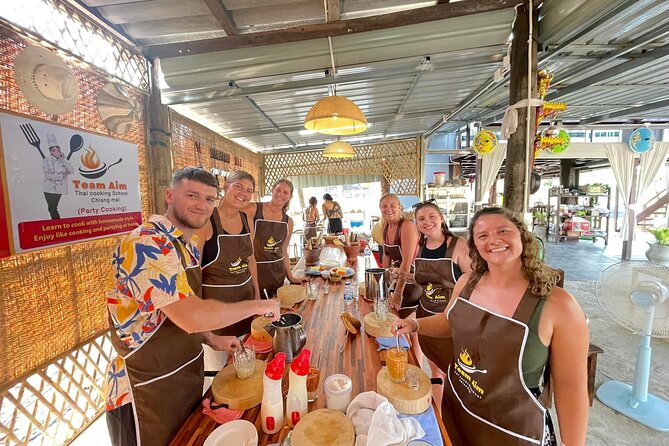
- Open-air kitchen in Chiang Mai with a real local-food vibe
- Take your food or finish it on the spot, plus step-by-step recipe book
From Somphet Market To Your Wok: How the Class Flows
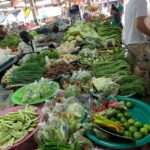
The experience starts with a market visit, and that matters more than it sounds. Thai cooking isn’t just about following a recipe. It’s about knowing what ingredients do in real life—how herbs smell different, how pastes get their depth, and what “fresh” really changes in flavor.
You’ll head to Somphet Market with your guide, then shop the specific items tied to what you’ll cook later. This isn’t a random walk-through. The point is practical: you learn what to look for, how to recognize key aromatics, and how those ingredients show up across curries, stir-fries, salads, noodles, and more. The best part is that it connects directly to your menu choices.
After the market, you ride to the school, settle in with something to drink, and get ready to cook. Then the day turns into a production line—move to the wok, measure, chop, stir, fry, taste, and adjust. This is the kind of class where you finish full and satisfied, because you truly eat what you make.
There’s also a nice pacing element: you get tea, coffee, and water during the session, plus tea and fruit in season. It helps keep the energy up when you’re working with hot pans and active prep.
You can also read our reviews of more tours and experiences in Chiang Mai.
Morning vs Evening Courses and Picking the Right Time
You can choose between two schedules, both about 5 hours 30 minutes long.
Morning course: 09:00–14:30
Pickup: roughly 08:20–08:55
Evening course: 16:30–21:00
Pickup: roughly 15:30–15:55
Here’s how I’d choose. If your day is packed with temples and city wandering, the morning course can be a clean start—then you can still have afternoon time afterward. If you prefer a relaxed afternoon, the evening course lets you do dinner plans around your cooking class timing, since the session includes meals you’ll make and eat.
One practical tip: both courses are long enough that you should treat this as your main food event. It’s not just “a snack class.” You’ll cook multiple dishes, then eat them. If you arrive too full, you’ll miss the fun of tasting each dish as it comes off the heat.
What You Actually Cook: Curries, Spring Rolls, Soup, Thai Tea, and More
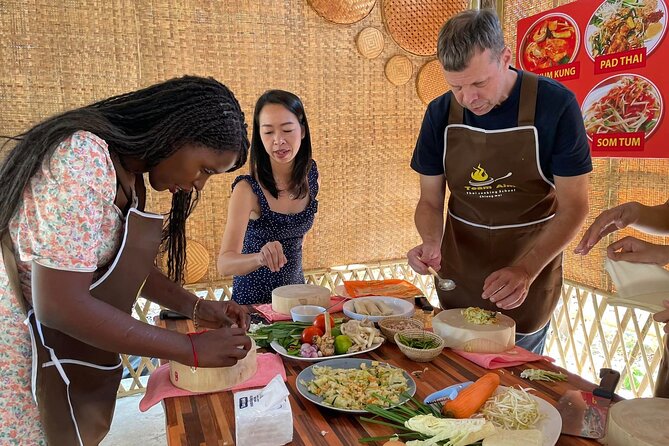
The menu is where this class earns its value. You’re not stuck with one dish. You’ll cook a set of items and then choose your specific combination.
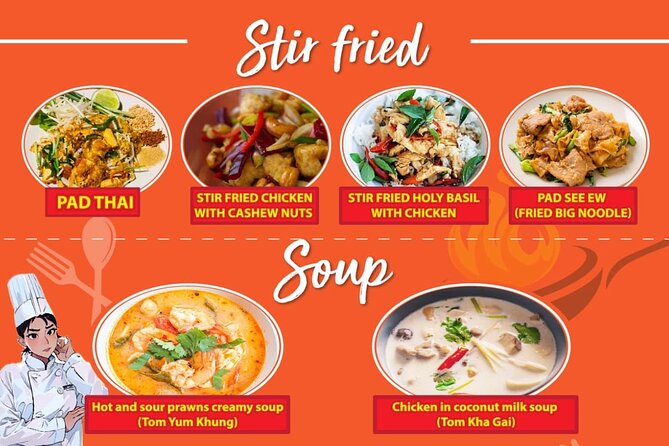
You can choose: 4 dishes + 1 curry paste + sticky rice with mango. And yes—everyone can make a different menu, which is a big deal for small groups. Instead of everyone doing the same thing, you get more variety at the table and more chances to learn different technique paths.
The dishes you’ll cover include options like:
- Spring rolls
- Soup
- Stir-fried dishes
- Curry paste
- Curry
- Thai traditional salad
- Thai tea
- Sticky rice with mango
Two things I’d highlight for your planning:
- Curry paste is part of the work, not just the finished product. Learning how paste becomes curry helps you recreate flavors later at home.
- You’re making Thai tea, which often gets skipped in other cooking classes. It gives you a taste of the beverage side of the meal, not just the savory plates.
Vegetarian and vegan are built into the experience. The class also gives you room to adjust spice to mild or spicy yourself. That’s important because Thai flavors can be bold, but you get control rather than a one-size-fits-all heat level.
Meet Cindy and Aim: The Teaching Style That Keeps It Fun
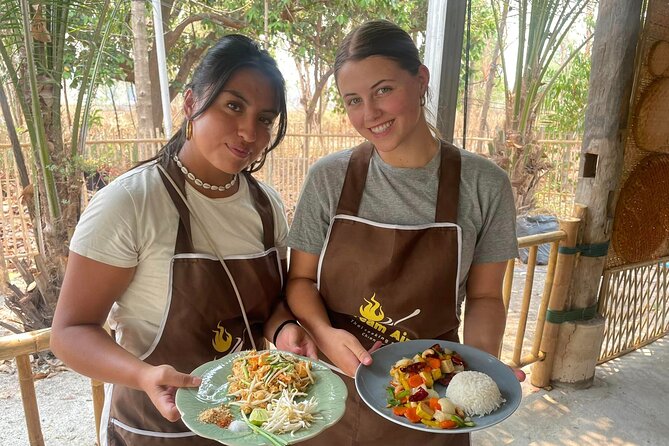
Small groups feel personal, but the real difference is how the teaching shows up in the details. Cindy leads the market portion, and from the way the experience is described, she does the job of turning shopping into learning. She helps you understand what ingredients you’re buying, and how they map to the dishes you’ll make later.
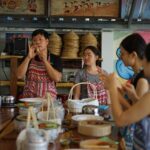
Then Aim is the cooking teacher in the open-air kitchen. The overall vibe is friendly and focused—less “classroom,” more “you’re at the station and making this with guidance.” The teacher’s job here is to keep you moving through each step without rushing your questions, and to make sure the group stays productive even when everyone is chopping and stirring at once.
Because the group is small, you’re more likely to get feedback as you cook. And because everyone works at a station, you’ll see technique, taste, and timing in action instead of just receiving instructions from the sidelines.
Open-Air Kitchen Logistics: One Wok Per Person, Plus Real-Time Adjustments
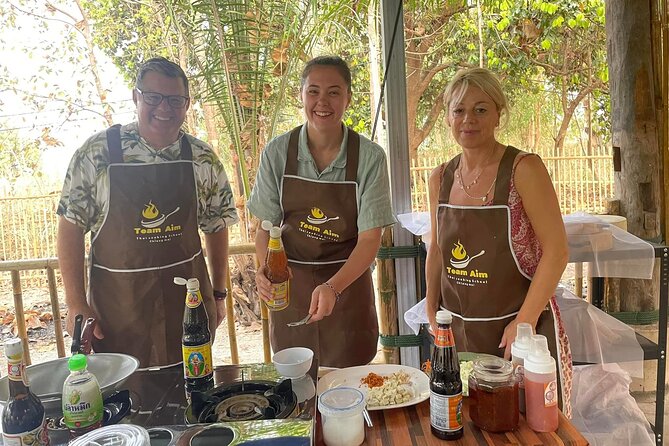
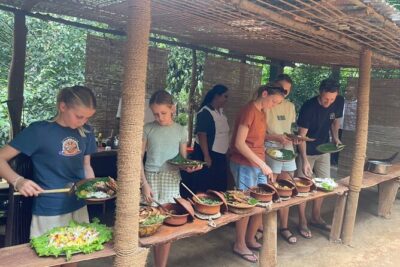
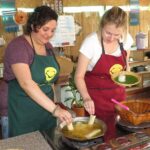
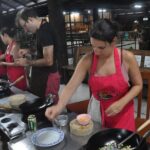
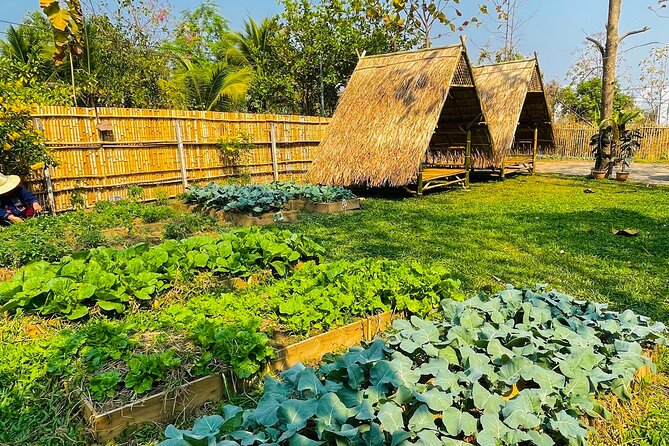
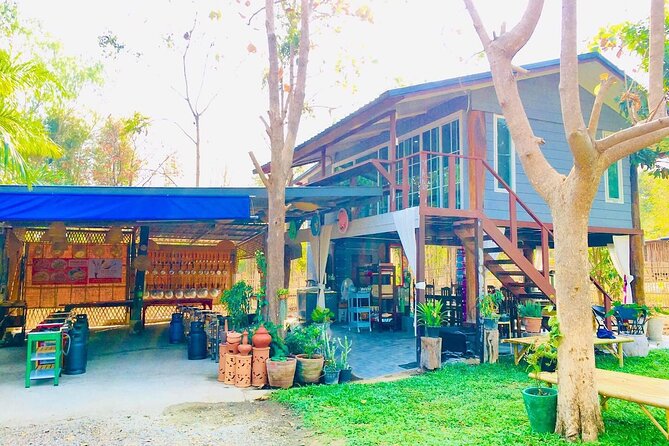
The school is an open-air kitchen, which gives it a local-food atmosphere. You’re not locked in a sterile room. You’re working in a space that feels connected to how Thai food actually gets cooked.
The most practical benefit of the setup is one person per one wok. It keeps the class from becoming passive. You don’t wait for turns for long stretches. You cook your portion, then taste and adjust. That hands-on structure is exactly why this works as a skill-building experience instead of a short entertainment stop.
You’ll also get the essentials handled for you:
- All ingredients for the cooking
- Recipe book step-by-step
- Drinking water, tea, coffee
- Tea and fruit in season
- Free Wi-Fi internet
- Eating all your food or taking it away
That last point is underrated. If you finish and still want to enjoy what’s made—carry it. If you’re not sure you’ll be hungry enough after a full day, you can plan to take a portion home. It makes the meal feel more flexible than a set buffet style.


Price and Value: Is $34.01 a Good Deal?
At $34.01 per person, this class lands in a pretty reasonable range for what you’re getting. What justifies the price isn’t just that you cook. It’s the combo of:
- Market shopping included
- Multiple dish cooking
- Curry paste production
- Small group size
- Hands-on woks
- Step-by-step recipe book
- Transportation within 2.5 km of Chiang Mai Old City
The market portion alone can feel like a mini education. Then you turn that knowledge into finished food. You also get the benefit of your group splitting menus, so the experience feels less repetitive.
Transportation is another value point. You get free round-trip transportation within 2.5 km from Chiang Mai Old City. If your hotel is close enough, you’ll save time and hassle, and you won’t lose your energy on getting across town.
One more thing to consider: the experience is weather-dependent. Since it’s open-air, if the weather turns, the class may be rescheduled or refunded. If you’re traveling during a rainy stretch, that flexibility matters.
Who This Cooking Class Is Best For
This is a strong fit if you:
- want more than tasting—actually want to understand ingredients and technique
- prefer small-group attention
- like adjusting recipes to your taste (especially spice level)
- travel with mixed dietary needs and want an option for vegetarian/vegan
It’s also a good choice for food lovers who want a memorable souvenir that isn’t just photos. When you leave with a recipe book and the skills to re-create spice balance, you’ve taken home something real.
If you hate being hands-on or you’re expecting a quick sampler class, this might feel like a workout. But if you want to cook, eat, and learn in a single session, it’s made for you.
Practical Tips Before You Go
A few simple prep moves will make the class feel smooth:
- Come hungry. You’ll be cooking and eating enough food that skipping breakfast (if you’re on the morning course) or going lighter earlier (if you’re on the evening course) makes the whole day more enjoyable.
- Wear something comfortable for chopping and standing.
- Be ready to taste and adjust spice. You can make it mild or spicy, but tasting is part of the learning.
- Ask about what you bought at the market. The point of that shopping stop is learning, so use the guide’s explanations as your anchor for the cooking later.
Also, keep your schedule flexible enough to handle the natural pace of a hands-on class. It’s not a rushed stop; it’s meant to take time.
Should You Book Team Aim Thai Cooking School?
I think you should book this if your goal is real skill and real variety. The combination of market shopping, open-air cooking, and the one-wok-per-person structure is the kind of setup that actually teaches you. You’ll leave with a step-by-step recipe book, plus the confidence that comes from cooking dishes like spring rolls, curry paste, curry, salad, and Thai tea yourself.
Pass if you want a very short, low-effort experience, or if you’re uncomfortable with spicy food adjustments and kitchen prep. Also consider the weather factor since the experience is open-air.
If you want the most authentic kind of Thai cooking class in Chiang Mai—one where you shop, cook, taste, and learn—this is a strong bet.
FAQ
How long is the Chiang Mai cooking class?
The class runs about 5 hours 30 minutes.
Are there different course times?
Yes. There’s a morning course (09:00–14:30) and an evening course (16:30–21:00), each with pickup before the start time.
What dishes will I cook?
You’ll cook items including spring rolls, soup, stir-fried dishes, curry paste, curry, Thai traditional salad, and Thai tea. You can choose 4 dishes plus 1 curry paste, and sticky rice with mango.
Can the class be vegetarian or vegan?
Yes. The dishes can be made vegetarian or vegan, and you can adjust spice to mild or spicy by yourself.
Is pickup and transportation included?
Pickup is offered, and transportation is free within 2.5 km of Chiang Mai Old City. The activity also supports a mobile ticket.
What is the cancellation policy?
You can cancel for a full refund up to 24 hours before the experience’s start time. If you cancel less than 24 hours before, the amount paid isn’t refunded. The experience also requires good weather and may be rescheduled or refunded if canceled due to poor weather.