REVIEW · LISBON
Pastel de Nata Cooking Class in a Lisbon Pastry Shop
Book on Viator →Operated by eatwith · Bookable on Viator
Custard tarts, made the real way in Lisbon. This Pastel de Nata cooking class at Casa dos Ovos Moles has you working step-by-step on the tart everyone talks about, with Filipa guiding the process in English. You’ll also taste Portuguese flavor along the way, not just eat the final product.
My favorite part is how hands-on it feels for a 1 hour 30 minute session, with a small group size that keeps the instructor engaged with your questions. One thing to consider: it’s a team workflow, so you won’t necessarily bake each tart completely on your own from start to finish.
In This Review
- Key highlights at a glance
- Why Pastel de Nata is more than a snack in Lisbon
- Casa dos Ovos Moles: the real pastry-shop setting
- Filipa’s approach: hands-on, patient, and very practical
- From dough to custard: what you actually make
- What you drink and eat: port, ginja, and coffee/tea
- The 1 hour 30 minutes: how the class flows
- Price and value: is $99.72 reasonable?
- Who should book this Lisbon Pastel de Nata class
- Tips to get the most from your class
- Should you book it?
- FAQ
- Where is the class meeting point?
- What time does the class start?
- How long is the Pastel de Nata cooking class?
- Is the class offered in English?
- How many people are in the group?
- Is it suitable for children?
- What drinks and food are included?
- What if I have food allergies or a special diet?
- What’s the cancellation policy?
Key highlights at a glance
- From-scratch Pastel de Nata techniques taught right in the pastry shop
- Small group (max 6) for more attention and quicker help when dough gets tricky
- Port wine and ginja liquor included as part of the experience
- History of the tart is explained while you cook, so it’s more than just baking
- Family-friendly for ages 12+, with guidance that works even for beginners
Why Pastel de Nata is more than a snack in Lisbon
Pastel de Nata is the kind of Lisbon food that turns into a whole personality. Even if you’ve eaten one already, learning how it’s made changes your brain a bit. You start noticing the texture, the thin crisp layers, and that caramelized top that looks simple but takes skill.
In this class, the goal isn’t just to hand you a pastry and call it culture. Filipa walks you through what makes the tart Portuguese, including the history of Pastel de Nata while you’re actively making yours. That matters, because it helps you understand why shops guard certain methods and why small details change the result.
One practical bonus: once you see how much work goes into the dough and the custard, you’ll stop thinking of it as a quick dessert. You’ll see it as an art that’s built from timing, handling, and attention—exactly the kind of lesson you can take home.
You can also read our reviews of more tours and experiences in Lisbon.
Casa dos Ovos Moles: the real pastry-shop setting
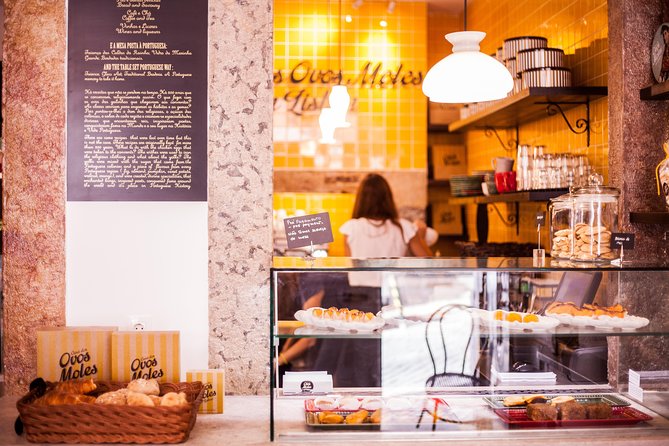
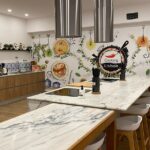
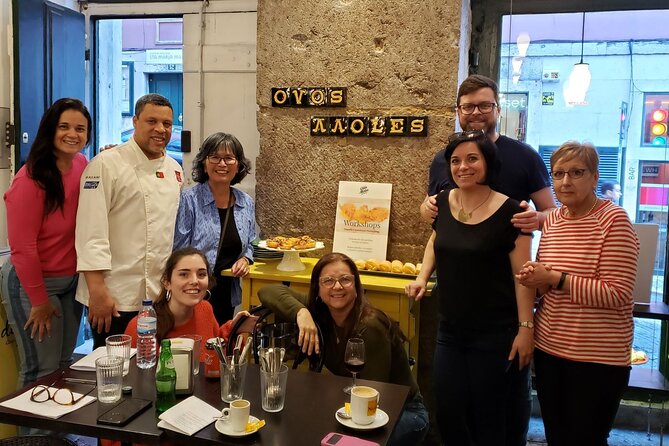
The class happens at Casa dos Ovos Moles, an established Lisbon pastry shop. You’re not in a classroom kitchen that feels like a set. You’re in a working environment, which makes the whole experience feel more authentic and less “tour show.”
The meeting point is Calçada do Sacramento 25 (1200-393 Lisboa), and the experience ends back there. That helps you keep the rest of your day simple. It’s also near public transportation, so you’re not stuck planning a long commute.
One more small detail I like: the setting makes it easy to tack on sightseeing right after. The area is close to a castle nearby, so you can finish class and keep exploring without losing time to transit.
Filipa’s approach: hands-on, patient, and very practical
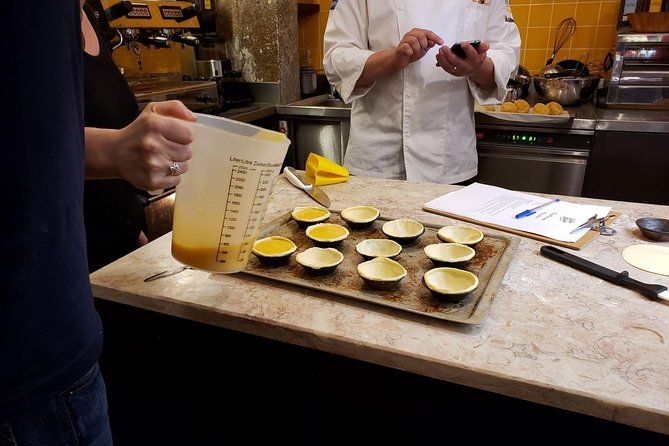
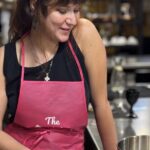
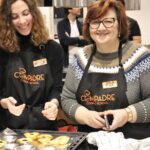
Filipa is the heart of this class. The best part is her teaching style: clear instructions, room for questions, and correction when your technique needs adjusting. People who come in as complete beginners don’t get left behind.
What you learn is both method and mindset. Custard tarts are fussy. Dough can tear. Filling can be uneven. Heat can surprise you. Filipa helps you get past the fear of messing it up. And when the group is small, you’re more likely to get direct feedback instead of generic advice.
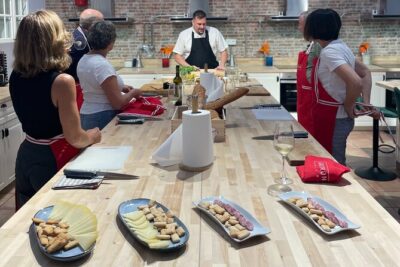
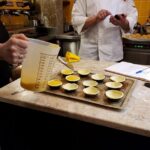
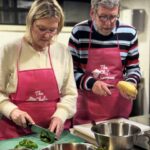
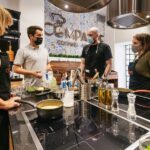
You’ll also feel the shop vibe through the workflow. It becomes a shared little operation: you do parts of the process, then you watch others, then you take over another step. It’s not a private lesson, but it still feels personal because the group is capped at 6 people.
If you have a family group or you’re traveling with a teen, this matters too. The class is suitable for kids aged 12 and older, and Filipa adjusts so you’re not just watching adults do everything while the younger ones wait.
From dough to custard: what you actually make
Here’s the core promise: you make the famous Portuguese custard tarts—Pastel de Nata from scratch—right in the shop. That includes learning the cooking techniques that go into the pastry, not just assembling a finished product.
Expect a process that feels more like baking craftsmanship than simple mixing. The pastry work includes handling dough properly so it doesn’t break when it’s moved and shaped. Then you focus on the filling. Pastel de Nata custard isn’t a random custard. It’s the filling that gives you that signature set and the way it behaves under heat.
Even if you’ve baked before, you’ll likely be surprised by how much handwork is involved. The point isn’t to make you a professional in 90 minutes. The point is to show you what the pros pay attention to—especially with dough handling and the final bake.
Also, readjust your expectations in the best way: this is a group exercise, so you’ll contribute across the steps. One person might handle one part while another works on the next. Everyone ends with a finished result to eat, but the labor is shared.
What you drink and eat: port, ginja, and coffee/tea
Food classes often stop at tasting. This one gives you a real little menu moment while you bake.
In the starter, you’ll have Pastel de Nata served with Porto Wine and Ginja Liquor. Ginja (Portuguese sour cherry liqueur) is one of those flavors that instantly makes the experience feel local. The wine adds warmth, and the licor flavor gives you a different angle on sweetness.
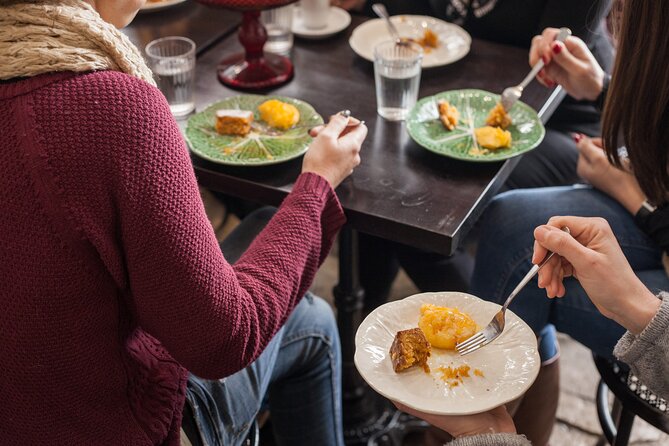
Then there’s dessert and drinks included as part of the experience: wine, aperitif, coffee, tea, and water. That means you’re not scrambling for a drink after you finish. You can sit, enjoy, and compare what you made with what you ordered in Lisbon before you forget which is which.
And yes, the best part is tasting what you made while it’s fresh. There’s something satisfying about eating a tart that still smells like the oven.
The 1 hour 30 minutes: how the class flows
The class starts at 3:00 pm and runs about 1 hour 30 minutes. Since it loops back to the meeting point, you’ll be able to plan your next stop without worrying about a far-off end location.
A typical flow looks like this:
- You arrive at the shop at the meeting point and get oriented.
- Filipa explains the tart, including the background behind Pastel de Nata.
- You work through the pastry steps together, with the group moving through different hands-on tasks.
- While baking happens, you enjoy the included tastings—port wine and ginja liquor in the starter set.
- You finish with eating the results of your work.
This timing is ideal if you want something that feels like a full activity but doesn’t eat your whole afternoon. It’s also a good pick if you like learning in motion. You’re not standing around waiting for a lecture to end.
Price and value: is $99.72 reasonable?
At $99.72 per person, this class isn’t a cheap impulse buy. It also isn’t priced like a gimmick. The value comes from what you’re doing and what’s included.
First, you’re paying for hands-on instruction from a real shop owner/instructor, Filipa, in a small group limited to 6 people. Second, you get drinks and tastings built into the experience, including port wine, ginja liquor, and additional beverages like coffee and tea. Third, the class focuses on from-scratch technique, which is where many cheaper “tasting-only” experiences fall short.
The one caveat is the group format. This can mean you don’t fully control every single step end-to-end by yourself. If your ideal is a private baking session where you do everything alone, this may feel more like a collaborative workshop than a solo project.
But if you want a fun, guided way to understand how Pastel de Nata is built—and to take home the confidence to try again later—you’re paying for exactly that.
Who should book this Lisbon Pastel de Nata class
This works best for:
- Beginners who want step-by-step guidance without feeling embarrassed
- People who love Lisbon food and want the story behind it while they cook
- Families with kids 12+, since it’s family friendly and the instructor can adapt
- Couples or small groups who want a hands-on activity that still feels social
If you’re the type who visits pastry shops and then wonders how the magic happens, this class answers that question fast. And because it’s English-taught, you can focus on technique instead of translating everything in your head.
Tips to get the most from your class
A few smart moves will help your class experience feel smoother:
- Arrive a little early so you’re not stressed when dough work starts.
- If you have food restrictions, communicate them ahead of time so the host can plan.
- Be ready to get your hands busy. This is not a watch-and-snack session.
- Ask questions while Filipa is explaining technique. In pastry work, small details matter.
Afterward, you’ll likely want to repeat what you learned. Even if you don’t get the first try perfect, this kind of experience makes the difference between guessing and actually practicing with purpose.
Should you book it?
I’d book this class if you want a genuinely hands-on look at Lisbon’s most famous custard tart, with a real shop setting and a small group size that keeps you supported. The included tastings—especially port wine and ginja—turn it into more than just baking instructions.
I’d hesitate only if you’re expecting a fully private, solo-by-solo baking experience. This is collaborative. You’ll do a lot, but it’s shared steps.
If that sounds good, go. You’ll leave with a new appreciation for why Pastel de Nata tastes the way it does—and you’ll have one more great Lisbon memory that you can recreate.
FAQ
Where is the class meeting point?
The class meets at Calçada do Sacramento 25, 1200-393 Lisboa, Portugal. The activity also ends back at the same meeting point.
What time does the class start?
The start time listed for this experience is 3:00 pm.
How long is the Pastel de Nata cooking class?
The duration is about 1 hour 30 minutes.
Is the class offered in English?
Yes. This experience is offered in English.
How many people are in the group?
The class has a maximum of 6 travelers.
Is it suitable for children?
Yes. It’s suitable for children aged 12 years and older, and it’s described as family friendly.
What drinks and food are included?
You’ll have a starter of Pastel de Nata served with Porto wine and Ginja liquor. Drinks and extras include wine, an aperitif, coffee, tea, and water.
What if I have food allergies or a special diet?
You’ll need to communicate any food restrictions (allergy, special diet, etc.) when booking.
What’s the cancellation policy?
You can cancel for a full refund if you cancel at least 24 hours before the experience’s start time. If you cancel less than 24 hours before, the amount paid isn’t refunded.