REVIEW · CHIANG MAI
Chiang Mai: Evening Cooking Class and Local Market Visit
Book on GetYourGuide →Operated by Galangal Cooking Studio · Bookable on GetYourGuide
Four dishes, one market, and a recipe stash.
This 5-hour Chiang Mai evening class pairs smooth hotel pickup with a local market stop and a stroll through an organic garden, then guides you through real Thai techniques with English help from instructors like New. I also love the choice-based menu, since you can pick the dishes you actually want to eat, from Pad Thai to Tom Yum and your preferred curry. The main catch is timing and fullness: it starts around dinner time and runs later (often up to about 8:30 pm for bigger groups), so plan your evening accordingly.
What makes it feel worth it is how much you do, not just how much you watch. In many sessions, New (and sometimes Aoy/Oi) keeps things moving, explains ingredients clearly, and adjusts around dietary needs so you still get a satisfying meal. Come with an empty stomach and comfortable shoes for the market walk, and you’ll leave with food you cooked and a PDF recipe book to recreate at home.
In This Review
- Key highlights to look forward to
- Starting in your hotel zone, not across town
- The market stop: ingredients you’ll recognize later
- Organic garden time: learning flavor at the source
- Choosing your dishes: the menu is half the fun
- Curry paste and Thai technique, step by step
- Eating together, then leaving with leftovers
- The recipe book you’ll actually use at home
- Dietary needs and substitutions (without turning the class into a compromise)
- Price and value for $28 in Chiang Mai
- Who this class suits best (and who should skip it)
- Quick logistics you’ll thank yourself for
- Should you book this Chiang Mai evening cooking class at Galangal Cooking Studio?
- FAQ
- How long is the Chiang Mai evening cooking class?
- Is hotel pickup and drop-off included?
- What dishes can I choose to cook?
- Do you offer vegan, vegetarian, Halal, or gluten-free options?
- What time does the class start in relation to dinner?
- Do I need to come hungry?
- Can I bring an observer?
Key highlights to look forward to
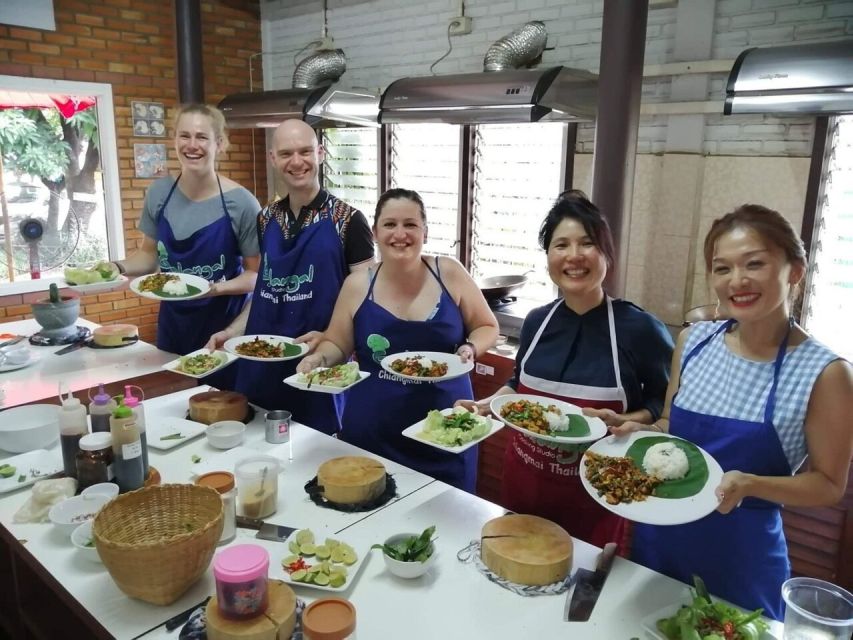
- Hotel pickup and drop-off from central Chiang Mai areas like the old city and along Huay Keaw Rd
- Market shopping plus an organic garden stroll so you understand where herbs and veg come from
- Pick your menu from stir-fry, soup, appetizer, and curry options, then learn the curry paste technique
- Air-conditioned indoor kitchen and clear English instruction that keeps first-timers comfortable
- Dietary flexibility (vegan, vegetarian, Halal, gluten-free options and allergy substitutions when needed)
- Take-home recipes via a PDF recipe book (often shared after class)
Starting in your hotel zone, not across town
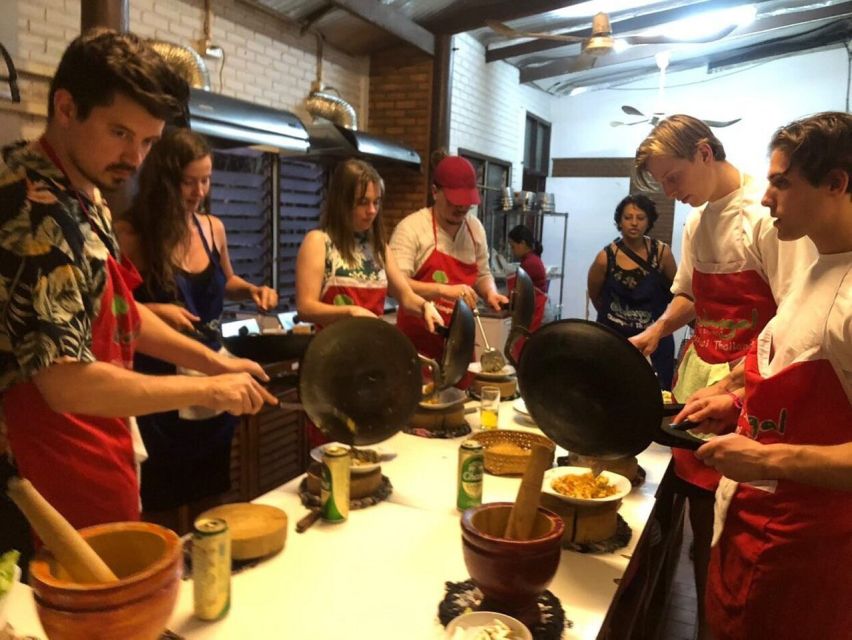
This is the kind of Chiang Mai activity that works on a normal travel schedule. You get picked up from central locations, including the old city, Santitham, and stretches along Huay Keaw Rd up to Maya Shopping Mall, plus some farther neighborhoods depending on your exact address. Pickup runs in the 3:15–3:45 pm window, and the operator notes the driver may arrive a bit earlier because evening traffic can be rough. The driver won’t wait more than 5 minutes after the scheduled pickup time, so set a quick reminder and be ready.
Why that matters: evening classes can be a headache if you’re stuck commuting after a day of temples. Here, the round-trip transfer lets you treat the class as your dinner plan instead of an extra errand.
When you do reach the school, you’re set up for the evening rhythm. Thai culture often starts dinner around 4 or 5 pm, and the class window is typically 4:00 to about 8:30 pm for larger groups (10–12 people). If your group is smaller, you should finish earlier.
One more small but real quality detail: multiple bookings praised how smoothly the transport worked, with pickup communicated clearly and the whole evening running on time.
You can also read our reviews of more tours and experiences in Chiang Mai.
The market stop: ingredients you’ll recognize later
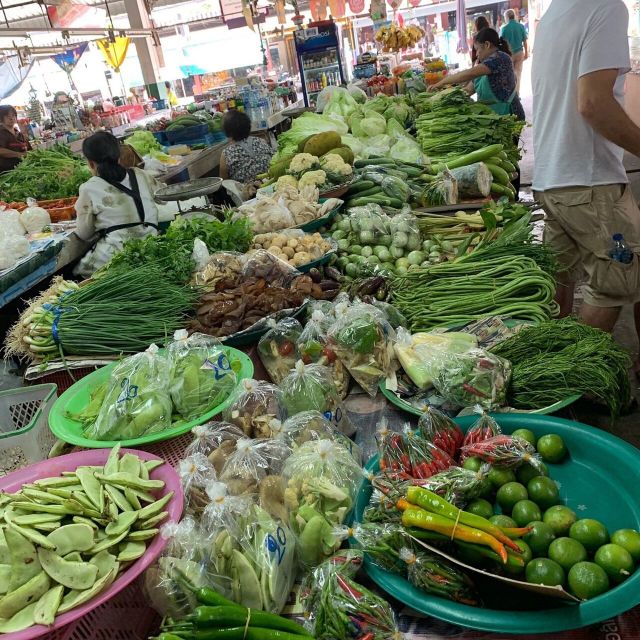
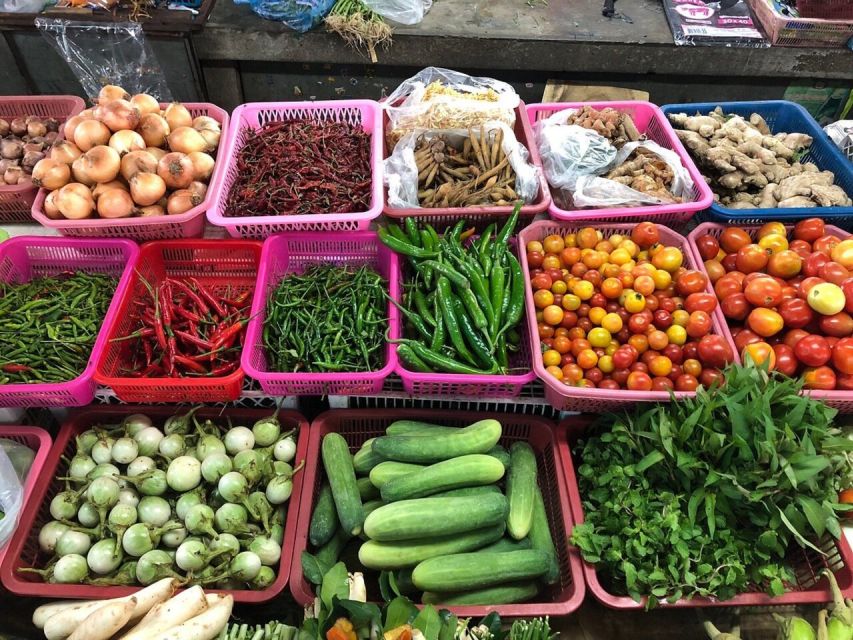
The market portion is where the class stops being just a cooking demo and becomes a buying-and-cooking lesson. You’ll walk through fresh produce and Thai staples with your guide, learning what you’re actually holding—things like herbs, vegetables, and the ingredients that shape flavor.
You also get a market “see it first” moment. Some people like skimming stalls; others like grilling the guide about what to buy. Either way, you’ll come away understanding which ingredients are optional for convenience and which ones are essential for the dish you chose.
A note on pacing: the included market tour is listed as depending on interest, so if you want extra time looking around, it’s worth telling the guide early.
Practical tip: come ready to ask questions about substitutions. Even with a set menu, you may want alternatives for seafood, spice levels, or ingredient availability at home. Several bookings specifically praised instructors for offering substitutions for dietary needs.
Organic garden time: learning flavor at the source
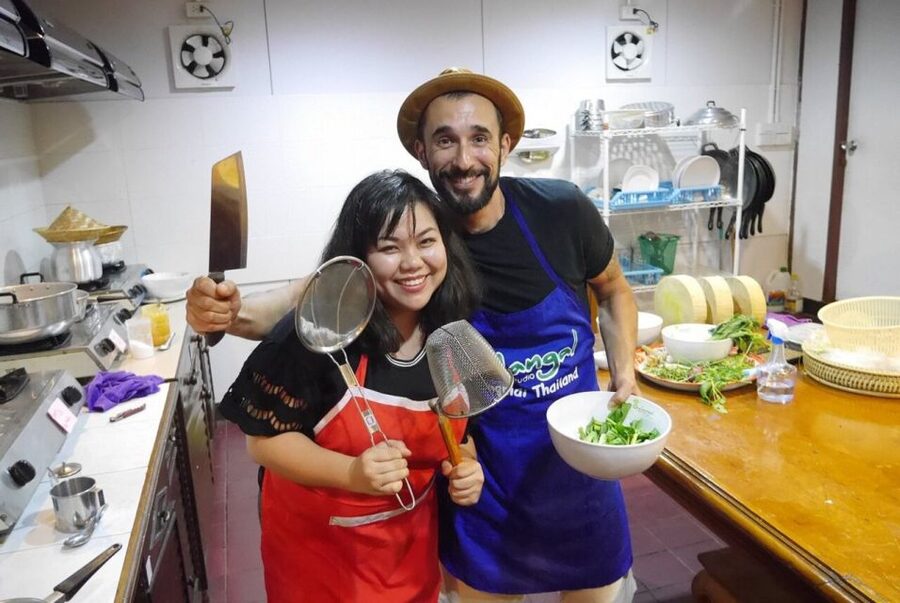
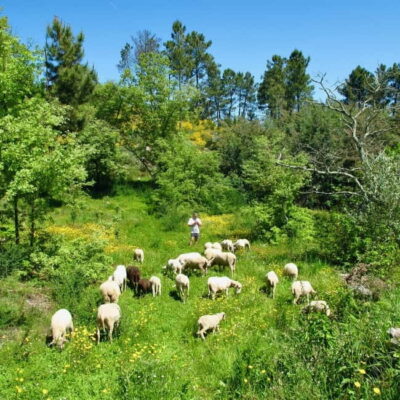
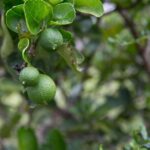
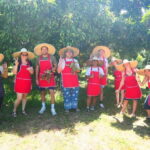
After the market, you visit an organic garden where you can stroll and see how herbs and vegetables are grown. It’s not a science lecture, but it gives you context. When you later smell Thai basil or taste something aromatic in your curry or stir-fry, you’ll understand the difference between “an ingredient” and “a plant with purpose.”
This part also helps you connect the dots between Thai cooking and Thai eating. Thai flavors rely heavily on fresh herbs and aromatics, and the garden stop is a visual reminder that the taste starts far earlier than the pan.
If you’re the type who likes tours that connect culture to food (not just food to photos), you’ll probably appreciate this extra layer.
Choosing your dishes: the menu is half the fun
Here’s one of the biggest reasons this class gets strong marks: you don’t get stuck with random assignments. You pick from categories, and that choice makes the cooking feel personal.
You choose one dish from each category:
- Stir-fried
- Examples include Pad Thai, Pad See Ew, Pad Kaphao Kai (holy basil chicken), and chicken cashew dishes
- Soup
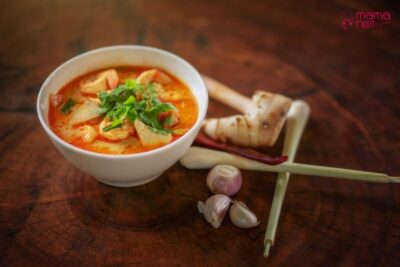
- Options include Tom Yum Kung, Tom Kha Kai, Tom Kha Je (vegetarian/vegan coconut soup), and another hot-and-sour variation
- Appetizer
- Choices include Som Tam (papaya salad), spring rolls, larb-style chicken salad, or glass noodle salad
- Curry / curry paste making
- Options include Massaman curry, green curry, Panang curry, red curry, yellow curry, dry red curry, plus a Chiang Mai-style noodle dish (Khao Soi)
Even though the core menu is organized into four selection categories, the class is also framed around learning curry paste technique. In practice, that means you’re not just assembling flavors—you’re learning how the curry foundation comes together.
What to expect in the kitchen:
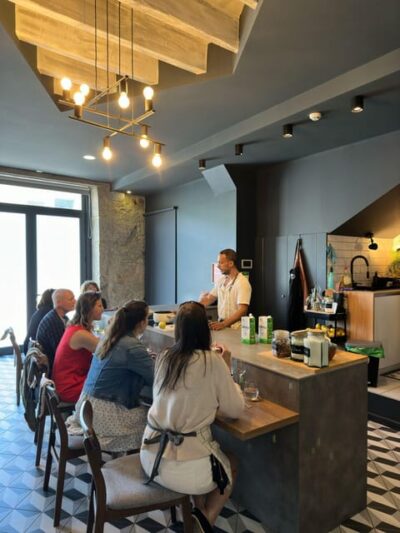
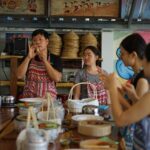
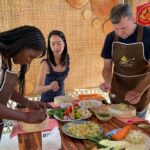
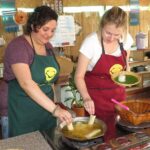
- You’ll cook under English instruction in an indoor air-conditioned dining room/kitchen setup.
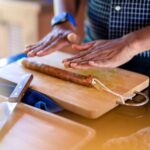
- The cooking is hands-on, but structured enough that you don’t need to be a confident home cook.
- Your guide keeps people moving so everyone finishes and can eat.
Reviews repeatedly call out that instructors explained why ingredients matter, not only how to stir or chop. That’s the difference between leaving with a recipe and leaving with skills.
Curry paste and Thai technique, step by step
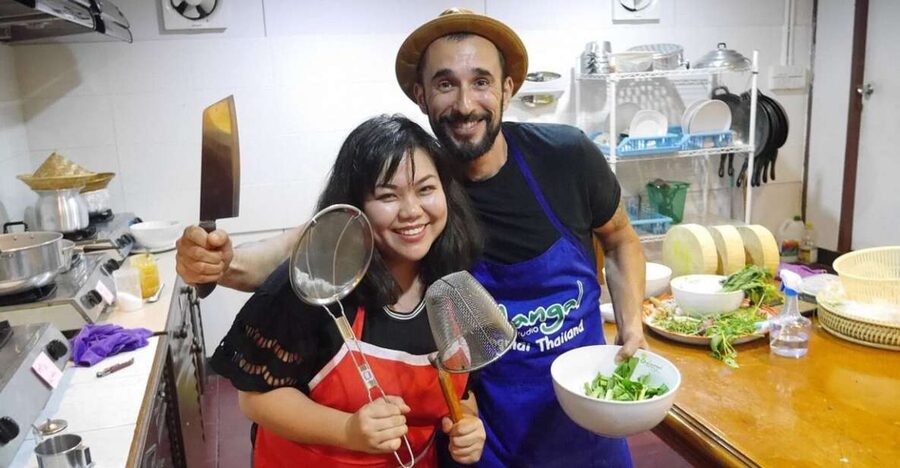
If you want to cook Thai food beyond one repeatable dish, curry paste is the skill that pays off. The class format is built around learning that foundation, not just tasting the result.
In a typical flow, you’ll:
- Start with the ingredients that build the curry base.
- Learn how to prepare and balance flavor in the paste.
- Move into the curry dish you selected, so the paste isn’t just an isolated project.
This matters for value. Lots of cooking classes in tourist areas make you feel busy, but you don’t always learn the core technique. Here, the curry paste focus gives you something you can carry home—especially if you want to make curries from scratch rather than relying on jarred paste.
And yes, you’ll taste what you make at the end. That means the final result isn’t theoretical. You can compare what you did to what you’re aiming for, and your guide can help you correct flavors on the spot.
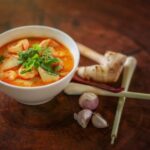
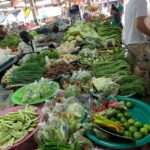


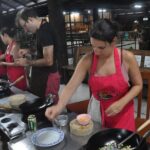
Eating together, then leaving with leftovers
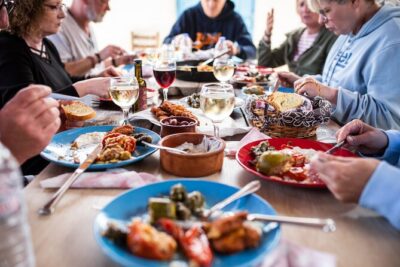
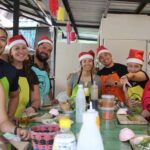
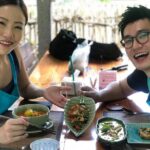
The end of the class is straightforward and satisfying: you eat the dishes you cooked together. Multiple bookings mention the portions and timing are enough to leave you stuffed, so treat this as your real meal, not a snack detour.
Another practical perk: you can take food back. That’s handy if you want to pace yourself, or if you’re trying to avoid booking a second dinner later.
The recipe book you’ll actually use at home
You get a PDF recipe book, which is the part that makes the experience more than just an evening activity. A recipe exists, and it’s designed for recreating the dishes you made.
Some bookings specifically mention getting recipes by email as a bonus, but the key takeaway for you is the same: you’re not relying on memory for ingredient amounts and steps.
If you’ve ever returned from a cooking class with a bunch of great smells in your head and nothing written down, this is the fix.
Dietary needs and substitutions (without turning the class into a compromise)
This class is listed as available for people who are:
- vegan
- vegetarian
- Halal
- gluten-free
- and for guests with allergies
Just as important, it sounds like the instructors don’t treat these as side requests. Several reviews praise attention to dietary requirements and substitutions that still keep the dish enjoyable (for example, vegetarian substitutions and seafood alternatives).
You should still communicate your needs clearly when you book, and mention any specific allergies. But if you’ve worried that Thai cooking classes might turn into “watch only” experiences, the data here suggests that won’t be the case.
Price and value for $28 in Chiang Mai
At $28 per person for about 5 hours, the value comes from the full package, not just the cooking. You’re paying for:
- hotel pickup and drop-off (a real time-saver in Chiang Mai)
- a market ingredient walk and organic garden visit
- English-led instruction
- all ingredients and equipment
- drinks like water, tea, and coffee
- recipe material to take home
In other words, you’re not just buying a single cooking session. You’re buying the “how Thai cooking starts” portion too: ingredients, herbs, and techniques tied to what you choose to cook.
If you love food and want something more grounded than a generic tourist meal, this is a strong fit for your evening.
Who this class suits best (and who should skip it)
This is a great match if you:
- want a practical way to learn Thai flavors and techniques
- like the idea of choosing your dishes rather than taking whatever you’re assigned
- enjoy markets and want a short food-and-ingredient story with your cooking
- need dietary options like vegetarian, vegan, Halal, or gluten-free
You might want to consider skipping if you:
- have altitude sickness concerns (listed as not suitable for people with altitude sickness)
Also, the class setup is indicated as wheelchair and stroller accessible, and the kitchen is indoors with air conditioning. The cooking school is near public transportation, so even if you’re not in the main pickup coverage, you may still have an easier option to reach it yourself—though pickup coverage does depend on your exact hotel address.
Quick logistics you’ll thank yourself for
A few common-sense points make the evening smoother:
- Bring personal medication if you need it.
- No smoking indoors, and alcohol and drugs aren’t allowed.
- Come with an empty stomach since dinner starts around 4–5 pm and you’ll be fed what you cook.
- Wear shoes that handle uneven market surfaces.
- If you want the experience to go faster or slower for your group size, listen for the guide’s timing notes. Big groups run the full window; small groups usually finish earlier.
One small, human detail from reviews: when schedules were tight, instructors showed willingness to adjust plans so the class still happened. That flexibility is reassuring if you’re trying to fit Chiang Mai activities into a short itinerary.
Should you book this Chiang Mai evening cooking class at Galangal Cooking Studio?
Book it if you want an evening that feels like real Thai food education: you shop for ingredients, learn from what you bought (and the herbs you saw), then cook multiple dishes you actually chose. The combination of market + organic garden + hands-on instruction plus a PDF recipe book is the kind of practical value that makes the class worth repeating back home.
Skip it if you’re only looking for a light tasting experience, or if late evenings are hard for you. The schedule is built around dinner time, and the class can run up to about 8:30 pm depending on group size.
If you’re staying in central Chiang Mai and want a dinner plan with real skills attached, this is one of the easiest yeses.
FAQ
How long is the Chiang Mai evening cooking class?
The duration is 5 hours.
Is hotel pickup and drop-off included?
Yes. Hotel pickup and drop-off in central Chiang Mai areas are included. Pickup timing is typically between 3:15 and 3:45 pm.
What dishes can I choose to cook?
You can choose one dish from each category: stir-fried, soup, appetizer, and a curry/curry paste option. Examples include Pad Thai, Tom Yum Kung, Som Tam, and Massaman curry.
Do you offer vegan, vegetarian, Halal, or gluten-free options?
Yes. The activity is available for vegan, vegetarian, Halal, gluten-free needs, and for guests with allergies.
What time does the class start in relation to dinner?
They note that Thai culture starts dinner around 4 or 5 pm, and the class timing reflects that.
Do I need to come hungry?
Yes. They specifically ask you to come with an empty stomach.
Can I bring an observer?
Observers are welcome, but they need to pay a fee: 500 THB per adult and 350 THB per child (ages 6–12).