REVIEW · UBUD
Exclusive Authentic Balinese Cooking Class at Family home
Book on Viator →Operated by Nipala cooking class by Kedongding · Bookable on Viator
A day of Balinese cooking starts with real local food. This private class near Ubud pairs a walk through Payangan Market with cooking in a family compound, so you’re not just learning recipes on paper. You’re also learning how Balinese cooks think about spice, paste, and sauce.
What I love most is the focus on hands-on work, from chopping and grinding to grilling and plating your own meal. You’ll also get a proper welcome with Bali coffee or tea plus Balinese cake, then refills during the class so you stay comfortable while you cook.
One thing to consider: this is a working, practical class. It’s best for ages 12+, and if you want a sit-back-and-watch experience, you may find it a bit too active.
In This Review
- Key reasons this class works
- Payangan Market: your real ingredient lesson before you cook
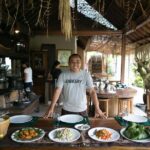
- Inside the Balinese compound open kitchen: more than a class
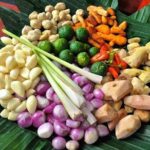
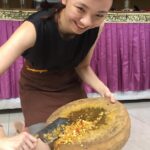
- The spice prep that makes Balinese food click: chopping vs grinding
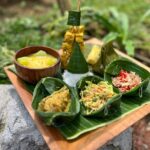
- What you’ll cook: a vegetarian-friendly Balinese menu you can actually repeat
- Your lunch or dinner: the best part is the eating you earned
- Duration, group size, and transport: what $75 buys in real terms
- Who should book this Ubud cooking class (and who should skip it)
- Should you book? My straightforward take
- FAQ
- What’s included in the cooking class?
- Is pickup and drop-off included?
- How long is the experience?
- How many people are in the class?
- Can I request a vegetarian meal?
- What dishes might I cook?
- What if the weather is bad or the tour can’t run?
Key reasons this class works
- Payangan Market first: see ingredients used by local families before you cook them
- Open-kitchen family compound: you cook at home, not in a staged demo room
- Stone-mortar and wooden-block spice prep: learn the two core Balinese methods
- Small private group (up to 12): each person gets their own station
- Vegetarian-friendly menu: you can make classic dishes with tofu/vegetarian versions
- Your lunch or dinner, made by you: the meal is the payoff, not an afterthought
Payangan Market: your real ingredient lesson before you cook
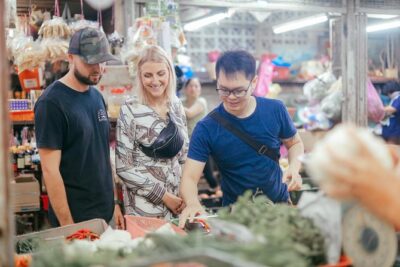
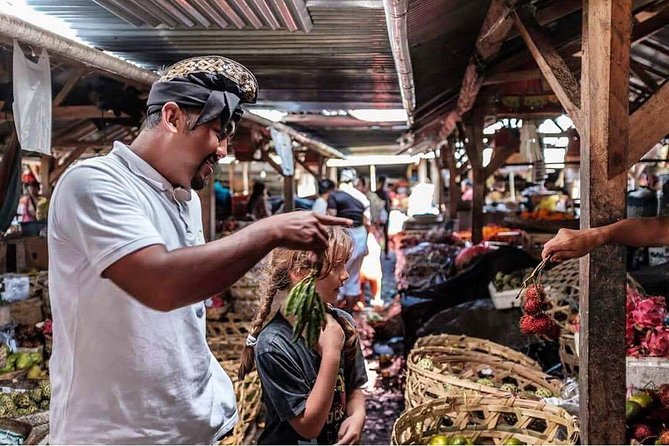
The day starts at Payangan Market, a traditional farmer market setup that gives you a quick education in what people actually buy and cook with. This matters because Balinese cooking isn’t only about flavor. It’s about ingredients, season, and technique. If you go in knowing where things come from, the cooking steps make more sense.
You’ll also get context for the spices and vegetables you’ll handle later. The best part is that the market visit isn’t treated like a photo op. You’re learning what ingredients look like, how they’re used, and why certain combinations show up repeatedly in Balinese dishes.
Timing-wise, this is designed to roll straight into cooking, which helps keep the experience cohesive. Whether you choose a morning class (with a market vibe and lunch) or an afternoon option (with dinner), you’ll feel the flow: see it, learn it, then make it.
Tip for your visit: wear comfortable shoes. Market stalls can be uneven, and you’ll be doing more walking than you might expect for a cooking class day.
You can also read our reviews of more tours and experiences in Ubud.
Inside the Balinese compound open kitchen: more than a class
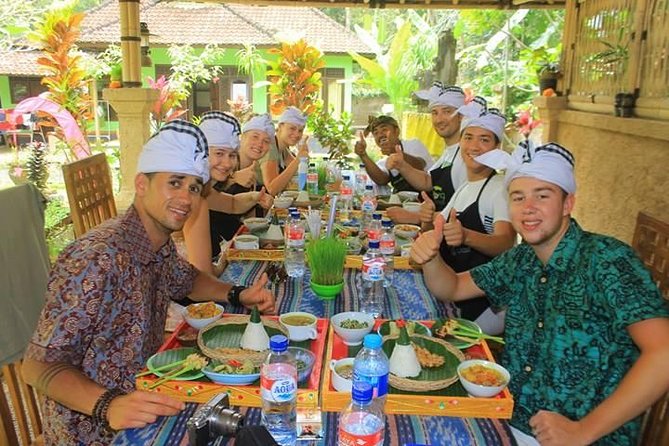
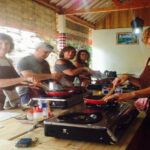
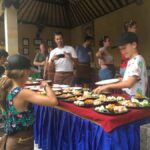
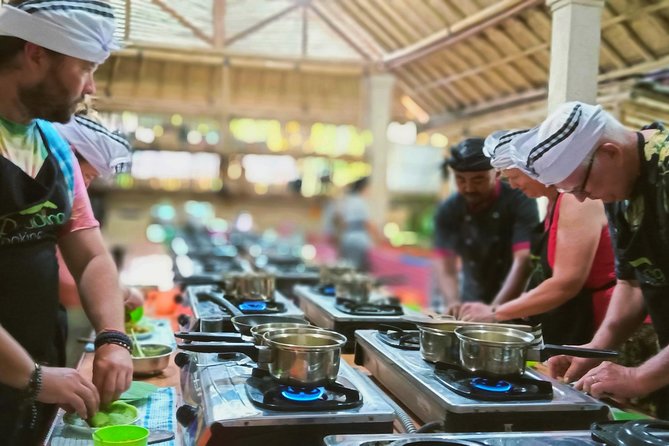
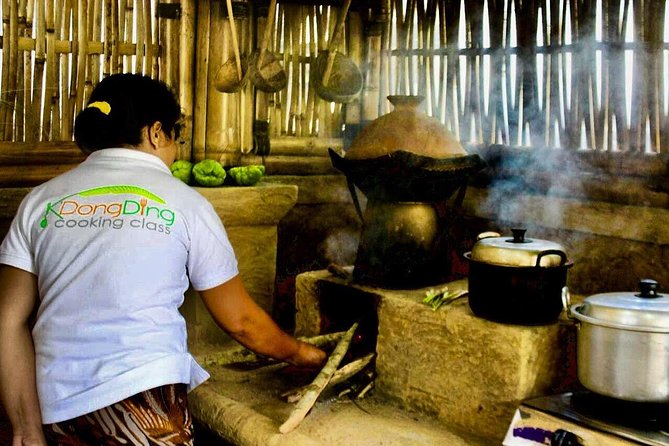
The cooking happens in a Balinese compound house setting, not a hotel kitchen. That shift changes the mood. You’re in an open-air kitchen environment where the day feels more like you’re learning in someone’s routine, not rehearsing for tourists.
You’ll typically start with a welcome drink—Bali coffee or tea—plus Balinese cake. Then you move into spice prep, and from there it becomes steady hands-on cooking. Many people describe this as a cultural experience as much as a culinary one, and that’s because you’re seeing how family life and food preparation overlap.
In reviews, the warmth and hospitality often stand out. One named instructor mentioned by name is Nyoman Mahendra, and other classes are associated with instructors like Wayan, but the main theme is the same: friendly guidance while you do the work. Some descriptions even include small family details like beekeeping and caring for rescued animals, which adds personality to the day.
The downside of a home setting is that it’s more relaxed and variable than a studio. If you’re very strict about timing or you want everything perfectly identical every single day, you might notice differences. Most people, though, like that the kitchen feels real.
The spice prep that makes Balinese food click: chopping vs grinding
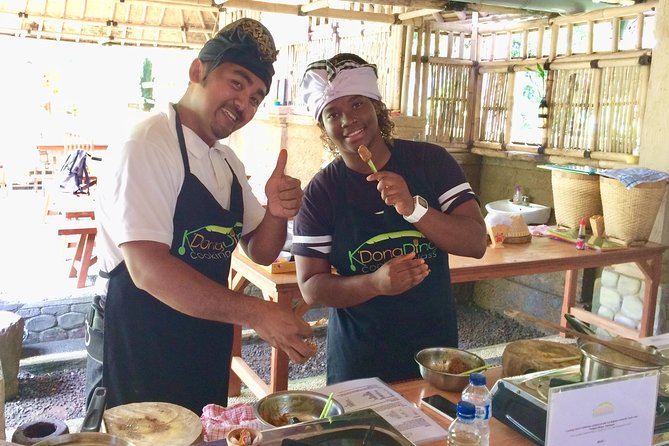
If you remember one thing from Balinese cooking, make it this: paste and sauce preparation is the heart of it. In this class, you don’t skip the hard part. You do it.
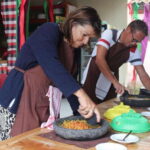
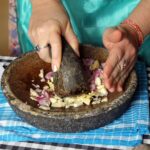
You’ll practice traditional spice processes using tools that change the texture and flavor:
- Chopping on a wooden chopping block
- Grinding in a stone mortar before cooking
That difference isn’t academic. It affects how fragrant the paste smells, how fine the mix becomes, and how it behaves when heated. Many Balinese dishes rely on that step to build flavor layers, and the class is designed so you feel the mechanics, not just hear about them.
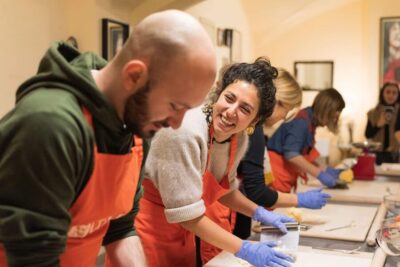
You’ll also get to test spice ingredients as part of the session. This helps you understand what you’re working with and why certain ingredients are added early. Then you move into mixing, forming, grilling, and finishing dishes, with an expert local chef guiding while you take the lead.
A practical note: this part can be a little hands-on-messy. If you’re sensitive about getting your hands dirty or you prefer very light kitchen work, plan for a bit of grime and plan to wash up well. In a good way, it’s how you learn.
What you’ll cook: a vegetarian-friendly Balinese menu you can actually repeat
This class is built around specific Balinese dishes, with vegetarian options available (you should request them in advance so they can prepare appropriately). The menu you may make includes:
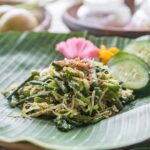
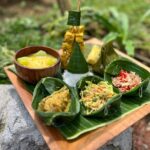
- JUKUT URAB (Vegetarian)
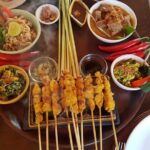
- SATE LILIT AYAM (Vegetarian with tofu option)
- Calon Be Siap with chayote soup (Vegetarian/tofu option)
- TAHU MESANTEN (Vegetarian)
- Dadar Gulung (Vegetarian) ala kdongding
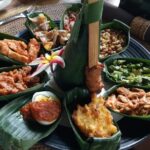
You’ll notice the meal is not random. It covers different styles: savory vegetables, sauces and tofu dishes, spoonable soups, grilled satay forms, and a sweet dessert. That variety is great if you want a broader skill set rather than one technique repeated five times.
Chayote soup has its own ingredient story, and the class includes this kind of explanation alongside cooking. For example, chayote is described as low in calories and fibrous, with notes about its potential role in digestion and weight management. I like that the class gives you reasons behind what goes into the food, because it makes the dishes easier to recreate later.
Dessert is also part of the deal. Dadar gulung is a Balinese classic, and making it yourself turns a “maybe I’ll try this in a warung someday” idea into something you can confidently bring to a potluck later.
Vegetarian travelers: this is one of the strongest reasons to choose this class over others that only offer a bland fallback. You can ask for tofu/vegetarian versions ahead of time.
Your lunch or dinner: the best part is the eating you earned
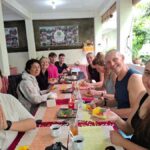
After the market and the cooking prep, the class finishes with the meal you make yourself. For the morning class, you’ll cook and then eat lunch. For the afternoon class, it’s dinner. Either way, you’re not sending dishes out to someone else’s kitchen and waiting. You cook, you plate, and you eat.
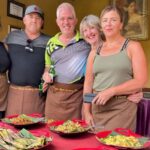
Many people describe the meal as multi-course in feel, with examples of cooking enough for around five dishes. That’s a meaningful difference from shorter cooking sessions where you only learn one small part of a meal. Here, you get a fuller view of how Balinese lunch or dinner is structured.
Coffee and/or tea also show up early with the welcome drink, and you can refill bottle water at the class for free. Since the class encourages reducing single-use plastic, you’re asked to bring your own bottle water.
Food expectation check: you’ll likely taste things as you go, then you’ll sit down for the full meal. If you’re the type who likes to snack while cooking, this is set up for that rhythm. If you want a clean “cooking only, then meal” flow, you can still do it, but be ready for tasting.
Duration, group size, and transport: what $75 buys in real terms
The class runs about 6 hours. That’s a good length because it includes:
1) market time
2) spice and ingredient prep
3) hands-on cooking at your own station
4) the meal you cook
In other words, you’re not rushed through the steps that actually teach technique.
Cost: $75 for about 6 hours, including free hotel pickup and drop-off in the Ubud area (and Payangan area pickup is also included). For many visitors, this is where the value becomes clear. You’re paying for a guided experience with transport and a real teaching kitchen setup, not just ingredients.
Group size is limited to 12 people maximum, and it’s described as private—so only your group participates. Reviews also describe it as feeling personal, especially when the group is small enough for instructors like Nyoman Mahendra to give close attention without taking over your station.
Transport details to note:
- The vehicle is air-conditioned.
- If you’re staying outside Ubud/Payangan, you may pay extra for return transfer (Sanur and some areas cost more per booking).
- For larger groups, there are extra costs if your party exceeds the vehicle’s seating limit.
So the practical question isn’t only what the class costs. It’s whether your pickup area is covered. If you are staying in central Ubud, the “all-in” feel is strong.
Who should book this Ubud cooking class (and who should skip it)
This experience is a strong fit if you want:
- a hands-on Balinese cooking class, not a demo
- a market visit paired directly to cooking
- vegetarian options using tofu/vegetarian versions
- a small private group setup (up to 12)
- an authentic family home setting near Ubud
It’s also great if you like learning technique: paste and sauce preparation, chopping vs grinding, and cooking steps that you can replicate later.
You might skip it if:
- you’re uncomfortable doing active kitchen work for several hours
- you’re traveling with very young kids (minimum age is 12)
- you want a strict, museum-style schedule with no flexibility at all
Weather matters, too. The class requires good weather, and if it’s canceled due to poor weather, you’ll be offered another date or a full refund.
If you’re planning your Ubud schedule, this is a great anchor activity. It pairs well with other cultural stops in the area, because you’ll leave with food skills and a better sense of local life, not just a full stomach.
Should you book? My straightforward take
Yes, I’d book it if Balinese food is high on your list and you want to learn the how, not only the what. The combination of Payangan Market plus a family compound kitchen plus hands-on spice work is the core strength here. It’s the rare cooking class where you actually practice the key steps that make Balinese dishes taste like themselves.
Double-check one thing before you commit: tell them about vegetarian needs and any allergies/special requests ahead of time. Then bring a water bottle, wear comfy shoes, and plan on getting your hands busy. If you do that, this class should give you both a memorable meal and real skills you can use at home.
FAQ
What’s included in the cooking class?
You get the cooking class with a local expert, a market visit, welcome Bali coffee/tea and Balinese cake, hands-on cooking tools and ingredients, a recipes book, and a culinary workshop certificate. The meal (lunch for morning class or dinner for afternoon class) is included, plus snacks and a refill option for water during the class.
Is pickup and drop-off included?
Yes. Free pickup and drop-off is included for hotels in the Ubud area (and the Payangan area). If you stay outside Ubud and Payangan, extra charges may apply depending on your hotel area.
How long is the experience?
It’s about 6 hours (approx.).
How many people are in the class?
It’s a private booking for your group. The minimum is 1 person, and the maximum is 12 people per booking.
Can I request a vegetarian meal?
Yes. Vegetarian meal options are available. You should let them know in advance so they can prepare the vegetarian menu.
What dishes might I cook?
The class includes dishes such as JUKUT URAB (V), SATE LILIT AYAM (V/TOFU), Calon Be Siap with chayote soup (V/TOFU), Tahu Mesantens (V), and Dadar Gulung (V) ala kdongding.
What if the weather is bad or the tour can’t run?
The experience requires good weather. If it’s canceled due to poor weather, you’ll be offered a different date or a full refund. It also has a minimum traveler requirement; if that minimum isn’t met, you’ll be offered a different experience/date or a full refund.