REVIEW · ROME
Testaccio: Home Cooking Cacio e Pepe, Amatriciana, Carbonara
Book on GetYourGuide →Operated by Timonfaya Travel Lanzarote · Bookable on GetYourGuide
Roman pasta gets real in Testaccio. This hands-on class teaches you the Roman favorites cacio e pepe, amatriciana, and carbonara in a small-group setting. You start with pasta basics and end at the table, with unlimited wine and coffee, in a real neighborhood home.
I especially like how you work the dough yourself and learn a pasta-making base from scratch. I also like meeting hosts Milvia and Andrea, who run the night with that patient, family-kitchen feel people hope for in Rome.
The one drawback to clock in advance: the experience is not suitable for anyone with pet allergies since dogs (and cats, depending on the household) may be around.
In This Review
- Key things I’d mark on your Rome calendar
- Why Testaccio and a home kitchen beat the usual pasta tour
- The 3.5-hour rhythm: pasta dough, three sauces, then dessert
- What you actually learn: hands-on technique and sauce timing
- The meal: unlimited wine and coffee with what you made
- Homemade dessert and take-home recipes that help you recreate it
- Price and value: is $105 per person worth it?
- Who this class suits best (and who should skip it)
- Practicalities that help you enjoy the night
- Safety and comfort: allergies and dietary needs
- Should you book? My take
- FAQ
- How long is the Testaccio pasta cooking class?
- How much does it cost?
- What sauces do you learn to make?
- What’s included in the price?
- Is this a small-group experience?
- Can vegetarians, vegans, or celiac guests eat?
- Is it suitable for people with pet allergies?
- Is there free cancellation?
Key things I’d mark on your Rome calendar
- Testaccio, not tourist-center: you’re in one of Rome’s most local foodie neighborhoods.
- Small group (up to 10): you get real attention, not a crowd shuffle.
- Three pasta sauces, one night: cacio e pepe, amatriciana, and carbonara—taught and then tasted together.
- Unlimited wine and coffee: you eat what you make, slowly, with drinks included.
- Take-home recipes: you leave with notes so you can repeat the dishes later.
- Diet-friendly options (with notice): vegetarian/vegan options and gluten-free for celiac are available.
Why Testaccio and a home kitchen beat the usual pasta tour
If you’ve done enough Rome sightseeing, you start noticing a pattern: many food stops show you the city, but not the skills. This is different. The whole point here is to teach you how Roman pasta happens at home—working with your hands, timing the steps, and tasting the logic behind the flavors.
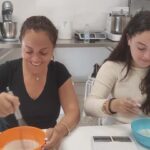
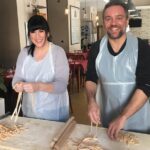
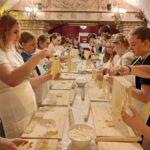
I like that you’re not stuck in a formal classroom. The class happens in a cozy Roman home setting, which changes the vibe fast. You’re not watching someone perform pasta magic from a distance. You’re making the components, then sitting down to eat together. That shift matters, because pasta is half technique and half comfort. When the evening feels like a visit to an Italian family kitchen, you actually remember what you learned.
Testaccio helps, too. It’s the kind of area where locals eat and talk and keep life moving. Compared with tourist-packed zones, the neighborhood energy makes the meal feel less like an event and more like an evening in Rome.
You can also read our reviews of more tours and experiences in Rome.
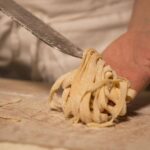


The 3.5-hour rhythm: pasta dough, three sauces, then dessert
Plan on a 3.5-hour experience built around a clear flow: make, learn, eat, repeat—Roman style.
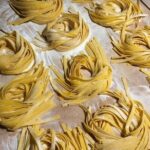
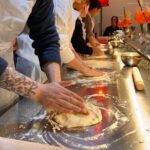
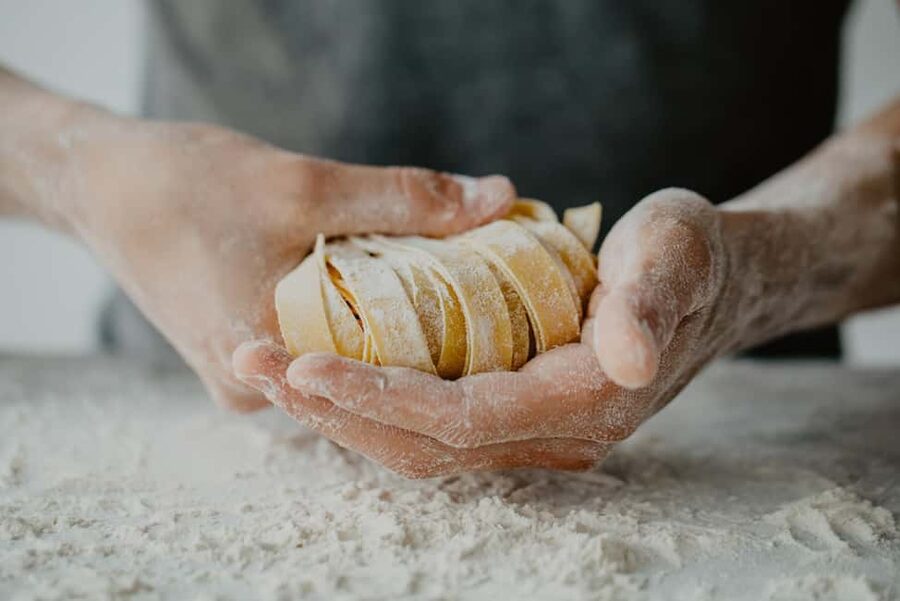
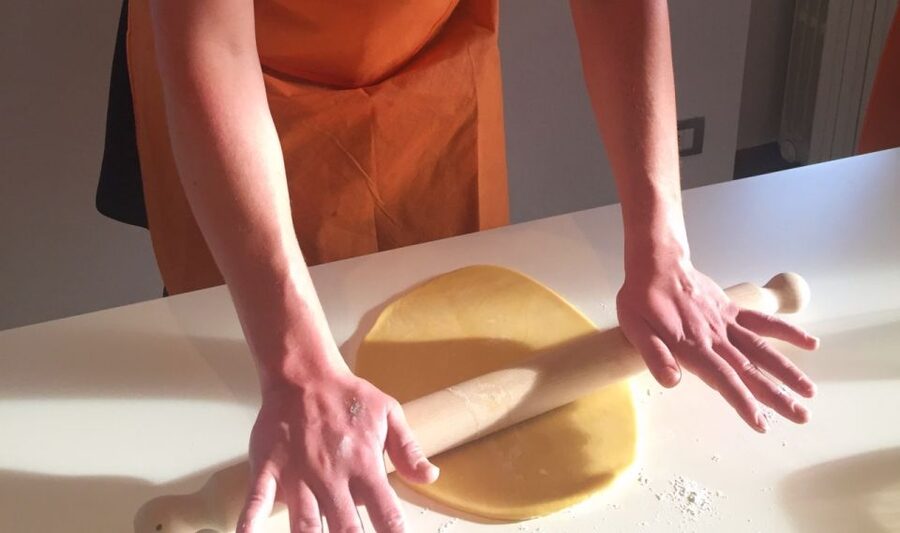
You’ll start by crafting a fresh pasta base from scratch. The guide helps you blend the basics into the dough (flour, eggs, and/or water). This matters because Roman pasta isn’t about complicated ingredients. It’s about getting the texture right so it behaves well in sauce.
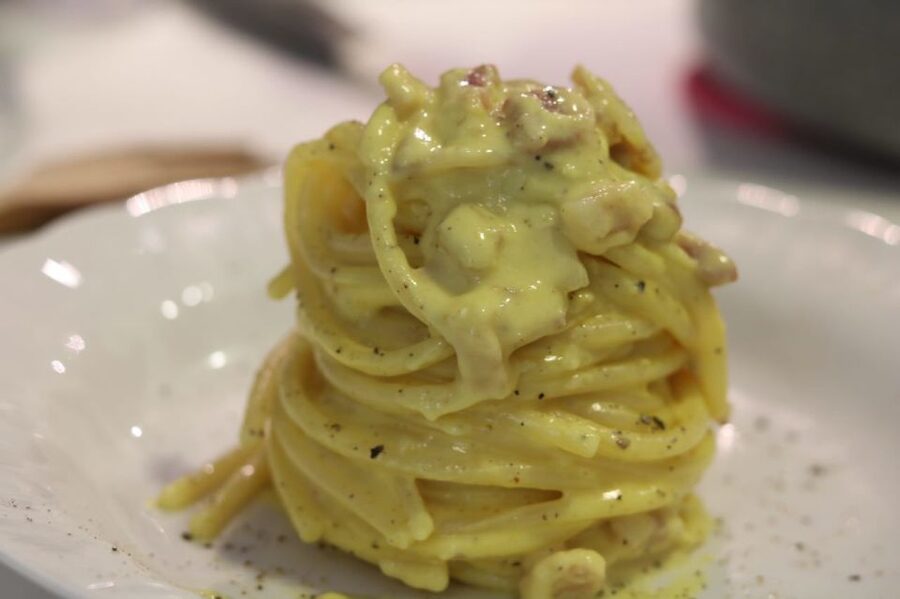
Then comes the main event: the three iconic Roman sauces—cacio e pepe, amatriciana, and carbonara. The teaching focuses on building confidence with each sauce method, not just telling you what to do. You learn how to combine simple ingredients into a final dish that tastes classic and stays balanced.
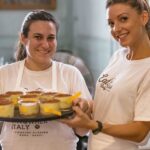
Once your pasta and sauces are ready, you eat a tasting of three pasta courses paired with local wine. After that, the evening finishes with a homemade dessert and Italian coffee. That final sequence is part of the charm. You don’t just leave with a food souvenir—you leave with the full dinner arc.
What you actually learn: hands-on technique and sauce timing
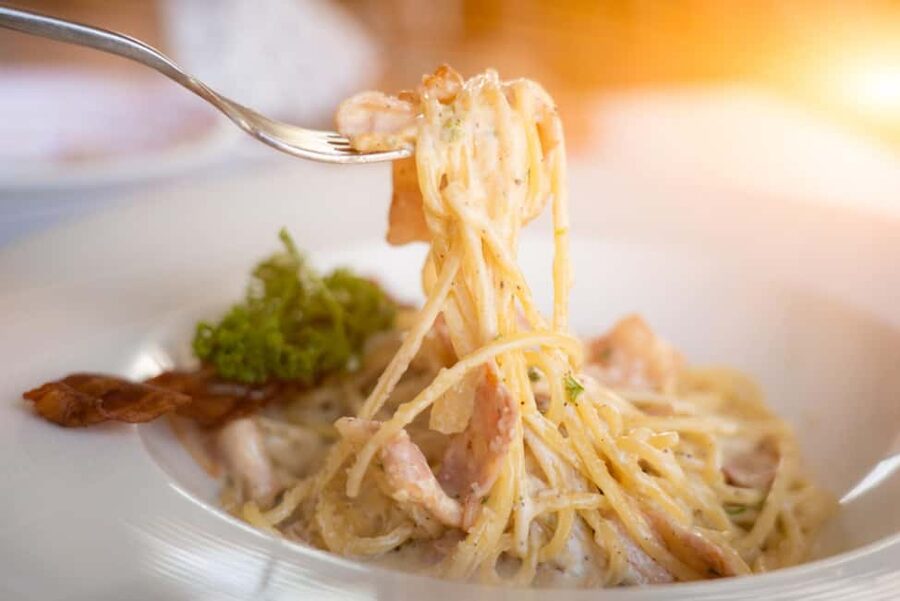
What sets this class apart is that the learning isn’t just “do these steps.” You get guidance on why steps work, and that makes the skill usable later.
For example, the pasta part focuses on forming the base so it’s workable and cooks properly. You’ll get tips and tricks for dough handling—things that are hard to guess until someone corrects your texture in real time. A lot of people arrive thinking fresh pasta is fussy. The class does a nice job of changing that mindset: once you understand the feel of the dough, the process gets more straightforward.
Then you move into three sauce techniques that sound simple but depend on correct timing and balance. Each sauce is treated as its own lesson. You learn the method and how to get that Roman flavor payoff without overthinking it. The best part is that you’re not only cooking—you’re also tasting what your choices produce. That feedback loop is exactly what helps you improve.
From the feedback I’ve seen, the instructors are also patient. Directions are described in a way you can follow even if you’re not a trained cook. You’re also encouraged to ask questions, and conversations over dinner can add extra context about food and life in Italy.
The meal: unlimited wine and coffee with what you made
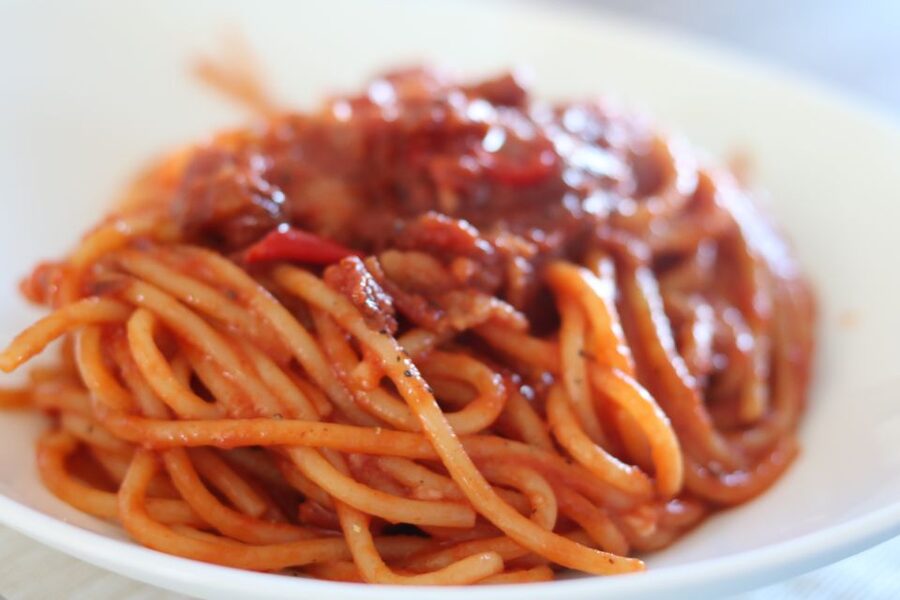
This is a cooking class where you actually get to enjoy the results. After the hands-on cooking, you sit down for the tasting of the three pasta courses. Each course is paired with local wine, and the experience includes unlimited wine and coffee.
Unlimited drinks can go one of two ways: chaos or calm. Here it’s set up as a dinner evening. The vibe stays friendly and unhurried because the group is small. You’ll be busy cooking, then you’ll settle in and eat at a pace that feels social, not rushed.
This portion matters for value. A lot of classes teach you something, then feed you a small portion. Here, you get full meals out of the work you did. You also get to compare how each sauce changes the pasta experience. That’s the kind of detail that makes you want to cook again at home.
Homemade dessert and take-home recipes that help you recreate it
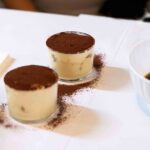
The ending isn’t an afterthought. After your pasta courses, you get a homemade dessert plus Italian coffee. It’s a classic finish: sweet closure, then coffee to round out the evening.
The other big win: you leave with exclusive recipes and notes. That might sound minor until you try making pasta at home. Without guidance, you can easily end up with dough that won’t roll right or a sauce that doesn’t behave. Recipe notes help you reproduce the night’s process instead of guessing.
Some people also mention getting follow-up materials like photos or recipe support after the class. Even if you’re already comfortable cooking, having structured notes turns the experience into something you’ll use, not just something you remember.



Price and value: is $105 per person worth it?
At $105 per person for a 3.5-hour experience, the price makes sense once you look at what’s included.
You’re paying for:
- a small-group teaching setup (up to 10 people)
- hands-on pasta making from scratch
- instruction and tasting for three pasta courses
- dessert plus Italian coffee
- drinks, including unlimited wine
- recipe notes so you can cook again
In Rome, paying for food experiences ranges wildly. The cheapest options often mean you watch more than you do, or you eat something light after a short demo. Here you do a full cook-and-eat arc, with multiple dishes and drinks included. For many people, that’s the difference between feeling like you bought a meal and feeling like you gained a skill.
If you value cooking instruction and enjoy sitting down for a real dinner, this is a strong fit. If you’re only chasing a quick snack and photos, you might not get as much out of it.
Who this class suits best (and who should skip it)
This fits best if you:
- want to learn Roman pasta techniques hands-on
- enjoy eating the results, not just cooking for a photo
- like small groups and conversation
- care about authentic neighborhood food culture (Testaccio delivers)
It’s also a good pick for couples and friends who want a social evening that still feels personal. With limited spots, it doesn’t turn into a production line.
It may not suit you if:
- you have serious allergies to dogs and cats, since the activity is not recommended for travelers with those concerns
- you expect a fully hands-off experience (this is cooking-focused, not a tasting tour only)
On the plus side, the class can adapt for vegetarians and vegans using traditional Roman recipes. Gluten-free options are also available for those with celiac. If you have dietary needs, it’s worth confirming details when you book so the menu aligns with your requirements.
Practicalities that help you enjoy the night
You’ll meet at Via Galvani, 4, 00153 Roma RM, in Building C, Buzz 11. Since hotel pickup and drop-off aren’t included, you’ll want to plan your own way to the neighborhood. Local transport tickets also aren’t included, so build that into your Rome budget.
With no big moving parts, the logistics are simple: arrive, get settled, cook, eat. Still, the address matters. Testaccio streets can feel like a maze when you’re tired from walking all day. I suggest you give yourself a little extra time to find Building C and the Buzz entry.
Also, keep your expectations aligned with the format. You’ll spend most of the time cooking and then eating in a home setting. This isn’t a fast, on-the-go food sprint.
Safety and comfort: allergies and dietary needs
This is the section I’d treat like a checklist.
- Pet allergies: The activity is not recommended for travelers with serious allergies to dogs and cats. If animal exposure is a risk for you, skip this one.
- Animal allergies: It’s also not suitable for people with animal allergies. That’s the clearest warning flag in the details you’re given.
- Vegetarian/vegan: Adaptations are offered using traditional Roman recipes.
- Gluten-free: Options exist for those with celiac.
If you fall into any of these categories, don’t wait until the last moment. Ask ahead so your meal is handled the way you need.
Should you book? My take
Yes, if you want a real Roman cooking skill—not just a Roman meal.
Booking makes the most sense when you:
- enjoy hands-on food experiences
- like small-group settings (up to 10 participants)
- want to learn cacio e pepe, amatriciana, and carbonara in one evening
- care about leaving with recipe notes
- don’t mind an evening that feels like dinner with locals in a home kitchen
Skip it if you have pet allergies, or if you’re the type of traveler who wants zero participation and zero kitchen time. In that case, you’ll feel trapped instead of delighted.
If you fit the sweet spot, this is one of those Rome experiences that gives you both a memory and a repeatable skill.
FAQ
How long is the Testaccio pasta cooking class?
It lasts 3.5 hours.
How much does it cost?
The price is $105 per person.
What sauces do you learn to make?
You’ll learn to prepare cacio e pepe, amatriciana, and carbonara.
What’s included in the price?
It includes the pasta cooking class for the three sauces, recipe notes, three pasta courses, dessert, and drinks/wine (plus wine and coffee as noted in the highlights).
Is this a small-group experience?
Yes. It’s a small group limited to 10 participants.
Can vegetarians, vegans, or celiac guests eat?
The menu can be adapted for vegetarians and vegans using traditional Roman recipes. Gluten-free options are available for those with celiac.
Is it suitable for people with pet allergies?
No. It’s not recommended for travelers with serious allergies to dogs and cats, and it’s not suitable for people with animal allergies.
Is there free cancellation?
Yes. You can cancel up to 24 hours in advance for a full refund.