REVIEW · ROME
Pasta Cooking Class Near the Colosseum with 3 Spritz Cocktails
Book on Viator →Operated by Carpe Diem Tours · Bookable on Viator
Pasta and spritz in one 3-hour class. That pairing is the point. I love the small-group setup and hands-on pasta work, and I also love how you get real coaching for making three classic Roman-friendly spritz cocktails. One thing to think about: the menu is not flexible for gluten-free, vegan, or lactose-free diets, so check that before you go.
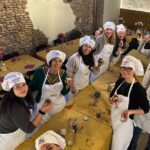
This is a lively, flour-on-your-hands kind of afternoon built around a professional local chef and a mixologist. It runs about 3 hours, caps at 14 people, and the vibe tends to be social (music, laughs, and people sharing bites). If you want a quiet, museum-style experience, this isn’t that.
In This Review
- Key things to know before you book
- Tipsy Pasta Near the Colosseum: What makes it fun
- Where you meet and how the start works
- The spritz lesson: Aperol, Hugo, and Limoncello
- Handmade pasta from scratch: what you’ll do (and what to expect)
- Carbonara vs. cacio e pepe: vegetarian options and dairy reality
- Small-group size: how the help actually feels
- Value for $95.53: what you get (and what to measure)
- Pace, timing, and what to do beforehand
- Dietary restrictions: the part you shouldn’t skip
- Who should book this class, and who might skip it
- Should you book this pasta and spritz class near the Colosseum?
- FAQ
- How long is the pasta and spritz class?
- Where is the meeting point in Rome?
- What’s included in the price?
- Is there a vegetarian option?
- Can you accommodate gluten-free, vegan, or dairy-free diets?
- What language is the class offered in?
- How big is the group?
- What happens at the end of the activity?
Key things to know before you book
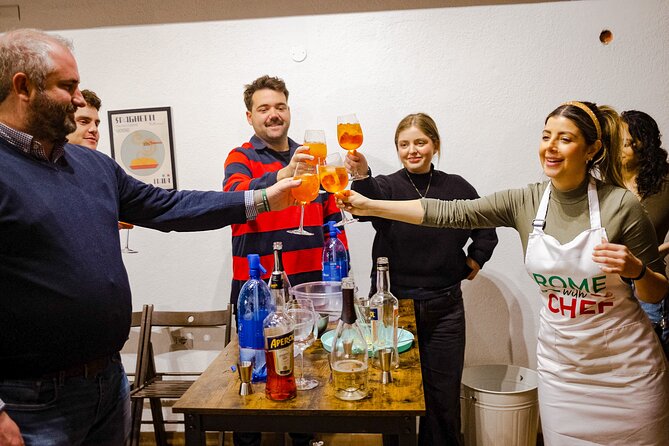
- Three spritz cocktails: Aperol, Hugo, and Limoncello, taught during the class.
- Fresh handmade pasta: you mix, roll, knead, slice, and cook.
- Vegetarian main available: cacio e pepe instead of carbonara.
- Maximum 14 people: less waiting, more direct help from the chef and mixologist.
- Take-home recipes in an ebook: so you can recreate the flavors after your trip.
Tipsy Pasta Near the Colosseum: What makes it fun
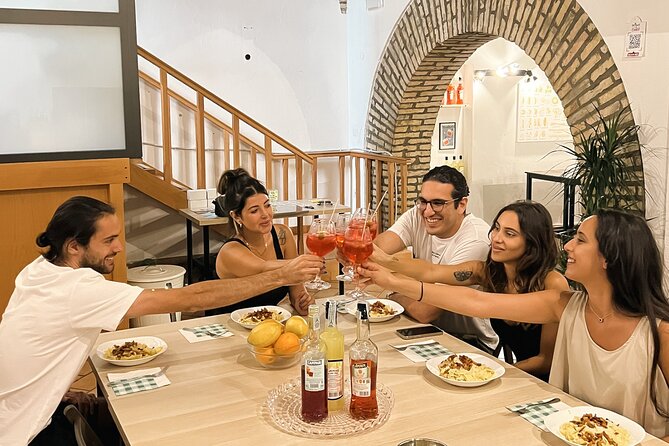
Rome is great at food. This experience leans hard into that idea—two anchors, pasta and spritz. The class feels like a night out, not a stiff cooking demo. You’re learning by doing, and you’re tasting as you go, which keeps the energy up even if you’ve never boiled pasta before.
I also like the balance of roles: a chef handles the pasta and a mixologist handles the drinks. That matters because you learn faster when the person teaching has one job and does it well. In sessions run by hosts like Sunny, Jimmy, Sherry, and Jennifer, the most repeated theme is upbeat energy plus patient, step-by-step instruction.
The one practical downside: “tipsy” is not just a nickname. If you’re sensitive to alcohol or you want to stay totally sober, plan your pace. The class includes three spritzes, and there’s water/soft drinks, but you still have to decide how you want to handle the cocktails.
You can also read our reviews of more tours and experiences in Rome.

Where you meet and how the start works
You meet at Via Cesare Balbo, 19, 00184 Roma RM. The activity starts there and ends back at the same meeting point. The location is near public transportation, and the operator notes the meeting point can shift slightly by day, though it’s still only about a five-minute walk between possible spots.
Why this matters: in Rome, being near transit keeps the evening easy. You’re not relying on taxis or a long walk after you’ve eaten and had a drink or two. Also, you’ll want to arrive a few minutes early so the group can start mixing and rolling without lag.
Once you’re in, the early flow is usually part aperitif mood and part instruction. Expect an intro to the drinks right away, then a switch into pasta prep, then a return to eating what you made.
The spritz lesson: Aperol, Hugo, and Limoncello

This is a cocktail class disguised as a pasta class. The operator has you making three spritz styles with a professional mixologist, with time to learn the method, not just copy a drink.
Here’s the lineup:
- Aperol spritz to get the afternoon started
- Hugo spritz while you’re cooking
- Limoncello spritz to round things out
What I like about teaching three different drinks: it forces you to pay attention to ratios, flavor profiles, and build order. A spritz isn’t just orange color and bubbles—it’s the balance between bitterness, sweetness, and citrus/herb notes. Getting hands-on with Aperol, then switching to Hugo, then finishing with Limoncello gives you a practical toolkit you can use at home without guessing.
Small heads-up from feedback: one person felt the third drink steps were done by staff rather than fully taught, and they also wanted clearer ratios. I can’t confirm how that plays out in every class, but if you care about doing every step yourself, say so early and ask to double-check the last drink method before it’s poured.
Music also seems to be part of the experience. Some sessions are lively enough to include recognizable tracks (for example, songs like Blur’s Girls and Boys, Pulp’s Common People, Michael Jackson’s Don’t Stop Til You Get Enough, and George Harrison’s Got My Mind Set on You were mentioned). Even if you’re not a playlist person, that kind of soundtrack helps a cooking class feel like a social night.
Handmade pasta from scratch: what you’ll do (and what to expect)
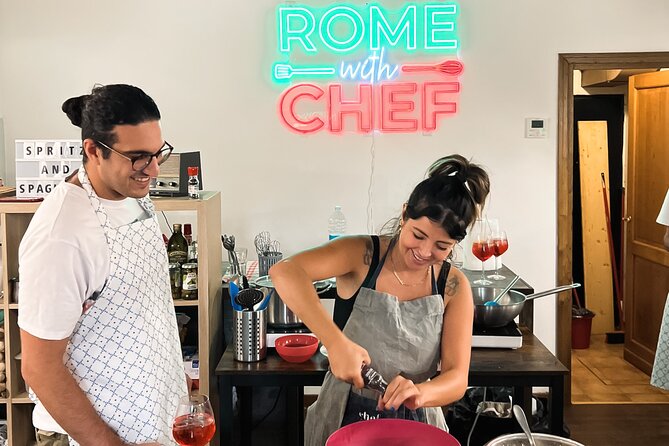
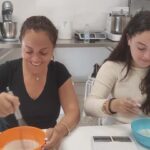
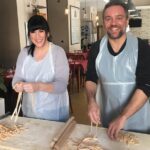
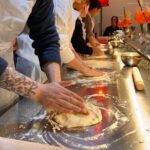
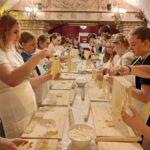
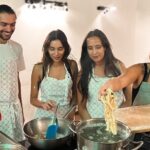
The pasta part isn’t “watch and taste.” You’ll actually make it. The class has you:
- mix the dough
- roll and knead
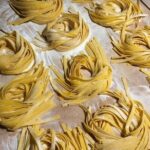
- slice it into fresh pasta
- cook it with guidance
That sequence matters. Fresh pasta is all about texture and feel. Rolling too thick or too thin changes how it cooks, and kneading affects elasticity. When the chef is walking the room through each stage, you learn what to look for (how the dough moves, how it stretches, and when it’s ready).
The menu focus is a classic Roman pairing:
- Carbonara (with a vegetarian swap available)
- or cacio e pepe for the vegetarian option
Cacio e pepe is a smart choice if you want something peppery and satisfying without the meat-based component. Still, it uses cheese and dairy, so it’s not a fit for lactose-free needs.
Portion reality: you make pasta, then you eat it. One of the most consistent positives is that people leave full and not just “sample-fed.” Water and soft drinks are included, which helps if you want to pace the cocktails.
Carbonara vs. cacio e pepe: vegetarian options and dairy reality
The class offers a vegetarian option: cacio e pepe instead of carbonara. That’s useful because many Roman cooking experiences treat “vegetarian” as a last-minute apology. Here, the main dish option is built in.
Still, here’s the practical check:
- Carbonara is traditionally egg- and cheese-based.
- Cacio e pepe uses cheese and pepper.
So if you have lactose intolerance, the operator states they cannot accommodate. If you’re gluten-free or vegan, they also can’t accommodate. If your goal is a true dietary match, plan for that now rather than hoping a substitution will appear on the day.
Also, there’s one feedback item to keep in mind. One participant said the sauces were prepared by staff with less involvement from the group than they expected, and they also noted carbonara sauce and sauce-making didn’t feel fully hands-on in their specific session. Even if your class is more participatory, it’s worth asking during the briefing: will you help assemble or cook the sauce, or is sauce work more of a guided demo?


Small-group size: how the help actually feels
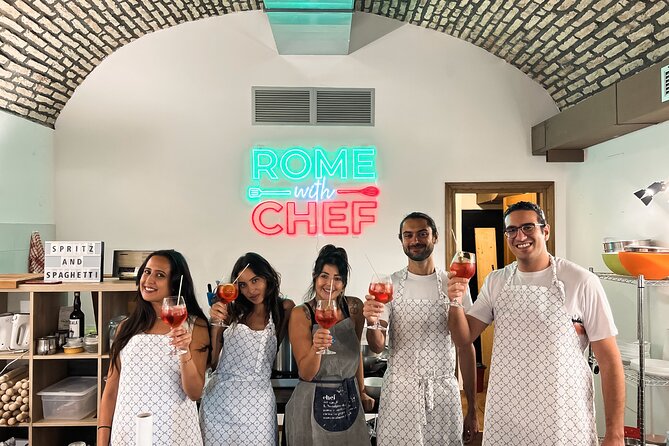
Maximum group size is 14 travelers. That’s the sweet spot for this kind of class. Large groups often turn into a cooking factory: one station, lots of standing around, and instructions too quick to absorb.
In the feedback, the most praised aspect is personal attention and patience. Hosts like Angela and Bea, Giovanna and TSI, and instructors named Gia and Gustavo were repeatedly described as patient and good at making a mixed group comfortable. That matters because pasta dough doesn’t care how confident you are. The person teaching has to meet you where you are—slower hands, first-timers, teens, couples, and everyone in between.
There’s also a social layer. People mention meeting others, sharing the fun, and ending the class with a full belly and new “we did that together” energy. If you’re traveling solo, this can be an easy way to connect without forced conversation all night.
Value for $95.53: what you get (and what to measure)
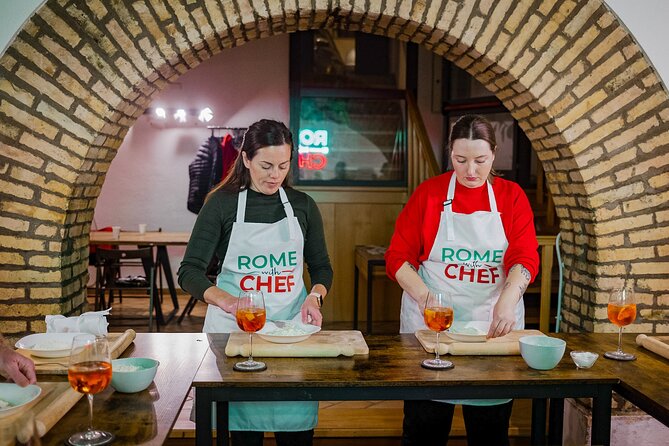
At $95.53 per person, you’re paying for three things at once:
1) a chef-led pasta workshop
2) a mixologist-led spritz class
3) the meal outcome (you eat what you make)
In Rome, that’s the value math: it’s not just a cooking lesson, and it’s not just a bar stop. It’s a timed, hosted activity with included drinks and included recipe materials in an ebook.
Are you getting a “chef’s table” restaurant meal? Not exactly. This is a class where the experience is part of the price. If you love food experiences that teach you something you can reproduce at home, the cost starts to make sense quickly.
My practical rule: book it if you’re the type who likes to do rather than just watch. If your ideal day is quiet sightseeing, you’ll probably enjoy it more as an active break than as a core anchor.
Pace, timing, and what to do beforehand
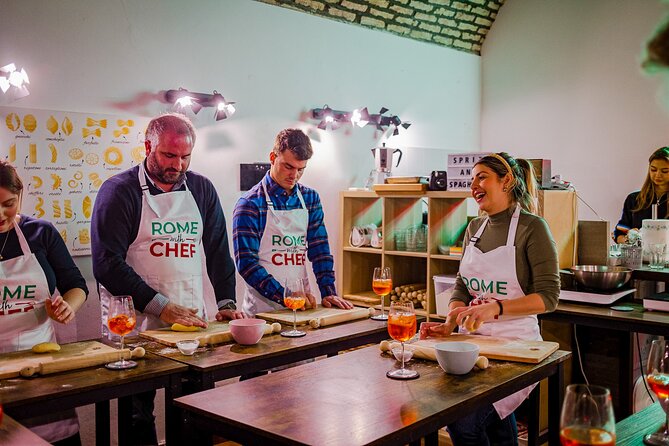
Duration is about 3 hours. That’s long enough to learn and eat without feeling dragged out. The class flows from cocktails to pasta work to eating your results, with drinks continuing through the session.
So plan your day like this:
- Don’t schedule a museum right before it unless it’s close and you’re good with time buffers.
- Eat something light beforehand if you’re prone to getting nauseous on alcohol or you just get hungry fast.
- Wear clothes you can live in afterward. Flour and sauce are normal in this kind of class, and you’ll likely want to treat the outfit like it’s disposable.
What you’ll likely remember isn’t just the food. It’s the process—mixing dough, rolling it, and getting that first “I made this” bite.
Dietary restrictions: the part you shouldn’t skip
The operator is clear about limitations:
- No gluten-free options
- No vegan options
- No dairy-free options
- Also not compatible with coeliac disease, gluten intolerance, or lactose intolerance
There is a vegetarian option, but it still involves dairy, since cacio e pepe is the vegetarian main. If your restrictions are strict, you’ll want a plan B.
A simple way to handle it: send your restrictions ahead of time and ask what’s possible for your specific needs. The operator says they can figure out accommodations if you have restrictions, but the posted constraints mean the safest bet is matching the provided menu expectations.
Who should book this class, and who might skip it
This class fits best if you:
- want a hands-on food activity in the center of Rome
- like cocktails and want to learn a real recipe, not just order one
- enjoy social settings with a small group
- are okay with alcohol being part of the fun
You might skip it if you:
- need strict dietary accommodations (gluten-free, vegan, dairy-free)
- prefer quiet, low-energy activities
- don’t want to be involved in pasta prep and prefer only observing
It’s also a strong pick for couples and families. One family-style session was praised as a great break from churches and museums, and there’s mention of first-timers, including teens, having a good time.
Should you book this pasta and spritz class near the Colosseum?
If you want one “Rome experience” that hits both food and fun, I’d say yes—this is the kind of evening that gives you a story and a skill.
Book it if you’re excited to make fresh pasta and you’re happy to learn cocktails like a grown-up. The small group, practical coaching, and the included meal outcome are the big reasons this works.
Skip or reconsider if your dietary needs don’t match the stated limits, or if you expect every step—including sauce—to be fully hands-on. Based on feedback, the pasta part is consistently participatory, but sauce involvement can vary by session.
If you’re deciding right now, ask yourself one question: do you want to leave with recipes you can recreate, plus a belly full of what you made? If yes, this class is a very solid bet.
FAQ
How long is the pasta and spritz class?
It runs for about 3 hours.
Where is the meeting point in Rome?
Meet at Via Cesare Balbo, 19, 00184 Roma RM, Italy. The meeting point may vary slightly by day, but the alternate locations are about a five-minute walk apart.
What’s included in the price?
You get an expert-led spritz and pasta workshop, three spritz cocktails (Aperol, Hugo, Limoncello), unlimited water/soft drinks, and instructions from a local expert chef and mixologist. You also receive take-home recipes in an ebook.
Is there a vegetarian option?
Yes. The main can be cacio e pepe if you choose the vegetarian option instead of carbonara.
Can you accommodate gluten-free, vegan, or dairy-free diets?
No. The class does not offer gluten-free options, vegan options, or dairy-free options, and it also can’t accommodate coeliac disease, gluten intolerance, or lactose intolerance.
What language is the class offered in?
The class is offered in English.
How big is the group?
The maximum group size is 14 people.
What happens at the end of the activity?
The activity ends back at the meeting point.