REVIEW · ROME
Private Walking Tour of Rome and a Cooking Class
Book on Viator →Operated by Sublime Tours · Bookable on Viator
Rome clicks into focus quickly. You get a private walking tour of central Rome, then you slow down for a hands-on cooking class at a local restaurant where you actually make and eat the meal. It’s a smart mix when you want both the sights and the real Italian rhythm of food.
Two things I really like: first, the walk hits major landmarks without turning into a stressful checklist sprint. Second, the cooking part gets personal, from building flavors from scratch to sitting down for what you made. The one thing to consider is the menu can shift by season, so expect small changes even though pasta is always included.
In This Review
- Key reasons this Rome combo works
- Starting at Piazza Barberini: a smooth launch into central Rome
- From Piazza Barberini to the Spanish Steps: classic Rome, easy to enjoy
- Trevi Fountain and Piazza di Pietra: where stories stick to the street
- Pantheon area and Santa Maria Sopra Minerva: two stops that balance awe and comfort
- Piazza Navona and Campo de’ Fiori: Rome that feels lived-in
- The cooking class transition: from sightseeing legs to kitchen focus
- What you’ll cook (and what you’ll eat): pasta first, then seasonal classics
- Taking recipes home: the real souvenir is the ability to cook
- Dietary needs and seasonal changes: how to plan without stress
- Price and value: what $167.59 really buys you
- Who this is best for (and who might want a different plan)
- Should you book this private Rome walking tour and cooking class?
- FAQ
- How long is the private walking tour and cooking class?
- Where does the tour start and where does it end?
- Is the tour private or group-based?
- What major sights are included in the walking portion?
- What do you cook and eat during the class?
- Are recipes provided after the tour?
- Is there any drink included?
Key reasons this Rome combo works
- Private group time means the guide can adjust pacing and focus
- Iconic sights in one flow, from Piazza Barberini to the Pantheon area
- Stops with weather in mind, including shade breaks during hot conditions
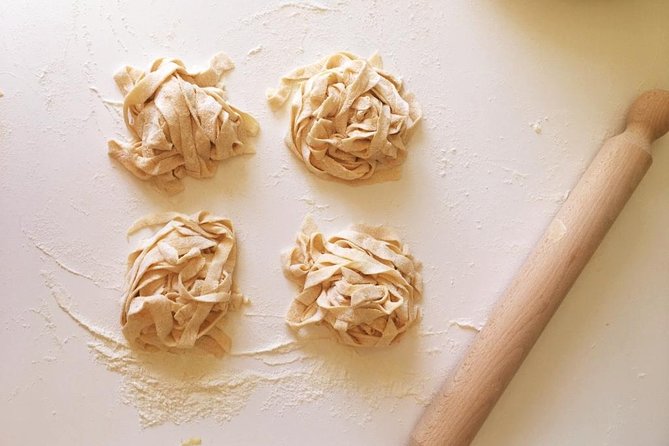
- Pasta made from scratch, with a sauce choice and real technique practice
- Seasonal ingredients show up in the non-pasta courses (but you still get a full meal)
- Recipes after the tour, so you can cook the dishes back home
Starting at Piazza Barberini: a smooth launch into central Rome
The experience begins around Piazza Barberini, a great spot if you want to ease into Rome rather than jump straight into the busiest corners. You meet your guide for a short intro, then you’re off walking with explanations that connect what you’re seeing to why it matters.
Because this is private, you’re not stuck timing your photos and questions around a big crowd. Your guide can slow down for the things you care about most and speed up when you just want to keep moving. In practice, that makes a huge difference in Rome, where you can burn time fast if you’re constantly rerouting around people.
One practical plus: the walk is designed to keep you comfortable. In very hot weather, the guide has a habit of making stops in the shade, and that’s exactly the kind of detail that keeps the day from turning into a sweaty endurance test.
You can also read our reviews of more tours and experiences in Rome.

From Piazza Barberini to the Spanish Steps: classic Rome, easy to enjoy
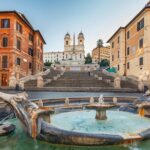
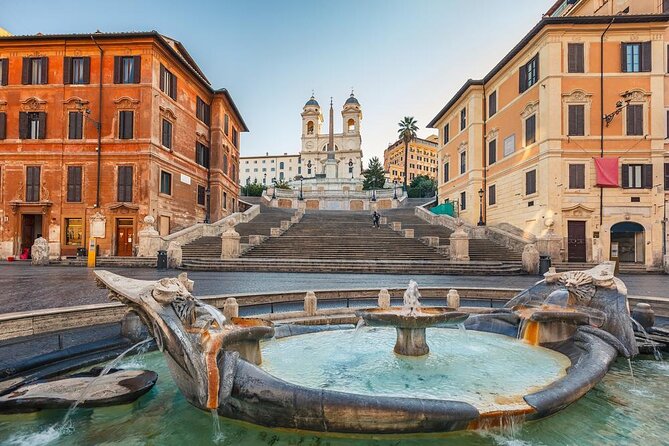
Your walk starts building momentum right away. Piazza Barberini sets the stage with grand-scale city energy and that unmistakable central-Rome feel. Then you head to the Spanish Steps (Scala di Spagna), the kind of place where people-watch alone could take an hour.
What makes this stop more than a famous photo spot is the way the guide frames it. You don’t just see steps and stone—you get context for how the location became a social magnet and how it fits into the city’s layout. It helps you understand what you’re looking at, especially if you’re on a first trip.
A practical drawback here: the Spanish Steps can get crowded, and there’s no escaping that. The way to handle it is simple—don’t fight the crowd. Aim for quick look-and-learn moments, then use your guide’s timing to reposition for better views and calmer photo angles.
Trevi Fountain and Piazza di Pietra: where stories stick to the street
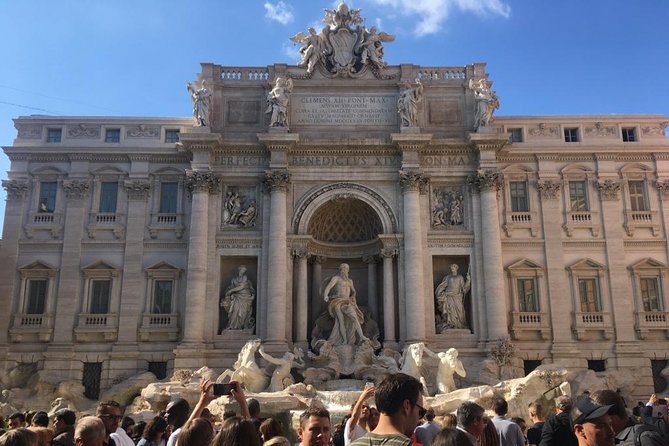
Next up is Fontana di Trevi, Rome’s most famous fountain. Even if you’ve seen it in photos, seeing it in person changes the scale. You feel the space around it, not just the water in the center of the image.
Your guide’s job isn’t to recite facts in a monotone. The value is in connecting the visual details you notice—positioning, design, the way the fountain anchors the street—to the bigger picture of Rome as a city that loves spectacle and symbolism.
After Trevi, you move to Piazza di Pietra, which feels like a calmer breather compared with the main Trevi crush. It’s a good spot to reset, scan the architecture, and absorb the city without constantly dodging tour groups.
If you’re trying to beat the crowds, keep expectations realistic. You won’t have Trevi all to yourself. What you can do is treat your time there as short and intentional: look first, photos second, then move.
Pantheon area and Santa Maria Sopra Minerva: two stops that balance awe and comfort
If you want a moment that truly turns into a highlight, plan for the Pantheon. It’s one of those places where your brain keeps trying to understand how something so monumental was built, and the guide gives you the kind of orientation that makes the experience feel personal instead of overwhelming.
You’ll also visit Chiesa di Santa Maria Sopra Minerva. This is a nice counterpoint to the Pantheon. The Pantheon is the big, world-famous statement. The church is more about texture—how religious architecture sits within everyday city life.
One reason these stops pair well with the rest of the day: you’re not just walking past monuments. You’re getting explanations that help you slow down and see. Then, you transition naturally toward the part of the day where you’ll use your energy in a different way—cooking.
Piazza Navona and Campo de’ Fiori: Rome that feels lived-in
After the more monumental sites, you’ll reach Piazza Navona, a square that feels theatrical in the best way. This is one of those places where the buildings frame activity and the whole area feels made for lingering. Navona can be very busy, but the guide’s pacing helps you enjoy it rather than just endure it.
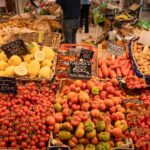
Then you head to Campo de’ Fiori, which brings a different vibe: market-square energy. It’s the kind of place where Rome doesn’t feel frozen in history. You get that sense of people doing real things—walking, buying, eating, moving through the day.
These two stops are a smart way to end the walking portion because they give you variety. You don’t leave feeling like you only saw stones. You leave feeling like you saw how Rome behaves.


The cooking class transition: from sightseeing legs to kitchen focus
After the walk, you’re taken to a local restaurant nearby. This matters more than it sounds. Rome sightseeing can be hard on the body, and a nearby location keeps you from spending precious time commuting.
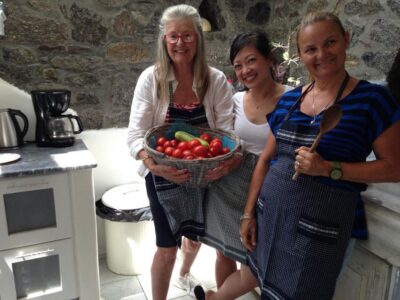
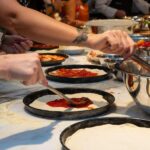
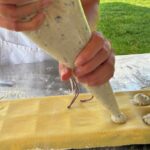
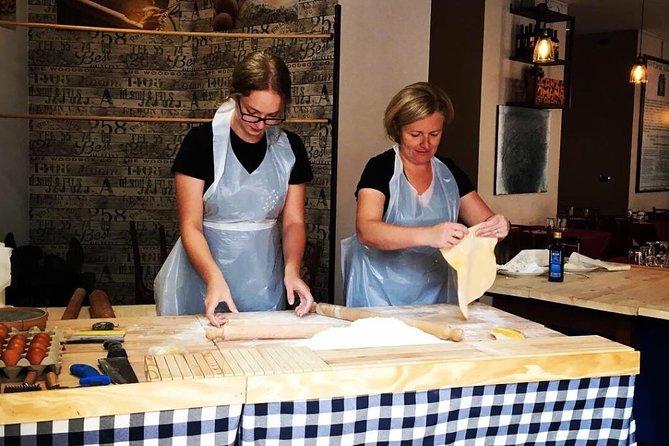
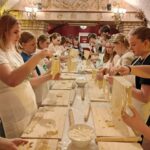
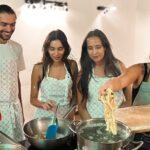
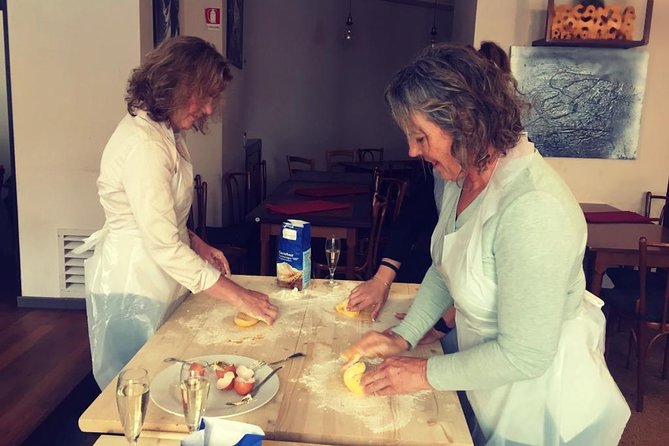
This cooking class is built around personal attention. You’re not watching someone else do everything while you stand there taking notes. You’re cooking, tasting, and learning what changes when you add the right ingredient at the right moment.
You’ll also get a drink with your meal: a glass of wine, beer, or a soft drink. That’s a simple but important detail. It pairs with the food and makes the meal feel like an actual Roman dining experience rather than a classroom with plates.
What you’ll cook (and what you’ll eat): pasta first, then seasonal classics
The menu is seasonal, so some dishes can vary. The one promise you can count on: a pasta course.
Here’s what the class includes in the sample menu:
- Starter: Jewish style artichoke or Caprese salad
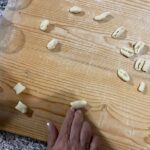
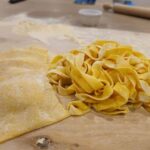
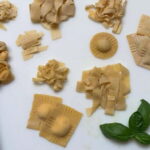
- Main: a pasta dish you make from scratch, with options like fettuccine, gnocchi, or scialatielli, plus a sauce of your choice
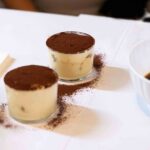
- Dessert: Tiramisu or Ciambelline al Vino Rosso
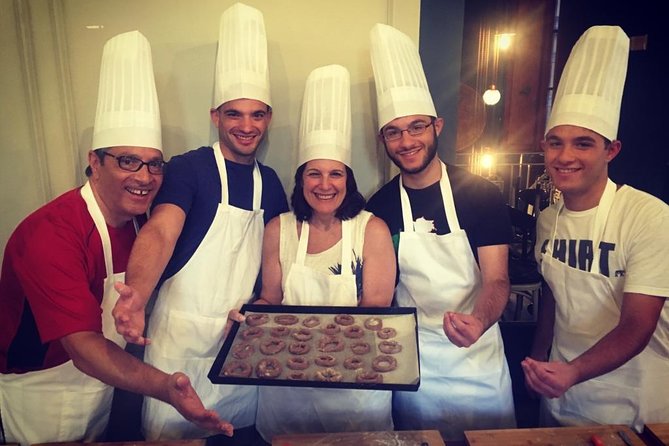
In the included meal details, you’ll see a strong emphasis on Italian comfort food made with real ingredients. For example, the included courses list gnocchi with pork-cheeks, artichokes, and pecorino cheese, plus ciambelline (crispy donuts) al vino rosso. The artichoke course also appears in the meal lineup, listed as seasonal and Jewish style in the sample.
One helpful note: even though the exact menu can change, the structure stays consistent—starter, main pasta, dessert—so you still get a full meal arc, not a random grab-bag of bites.
Taking recipes home: the real souvenir is the ability to cook
I love tours that give you something you can actually use. Here, you get recipes for the dishes after the tour, so you can recreate the experience back home.
That’s more valuable than a postcard. You’re not just collecting memories. You’re collecting instructions. And since the class includes cooking with seasonal thinking, the recipes can help you adapt to what’s available where you live.
If you’re the type who hosts friends and wants to bring a taste of Rome to your table, this is the kind of souvenir that keeps paying off.
Dietary needs and seasonal changes: how to plan without stress
Because the ingredients are chosen seasonally, some dishes may vary. The tour also states that special menus like gluten-free, dairy-free, or vegetarian are available upon request, with the provider doing its best to accommodate you.
Here’s the practical way to handle this: message your needs clearly when you book, and expect that the final menu can still shift as ingredients change. If you’re gluten-sensitive, don’t assume every sauce or dessert will be automatically suitable. Ask what’s being adapted so you don’t end up guessing.
Also, if you love a specific dish from the sample menu, remember that the artichoke option and pasta options are listed as part of the menu plan, but not guaranteed as the exact same choice every day.
Price and value: what $167.59 really buys you
Let’s talk value in plain terms. At $167.59 per person for about 4 hours, you’re paying for three things bundled together:
- A private walking tour with multiple major sights
- A hands-on cooking class where you make the meal
- Lunch or dinner-style eating with courses and a drink, plus recipes afterward
A big reason this can feel like good value is that it replaces two separate activities. If you tried to build this day on your own, you’d likely book a guided sight walk, then pay separately for a cooking class, then pay for a full meal. Here, the walking and cooking flow together, and the meal costs are folded in.
The private format also matters. You’re paying extra for the guide’s time focused only on your group, not a long line of strangers. If you’re traveling with family or a small group, that efficiency adds up fast.
Who this is best for (and who might want a different plan)
This is a strong match for:
- First-time Rome visitors who want orientation fast
- Food lovers who want to learn technique, not just eat
- Families: one review highlighted that pasta making was a standout for kids, and the guide adapted to family interests
- People short on time who still want major landmarks without running yourself ragged
It may be less ideal if:
- You hate walking. The full experience is still a walk first, then cooking.
- You want a guaranteed fixed menu with no changes. Seasonal ingredients can shift dishes, even though pasta stays included.
Should you book this private Rome walking tour and cooking class?
I’d book it if you want a day that does two things well: you see Rome’s headline sites, and you go home with actual food skills. The private format makes it easier to get the right pace, and the cooking class turns the trip into something you participate in, not just observe.
Book it especially if you’re traveling as a couple, with kids, or with friends and you’d like a guide who can tune the day to your interests. If you’re the type who likes shade breaks during hot weather and appreciates a guide who can also suggest other local stops, this fits your style.
FAQ
How long is the private walking tour and cooking class?
It lasts about 4 hours (approx.).
Where does the tour start and where does it end?
You start at Piazza Barberini and the tour ends near the Pantheon, at Via del Pantheon.
Is the tour private or group-based?
It’s private. Only your group participates.
What major sights are included in the walking portion?
You’ll stop at Piazza Barberini, the Spanish Steps, Fontana di Trevi, Piazza di Pietra, the Pantheon area, Chiesa di Santa Maria Sopra Minerva, Piazza Navona, and Campo de’ Fiori.
What do you cook and eat during the class?
You’ll make and eat an Italian meal with a starter (Jewish style artichoke or Caprese salad), a pasta main made from scratch (pasta dish is always included, with sauce of your choice), and dessert (Tiramisu or Ciambelline al Vino Rosso). Dishes may vary by season.
Are recipes provided after the tour?
Yes. Recipes for the dishes are provided after the tour so you can recreate them at home.
Is there any drink included?
Yes. You’ll get a glass of wine, beer, or a soft drink with the meal.