REVIEW · BALI
Spice Garden, Jamu & Cooking Class in Bali Village
Book on Viator →Operated by Balikaru · Bookable on Viator
A Bali cooking class in a working village is the real deal. You’ll spend about 4.5 hours near Mt. Batukaru with a small group (max 12), tour a spice garden, then cook Balinese favorites in an open-air kitchen. I especially like the hands-on feel: you’re not just watching, you’re mixing Jamu, grilling Sate Lilit, and making dessert.
Two more things I think you’ll love are the personal village access (rice terraces, farmers, and an authentic compound) and the practical, learn-by-doing approach that helps you understand spices beyond the moment. One consideration: the experience depends on good weather, so plan for the possibility of rescheduling if conditions are poor.
In This Review
- Key highlights you’ll feel right away
- Why this Bali village kitchen feels different near Mt. Batukaru
- The day’s flow: from rice terraces to a cooked lunch
- Spice garden tour: what you’ll actually take from it
- Learning Rindik: bamboo music class meets cooking culture
- Jamu making and fruit tasting: two drinks, real village technique
- Cooking in Paon Bali: bamboo fire, Sate Lilit, and clay-pot Lak Lak
- The extra village stops: rice planting, Manis the cow, bees, and nature views
- Belulang Hot Spring and the end-of-day wrap-up
- Price and value: why $55 can work well here
- Who this Bali class is best for (and who should consider something else)
- Should you book this Spice Garden, Jamu & Cooking Class in Balikaru?
- FAQ
- What time does the tour start?
- How long is the experience?
- Where does the tour start, and where does it end?
- How many people are in the group?
- What cooking and cultural activities are included?
- What is the dress code in the village?
- Can the tour accommodate vegetarian diets?
- Is the Belulang Hot Spring included?
- Are drinks and tips included in the price?
- What happens if the weather is bad or if I cancel?
Key highlights you’ll feel right away
- A small group size (12 max): more time with the chef and guides, and a calmer pace.
- Jamu production plus fruit tasting: you learn two kinds of Jamu and taste fruit along the way.
- Rindik practice before cooking: a bamboo instrument lesson that sets the tone for village culture.
- Open-air Paon Bali cooking: bamboo-fire style cooking with dishes you prepare yourself.
- Extra village experiences: rice planting help, feeding the cow Manis, and time with stingless bees/Trigona beehives.
- Optional Belulang Hot Spring bath: add-on relaxation if you want it.
Why this Bali village kitchen feels different near Mt. Batukaru
This isn’t a hotel cooking workshop where you step out, cook, and disappear. The setting matters. You start in the Balikaru area (near Belulang) and move through a mountain village rhythm—rice terraces, gardens, farmers, and family spaces—before you ever light a stove.
What makes it work is how the day connects food to place. You’ll pick herbs from the herb and spice garden, then use what you learn right away in the kitchen. And because the hosts are from the surrounding community, the tone is practical and warm instead of staged.
The result is a cooking class you can actually take home in your head. You’ll come away understanding how spices and technique connect to the dishes, not just memorizing recipes.
You can also read our reviews of more tours and experiences in Bali.
The day’s flow: from rice terraces to a cooked lunch
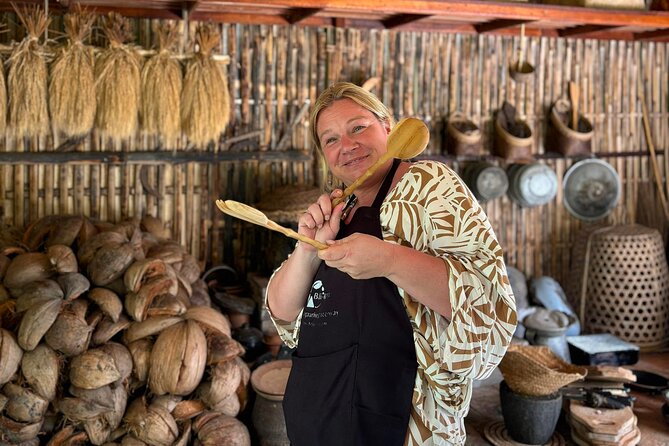
The day starts at 9:00 am and runs about 4 hours 30 minutes, with the tour ending back at the meeting point. After arrival, you’re guided into the village area first—so you’re not immediately stuck in “tour mode.”
Here’s what the rhythm feels like:
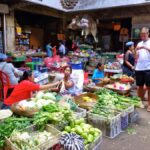
- You begin with a gentle introduction to the village landscape, including rice terraces and a chance to meet farmers.
- You tour the herb and spice garden, where you’ll pick fresh ingredients and learn what they’re used for.
- You then transition into cultural activity with an instrument lesson, learning to play the Rindik (the bamboo instrument of the farmer).
- Only after that cultural warm-up do you start Jamu making and then move into cooking over the open-air kitchen setup.
The pace is intentionally varied. You’re not stuck at one station the whole time, and you get multiple “start points” during the day: garden tour, drink making, instrument practice, then the cooking itself.
Spice garden tour: what you’ll actually take from it
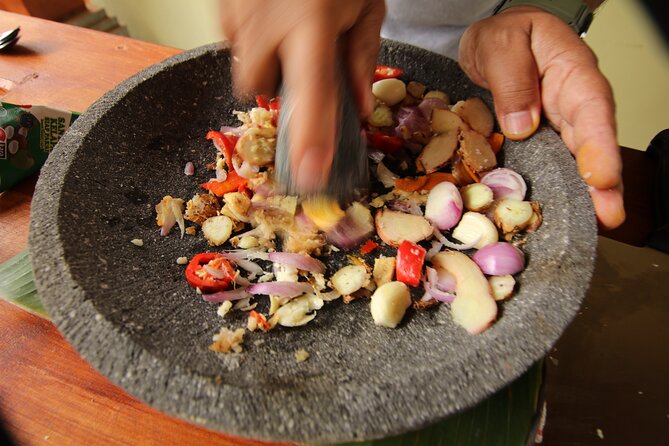
This is where you get the foundation. The guide walks you through the herbs and spices grown nearby, and you’ll pick ingredients directly from the garden. That detail is bigger than it sounds. When you’ve physically gathered an herb, you notice it later in the dish—smell, taste, and texture become less mysterious.
It also helps that you’re using an English-speaking guide (and other languages may be available with a surcharge). You’re not trying to guess measurements with a language barrier. The garden tour is meant to give you context so your cooking makes sense.
Practical takeaway: think of this section as your ingredient map. When you’re later making Jamu and cooking Balinese dishes, you’ll know which flavors you’re chasing and why.
Learning Rindik: bamboo music class meets cooking culture
Before you start cooking, you’ll learn to play Rindik, a traditional bamboo instrument used by farmers. It’s short, hands-on, and it changes the mood of the day.
Why it matters: it reminds you that cooking here is part of a whole village tradition, not a one-off activity. Even if music isn’t your thing, the practical goal is confidence—learning a simple pattern and then moving on with the rest of the day feeling more connected.
Jamu making and fruit tasting: two drinks, real village technique
Jamu is Indonesia’s long-standing herbal drink tradition, and this experience treats it like a hands-on craft rather than a “sample and smile” moment.
You’ll make two kinds of Jamu, then enjoy a fruit tasting as part of the process. The day is structured so you first learn and taste the ingredients, and only then move into the heavier cooking.
This is also a good place to mention the health angle without overdoing it. Jamu is presented as an herbal wellness drink, but the bigger value for me is technique. You’ll see how flavors are built, how you balance herb character, and how the drink connects to the food you’re about to cook.
And yes, it’s fun. Herbal mixing with guided support tends to feel like you’re doing something real, not “performing” for a class.
Cooking in Paon Bali: bamboo fire, Sate Lilit, and clay-pot Lak Lak
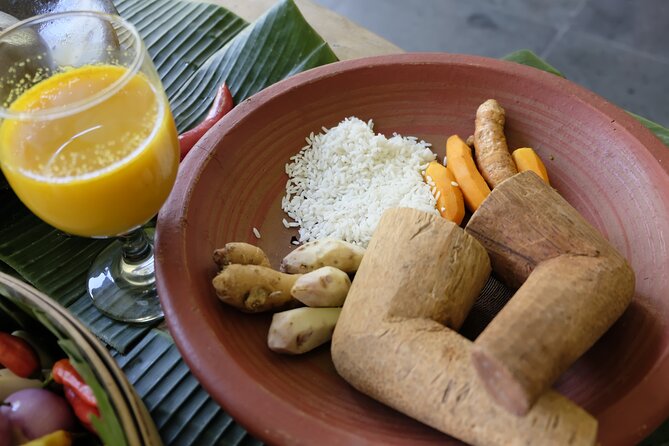
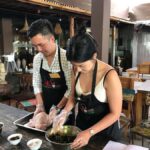
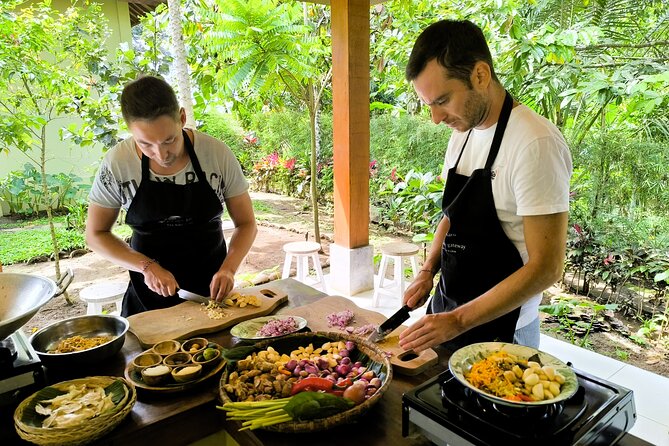
Now for the main event: the open-air cooking in Paon Bali, guided by the chef. This is where you shift from learning ingredients to creating dishes with your own hands.
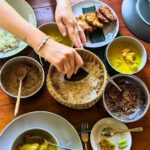
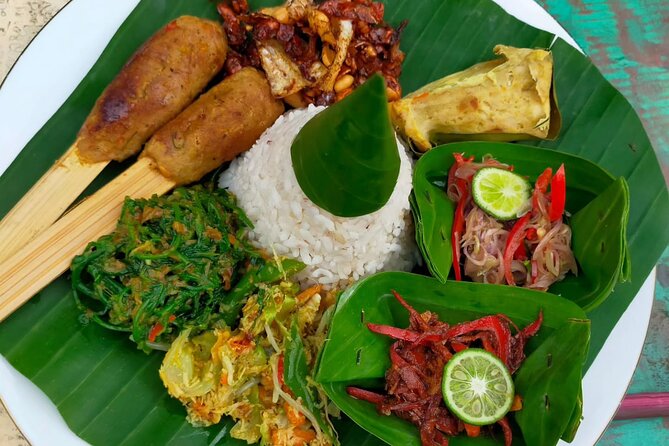
You’ll cook a full Balinese meal that includes:
- Nasi Campur Tumping for lunch (and you’ll also prepare the dessert)
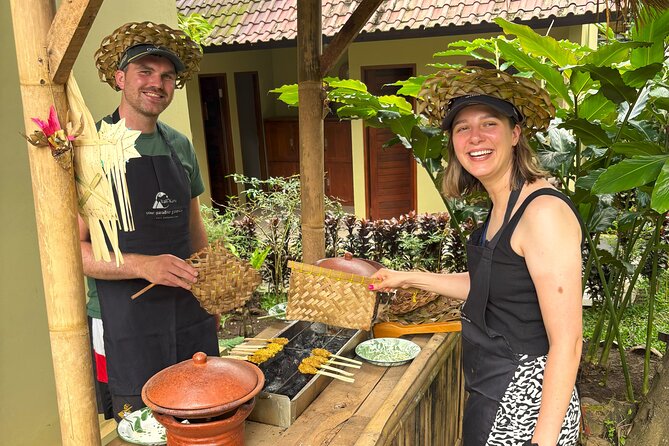
- Sate Lilit, grilled at Gerobak, a live bamboo grill
- Lak Lak, a traditional Balinese dessert cooked in a clay pot
A key difference between this class and many others is that the cooking method is part of the learning. Cooking on a bamboo grill and using a clay pot for dessert makes heat behavior and timing feel different. Even if you’ve cooked at home before, your body notices the change: aroma, smoke, and texture all come into play.
What you’ll probably care about most: you get to prepare and then eat the results. Lunch isn’t an afterthought. It’s the payoff for all the ingredient and technique lessons you did earlier.
The extra village stops: rice planting, Manis the cow, bees, and nature views
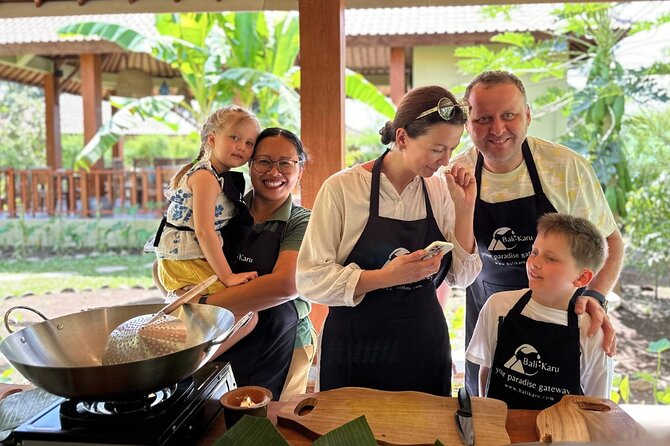
After the core cooking and lunch, the day doesn’t end at a plate. You’ll have options and additional experiences tied to farm life around Belulang and Batukaru.
Depending on timing and flow, you can experience:
- Help planting rice (a farmer-style “helping hand” moment)
- Visit the farm with animals, including feeding the cow Manis
- Discover stingless bees and learn about their connection to Trigona beehives, including the rare, healthy honey
- A soft trekking stretch of about 30 minutes downhill with mountain views
- Visit an authentic Balinese compound in the mountain village
This mix is worth it because it keeps your understanding practical. You see where ingredients come from and how farm life fits into daily cooking. And the trekking portion adds a nature break so you’re not only standing in one place.
One more practical note: the trekking is described as soft and downhill, but it’s still a 30-minute walk. Wear shoes you trust on uneven ground.
Belulang Hot Spring and the end-of-day wrap-up
If you want to loosen up after cooking, there’s an optional visit to Belulang Hot Spring for a bath. It’s not framed as a must-do, so you can choose based on how tired you feel.
At the end, you’ll get a farewell gift plus a personal cooking class certificate. You’ll also receive a recipe book by email after the tour, which is a nice way to make the day last longer than the meal itself.
Price and value: why $55 can work well here
At $55 per person for about 4.5 hours, this price makes sense because the day is packed with included activities—not just cooking.
What you’re getting for the money includes:
- A welcome drink and an herb/spice garden tour
- An English-speaking guide (with other languages only if requested with surcharge)
- Rindik instrument learning
- Jamu production plus fruit tasting
- Guided cooking in Paon Bali, plus lunch and dessert you cook yourself
- A farm visit with animals and Trigona (stingless) beehives
- Rice planting help, plus additional village compound time
- A soft downhill trek (~30 minutes) with mountain views
- Optional Belulang Hot Spring bath
- Certificate and a recipe book emailed after the tour
Also, group size matters for value. With a max of 12, it’s less likely you’ll get rushed or left alone at a station while everyone waits. And because many steps are “do it yourself,” your time feels more justified.
One small thing to keep in mind: drinks aren’t included, and tips are not included, so budget a little extra if that’s part of your travel habits.
Who this Bali class is best for (and who should consider something else)
This experience is a strong match if you:
- Want a real village setting instead of a staged cooking show
- Enjoy learning by doing (gardens, drinks, grilling, and dessert)
- Like nature breaks with mountain views and a short trek
- Are curious about Balinese food foundations: herbs, Jamu, and traditional techniques
You might want to think twice if:
- You’re short on mobility or don’t want a downhill walk (even if it’s described as soft)
- You’re traveling with strict expectations about fixed menus, since the day includes a lot of moving parts and optional add-ons
- You need guaranteed weather independence, since the experience requires good weather
Should you book this Spice Garden, Jamu & Cooking Class in Balikaru?
If you want more than a recipe handout, I’d book it. The best reason is the structure: you learn ingredients in the garden, translate that into Jamu, then apply it in a real open-air cooking setup with traditional dishes like Sate Lilit and Lak Lak. Add in the village farm moments—rice planting, Manis the cow, and the stingless bee world—and the day feels worth the price.
My final advice: come hungry, bring comfortable shoes, and respect the dress code. If you do, you’ll leave with more than lunch—you’ll have a clearer sense of how Balinese flavors connect to daily life.
FAQ
What time does the tour start?
It starts at 9:00 am.
How long is the experience?
It’s approximately 4 hours 30 minutes.
Where does the tour start, and where does it end?
It starts at BalikaruBelulang Bali, Mengesta – Tabanan Region, Mengesta, Kec. Penebel, belulang, Bali 80152, Indonesia, and ends back at the meeting point.
How many people are in the group?
The tour has a maximum of 12 travelers.
What cooking and cultural activities are included?
You’ll tour the herb and spice garden, learn to play the Rindik bamboo instrument, make two kinds of Jamu with fruit tasting, cook a Balinese meal in the Paon Bali open-air kitchen (including Sate Lilit grilled at Gerobak and Lak Lak cooked in a clay pot), and enjoy lunch. You’ll also visit a Balikaru farm area with animals and Trigona beehives.
What is the dress code in the village?
The guidance is: topless or beach clothing is an offence. Shirts, pants, and slippers are okay.
Can the tour accommodate vegetarian diets?
Yes. The experience states it can accommodate dietary needs such as vegetarian, as long as you indicate your requirements at booking.
Is the Belulang Hot Spring included?
It’s optional. The experience includes a visit to Belulang Hot Spring, and you can choose whether to bathe.
Are drinks and tips included in the price?
Tips are not included, and drinks are not included.
What happens if the weather is bad or if I cancel?
The experience requires good weather. If it’s canceled due to poor weather, you’ll be offered a different date or a full refund. There is free cancellation, and you can cancel up to 24 hours in advance for a full refund.