REVIEW · DA NANG
Da Nang: 5 famous dishes cooking class with market trip
Book on GetYourGuide →Operated by Apron Up Cooking Class · Bookable on GetYourGuide
A market-to-kitchen lesson that actually makes sense. You start in Bac My An market with an instructor who helps you choose ingredients, then you cook five dishes in an English-friendly class. I like the clarity of the teaching and the way the experience ends with real recipes you can repeat. One thing to consider: it is a 4-hour hands-on session, so come with an open stomach and comfy shoes.
You will eat what you make: Bun Bo Hue, banh xeo, fresh roll, young jackfruit salad, and avocado ice-cream (vegetarian version available). The class also gives you a printed cook book and a certificate, so it feels more like a real skill-building experience than a quick food stop. The only likely drawback is timing and weather—when it rains, your market walk can get muddy fast.
In This Review
- Key highlights you’ll feel the moment you start
- Market to menu: why this Da Nang class works
- A small reality check
- Where you meet near My Khe Beach (and how to not miss the start)
- Why the exact address matters
- Bac My An market: what you’re really learning while shopping
- Market stop drawbacks to plan for
- Back to the kitchen: the 5-dish cooking plan
- What “5 dishes” means for you
- Dish by dish: what you’ll cook and what to watch for
- Bun Bo Hue
- Banh xeo
- Fresh roll
- Young jackfruit salad
- Avocado ice-cream
- Eating together: the meal, the rice vodka, and the chatting part
- Value check: is $40 a good deal for all this?
- Logistics that can make or break the day
- Timing
- Shoes and weather
- Dietary needs and vegetarian option
- Who should go
- Instructor quality is the real differentiator
- Should you book this Da Nang cooking class?
- FAQ
- How long is the cooking class in Da Nang?
- What dishes are included in the 5-dish menu?
- Where do I meet for the class?
- Is the guide available in English?
- Do I get to eat what I cook?
- Is the market trip included?
- What’s included besides cooking and ingredients?
- Is there a vegetarian option?
- Who is this not suitable for?
- Is the experience accessible for wheelchair users?
Key highlights you’ll feel the moment you start
- Bac My An market shopping with guidance on produce and ingredient choices
- English-speaking instruction that stays clear even when your knife skills are still warming up
- Five-dish course that covers both savory favorites and a sweet surprise
- Hands-on meal with rice vodka plus fruit, so you taste as you learn
- Take-home book + certificate for a lasting reminder of what you cooked
- Diet flexibility via a vegetarian version for the jackfruit salad and other components
Market to menu: why this Da Nang class works
Da Nang food can feel like a blur when you are only eating and moving on. This class slows the process down in a good way. You do two things most food tours never manage: you see ingredients up close, and you learn how they turn into recognizable dishes.
I especially like the flow. The market part is not just photo time. You are shopping with your instructor, learning what to look for and how to pick items you can find again later. Then you come back to the kitchen and cook in a way that connects back to what you bought.
Also, the teaching style matters. In multiple class experiences described here, guides like Daisy and Chi (and instructors with similarly strong communication skills, including Bora and Blue) were singled out for clear English and patient help. If you are worried about feeling lost, that matters.
You can also read our reviews of more tours and experiences in Da Nang.
A small reality check
This is not a sit-down cooking show. It is active. You will chop, mix, assemble, and taste. If you do not like hands-on work, you might prefer a lighter food tour. And if you are traveling in wetter seasons, keep in mind market time can mean slick sidewalks.
Where you meet near My Khe Beach (and how to not miss the start)
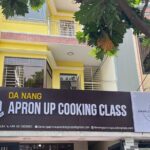
The meet-up point is at number 07 Nguyen Ba Lan street, Ngu Hanh Son, Da Nang. They ask you to arrive 10 minutes before the starting time so the group can settle and start right away.
You will end back at the meeting point at the finish. That makes it easier to plan the rest of your afternoon in Da Nang without needing taxis or extra coordination.
Why the exact address matters
In Da Nang, it is easy to wander a few blocks off and still feel close enough. This is one of those activities where being a little early saves stress. Show up with time, and you will start cooking faster.
Bac My An market: what you’re really learning while shopping
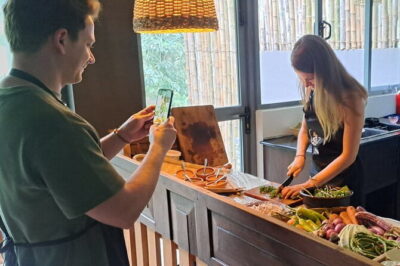
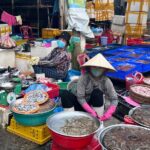
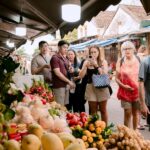
Your market stop is Bac My An market with your instructor. The practical goal is ingredient confidence. You are not just buying food. You are learning what different produce is, how to select quality, and how those choices affect the final dish.
This is where the “authentic” part becomes useful, not just decorative. If you have ever tried to recreate a Vietnamese dish at home and it tasted slightly off, it is often because of ingredient details: freshness, ripeness, texture, or the right flavor base.
In the experiences shared here, instructors were repeatedly praised for being attentive and guiding you on how to pick food and prepare it. That is exactly what you want from a market visit: direct help you can carry to your kitchen later.

Market stop drawbacks to plan for
Markets mean more walking than you might expect for a 4-hour activity. Wear shoes you can stand in. Also, market times can be affected by rain—one experience noted making it work during rainy weather—so bring a light rain layer if rain is on the menu during your trip.
Back to the kitchen: the 5-dish cooking plan
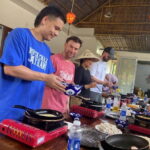
Once you return to the kitchen, you start cooking a full set of classic dishes. The menu is:
- Bun Bo Hue
- Banh xeo
- Fresh roll
- Young jackfruit salad
- Avocado ice-cream
Vegetarian options are available if you need them.
And yes, you get to eat what you make. You will enjoy the meal together with fresh fruits and homemade rice vodka, while chatting with your instructor.
What “5 dishes” means for you
Five dishes is a sweet spot. It is enough variety to understand flavor patterns across Vietnamese cooking—broth, crispy batter, fresh herbs, crunchy-sour salad, and a cool dessert. But it is not so many that you spend the entire time watching someone else cook.
It is also value-smart. For $40, you are paying for the ingredients, tools, instruction, and the meal. You are not just buying a lunch; you are buying a repeatable skill set plus a cookbook you can use after the trip.
Dish by dish: what you’ll cook and what to watch for
Bun Bo Hue
Bun bo hue is the kind of dish that tastes like it has layers even when you are only using a few key components. Expect a fragrant noodle soup experience. This is one of the dishes that teaches you how Vietnamese flavor builds through balance—broth depth plus herbs and toppings.
Tip for your memory: focus on what makes the broth smell different from plain noodle soup. That scent clue is often what you will miss when trying to recreate it later.
Banh xeo
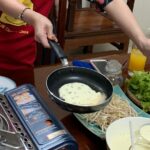
Banh xeo is all about batter and timing. The texture should be crisp at the edges while still staying tender where it matters. This dish also forces you to practice assembly, because the whole point is wrapping and balancing flavors with herbs and fillings.
If you worry you will burn something, do not. The class is set up so you learn step-by-step, and good instructors here were known for explaining things clearly and correcting mistakes gently.
Fresh roll
Fresh rolls are deceptively simple. The key is the roll itself—tight enough to hold, not so tight that it becomes a paste. This dish usually turns into a great “I get it now” moment because you can see the technique improving in real time.
Young jackfruit salad
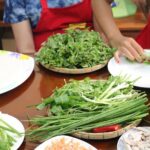
This is the one where flavors go sharp and bright. Young jackfruit salad leans on fresh herbs and a sour-salty-sweet balance. The instructor is there to guide you through the prep and seasoning so you end up with a salad that tastes alive instead of flat.
If you are vegetarian, you may see the course adjusted with a vegetarian version. That is important: you still get the core dish concept, not a sad substitute.
Avocado ice-cream
If you think avocado ice-cream sounds strange, good. That curiosity is part of the experience. The cool, creamy texture is the point, and it often surprises people in a good way.
More than once, this ice-cream was noted as a surprise that still worked. The lesson here is that Vietnamese desserts often use familiar ingredients in unexpected ways, and once you try it, you understand the why.
Eating together: the meal, the rice vodka, and the chatting part
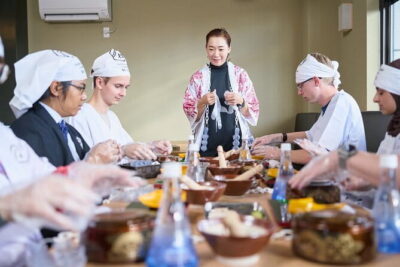
After cooking, you sit down and enjoy what you made with fresh fruits. You will also be served welcome tea earlier in the experience, and later you might have homemade rice vodka while chatting with the instructor.
That social portion sounds small on paper, but it matters. This is when questions come easily: What ingredient can you swap? Where do you find something similar? How do you adjust flavor for your taste?
Instructors in these experiences were described as cheerful, attentive, and patient. That kind of vibe makes the food stick, because you remember not only the recipe but the logic behind it.
Value check: is $40 a good deal for all this?
At $40 per person for about 4 hours, this class is pretty strong value for Da Nang if you care about learning. Here’s why.
You get:
- Market trip and ingredient guidance
- English-speaking guide
- 5-dish cooking course
- All ingredient fees
- Cooking tools
- Welcome tea, fruit, and rice vodka
- Printed cook book and certificate
In many food experiences, you pay for eating. Here, you pay for eating plus the skill transfer. The market portion alone can be worth it if you want to leave with real ingredient confidence instead of vague memories.
Also, you get the cookbook and certificate. It is a small thing, but it helps you follow through after your trip, when enthusiasm is high and your search history is full of recipe videos.
Logistics that can make or break the day
Timing
The activity runs 4 hours. Starting times vary, so check availability for the slot that fits your day.
Shoes and weather
You are doing a market walk plus cooking. Wear shoes you can stand in and move around with. If it is rainy, it can change the feel of the market visit, so a light rain layer is smart.
Dietary needs and vegetarian option
The class offers a vegetarian version if you are vegetarian. If you have other dietary restrictions, you might find the instructor can adjust things, since adaptability came up in these experiences—but the exact approach is not listed, so it’s worth confirming.
Who should go
This works best for:
- People who like learning by doing
- Foodies who want recipes they can recreate
- Travelers who enjoy markets and ingredient selection
- Anyone who wants a structured meal instead of random street-hopping
Instructor quality is the real differentiator
This is one of those classes where the instructor can change everything. In the experiences described here, guides were praised for:
- clear English explanations
- attentiveness while you cook
- patience with mistakes
- keeping the energy positive
Names like Daisy, Chi, Bora, Blue, and Nick appeared in feedback. That tells me the program places real effort into teaching, not just logistics.
It also matters that you are learning in a group setting. If your confidence is lower than your appetite, that structure helps. People were also noted for having a small group size at least in one case (four people), which usually means more hands-on attention.
Should you book this Da Nang cooking class?
Book it if you want more than another nice meal. If your goal is to learn how Vietnamese cooking actually comes together, this class is well matched: market first, then kitchen, then food you can repeat at home using the take-home cook book.
Skip or rethink it if:
- You hate hands-on cooking and would rather watch
- You cannot do a 4-hour active session
- Weather is a major issue for you and you hate wet, messy markets
If you are on the fence, here is my practical take: you are paying for a full sensory experience, not just lunch. Between the five-dish menu, the market shopping, and the printed recipes, it is one of the more complete ways to spend a half day in Da Nang.
FAQ
How long is the cooking class in Da Nang?
The class duration is 4 hours.
What dishes are included in the 5-dish menu?
The course includes Bun Bo Hue, Banh xeo, fresh roll, young jackfruit salad, and avocado ice-cream. A vegetarian version is available if needed.
Where do I meet for the class?
Meet at number 07 Nguyen Ba Lan street, Ngu Hanh Son, Da Nang. You should arrive about 10 minutes before the starting time.
Is the guide available in English?
Yes. The instructor is English-speaking.
Do I get to eat what I cook?
Yes. You enjoy the meal together after cooking, along with fresh fruits. Rice vodka may also be served.
Is the market trip included?
Yes. The market trip is included as part of the experience.
What’s included besides cooking and ingredients?
Included items list a welcome tea, fruit, rice vodka, cooking tools, a cook book, and a certificate.
Is there a vegetarian option?
Yes. The course can be adapted with a vegetarian version.
Who is this not suitable for?
It is not suitable for children under 4 years old, and it is not suitable for people over 95 years old.
Is the experience accessible for wheelchair users?
Yes, it is listed as wheelchair accessible.