REVIEW · DA NANG
5 Dishes Cooking Class with Market Trip in Da Nang
Book on Viator →Operated by DaNang Apron Up Cooking Class · Bookable on Viator
Dinner starts at the market. This Da Nang class is built around the idea that you understand food best when you shop for it first, then cook it yourself. I like that you begin at Chợ Bắc Mỹ An, learning local ingredients and even how to substitute when you’re back home. I also like the clear hands-on structure: you cook five signature dishes, then sit down together for the meal. One consideration: the whole experience runs about 4 hours, so it moves at a teaching pace rather than a slow browse.
The vibe is practical and warm, with instruction you can actually follow. In the feedback I saw, the instructor style is a big part of why people rate it so highly, especially praise for patient, careful explanations (including an instructor named Jenny). You’ll finish with a cookbook and a certificate, plus that extra local touch of homemade rice vodka with your meal.
In This Review
- Key Highlights Before You Cook
- Why This Da Nang Class Starts at Chợ Bắc Mỹ An
- Price and Time: What $39 Really Buys You
- Arrival at 07 Nguyễn Bá Lân: How the Day Gets Rolling
- Market Trip Skills: Choosing Ingredients and Planning Substitutions
- Cooking the Menu: Five Da Nang Dishes You Learn to Make
- Bánh Xèo (Vietnamese savory pancake)
- Bún Bò Huế (spicy beef noodle soup)
- Hoi An Fresh Roll (fresh roll)
- Young Jackfruit Salad (with herbs and crunch)
- Avocado Ice-Cream (cool finish)
- What You Eat: A Shared Meal with Homemade Rice Vodka
- Small Group Size, Instruction Style, and the Human Touch
- Take-Home Cookbook and Certificate (and Why They Matter)
- Who This Cooking Class Is Best For
- Quick Practical Tips Before You Book
- Should You Book This 5 Dishes Cooking Class in Da Nang?
- FAQ
- Where is the meeting point?
- How early should I arrive?
- How long is the cooking class?
- What dishes will I learn to cook?
- Do I eat what I cook?
- Is there a market visit included?
- Can the class handle vegetarian, vegan, or allergies?
- How big is the group?
- What is the cancellation policy?
Key Highlights Before You Cook
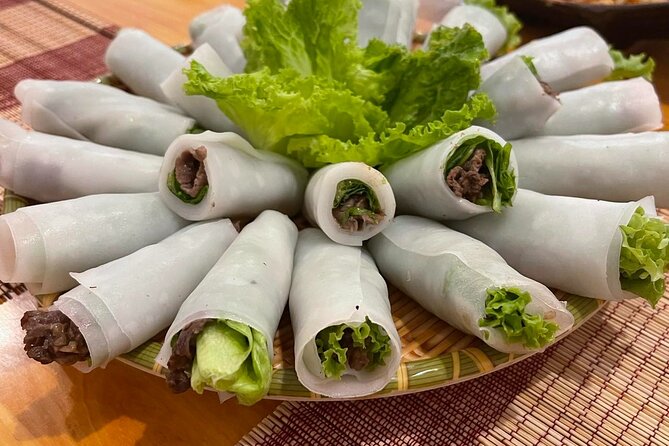
- Market-first planning at Chợ Bắc Mỹ An so you know what you’re buying and why
- Ingredient swaps for home cooking, not just a one-time class
- Five hands-on dishes: Banh Xeo, Bun Bo Hue, fresh rolls, young jackfruit salad, avocado ice-cream
- A shared sit-down meal, including homemade rice vodka
- Small group size up to 30 people, keeping it manageable
- Dietary options on request (vegetarian, vegan, and allergies)
Why This Da Nang Class Starts at Chợ Bắc Mỹ An
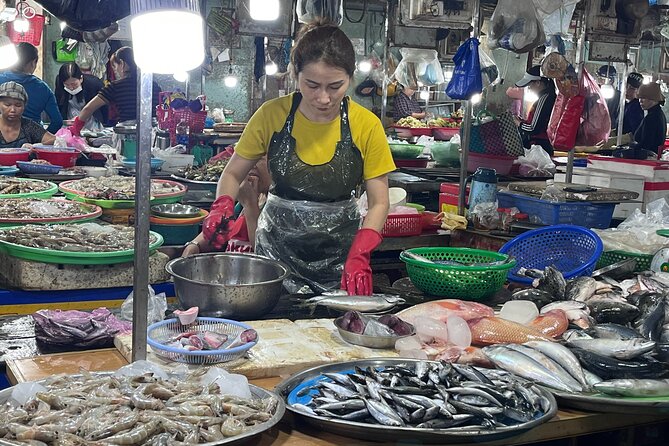
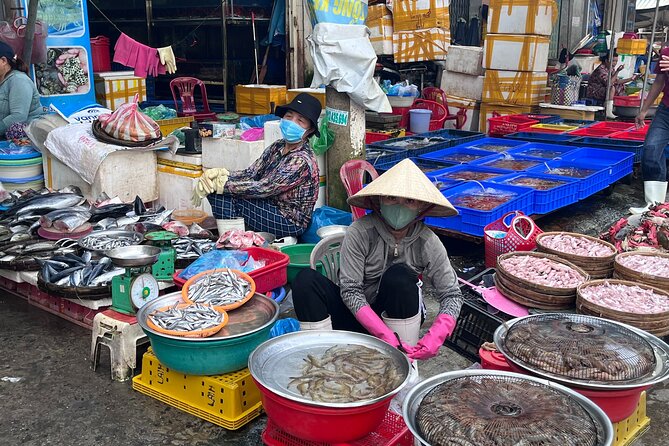
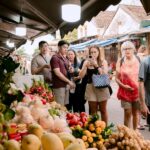
If you’ve ever wandered a market in Vietnam and thought, I have no idea what to buy, this part of the class is for you. The tour begins with a visit to the nearby market—Chợ Bắc Mỹ An—where you shop and learn about common ingredients used in the dishes you’ll make later.
This isn’t just shopping as a warm-up. The market time is framed as ingredient education: you’ll learn what certain items are used for, and you’ll also hear about possible replacements. That matters because many of Da Nang’s best flavors depend on ingredients that aren’t available everywhere. The class is trying to set you up for success when you cook at home, not only when you’re standing over a cutting board in Vietnam.
I also like that the market portion gives you context for Vietnamese cooking. You see the ingredients before you handle them, so names stop being random words and start being real items with a job in the recipe. It’s the difference between watching a recipe video and actually understanding why the recipe says what it says.
You can also read our reviews of more tours and experiences in Da Nang.
Price and Time: What $39 Really Buys You
At $39 per person for about 4 hours, this class is priced like a value play for people who want more than a one-dish meal. You’re getting:
- a market visit,
- instruction to cook five dishes,
- a shared meal (including rice vodka),
- and takeaway items: a cookbook and a certificate.
A cooking class can be expensive when it’s mostly watching. Here, the structure is built around doing. Even without knowing every detail of the teaching method, you’re essentially paying for access to a guided market + a multi-dish cooking session + food you’ll eat together afterward. For Da Nang, that’s a lot packed into one outing.
One more practical point: the tour uses a mobile ticket. That’s small, but it helps when you’re trying to keep your day simple and avoid paper logistics.
Arrival at 07 Nguyễn Bá Lân: How the Day Gets Rolling
Your day starts with a meet-up at 07 Nguyễn Bá Lân, Bắc Mỹ An, Ngũ Hành Sơn, Đà Nẵng. They ask you to arrive about 15 minutes before the start time. If you’ve done enough tours to know the pattern—traffic, misread instructions, a wrong turn—this early buffer is smart.
The meeting point is also described as being near public transportation. That’s useful if you’re juggling a tight schedule in Da Nang and don’t want your whole plan to hinge on taxis.
From there, the flow is straightforward: meet, head to the market nearby, then return for the cooking session. The experience ends back at the meeting point. So you’re not dealing with a long “end up somewhere else” situation.
Market Trip Skills: Choosing Ingredients and Planning Substitutions
The market stop is the heart of the first act. You’re not just picking up whatever looks good. You’re learning how ingredients are used and how you can swap them later. That’s one of the best parts of this kind of class, because it turns into a real-life skill.
Here’s what this approach helps you do:
- Shop with purpose: you know what you’re looking for instead of guessing.
- Cook with confidence later: ingredient substitutions are not an afterthought.
- Ask better questions: when the instructor explains an item, you can actually connect it to flavor and technique.
Even if you’ve eaten Vietnamese food before, markets are where you learn the logic behind the dishes. That’s also where you may notice the real differences between “Vietnamese food” and your idea of Vietnamese food, depending on where you’ve eaten so far.
One more small but important detail: the class is set up to answer questions you’ve been curious about. If there’s an ingredient you can’t pronounce (that’s common) or a spice level you want to adjust, this is the time to clarify.
Cooking the Menu: Five Da Nang Dishes You Learn to Make
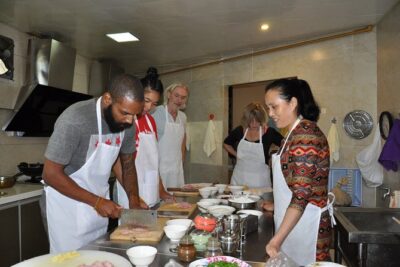
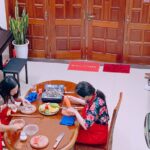
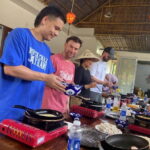
Back from the market, you’ll cook five dishes. This is the part that makes the class feel more like a workshop than a demo. The goal is that you not only taste, but understand the steps and how the components come together.
Here’s your cooking menu, plus what to pay attention to while you’re working:
Bánh Xèo (Vietnamese savory pancake)
Bánh Xèo is a crowd favorite for a reason: it’s part crispy, part savory, and it relies on the right batter consistency and cooking heat. In a class setting, you’ll likely get guidance on how to handle the batter so it doesn’t end up too thick or uneven.
What I like about teaching this dish is that it forces you to think about technique, not only ingredients. If you get the batter right and cook it properly, the rest of the flavor usually clicks into place.
Bún Bò Huế (spicy beef noodle soup)
This dish is known for its bold flavor profile and comforting noodle base. In class, the main value is learning how the components work together, especially how you balance that “warming” spice and richness.
Pay attention to seasoning cues. If you’ve got allergies or you dislike very spicy food, this is where you’ll want to ask what you can adjust.
Hoi An Fresh Roll (fresh roll)
The class includes a fresh roll style dish called Hoi An Fresh roll. Fresh rolls are great because they’re often built from multiple parts—filling, wrapping, and dipping or dressing components. They’re a hands-on lesson in assembly and texture.
What you’ll likely walk away with is a clearer understanding of how to make the roll without tearing it, and how the filling ingredients should complement each other.
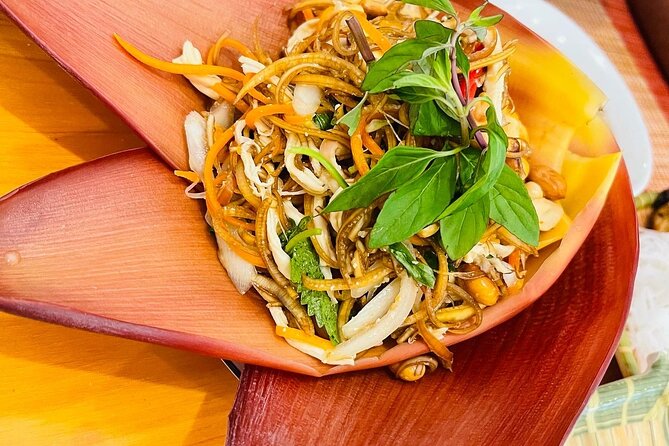
Young Jackfruit Salad (with herbs and crunch)
Young jackfruit salad brings a different kind of satisfaction: tang, crunch, and herbal brightness. This is the dish that helps you expand beyond “cooked everything” meals. It’s also one of the best options for learning how Vietnamese salads are built—flavor layering matters.
In class, ask about how they treat the jackfruit and what they use to balance tartness and seasoning. Even if your ingredients vary later, the flavor strategy is the transferable part.
Avocado Ice-Cream (cool finish)
After savory and spicy dishes, you’ll get a dessert: avocado ice-cream. This is a memorable finish because it’s not a generic ice-cream moment. Avocado adds a creamy texture that feels surprising if you’ve only had avocado in savory contexts.
When making a frozen dessert, the key learning points tend to be mixing consistency and how you handle the cooling process. If you like making desserts at home, this is the dish that can turn into a go-to.
What You Eat: A Shared Meal with Homemade Rice Vodka
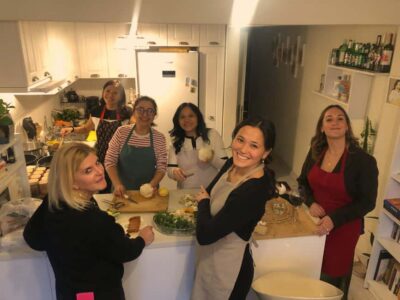
Once cooking wraps up, you eat together. That shared meal is more than just included food—it’s where the class becomes a complete experience. You’ll taste what you made, compare notes with others in your group, and probably discover which dish is your personal favorite.
The meal includes homemade rice vodka. That’s a very local detail, and it’s also a reminder that Vietnamese dining often comes with a drink component, not just food. If alcohol isn’t your thing, you can still enjoy the rest of the meal, but it helps to be aware that it’s part of the plan.
If you have dietary restrictions, the class says they can cater for vegetarian, vegan, and allergies—just make sure to note it in special requests when booking.
Small Group Size, Instruction Style, and the Human Touch
With a maximum of 30 people, this class is built to stay organized. It’s big enough to be lively, but not so large that you disappear into the crowd. For a cooking class, that balance matters because you need to ask questions and get guidance while you’re working.
What people seem to love most is instruction quality. In the feedback available, an instructor named Jenny gets highlighted for careful explanations and making the whole experience feel fun and approachable. That’s exactly what you want in a cooking class: clarity, patience, and someone who can guide you through steps without rushing you.
Also, you’re not just learning recipes—you’re being shown how ingredients behave and how Vietnamese cooking thinks about balance.
Take-Home Cookbook and Certificate (and Why They Matter)
The class doesn’t end when the food does. You receive a cookbook and a certificate. I’m a fan of classes that give you tools to reproduce what you learned, and this one makes that explicit.
The cookbook helps you cook later without relying on memory or trying to guess measurements. The certificate is a fun bonus, but the real value is that you’re leaving with a structured reference to the dishes you practiced.
If you’re the kind of person who likes to cook your vacation days back into your normal routine, this is a strong match.
Who This Cooking Class Is Best For
This tour works especially well if:
- You feel unsure about what to buy in Vietnamese markets.
- You want to cook multiple dishes in one outing, not just one “signature plate.”
- You care about learning ingredient substitutions for home cooking.
- You like hands-on lessons with direct instruction.
It’s also a good fit for couples, solo travelers, and small groups who want something practical and food-centered without needing a full-day commitment.
One consideration: because it’s about 4 hours, the class is designed to keep momentum. If you want a long, slow market wander with lots of free time for browsing beyond the ingredients, you might feel slightly time-pressed.
Quick Practical Tips Before You Book
- Arrive a little early. 15 minutes before is the target for a reason.
- If you have allergies, list them clearly in the special request. The class says they can cater for allergies.
- Be ready to cook. This isn’t only tasting.
- Expect spice potential. If you’re sensitive, ask what you can adjust while you’re there.
- If you love dessert, keep an eye on the avocado ice-cream station—it’s the cool, creamy reward.
Should You Book This 5 Dishes Cooking Class in Da Nang?
I think you should book it if you want a clear “market-to-cooking” experience that leaves you with real skills. For $39, you’re not paying just for a meal—you’re paying for market education, hands-on practice, and a set of takeaway materials. The market-first design and the multi-dish lineup are the winning combo.
Skip it only if you already know exactly what you want to cook and shop for, and you’d rather spend your money on a longer, more independent food day. This class is structured. It moves. It teaches. That’s the point.
If you’re curious about Vietnamese flavors and you want to bring some of that kitchen logic home, this is an easy yes.
FAQ
Where is the meeting point?
You meet at 07 Nguyễn Bá Lân, Bắc Mỹ An, Ngũ Hành Sơn, Đà Nẵng 550000, Vietnam.
How early should I arrive?
They ask you to arrive 15 minutes before the starting time.
How long is the cooking class?
The duration is about 4 hours.
What dishes will I learn to cook?
You’ll cook five dishes: Banh Xeo, Bun Bo Hue, Hoi An Fresh roll, Young jackfruit salad, and avocado ice-cream.
Do I eat what I cook?
Yes. You’ll have the meal together at the end, and it includes homemade rice vodka.
Is there a market visit included?
Yes. The class begins with a visit to the market nearby (Chợ Bắc Mỹ An).
Can the class handle vegetarian, vegan, or allergies?
Yes. Vegetarian, vegan, and allergies can be catered for, but you need to mention it in special request when booking.
How big is the group?
The tour has a maximum of 30 people.
What is the cancellation policy?
You can cancel for a full refund if you cancel at least 24 hours before the experience starts. Free cancellation is offered, with the cutoff based on local time.