REVIEW · DA NANG
5 traditional dishes Da Nang cooking class with market trip
Book on Viator →Operated by Apron Up Cooking Class · Bookable on Viator
Want Da Nang flavors without guesswork? A visit to the Chợ Bắc Mỹ An market followed by hands-on cooking turns local ingredients into five Central Vietnam dishes you actually make and eat. I like how the menu is built for real variety, not just one or two standouts, and I like that you’re taught by friendly instructors like Bora, Blue, Chi, and Jenny. One thing to consider: the class style can include shared parts (and some dishes are a bit fiddly), so your plate might not be identical to the person next to you.
This is set up like a short, focused food day: meet in Bắc Mỹ An, shop nearby, return to the kitchen, then cook as a group. The cap is up to 30 people, which keeps things from feeling chaotic, even if you’re doing a group class.
You also get practical flexibility. The menu is chosen so it can be adjusted for dietary requirements, and vegetarians can opt for a vegetarian version (including for the avocado ice-cream portion). If you want Da Nang food with a bit of structure and good results, this format is easy to recommend.
In This Review
- Key highlights you will care about
- Market Stop at Chợ Bắc Mỹ An: Get your bearings fast
- In the kitchen: Cooking five Central Vietnam favorites
- What you’ll learn from each dish (practical focus)
- Dietary needs and swaps
- The meal experience: Lunch, dinner, plus fruits and rice vodka
- Instructors and group vibe: Bora, Blue, Chi, Jenny
- Price and value for $39: What makes it feel fair
- Practical tips for a smooth 4-hour session
- Who should book this Da Nang cooking class
- Should you book this Apron Up cooking class?
- FAQ
- How long is the Da Nang cooking class with market trip?
- Where does the class start?
- Do you visit a market before cooking?
- What dishes do you cook?
- Is coffee or tea included?
- Is lunch included?
- Is rice vodka included?
- What do you receive at the end?
- What is the cancellation policy?
Key highlights you will care about
- Chợ Bắc Mỹ An market visit to learn what you buy and why it matters
- Five-dish hands-on menu: Bun Bo Hue, Banh Xèo, fresh rolls, young jackfruit salad, and avocado ice-cream (with vegetarian option)
- Food included: coffee/tea plus a full meal setup with what you cook, fruits, and rice vodka
- Taught with real technique so you’re not just copying steps
- You leave with a cookbook and certificate, so the day lasts longer than dinner
Market Stop at Chợ Bắc Mỹ An: Get your bearings fast
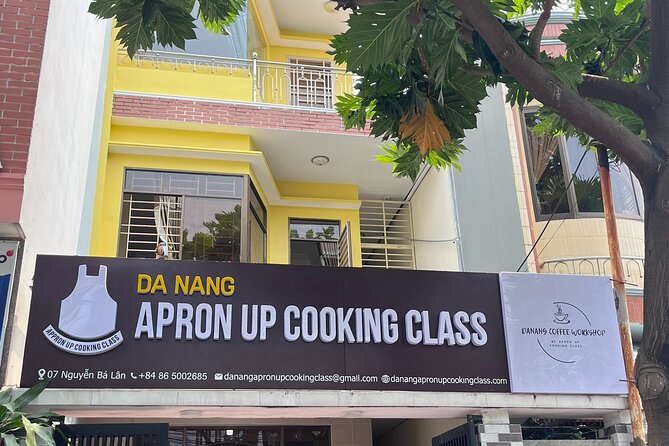
The experience starts at 07 Nguyễn Bá Lân, Bắc Mỹ An, Đà Nẵng. You’ll want to arrive about 10 minutes early so you don’t slow the group down, since the market visit begins soon after meet-up.
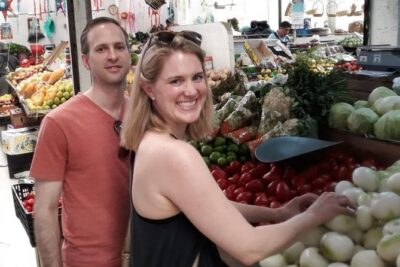
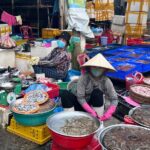
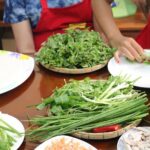
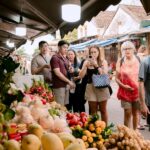
From there, you head to Chợ Bắc Mỹ An, a nearby market that’s close enough to stay practical for a 4-hour class. This part is valuable even if you’re not a “market person,” because it teaches you how local cooks think: ingredients aren’t just items on a list. You learn what you’re buying, how the selection works, and how those choices show up in the dishes later.
It’s also a great way to reset your Da Nang senses. You’ll see the ingredients that power Central Vietnam cooking and you’ll get a little practice noticing textures, shapes, and freshness—stuff that matters when you start rolling, frying, and plating back at the kitchen.
You can also read our reviews of more tours and experiences in Da Nang.
In the kitchen: Cooking five Central Vietnam favorites
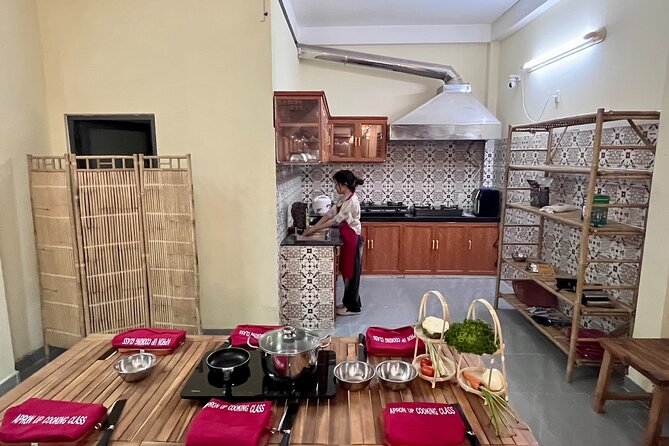
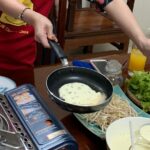
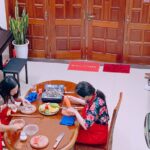
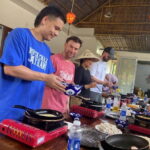
Back in the kitchen, you get to cook a full set of five dishes. The class is set up as a join-in style, so you’re cooking with others, but the instruction is hands-on rather than a passive show-and-tell. The menu includes:
- Bun Bo Hue
- Bánh Xèo
- Tâm Hữu fresh roll
- Young jackfruit salad
- Da Nang avocado ice-cream (or a vegetarian version)
Why this lineup works: it hits different cooking styles in one afternoon. You’ll do things that require heat control, rolling/assembly, and balancing fresh elements. That variety is why people love taking this class early in their trip: it helps you understand what you’ve been eating around town.
What you’ll learn from each dish (practical focus)
- Bun Bo Hue: expect technique and timing tied to noodle soup style. This kind of dish is often treated as a “made with care” item, and you’ll learn the approach so it tastes right when the meal comes together.
- Bánh Xèo: one of the common wow-factors in Da Nang cooking. In class, focus tends to land on how to get the pancake crisp and evenly cooked—this is the dish you’ll likely feel progress on fast.
- Tâm Hữu fresh roll: fresh rolls can go wrong in a tiny way and then everything changes. If yours falls apart slightly, don’t panic—this is exactly the kind of dish where learning by doing is the point, not perfection.
- Young jackfruit salad: a fresh component that rounds out a heavier meal. You’ll get practice handling the ingredients and assembling a salad-style dish that feels lighter but still satisfying.
- Avocado ice-cream (or vegetarian version): a smart finale. It gives you something cool after hot food and helps you experience a Central Vietnam sweet that isn’t the same old cookie-and-ice-cream routine.
Dietary needs and swaps
The menu is selected with flexibility in mind, so adjustments can be made based on dietary requirements. If you’re vegetarian, you’ll be offered a vegetarian version for the avocado ice-cream part, and the overall menu is designed so it can adapt. This is one of those “small detail, big outcome” features: it means you can plan your food day without guessing what’s off-limits.
The meal experience: Lunch, dinner, plus fruits and rice vodka
Food here isn’t a snack between steps. It’s a full meal setup built around what you cook.
The class includes lunch and dinner, plus coffee and/or tea. You’ll also eat the dishes you make together, and the meal comes with fruits and rice vodka as part of the experience.
Two things to understand before you go:
- You should plan to eat. This is not a light tasting where you’re hungry again an hour later.
- Alcohol is included, but it’s optional in how you personally handle it. If you’d rather not drink, you can still enjoy the rest of the meal and focus on learning the food.
Also, many classes have a “group recipe” moment, where one dish is made together rather than each person producing a separate perfect bowl. That can be a drawback if you strongly prefer total personal control over every dish, but it also makes the workflow smoother in a 4-hour window.
Instructors and group vibe: Bora, Blue, Chi, Jenny
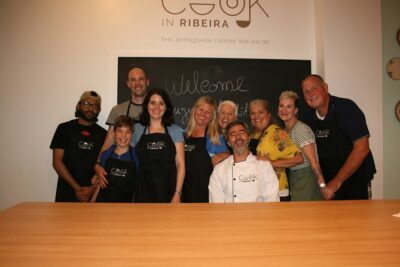
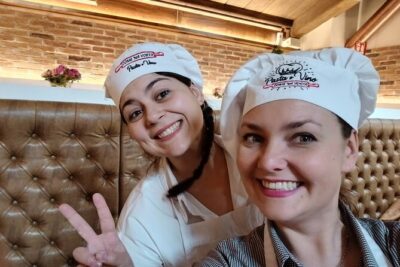
The teaching style seems consistent: friendly instructors, patience, and practical guidance. Names that come up include Bora, Blue, Chi, and Jenny, and more than one instructor is described as using a clear, encouraging approach—helpful for both adults and kids.
This matters because cooking classes fail when instruction is vague. Here, the emphasis appears to be technique: how to handle ingredients, when to watch for doneness, and how to avoid common mistakes (especially in dishes like crisp pancake items and delicate fresh rolls).
Group size is capped at 30, but the “feel” in this kind of setup comes from the fact that you’re doing the work yourself. When you’re physically making the food, you don’t have to translate a language barrier through guessing.
Price and value for $39: What makes it feel fair
At $39 per person, this class is priced like a “do something meaningful with your day” activity, not a budget cooking gimmick.
Here’s where the value comes from:
- You get a market trip (not just a quick drive-by stop).
- You cook five dishes, including a savory set plus a dessert component.
- Coffee/tea and meals are included (lunch and dinner, plus fruits).
- You leave with a cookbook and a certificate, which turns the experience into a memory you can reuse at home.
- The group is capped at 30, so you’re not stuck with a huge crowd that makes hands-on teaching hard.
If you compare it to the cost of eating multiple Da Nang dishes plus paying for a guide-led food explanation, this price starts to feel like a bargain. The key is you’re paying for learning and context, not just eating.
One consideration on value: shared plating or group-prep moments can mean you don’t get a perfectly individualized experience for every single dish. If that would bother you, look at the menu and choose this class for the dishes you care about most.
Practical tips for a smooth 4-hour session
This experience runs about 4 hours. That timeline is short enough to fit nicely into a day in Da Nang, but you’ll still do a lot: meet-up, market walk, kitchen cooking, then sit down to eat.
A few practical pointers based on how the class is structured:
- Arrive early (about 10 minutes) so you can start the market visit on time.
- Wear comfortable shoes. Markets and kitchens mean standing and moving.
- If you have dietary needs, say so clearly when you book. The class is set up to adjust the menu, but it’s easier when you communicate early.
- Bring curiosity, not perfection. Fresh rolls and similar tasks can be tricky, and your goal is learning technique, not producing restaurant-level identical results.
Also, the meeting point and the ending point are the same, so you’re not stuck figuring out how to get back after the class.
Who should book this Da Nang cooking class
This is a great fit if you want:
- A hands-on way to understand Central Vietnam food in a few hours
- A mix of classic dishes like Bánh Xèo, Bun Bo Hue, fresh rolls, jackfruit salad, and avocado ice-cream
- A structured activity that includes eating and a take-home guide
It’s especially appealing for families and multi-age groups because instructors are described as patient and comfortable teaching kids. It also suits beginner cooks, since the class is built around teaching technique rather than assuming you already know what you’re doing.
You might choose something else if:
- You strongly dislike group cooking formats where parts of dishes may be shared
- You need total control over every component and plate (this class can be a bit more team-based)
Should you book this Apron Up cooking class?
If you want a value-packed Da Nang experience that ties together market shopping, real cooking instruction, and a sit-down meal, I’d book it. For $39, you’re getting five dishes, meals, coffee/tea, fruits, rice vodka, plus a cookbook and certificate. That’s a lot of payoff for a single afternoon.
Book it sooner in your trip if you want the most learning. The market stop gives context, and cooking the dishes gives you the memory that makes later restaurant meals taste more understandable.
If your top priority is strict individual cooking with no shared elements, you should know that the class can be partly group-paced. For most people, though, that shared rhythm is what keeps the experience smooth.
FAQ
How long is the Da Nang cooking class with market trip?
It runs for about 4 hours.
Where does the class start?
The meet-up point is 07 Nguyễn Bá Lân, Bắc Mỹ An, Ngũ Hành Sơn, Đà Nẵng, Vietnam, and the activity ends back at the meeting point.
Do you visit a market before cooking?
Yes. You meet, then visit Chợ Bắc Mỹ An to learn about local produce and shop for ingredients.
What dishes do you cook?
You cook five dishes: Bun Bo Hue, Bánh Xèo, Tâm Hữu fresh roll, young jackfruit salad, and Da Nang avocado ice-cream (with a vegetarian version available for vegetarians).
Is coffee or tea included?
Yes, coffee and/or tea are included.
Is lunch included?
Yes. Lunch is included, and the experience also lists dinner as included as part of the overall meal setup.
Is rice vodka included?
Yes. Rice vodka is included with the meal.
What do you receive at the end?
You receive a cookbook and a certificate.
What is the cancellation policy?
You can cancel for a full refund up to 24 hours in advance. If you cancel less than 24 hours before the start time, the amount paid is not refunded.