REVIEW · LUANG PRABANG
Luang Prabang: Evening Cooking Class & Local Baci Ceremony
Book on GetYourGuide →Operated by Wander Laos Tour Co.,Ltd · Bookable on GetYourGuide
Dinner starts with blessings in Luang Prabang. This 4-hour small-group evening pairs a hands-on cooking class with a very personal Baci ceremony, plus traditional music and rice-field views.
I especially like how you pick ingredients first, then cook them into a real Lao home-style dinner. One drawback to know up front: the Baci part is culturally formal, so you’ll need covered knees and shoulders and you should expect more ritual than a typical performance.
In This Review
- Key Things That Make This Evening Special
- A 4 PM Pickup Leads to a Market, Not a Menu
- The Food Market Stop: Where Lao Flavors Make Sense
- Cooking Your Own Lao Dinner: 5 Dishes, Real Technique, No Acting
- Eating Together in a Traditional Setting
- The Baci Ceremony: What It Is and How to Respect It
- Traditional Music and the Hmong Performance
- Price and Value: Why This $51 Evening Can Be Worth It
- Who This Is Best For (and Who Should Skip)
- Practical Tips for a Smoother Night
- Should You Book This Luang Prabang Evening?
- FAQ
- How long is the cooking class and Baci ceremony?
- Is hotel pickup and drop-off included?
- How large is the group?
- What should I wear?
- Is alcohol included?
- Is this activity suitable for everyone?
Key Things That Make This Evening Special
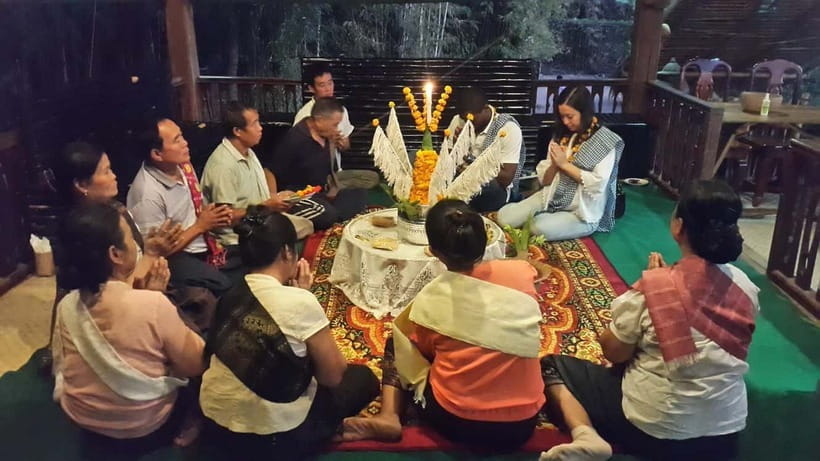
- Baci ceremony with a local family: not a distant viewing, but a shared ritual and blessing moment
- Market stop for real ingredient context: you learn what goes where before you cook
- Hands-on cooking of 5 typical dishes: you do the work, not just watch
- Charcoal-and-wood cooking style: a more old-school way of getting flavor
- Traditional folk music and Hmong costume performance: culture comes with a soundtrack
- Small group (up to 6): easier conversation, more personal attention
A 4 PM Pickup Leads to a Market, Not a Menu
This is the kind of Luang Prabang night that starts like a local routine: you meet your driver at 4:00 PM at your hotel lobby, then head out before the evening crowds kick in. The route matters here. You’re not just being transported from A to B. You’re being set up to understand Lao food as something daily people actually shop for and cook.
The group stays small, up to 6 participants, which changes the tone fast. With fewer people, your English-speaking host (often described as Si or Somsay) can slow down and explain things properly, instead of rushing through a checklist. You’ll also get a more relaxed pace for questions.
One practical note for your comfort: the evening is a mix of walking around a market and spending time outdoors near cooking stations. Comfortable shoes are worth packing, even if you’re tempted to go with sandals.
You can also read our reviews of more tours and experiences in Luang Prabang.
The Food Market Stop: Where Lao Flavors Make Sense
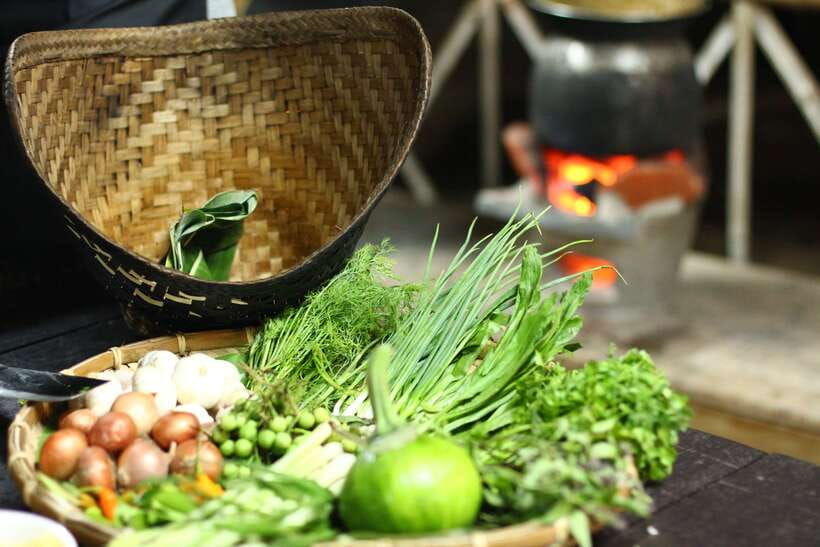
The first major stop is the local food market. This is where you learn ingredients in context: herbs, fresh items, and staples that show up again and again in Lao cooking. Instead of learning recipes as isolated instructions, you’re learning why certain foods are used and how locals think about balancing flavors.
Here’s what I think makes this market visit valuable: it turns cooking into understanding. When you later make your dishes, you already know which ingredients are common, what they smell like, and how they behave in soups, stir-fries, and dips.
Also, this is one of those moments where culture shows up in small details. People buying dinner, sellers explaining produce, and the casual flow of daily life. It gives your later Baci ceremony and family meal more meaning, because you’re already seeing how routine supports tradition.
Cooking Your Own Lao Dinner: 5 Dishes, Real Technique, No Acting

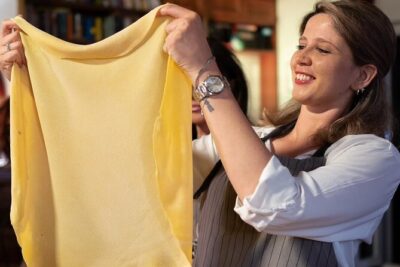
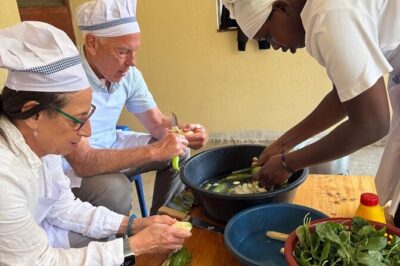
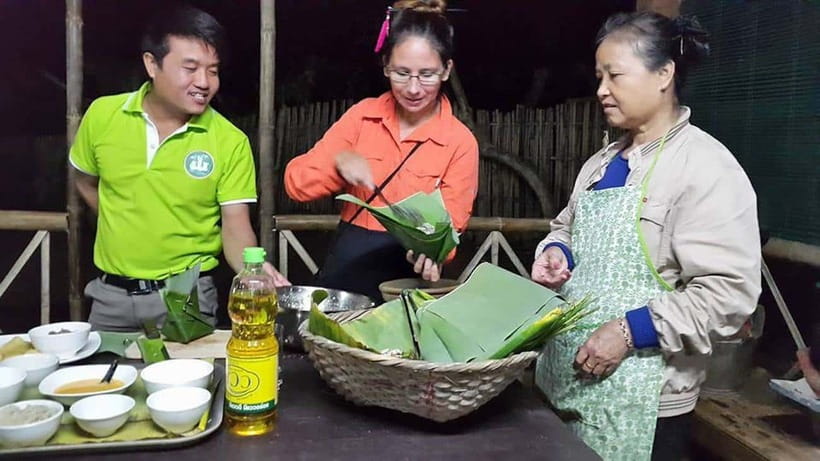
After the market, you shift into the cooking portion. You’ll learn to make five typical Lao dishes using the ingredients you gathered. You’re not observing from the sidelines. You help prepare, cook, and assemble. That hands-on approach is where the evening earns its high praise.
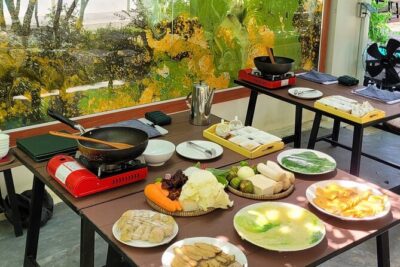
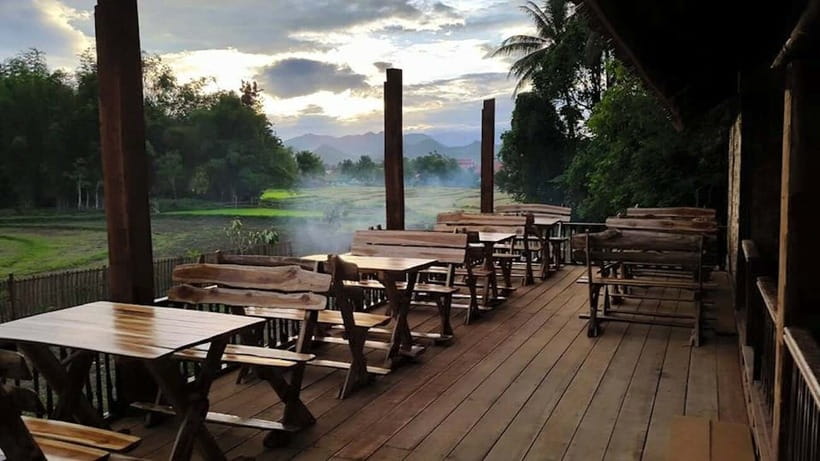
From how this experience is described, the cooking setup leans rustic: an open pavilion-style space with an outdoor feel, plus cooking over charcoal. Some meals use clay burners, and the overall vibe is practical, not staged. That matters because you’ll likely pick up small techniques you can’t get from a glossy class in a city kitchen.
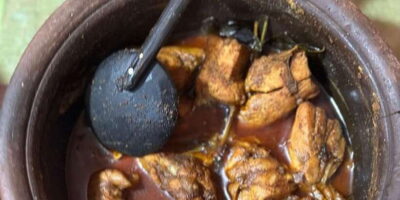
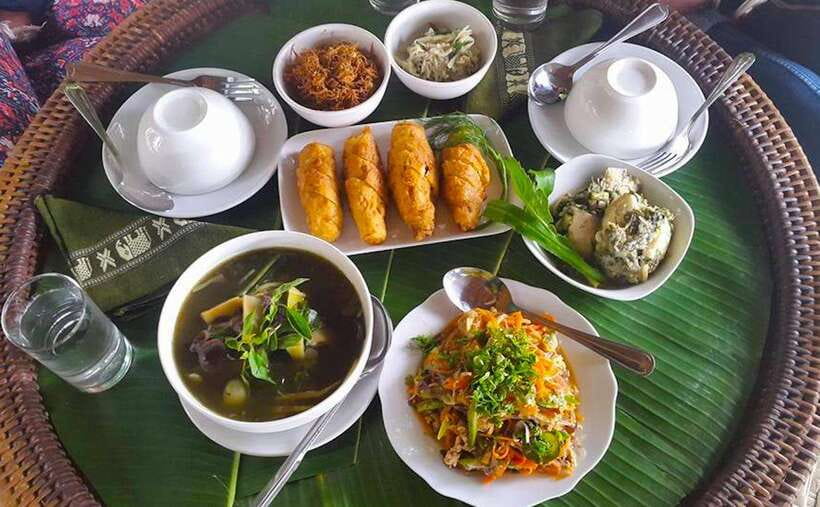
Your specific dishes can vary, but you should expect a mix that covers the Lao table: something like a soup, a main with fish or meat, sticky rice, and dips (often at least two). Several past evenings also mention pumpkin-style soup and pork elements, along with fresh dips like tomato-based and eggplant-based options. Even if your exact menu changes slightly, the logic stays the same: you’ll learn how Lao dinner works as a set.
Eating Together in a Traditional Setting
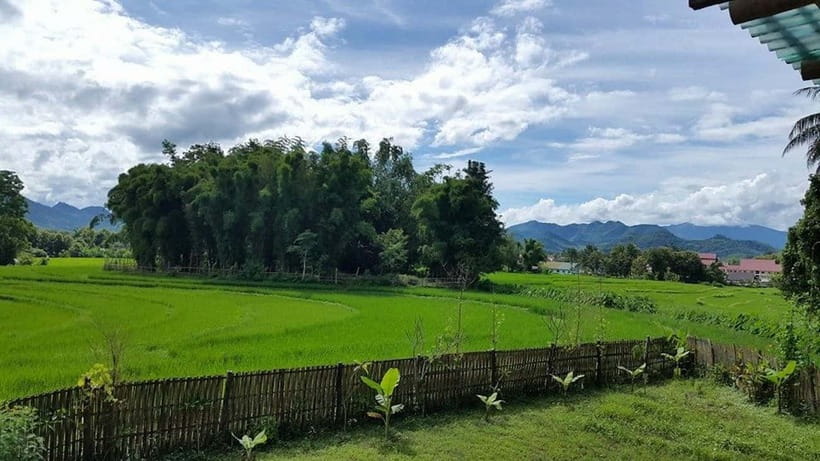
Dinner comes right after cooking, and you eat in a traditional Lao style with the family. The pavilion setting helps here. Views of rice fields and mountains are part of the experience, and you’re eating in an atmosphere that feels tied to place rather than a restaurant version of Laos.
This is also where the “small group” choice pays off again. Meals feel less like you’re sharing a table at a tour dinner and more like you’re settling in with people who actually live this way. Expect conversation, and don’t be surprised if you’re asked a question about where you’re from or what you like to cook at home.
One more practical thought: alcohol isn’t included. If you want a drink, don’t assume it’ll be part of the package. And since outside food and drinks aren’t allowed, come ready to eat what’s prepared for you.
The Baci Ceremony: What It Is and How to Respect It

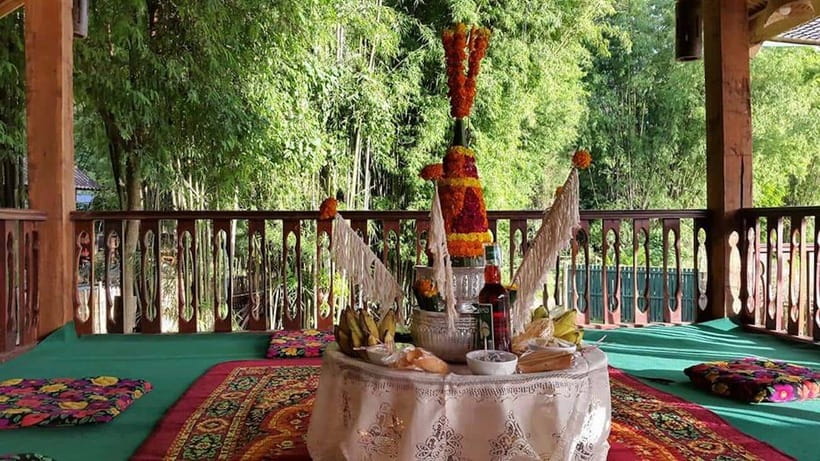
The highlight for many people is the Baci ceremony with a local family. This custom is performed to celebrate important life moments and transitions, such as a mother recovering from childbirth, a sick person being cured, or monks entering a temple. It can also be tied to annual festivals.
In this tour, you’re not just watching quietly from a corner. You’re included as part of the group experience. That means you’ll hear chanting or singing, see the blessing elements up close, and absorb how serious and meaningful it is to participants.
Dress matters for this part. The guidance is clear: wear covered knees and shoulders. If you’ve got flexibility, you’ll also want to plan for ceremony posture. Some people describe needing to fold or sit in ways that can be uncomfortable if you’re used to rigid chairs. This isn’t a big theater setup, so your body matters.
One more thing: you might be asked to participate in a small way, like singing along with the family. That’s not meant to put you on the spot, but it is part of the shared feeling. If you’re nervous, keep it simple and do your best. The tone is welcoming, not performance scoring.
Traditional Music and the Hmong Performance
After dinner and the ceremony, the evening continues with traditional music and song. You’ll enjoy a performance by local musicians, with costumes noted as Hmong traditional attire. This part connects the evening back to the region’s cultural rhythm.
Some versions of the evening also mention the khene (a traditional Lao instrument) as part of the musical segment. In at least a few experiences, guests even get a chance to try playing or interact with the instrument, or they watch a dancer perform alongside it. Even if your evening doesn’t include every extra moment, you can count on a finish that feels more cultural than just a quick soundtrack.
The rice-field views during or after the music add a nice emotional reset. You get your learning and ritual, then you end with something beautiful and communal.
Price and Value: Why This $51 Evening Can Be Worth It
At $51 per person for 4 hours, this isn’t a bargain deal like a street-food stroll. You’re paying for several things at once:
- Hotel pickup and drop-off
- An English-speaking host (market education + ceremony context)
- A small group setup (maximum 6)
- Market stop for ingredients
- Cooking class with five dishes
- Home-style dinner
- The Baci ceremony
- Live music performance
If you try to replicate it on your own, you’d need someone to coordinate the family access and translation-level context for both cooking and the ceremony. That’s hard to do without a guide. The value here comes from the combination: ingredient learning plus a family ritual, not just a cooking workshop.
One thing to keep in mind: there’s no alcohol included, and outside food/drinks aren’t allowed. So factor the price for what’s actually served and what’s not.
If you’re the type of traveler who wants a checklist experience, you might feel this is “too much” in one night. But if you like food culture with a real ceremony at the center, it’s one of the better ways to spend an evening in Luang Prabang.
Who This Is Best For (and Who Should Skip)
This works best for you if you:
- Want Lao daily life through food, not just a cooking recipe demo
- Like cultural customs that include explanation, not just observation
- Enjoy smaller groups where the host can actually talk through details
- Are okay spending time outdoors and standing at a cooking station
It’s not a great fit if you have mobility limitations or need wheelchair accessibility. Also, it’s noted as not suitable for pregnant women. And for the Baci ceremony comfort level, your best bet is to wear appropriate clothing and choose footwear you can walk in easily.
If you’re looking for a strict vegetarian-only menu: one past experience reported vegetarian suitability, but you should still plan on confirming needs with the host when you book. Cooking styles and ingredients can vary by evening and household.
Practical Tips for a Smoother Night
A few small moves can make the whole evening feel better:
- Wear covered knees and shoulders for the ceremony. Don’t wait until you arrive.
- Bring comfortable shoes. The day includes market time and time near cooking setups.
- Plan to eat everything included. Outside snacks and drinks aren’t part of the package.
- Come with questions. The market stop is the moment to ask how ingredients are used day-to-day.
And if you’re worried about the ceremony: remember it’s designed as a welcoming family experience. Being respectful with posture, clothing, and a calm attitude goes a long way.
Should You Book This Luang Prabang Evening?
I think you should book it if you want one ticket that covers market education, hands-on Lao cooking, and a real Baci blessing, all in a small group setting. The structure makes sense: you learn ingredients first, then cook, then share the meal, then witness (and participate in) the ceremony with context.
Skip it if your priority is a casual, low-structure night, or if you need full accessibility support. Also, if ritual sitting or formal customs would stress you out, this may not be the right fit for your comfort level.
If you can handle the dress code and enjoy food culture, this is the kind of Luang Prabang experience that tends to stick with you longer than a photo-heavy tour.
FAQ
How long is the cooking class and Baci ceremony?
The experience lasts 4 hours total.
Is hotel pickup and drop-off included?
Yes. Hotel pickup and drop-off are included, with pickup from hotels in Luang Prabang city. You’ll be asked to wait in the lobby about 5 minutes before the scheduled time.
How large is the group?
It’s a small group, limited to 6 participants.
What should I wear?
Wear comfortable clothes and covered knees and shoulders for the Baci ceremony. Comfortable shoes are also recommended.
Is alcohol included?
No. Alcoholic drinks are not included.
Is this activity suitable for everyone?
No. It’s not suitable for pregnant women, people with mobility impairments, or wheelchair users.