REVIEW · PONDICHERRY
Indian Cooking Class in Pondicherry
Book on Viator →Operated by Sita Cultural Center · Bookable on Viator
This class starts with your nose and ends with your stomach. You’ll pick your lunch menu, then head to Goubert Market for ingredients before cooking a traditional South Indian meal at Sita Cultural Centre.
Two things I really like: the hands-on market shopping (you choose ingredients based on what you want to cook), and the way the class builds toward a proper meal, not just a cooking demo.
One thing to consider: drinks aren’t included, so plan on water. Also, the class is max 6 people, so you’ll move as a small group—great for attention, but not private.
In This Review
- Key Points Worth Your Time
- Market First at Sita Cultural Centre: Choosing What You’ll Cook
- Goubert Market Ingredient Shopping: Learning What Makes the Flavor
- Hands-On Cooking at Sita Cultural Centre: Step-by-Step Instruction That Sticks
- What You’ll Cook: Rice, Gravies, Sides, and a South Indian Dessert
- The Banana Leaf Lunch: Eating the Food the Way It’s Served
- Group Size and Timing: 4 Hours That Move, But Don’t Rush You
- Price and Value in Pondicherry: What $28.21 Buys You
- Who Should Book This Cooking Class (And Who Might Skip It)
- Should You Book This Pondicherry Indian Cooking Class?
- FAQ
- How long is the Indian cooking class in Pondicherry?
- What time and where does it start?
- Can I choose what dishes to cook?
- Is lunch included?
- Are drinks included with the lunch?
- Is this class suitable for young children?
Key Points Worth Your Time
- Choose from around 30 dishes, with lots of vegetarian options
- Market ingredient shopping at Goubert Market right after you pick your menu
- Cook with a professional chef and get step-by-step guidance
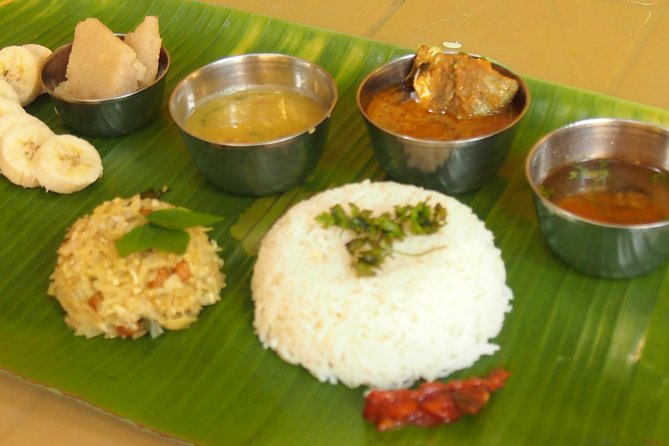
- Banana leaf plates for a genuinely South Indian way of eating
- Take home a free cook booklet so you can recreate your dishes later
- Small group up to 6 travelers, which helps keep the lesson interactive
Market First at Sita Cultural Centre: Choosing What You’ll Cook
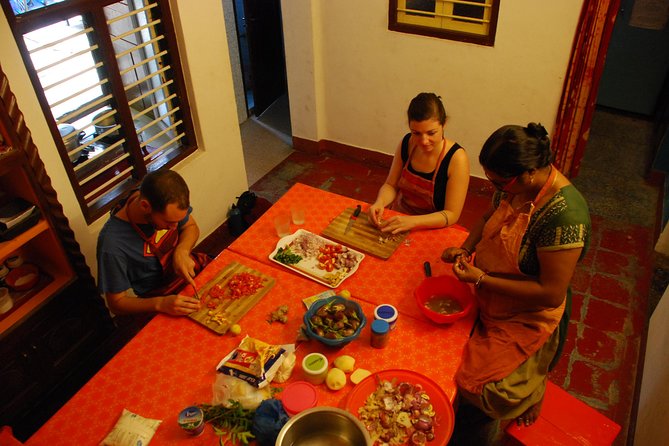
Pondicherry is a place where you can go from quiet streets to big flavor fast. This experience does that in the first moments. You meet at Sita Cultural Centre (22, Kandappa Mudaliar St, White Town, Puducherry) at 10:00 am, and the day starts with menu decisions.
Here’s the clever part: you don’t just get assigned a recipe. You choose what you’ll cook from around 30 different dishes, with many vegetarian options available. That matters because Indian cooking isn’t one-size-fits-all. Want something comforting? Something spicy? Something dessert-like? Your choices shape the whole class.
If you’re new to South Indian food, this setup also helps you build confidence. You’ll learn by doing, and you’ll cook a full lunch structure (not random snacks). From the way the class is designed, you’re moving from ingredients to spices to final dishes in a way that makes sense, even if you don’t speak a word of local language.
One more practical plus: you’re given a mobile ticket, so you won’t be scrambling for paper after your walk in White Town.
Goubert Market Ingredient Shopping: Learning What Makes the Flavor
After you’ve picked your dishes, you head to Goubert Market. This is where the class becomes more than cooking. Markets teach you the logic behind Indian food: what ingredients are used, why certain flavors appear again and again, and how spice blends come together.
You’ll see a mix of produce, spices, and protein options. The class can include veggie mains, and it can also include mains with fish or chicken—so you’re likely to spot a broad range of ingredients depending on what you chose. If you’re vegetarian, you’re not stuck. The class explicitly offers lots of vegetarian options, so you can keep your selection plant-forward.
You’ll also get a real sense of what fresh ingredients look like in practice. That helps later, because when you try the recipes at home, you’ll know what you’re aiming for: colors, textures, and that key smell when spices hit hot oil.
A small detail that makes a difference: the market time also acts like a prep session. You’re paying attention while you shop. When you return to cook, you’re not guessing what you bought or why it matters.
In the most positive feedback about this experience, the market trip is repeatedly praised as fun and useful. People call it a highlight because you get to select ingredients yourself, not just look around.
Hands-On Cooking at Sita Cultural Centre: Step-by-Step Instruction That Sticks
Back at Sita Cultural Centre, the cooking starts in a way that’s friendly for beginners. The class is designed around a traditional South Indian lunch format: rice, a main gravy, side dishes, and a dessert.
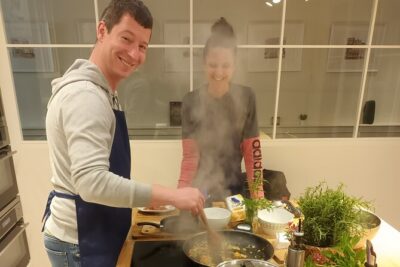
You’re not left to figure it out alone. You’re working with a professional chef who gives hands-on instruction every step of the way. That sounds obvious, but it’s the difference between learning spices and just watching someone cook. When the pace is guided, you can actually repeat it later at home.
This is also where the class earns its high rating. Multiple people highlight that the instructor is approachable and takes time to explain what you’re doing. One review notes the instructor’s humor and energy, which matters more than you’d think. Cooking classes go better when you feel comfortable asking quick questions like:
- Why does this spice go in now?
- How do I know it’s cooked enough?
- What should the texture look like at each stage?
Spice timing is a real part of South Indian cooking. If you get it wrong, everything can taste off. The class specifically teaches you those moments, not just the final dish.
One more detail: in at least one described session, the instruction was delivered in both English and French. If you’re traveling with people who speak different languages, that’s a practical advantage.
What You’ll Cook: Rice, Gravies, Sides, and a South Indian Dessert
This isn’t a single-recipe experience. It’s a complete lunch menu. The class structure is very clear:
- A rice dish
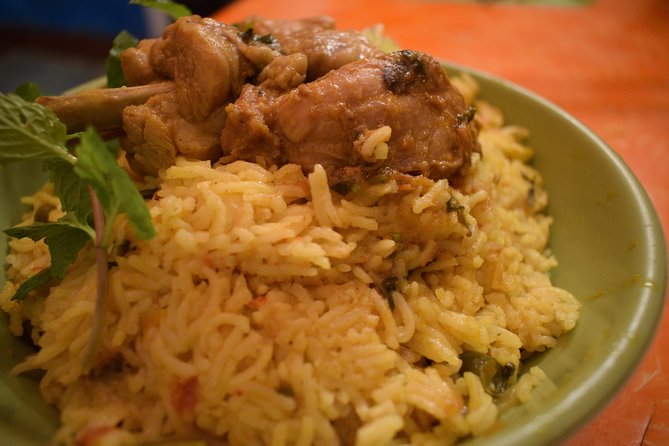
- A main gravy, which can be vegetable, fish, or chicken depending on your choices
- Side dishes
- A dessert
That format is great for a few reasons.
First, South Indian meals are built to work together. The rice isn’t random; it’s part of how you balance flavor. The gravy brings heat and depth. Side dishes add crunch, tang, or extra spice layers. And dessert gives you that closing sweetness.
Second, you’ll learn multiple techniques instead of one. Even if two dishes share ingredients, the cooking methods differ—so your skills grow faster.
Third, it’s easier to choose if you’re traveling as a couple or small group. One person can go for a fish curry main, another can pick a veggie gravy, while everyone still shares a lunch experience that feels cohesive.
You also get flexibility in what you make, because the menu choice is wide—around 30 options. That range is a big deal at this price point, since many cooking classes push the same handful of recipes every time.
The Banana Leaf Lunch: Eating the Food the Way It’s Served
Then comes the part your body will remember longer than your brain: eating.
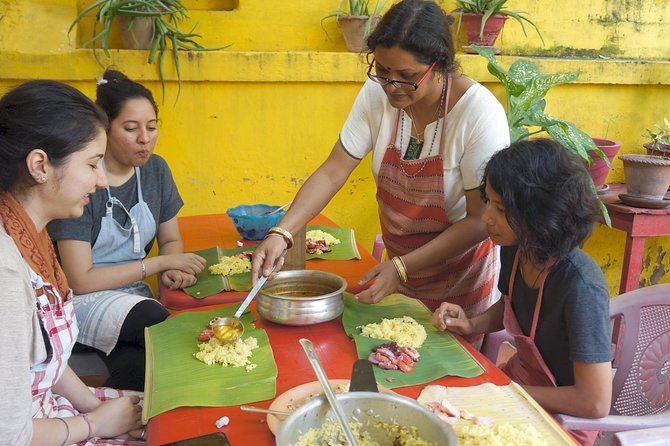
You’ll enjoy your meal the traditional way—using a banana leaf as a plate. It’s not just a gimmick. In South Indian dining, serving on banana leaf is tied to how meals are handled and experienced. You get a more local feel the moment you sit down.
This also helps you taste more accurately. When food is served in the traditional way, it feels like a real lunch, not a break between activities. You’ll get to eat what you cooked, and it lands differently when you see how the meal comes together as a plateful.
If you’re the kind of traveler who likes eating as part of learning, this moment is a big reward. And since lunch is included, it’s not an extra cost stop you need to negotiate afterward.
One practical consideration: because drinks aren’t included, you might want water on hand (either buy it nearby or plan to pick it up before you sit down).
Group Size and Timing: 4 Hours That Move, But Don’t Rush You
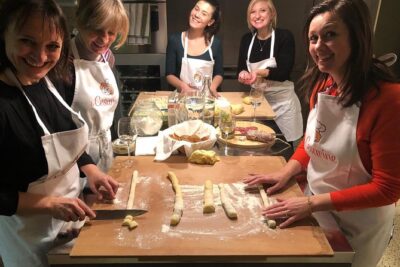
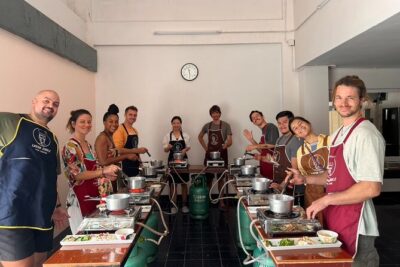
The class runs about 4 hours. With a maximum of 6 travelers, the pace tends to stay manageable. Small group size usually means you’re not watching from the back row, and it’s easier for the chef to correct small mistakes before they turn into flavor problems.
It’s also the kind of schedule that fits into a Pondicherry day. You’ll start at 10:00 am, shop and cook, then finish back at the meeting point. That means you’re not hunting for transport afterward with a full stomach and a phone battery at 2%.
If you’re traveling with friends, this group size is ideal. You’ll feel part of the process, especially when you’re sharing ingredients and discussing dish choices.
Price and Value in Pondicherry: What $28.21 Buys You
At $28.21 per person for about 4 hours, this isn’t just a cooking class price. You’re paying for a full learning-and-lunch experience:
- market ingredient shopping
- professional chef instruction
- lunch you actually prepare
- all taxes and handling charges included
The biggest value move is that you’re not just cooking. You’re learning the ingredient logic first, then cooking multiple parts of a South Indian meal structure. That tends to make the skills more transferable when you get home.
Also, the class includes a free cook booklet, which is one of those details that can quietly add value. If you want to recreate dishes later, those written steps help you remember what you did when you don’t have the chef standing beside you.
The only real cost-related dip: drinks aren’t included. That’s not unusual for this kind of experience, but it does mean you should budget for water or plan around what you’ll drink during lunch.
Finally, this is often booked in advance (around 39 days on average). That doesn’t mean it’s impossible to find space, but it does suggest it’s popular enough to plan ahead.
Who Should Book This Cooking Class (And Who Might Skip It)
This class is a great match if you:
- want a practical way to learn South Indian cooking, not just eat it
- like hands-on activities and you’re excited to shop for ingredients
- want a real lunch outcome, including rice, gravy, sides, and dessert
- prefer small groups for better instruction
It’s also smart for people who don’t want a huge time commitment. About 4 hours is enough to learn, cook, eat, and still keep your day flexible.
You might consider skipping or adjusting your expectations if:
- you strongly need drinks included in the price
- you’re traveling with very young children (it’s not recommended for children aged 4 and under)
- you want a totally private experience (max 6 travelers)
And if your group wants something specific like only vegetarian dishes, you can choose vegetable options. Just make sure your dish choices reflect that from the start, since the class menu includes the possibility of fish or chicken mains depending on what you pick.
Should You Book This Pondicherry Indian Cooking Class?
Yes, you should book it if you want a high-value Pondicherry experience that’s equal parts market education and real cooking practice. The best reason to do it is simple: you don’t just observe. You pick your dishes, shop the ingredients, cook with a pro chef, then sit down to eat the meal you made on banana leaf.
The only clear drawback is also simple: no drinks included. If you’re fine planning around that (water is the obvious fix), the trade-off is worth it for the food, instruction, and the ability to take recipes home.
If you’re in White Town and you want one activity that feels authentic, practical, and delicious, this is one of the easiest yes decisions to make.
FAQ
How long is the Indian cooking class in Pondicherry?
The experience is approximately 4 hours.
What time and where does it start?
It starts at 10:00 am at Sita Cultural Centre, 22, Kandappa Mudaliar St, White Town, Puducherry, 605001, India.
Can I choose what dishes to cook?
Yes. You can choose from around 30 different dishes, and there are lots of vegetarian options.
Is lunch included?
Yes. Lunch is included.
Are drinks included with the lunch?
No. Drinks are not included.
Is this class suitable for young children?
It is not recommended for child aged 4 and under, and children must be accompanied by an adult.