REVIEW · DA NANG
Home Cooking Class: Market, Garden and cooking 4 dishes
Book on Viator →Operated by Da Nang Home Cooking Class · Bookable on Viator
This home cooking class turns Da Nang into an edible lesson, from Han Market to your cutting board. I like the hands-on format where you actually cook and eat, and I also like the small group size that keeps things friendly with instructors like Jane, Lyn, and Nhi. One thing to think about: you’re spending about four hours out of the day, and the schedule is weather-dependent since it includes an outdoor farm/garden visit.
In This Review
- What Makes It Feel Local, Not Staged
- Key things I’d circle before you book
- From Han Market to a Family Kitchen: How This Class Works
- The Day Starts with Pickup and a Quick Rhythm Check
- Stop 1: Han Market Shopping for Ingredients That Actually Matter
- Adding a Farmer’s Touch: Vegetable Garden and Farm Activity
- Tea/Coffee Break: Sit Down and Set the Mood
- Cooking 4 Iconic Vietnamese Dishes (And Eating Them)
- The menu changes by day
- What each dish teaches you (without the lecture)
- You’ll get recipe copies in English
- What the 4-Hour Schedule Feels Like in Real Life
- Value and Price: Why $26 Can Make Sense Here
- Who This Tour Fits Best (And Who Might Want Something Else)
- Tips to Get More Out of Your Cooking Day
- Should You Book This Da Nang Home Cooking Class?
- FAQ
- How long is the cooking class?
- How many people are in the group?
- Is pickup included?
- What dishes will I cook?
- Does the class include drinks or dessert?
- Are the recipes available in English?
- What’s included in the price?
What Makes It Feel Local, Not Staged
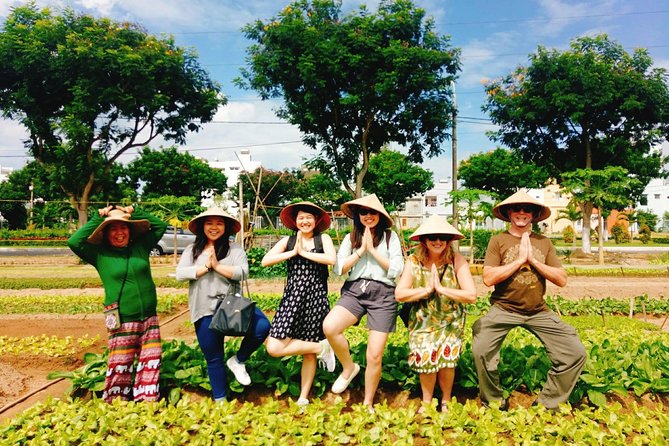
You get a true “learn from the family” vibe, plus English support via an English-speaking instructor and English recipe copies. The possible drawback is straightforward: the menu changes by day, so you might not get the exact four dishes you’re hoping for unless you book on the right dates.
Key things I’d circle before you book
- Small group (max 9 to 10) for a more personal cooking class pace
- Market selection first, so ingredients feel real and not random
- Garden/farm activity so you connect vegetables to the food you make
- Four dishes hands-on with enough food to leave full
- Vietnamese coffee and dessert as part of the meal experience
- English recipe handouts so you can repeat the dishes later
You can also read our reviews of more tours and experiences in Da Nang.
From Han Market to a Family Kitchen: How This Class Works
This is a morning or afternoon culinary outing that’s built around one idea: in Vietnam, you learn best by doing. You start with real ingredients, then you cook classic dishes with guidance, and you finish by eating everything you made. With a maximum group size around 9–10 people, you’re not shouting over a crowd, and you get help when you need it.
The class runs about 4 hours. You’ll get hotel pickup if you choose the full tour option, and you receive a mobile ticket. That matters because Da Nang traffic can be unpredictable, and starting and ending on time is part of the value here.
The Day Starts with Pickup and a Quick Rhythm Check
Depending on the session, pickup happens in the Da Nang center. The morning schedule runs roughly 8:00–8:30 AM start with the full experience moving toward a 12:00 PM finish. The afternoon session starts around 2:00–2:30 PM and ends around 6:00 PM.
If you’re planning your day in advance, choose the timing that fits your energy. The market and garden stops both take time, and the cooking part gets active quickly. Wear something you can move in, because you’ll be working, not just watching.
One practical note from the structure of the day: this isn’t a quick photo stop. You’ll tour, you’ll shop, you’ll learn, then you’ll cook. If you like experiences with a clear flow, you’ll appreciate the pacing.
Stop 1: Han Market Shopping for Ingredients That Actually Matter
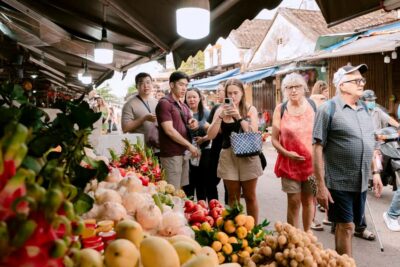
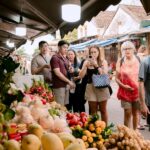
The market visit centers on ingredient quality and how to choose what you need for each dish. You’re not just browsing. You’re selecting components, which gives context for why Vietnamese cooking tastes the way it does—fresh aromatics, the right textures, and the sauces that tie flavors together.
Even if you’ve been to markets before, this one is useful because it’s tied to your cooking tasks. When you pick herbs, greens, or other key items, you’ll remember them later when you see what goes into your sauces and salads.
You’ll also likely get a better feel for what Vietnamese home cooks prioritize: balancing sour, sweet, salty, and fresh. That’s hard to learn from a recipe alone. Seeing and choosing ingredients in the local market makes the flavors click.
Adding a Farmer’s Touch: Vegetable Garden and Farm Activity
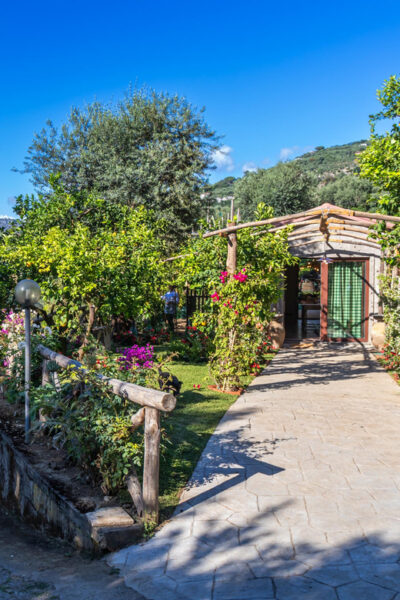
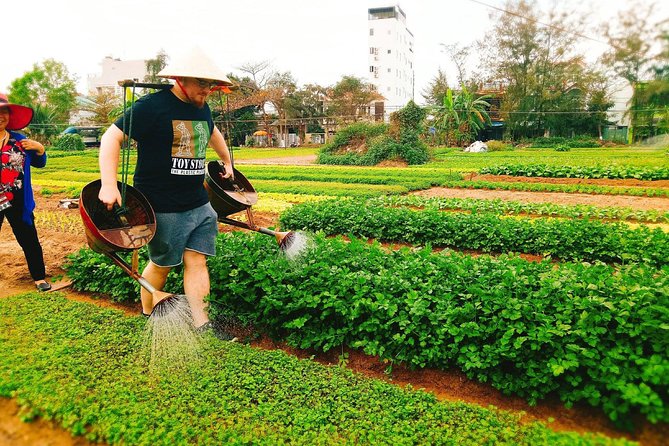
One of the strongest parts of this experience is the garden/farm component. You’ll join the farmers in preparing land and growing vegetables, then you’ll practice as a Vietnamese farmer.
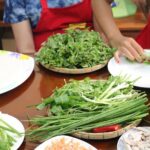
Why does this matter? Because vegetables aren’t just garnish in these dishes. Green papaya salad and mango salad rely on crisp, watery fruit and a careful handling that affects texture. Spring rolls and savory pancakes depend on fresh greens and herbs. When you connect food to how it’s grown, the cooking steps make more sense.
This portion can also be a reality check. If you’re expecting a fully indoor experience, this isn’t it—part of the fun is getting out where the produce comes from. The activity also means weather matters, and the operator notes the experience requires good weather.
Tea/Coffee Break: Sit Down and Set the Mood
After the market and farm time, the schedule includes a sit-down tasting. You’ll enjoy authentic Vietnamese coffee, and the day also references tea tasting as part of this stage.
This pause isn’t just for flavor. It’s how the day resets before you go into four-dish cooking mode. It gives you time to ask questions, get oriented, and mentally switch from wandering to chopping.
Cooking 4 Iconic Vietnamese Dishes (And Eating Them)
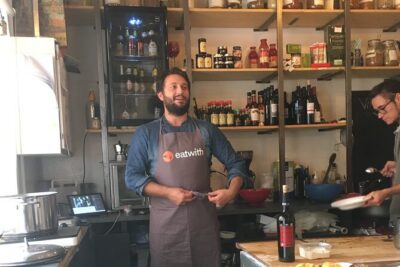
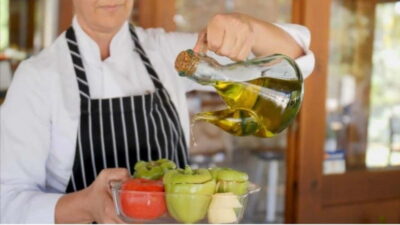
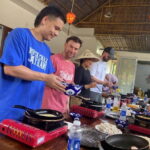
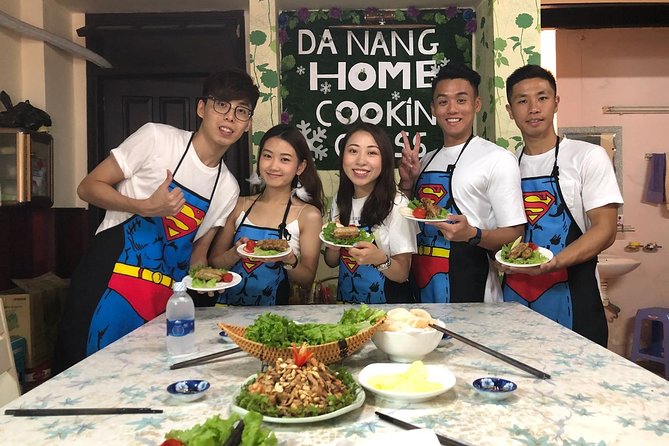
The main event is hands-on cooking in a local home environment, taught by an English-speaking instructor (names you may meet include Jane, Lyn, and Nhi). You’ll learn classic techniques for four iconic dishes, then you eat what you cook.
The menu changes by day
Here’s what you can expect, depending on the day:
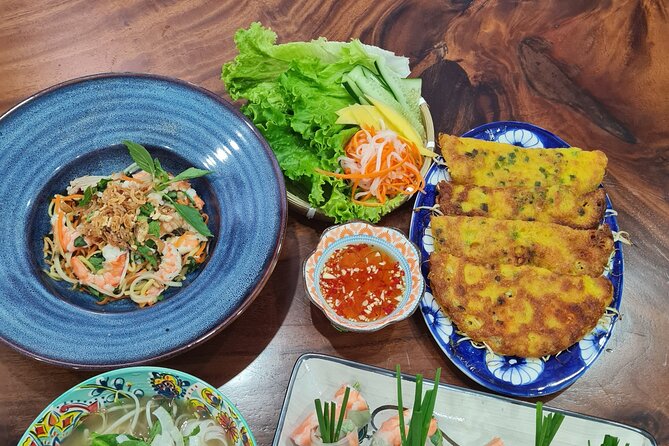
Menu 1 (Mon, Wed, Fri, Sun)
- Quang Noodle
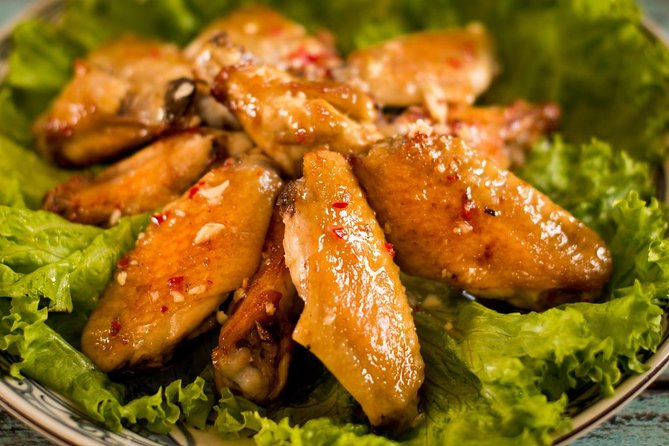
- Fish sauce chicken wing
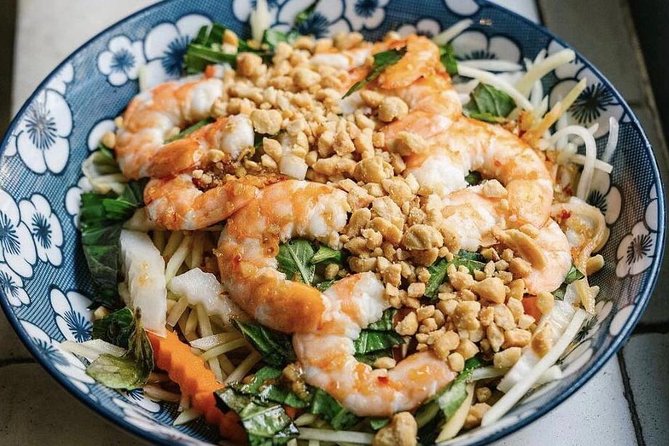
- Green papaya salad with shrimp
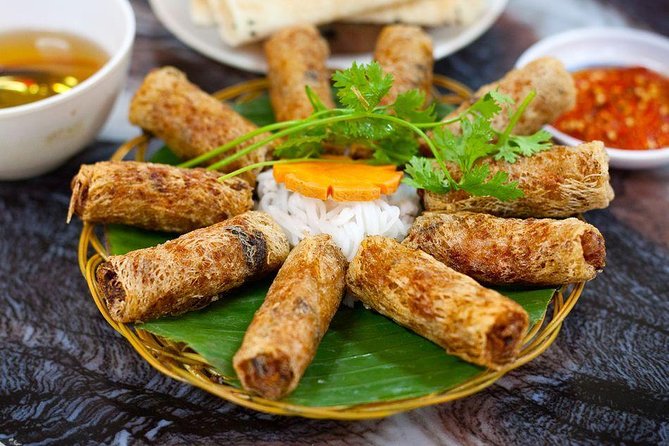
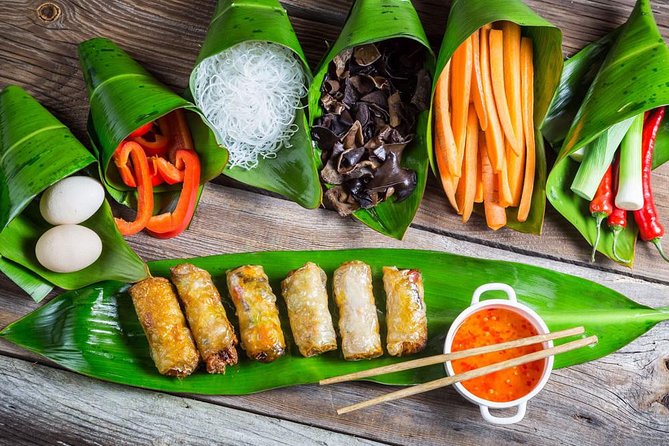
- Deep-fried spring rolls
Menu 2 (Tue, Thu, Sat)
- Beef noodle soup
- Crispy Vietnamese Pancakes (Banh Xèo)
- Green mango salad with shrimp
- Fresh spring roll
What each dish teaches you (without the lecture)
Quang Noodle is a great dish to learn because it focuses on broth and seasoning style, not just noodles. Getting the flavors right teaches you how Vietnamese cooking builds depth without needing fancy ingredients.
Fish sauce chicken wing can be a crowd-pleaser for a reason: fish sauce-based flavor is bold, savory, and addictive when it’s balanced well. This dish is a good introduction to the idea that fish sauce is more than a single note—it’s a foundation.
Green papaya salad with shrimp and green mango salad with shrimp both teach the same core skill: balancing tart fruit with shrimp and the right dressing. Texture matters here, too. If you’re careful, the salad stays crisp instead of soft.
Deep-fried spring rolls versus fresh spring rolls gives you an immediate comparison. Frying teaches you heat control and crispness, while fresh rolls emphasize rolling technique and moisture management.
On the second menu:
Beef noodle soup is comfort food with discipline. You’ll learn why broth and seasoning matter, and how Vietnamese flavor tends to feel rounded rather than heavy.
Crispy Vietnamese pancakes (Banh Xèo) are a fun way to learn Vietnamese batter and cooking technique. They look simple, but the crispness comes from timing and heat control.
If you love food that feels bright and fresh, you’ll probably enjoy the mango/papaya salad portion. And if you want the most practical “I can cook this at home” dishes, spring rolls and salads often translate best.
You’ll get recipe copies in English
You’re not leaving with just memories. You’ll get English recipe copies for the dishes you cook. That’s a big deal for value because it turns your experience into something you can repeat later.
What the 4-Hour Schedule Feels Like in Real Life
The day is structured so you’re never waiting too long in between steps. Roughly:
- Pickup and start (morning around 8:00 AM or afternoon around 2:00 PM)
- Garden/farm activity
- Market shopping
- Go to the local house to cook the four dishes
- You eat lunch or dinner you cooked
- Tour ends around midday or early evening
If you’re prone to getting hungry, this schedule helps because the cooking phase leads directly into eating. People also note the portions can feel substantial—so go easy on breakfast or skip a heavy snack before you start.
Value and Price: Why $26 Can Make Sense Here
At $26 per person, this class competes well with cooking classes that are either too short, too generic, or too group-large to get real help. You’re paying for:
- market time
- garden/farm activity
- ingredient costs
- an English-speaking instructor
- recipe handouts
- Vietnamese coffee and dessert
- hotel pickup for the full tour option
Even if you only focus on the hands-on cooking and meal, the market plus ingredient selection adds real educational value. And because it’s a small group, you’re more likely to get guidance that actually prevents mistakes—especially with dishes like pancakes, spring rolls, or fried items.
So if you’re looking for a low-cost way to learn Vietnamese home cooking rather than just taste it, this has a strong price-to-experience ratio.
Who This Tour Fits Best (And Who Might Want Something Else)
This works best for you if:
- you enjoy practical learning, not just food tasting
- you want to cook dishes that are recognizably Vietnamese and not tourist-adapted
- you like small-group activities with an instructor you can ask questions to
- you want a complete day sequence: ingredients → cooking → eating
It might be less ideal if:
- you dislike any outdoor farm/garden component
- you’re short on time and need a fast, strictly indoor activity
- you’re very specific about which dishes you want, because the menu varies by day
For families or couples, the four-dish format is usually a win because everyone gets to participate and you all sit down to eat together.
Tips to Get More Out of Your Cooking Day
A few practical moves can make the day smoother:
- Bring comfortable shoes for market walking and garden time.
- Expect the cooking session to be active, so light layers help.
- If you have a strong dislike (like cilantro or shrimp), mention it to the instructor early. The class is based on specific menus, but communication can help with how ingredients are handled.
- Choose the day based on the menu if you’re chasing a specific dish, like Banh Xèo or Quang Noodle.
Also, take your time during the market stop. It’s the easiest place to learn by looking, and it improves your cooking decisions later.
Should You Book This Da Nang Home Cooking Class?
If you want to learn Vietnamese cooking the way locals do—shopping first, cooking with a family rhythm, and eating what you make—this is an easy yes. The small group setup, English recipe handouts, and the specific four-dish cooking format all point to a class that’s meant to teach, not just entertain.
Book it if you’re excited by market ingredients, the chance to work in a vegetable garden/farm setting, and you like the idea of leaving with dishes you can recreate. I’d say skip it only if you strongly prefer indoor activities or you’re unsure about the day-of-menu you can attend.
FAQ
How long is the cooking class?
The experience runs for about 4 hours.
How many people are in the group?
The tour is listed with a maximum of 9 travelers, and the overall maximum is noted as 10 travelers.
Is pickup included?
Pickup is offered for the full tour option. Drop-off service is not included, and pickup and drop-off are not included if you book only the cooking class portion.
What dishes will I cook?
You cook four dishes, and the menu depends on the day. One set includes Quang Noodle, fish sauce chicken wing, green papaya salad with shrimp, and deep-fried spring rolls. The other set includes beef noodle soup, crispy Vietnamese pancakes (Banh Xèo), green mango salad with shrimp, and fresh spring roll.
Does the class include drinks or dessert?
Yes. You’ll taste authentic Vietnamese coffee, and dessert is included.
Are the recipes available in English?
Yes. English recipe copies are included.
What’s included in the price?
The experience includes the market tour, farming activity, water, ingredients, English-speaking instructor, dessert, and the recipe copies. Pickup is included for the full tour option.