REVIEW · MARRAKESH
Authentic Amazigh Cooking Class at Saida
Book on Viator →Operated by Emazighen · Bookable on Viator
Taste Morocco beyond Marrakech’s medina. Saida’s Amazigh Cooking Class at her family home gives you Amazigh cooking up close, with a real welcome, hands-on time making tagine and tea, and a lunch that actually feels like someone’s home—not a show. The focus on women’s cooperatives (carpets, and optionally argan oil) adds meaning beyond food. One thing to consider: it’s a full day out of the city, and the experience depends on good weather.
You’ll start with pickup from your Marrakech accommodation, then ride out with a driver to a traditional house at the foot of the mountains. This is a small group (max 6), so the pacing stays calm. And if you want a break for photos or scenery, you can ask the driver to stop at Lake Lalla Takerkoust or add a visit to a women’s argan oil cooperative.
In This Review
- Key things I think you’ll enjoy most
- From Marrakech pickup to Saida’s home at the Atlas foothills
- Meeting Saida: Amazigh cooking as family knowledge (not performance)
- The tagine lesson: what you actually learn (and why it’s useful)
- Tea, lunch, and the simple pleasure of eating well
- Women’s carpet cooperative: a craft lesson with real purpose
- Optional add-ons: Lake Lalla Takerkoust and women’s argan oil work
- How long is the day, and how the timing feels in real life
- Price and what you’re really paying for (at $114.86)
- Who this is best for (and who might want something else)
- Should you book Saida’s Amazigh Cooking Class at Saida?
- FAQ
- What is the price per person?
- How long does the experience last?
- What time does it start?
- Is pickup offered from Marrakech accommodations?
- How many people are in the group?
- What’s included in the price?
- Do I get to cook, or is it just a demonstration?
- What dishes are part of the class?
- Can I add a stop at Lake Lalla Takerkoust?
- Is there an argan oil cooperative visit?
Key things I think you’ll enjoy most
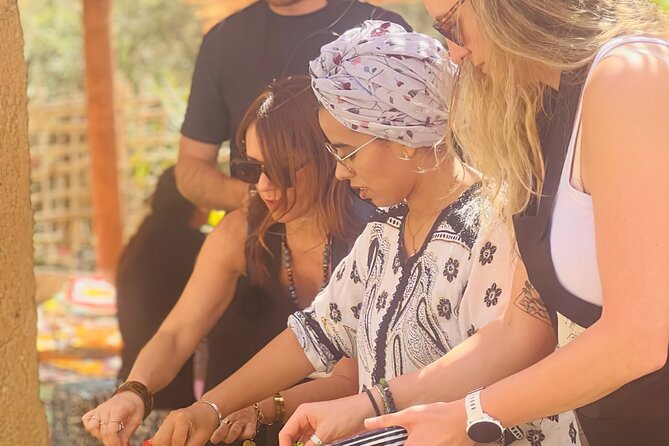
- Hands-on tagine and tea time in a family home setting
- Fresh local ingredients you can actually trace back to the day’s food
- A small group cap of 6 for more conversation and less waiting
- Women-led projects through Saida’s carpet cooperative and optional argan oil visit
- A relaxed Atlas-day rhythm with lunch included and bottled water
From Marrakech pickup to Saida’s home at the Atlas foothills
The day starts at 9:00 am, with pickup offered from your accommodation in Marrakech. You’re not stuck figuring out the logistics on your own. Instead, you get an air-conditioned vehicle and a driver who controls the timing so you can focus on what matters: meeting people, learning, and eating.
Once you leave the city behind, the tone changes. The drive to Saida’s home (traditional, family-run, and located at the foot of the mountains) is part of the point. You’re heading away from crowds into a quieter, more grounded rhythm where cooking feels like normal life, not an activity you booked.
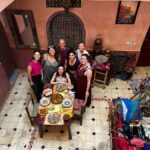
Because the group is limited to 6 travelers, you also avoid the usual problem of “being herded.” You’ll have time to ask questions, taste along the way, and get real feedback on what you’re doing.
Practical note: The experience requires good weather. If conditions are poor, it can be canceled and you’ll be offered a different date or a full refund.
You can also read our reviews of more tours and experiences in Marrakesh.

Meeting Saida: Amazigh cooking as family knowledge (not performance)
Saida’s story is part of why this class feels human. She’s from a mountain village and became involved in tourism early on, aiming to improve her family’s life and support the community around her. That context matters, because the cooking class isn’t just about meals—it’s about passing on Amazigh culture and using tourism in a way that helps people.
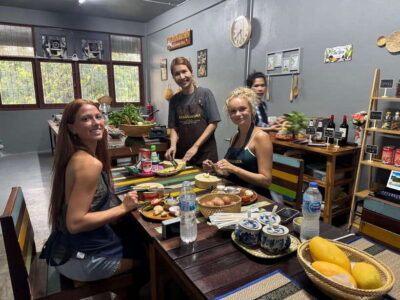
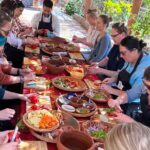
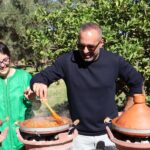
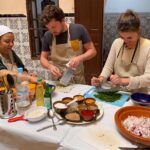
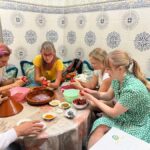
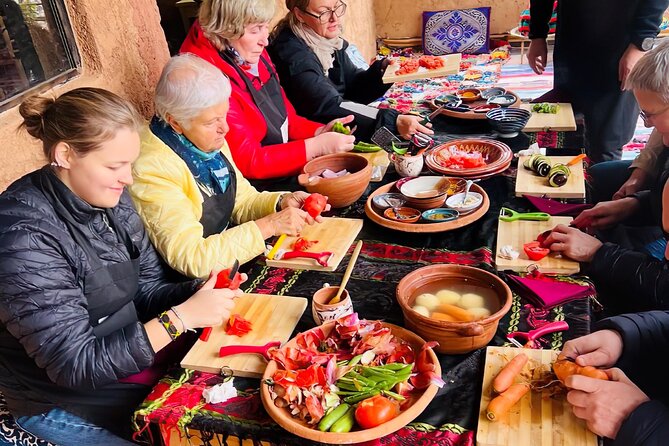
When you arrive, you’ll be welcomed warmly. From there, Saida shows you the secrets of Amazigh cuisine using fresh and local ingredients. You’re not just watching. You’re in it—learning, prepping, and putting together dishes that feel iconic for the region.
One of the best parts of the day is that the food doesn’t feel disconnected from place. Even when you’re learning technique, you’re also picking up cues about taste: spices, layering, and the patience of dishes cooked the Amazigh way.
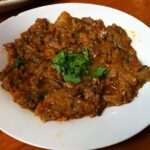
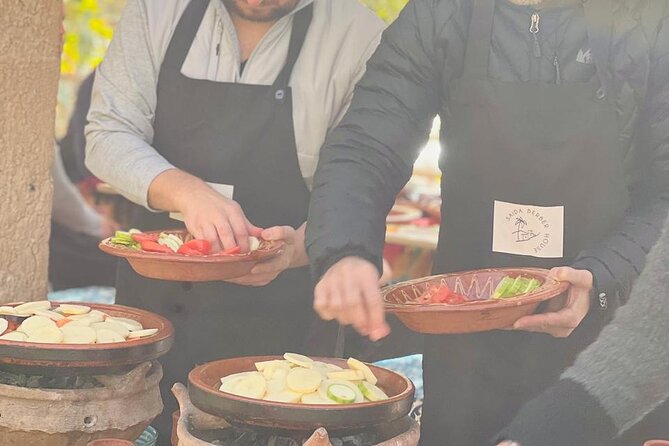
And yes—tagine is the star. In at least one case described, the class included a chicken and vegetable tagine, which is a perfect “learn-by-doing” dish because it teaches you the logic of combining vegetables and seasoning while still letting you taste what you’re building.
The tagine lesson: what you actually learn (and why it’s useful)
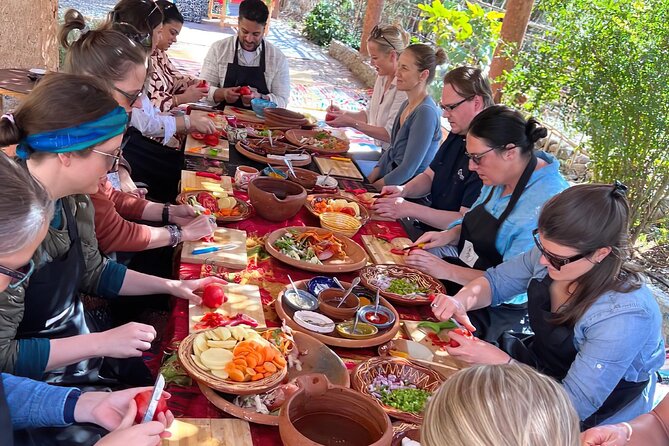
A tagine can seem simple on paper: meat, vegetables, spices, then let time do the work. But in class, the value is in the details—how to prepare and combine ingredients so the finished dish tastes balanced instead of heavy.
Here’s what you should expect from the cooking experience:
- You’ll learn how to prepare tagine as part of the class format.
- You’ll handle ingredients and get guidance as you work.
- You’ll also taste what you helped make, so you understand the result right away.
What makes this practical is that you’re learning a framework you can use again at home. Tagines aren’t all the same, but the idea—building flavor through seasoning choices and cooking method—is transferable.
If you’re worried about being “good at cooking,” don’t. This is the kind of class where you’re learning step-by-step. You just need to be willing to try.
Tea, lunch, and the simple pleasure of eating well
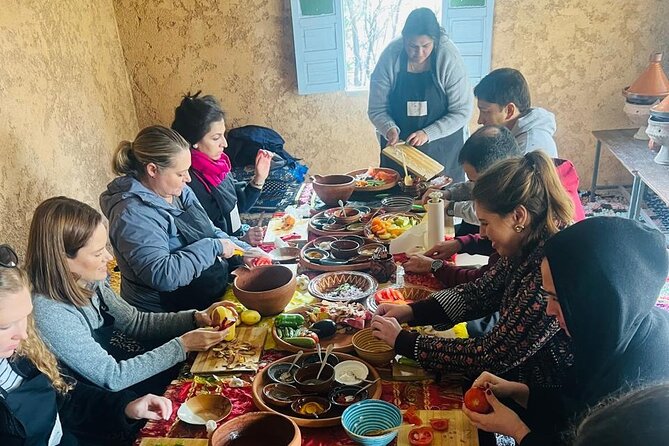
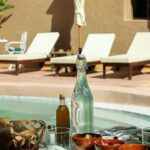
Lunch is included. That matters here because it turns the class into a true meal experience instead of a fast taste-test and a quick exit.
You’ll eat what you prepared, and you’ll likely notice how much the food leans on what’s local and seasonal. One description included vegetables from the garden and a dessert made with pomegranate picked from a garden tree. Even if your day doesn’t feature the exact same fruit, the theme is clear: the ingredients are tied to the home and its surroundings.
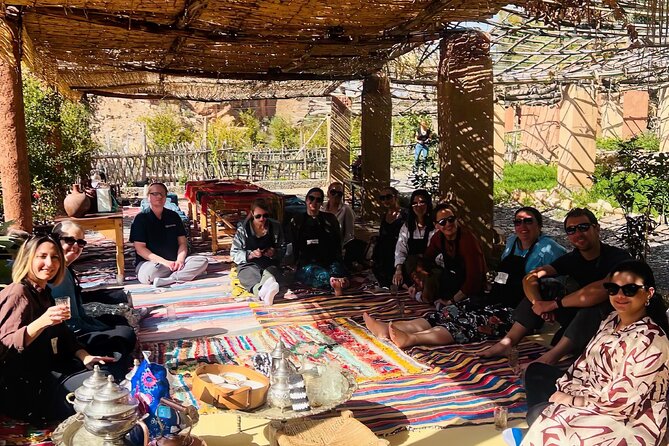
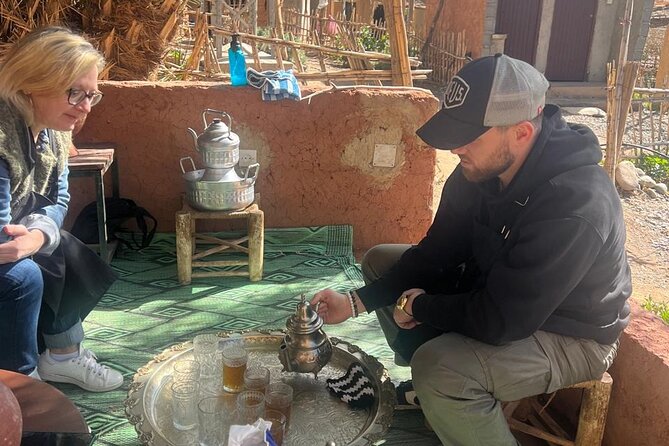
Tea also shows up as part of the day. In descriptions of the experience, guests learned to prepare tea as well. If you care about Moroccan hospitality, don’t treat tea as an afterthought. The tea moment is where the day softens—people slow down, and you get to talk more naturally.
Women’s carpet cooperative: a craft lesson with real purpose
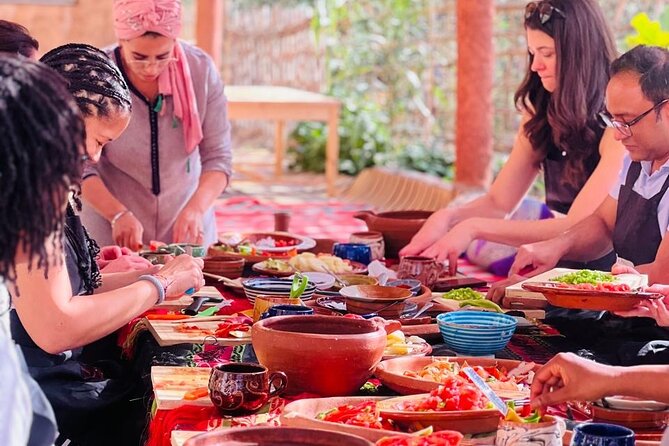
After cooking and eating, the day expands into another side of Saida’s work: women’s autonomy through a Berber carpet cooperative.
This isn’t “craft shopping” in the usual sense. You’re learning about ancestral know-how through the craftwomen involved in the cooperative. That means you’re seeing how skills pass from generation to generation—and how earning opportunities can keep those skills alive.
If you care about value (not just souvenirs), this is a strong stop. It helps you understand the cultural meaning behind a Berber rug, and it gives context for why certain patterns and processes matter.
Also, because the group is small, you’re more likely to get a real sense of the people behind the craft, not just the product.

Optional add-ons: Lake Lalla Takerkoust and women’s argan oil work
The experience includes built-in flexibility. You can ask the driver to stop to visit Lake Lalla Takerkoust. If you want a pause for views and photos, this is a good way to break up the day without going far off-route.
If you’re interested in another women-led project, it’s also possible to visit a women’s argan oil cooperative to learn about how traditional argan products are made. This is worth considering if you like understanding how everyday ingredients become products, and how women in the region use traditional methods for income and independence.
Both of these add-ons fit the theme of the day: connecting food to place and people.
How long is the day, and how the timing feels in real life
The tour duration is about 7 hours 30 minutes. That’s a full day, but it’s also not an all-day slog. The pacing is built around distinct moments:
1) pickup and ride out
2) arrival and Amazigh cooking instruction
3) cooking, tasting, and lunch
4) cooperative/craft time
5) return toward Marrakech
A long day is only a drawback if you hate sitting in a car for hours. If you’re fine with that trade—especially for a small-group, home-based cooking class—this time length is part of the payoff.
Price and what you’re really paying for (at $114.86)
At $114.86 per person, you’re not just buying a recipe sheet. You’re paying for:
- transport in an air-conditioned vehicle
- a guided day in a family home
- lunch and bottled water
- an apron/uniform for the cooking class
- access to women-led projects through Saida’s network
That’s why the price can feel fair. You get both the cooking lesson and the cultural connection. Many city-based classes don’t include meals, don’t connect to local projects, and don’t provide the same level of personal interaction.
The small group cap (max 6) also matters for value. You’re more likely to get actual time with the hosts rather than being part of a crowd.
Who this is best for (and who might want something else)
This is a great fit if you want an Atlas-adjacent day that feels grounded: food, hospitality, and women-led community work. You’ll probably love it if you enjoy:
- learning techniques you can reuse
- eating real home-style meals
- meeting people whose work is connected to family and community
It may not be the best match if you prefer strictly scripted, high-speed sightseeing. This day is calmer than that, and it’s built around cooking and conversations.
Should you book Saida’s Amazigh Cooking Class at Saida?
I’d book it if you want a Marrakech day that swaps shopping streets for a real home experience. The mix of hands-on tagine learning, lunch and tea, and the women’s carpet cooperative gives you more than a one-note “cooking activity.”
Also, the small group size is a big deal. It makes the day feel personal, and it helps you get value from every hour you’re away from Marrakech.
Only hold off if you know the weather is likely to be rough for your travel dates or you really don’t want a 7+ hour day trip. Otherwise, this is the kind of experience that leaves you with flavors, context, and a sense of having met people—not just passed through.
FAQ
What is the price per person?
The price is $114.86 per person.
How long does the experience last?
It lasts about 7 hours 30 minutes.
What time does it start?
The start time is 9:00 am.
Is pickup offered from Marrakech accommodations?
Yes, pickup is offered.
How many people are in the group?
The tour/activity has a maximum of 6 travelers.
What’s included in the price?
Lunch, air-conditioned vehicle, an apron for the cooking class, and bottled water are included.
Do I get to cook, or is it just a demonstration?
It’s a cooking class, and guests learn to cook dishes such as tagine (including chicken and vegetable tagine in examples), plus tea preparation.
What dishes are part of the class?
Tagine is the key dish, and tea is also part of the experience.
Can I add a stop at Lake Lalla Takerkoust?
Yes. You can ask the driver to stop to visit Lake Lalla Takerkoust.
Is there an argan oil cooperative visit?
If you’re interested, it’s possible to visit a women’s argan oil cooperative to learn about the making process of this traditional product.