REVIEW · CHIANG MAI
Morning Thai cooking class
Book on Viator →Operated by Aromdii Cooking School · Bookable on Viator
Thai cooking starts with market smells.
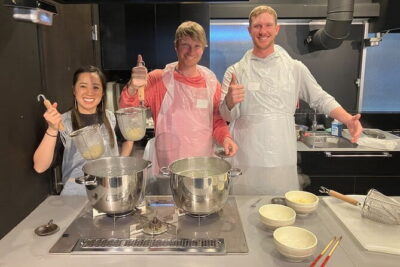
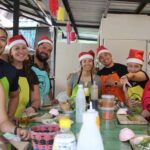
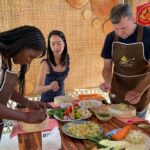
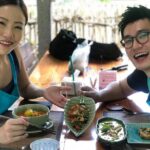
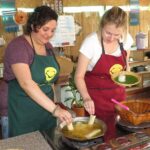
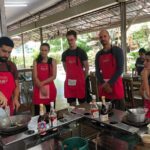
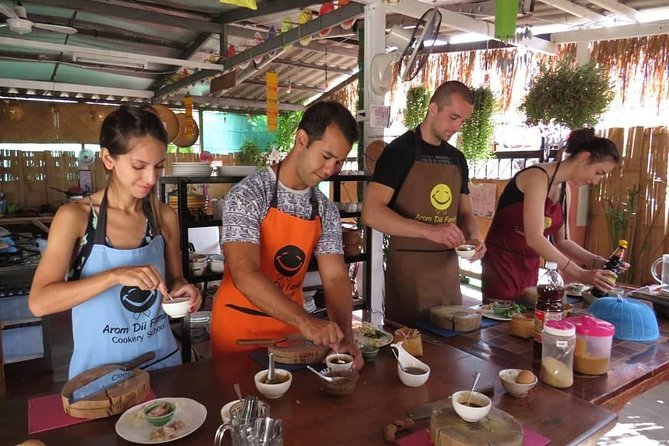
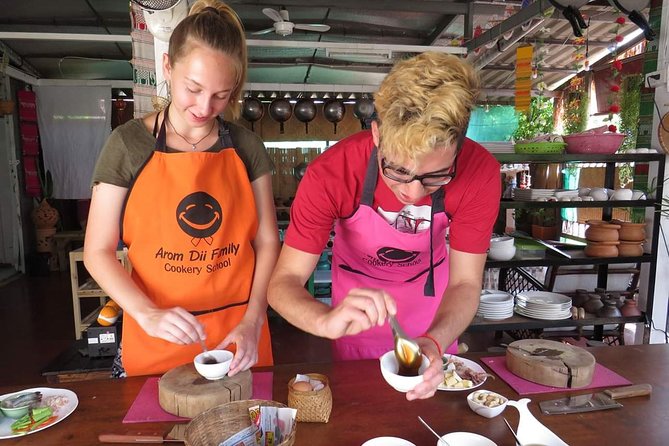
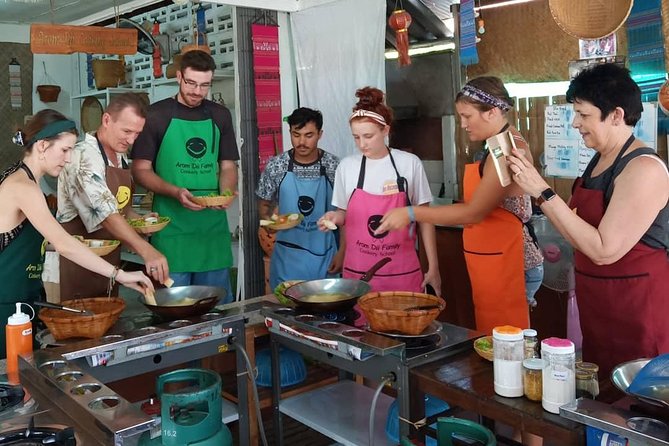
What makes this experience so appealing is that you plan your menu first, shop for your own ingredients, then cook five classic dishes step by step in a small group. I like that it’s taught in a friendly, hands-on way with limited group size (eight people), so you get real coaching instead of watching from the sidelines. One thing to consider: the kitchen has no aircon, just fans, so heat and rain season can affect comfort.
You’ll also like the structure: the class moves from stir-fry to soup/appetizer, then ends with dessert and curry paste made from scratch. I appreciate the options too, because you’re not stuck with one fixed menu, and vegan and vegetarian choices are supported from the broader list. The possible drawback is timing and staying power—about 4.5 hours is a solid chunk of the morning, and you’ll be actively cooking the whole time.
In This Review
- Key takeaways before you go
- Kad Kom Market to Aromdii: where the morning really begins
- Picking your five dishes before class starts
- Market tour: Thai veggies, spices, and what to buy
- How the 4.5-hour class flows (and why the order matters)
- Step 1: Stir-fry first
- Step 2: Soup and appetizer
- Step 3: Dessert and curry paste from scratch
- No aircon in the kitchen: plan for fans, heat, and rain season
- Price and value: is $27.70 a good deal?
- Transportation and meeting point reality in Chiang Mai
- Who should book this cooking class
- Should you book Aromdii’s morning Thai cooking class in Chiang Mai?
- FAQ
- Where is the meeting point for this cooking class?
- What time does the class start?
- How long does the experience last?
- Do I get pickup or transportation included?
- How many people are in the group?
- How many dishes will I cook?
- When do I choose what I’ll cook?
- Does the class offer vegetarian or vegan options?
- Is there air conditioning in the kitchen?
- What is the cancellation and weather policy?
Key takeaways before you go
- Shop first, cook what you chose: pick your dishes ahead of time, then gather ingredients together.
- Five dishes from two Thai regions: the menu covers more than one style of Thai cooking.
- Curry paste from scratch: you’ll learn the process, not just the finished curry.
- Small-group attention: with only eight people, questions don’t get lost.
- Fans only in the kitchen: plan for warm, sometimes humid conditions.
Kad Kom Market to Aromdii: where the morning really begins
This class starts at Kad Kom Market (บ้านเลขที่19 3มบ เวียงทอง 1, Tambon Chang Khlan, อ.เมือง Chang Wat Chiang Mai 50100). Meeting is at 9:00 am, and it returns you back to the same starting point when it’s done.
The smart part is how the morning is set up. You don’t just show up and follow instructions. You begin by learning what you’re going to cook, then you go find the ingredients that match your choices. That makes the whole meal feel personal, like you’re recreating Chiang Mai flavors rather than copying someone else’s plate.
Aromdii Cooking School runs the experience, and it’s designed for a maximum of eight. You’ll be in a reserved space for participants only, not a shared public kitchen area. That matters in Thailand, where food spaces can get busy fast. Here, you’re there to cook, not to dodge elbows.
You can also read our reviews of more tours and experiences in Chiang Mai.
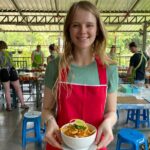
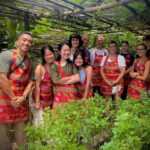
Picking your five dishes before class starts
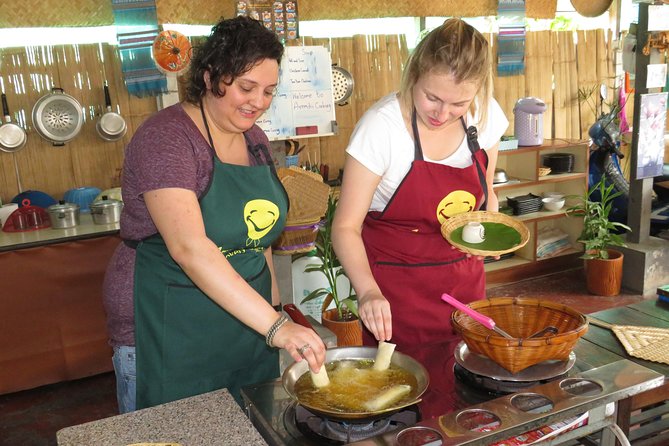
The menu gives you flexibility, and that’s not just a marketing point. Before the cooking begins, everyone chooses their dishes. Then you pick up the ingredients needed for those exact selections. That means less wasted time and fewer moments where you realize midway through that you don’t like the dish you ended up with.
The cooking list is organized by courses, so you can mix-and-match based on your mood:
Stir-fried options
- Pad Thai
- Fried Drunken Noodles
- Pad See Ew
- Fried cashew nut
Appetizer options
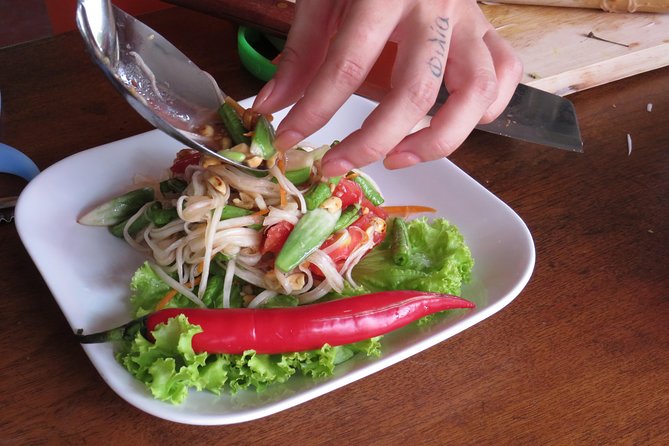
- Papaya Salad
- Fresh spring rolls
- Fried spring rolls
- Mixed Fruits Salad
Soup options
- Hot & Sour Prawns thick soup
- Coconut chicken
- Tom Yum Chicken
- Hot & Sour Prawns Clear soup
Curry (and curry paste) options
- Khao Soi (Chiangmai noodles)
- Green curry
- Massaman curry
- Red curry
Dessert options
- Mango sticky rice
- Pumpkin in coconut milk
You also have a strong advantage if you eat vegetarian or vegan. The menu supports vegetarian and vegan options, so you can still build a full set of five dishes without feeling like you’re getting a backup meal.
One practical tip: if you’re deciding between Thai “comfort food” and Thai “wow,” lean toward Khao Soi if you want a Chiang Mai specialty, and pick one of the curries if you want curry depth. If dessert is what you’re after, the mango sticky rice route is the most crowd-pleasing on a hot morning.
Market tour: Thai veggies, spices, and what to buy
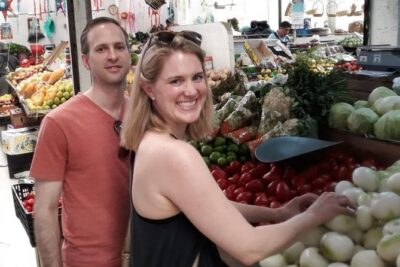
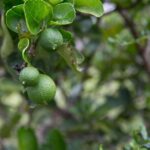
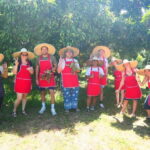
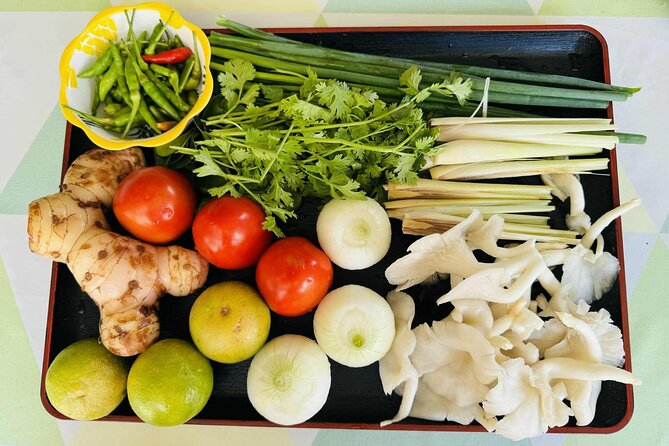
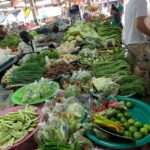
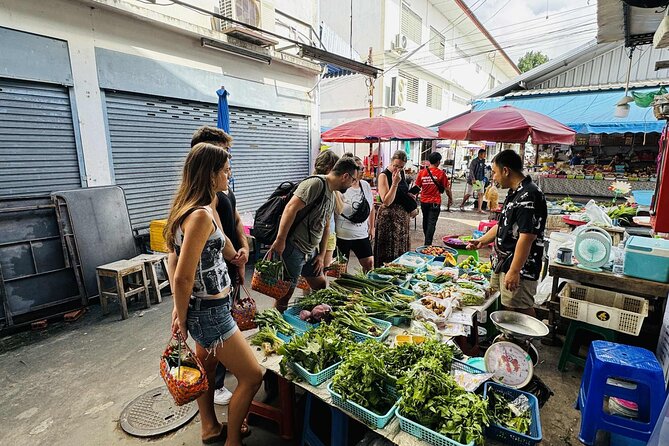
The market tour is short, about 15–20 minutes, which is ideal if you want context without losing the day. You’ll walk around and get shown Thai veggies, spices, and herbs. You’ll also have time to take photos, and you can buy spices to take home.
This is where you’ll notice the real value of doing a class like this. A cooking class is often only about technique. Here, you get ingredient literacy too. Seeing fresh aromatics and understanding how spices are grouped helps you shop later and cook at home with more confidence. Even if you don’t remember every name, you’ll remember what you handled and what it smelled like.
Also, the timing matters. Because you pick your menu first, you can buy with purpose. That turns the market into a real “ingredient hunt,” not a general sightseeing walk.
If you’re the type who likes souvenirs but hates clutter, buy small spice items you can use quickly. The class is basically training your senses—use that by bringing back a few things you actually tasted.
How the 4.5-hour class flows (and why the order matters)
The full experience runs about 4 hours 30 minutes. The kitchen session starts with stir-fried dishes, then moves through soup & appetizer, then finishes with dessert plus curry paste and curry.
Here’s the sequence you can expect:
Step 1: Stir-fry first
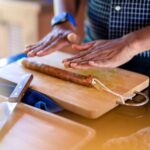
The class starts from stir fried. This is a good choice for pacing. Stir-fry teaches you timing—heat, speed, and when to stop. When your kitchen confidence is building, it’s easier to catch mistakes early.
Pick one stir-fry option and use it as your foundation. If you end up choosing Pad Thai or a noodle dish, you’ll be practicing quick handling and balancing flavors through the process.

Step 2: Soup and appetizer
Next comes soup and appetizer. This part slows things down just enough to let you focus on technique without rushing every step. If you choose papaya salad or spring rolls, you’ll likely get a different cooking style than the stir-fry—more prep and shaping, less “watch the pan and move fast.”
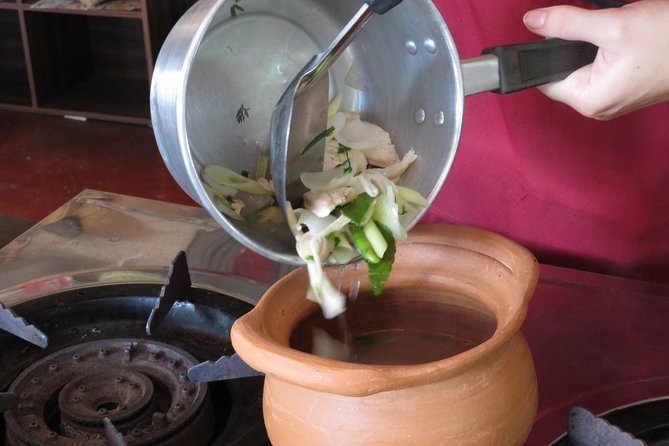
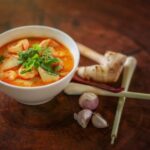
Soups add another layer. With options like Tom Yum Chicken or the hot and sour prawns soups, you’ll be working with Thai profiles that depend heavily on aroma and heat.
Step 3: Dessert and curry paste from scratch
The ending is the big one: dessert and curry paste made from scratch. This is also where the class feels most “Thai.” Curry isn’t just sauce—it’s the paste that sets the character.
Because curry paste is made from scratch, the class isn’t only about following a recipe. It’s about learning the method—how the paste comes together into a usable base. That’s the difference between eating a curry and understanding curry.
Finish with dessert while everything is still fresh and warm. Mango sticky rice or pumpkin in coconut milk are both built for a satisfying close.
No aircon in the kitchen: plan for fans, heat, and rain season
First, a real-world note: there’s no air conditioning in the kitchen and eating room. You’ll have fans instead.
This matters because the tour’s seasonal guidance is very clear:
- March to June (summer): expect heat.
- July to October (rainy): expect damp conditions.
- November to February (winter): conditions usually feel more manageable, but still plan for Thai humidity at different hours.
What should you do with this info? Wear breathable clothes you can move in comfortably. Avoid slippery shoes. Bring a light towel or extra hand wipes, especially if you’re doing anything with raw herbs or lots of chopping. And if you’re sensitive to heat, time your water intake—bottle water is included, but you’ll still want to sip steadily.
Fans are fine when you’re moving and cooking. They’re less helpful when you’re waiting for the next step. Since the class is active from start to finish, most people find a rhythm. Just don’t show up dressed for a cool café.
Price and value: is $27.70 a good deal?
At $27.70 per person, this isn’t a fancy high-end experience. It’s priced like a practical, hands-on cooking class—and the value is strong because a lot is wrapped into the cost.
Here’s what you get for that price:
- a market tour (short but real)
- ingredient handling tied directly to your chosen menu
- cooking instruction across five dishes
- curry paste made from scratch
- bottle water and seasonal fruit
- a handmade recipe download from their website
- transportation if you’re within about 3 kilometers, and pickup is offered
When you compare that to cooking classes that only teach technique and make you supply ingredients separately, the math shifts. Here, the market and the shopping are part of the lesson, and the food includes what you buy for your own dishes.
One more value factor: small-group format. If a class is crowded, your attention drops, and you lose time fixing mistakes. With a group capped at eight, it’s easier to get guidance fast.
My advice: treat the price as an “all-in morning food lab.” You’re paying for the shopping, the class, and the output you’ll eat—then leaving with a recipe download you can actually use.
Transportation and meeting point reality in Chiang Mai
You’ll meet at Kad Kom Market, and the tour ends back at the same meeting point. That makes logistics easier than tours that strand you on the other side of town.
There’s pickup offered, and transportation is included for nearby locations within 3 kilometers. That means if you’re staying close, you might roll up stress-free. If you’re farther out, you might need to use local transit to reach the meeting area.
It’s also listed as near public transportation, which is useful if you want flexibility. For Chiang Mai, it’s smart to plan your morning around simple access points, not complicated cross-city movement.
Also note the vibe: you’re not sharing the space with visitors. That reserved setup helps the class stay efficient, which is why you’ll likely feel like the morning moves steadily rather than stalling.
Who should book this cooking class
This is a great fit if you want:
- a hands-on Thai food lesson without a long day
- a real market connection, not just a supermarket stop
- a menu with enough choices to match your taste
- a small group where questions are welcomed
- curry paste training, which is often the hardest part to do well at home
You’ll especially enjoy it if you’re the type who learns by doing. Choosing from multiple stir-fry, soup, appetizer, curry, and dessert options keeps your interest up through the full 4.5 hours.
If you hate hot, non-air-conditioned rooms, take the comfort warning seriously. Fans can be enough when you’re active, but you should know what you’re signing up for.
Should you book Aromdii’s morning Thai cooking class in Chiang Mai?
I’d book it if you want a focused, small-group experience that teaches you more than one dish and includes the ingredient shopping that makes Thai cooking feel real. The strong points are the five dishes from scratch, the chance to make curry paste, and the practical recipe download after you leave.
I’d think twice if you’re uncomfortable in warm spaces or you need a super slow pace. This is active cooking, not a relaxed demo. Also, it’s weather-dependent in the sense that outdoor/market parts don’t work well in poor conditions, and the activity can be canceled for that reason.
If your goal is a memorable Chiang Mai morning that ends with food you cooked yourself, this is a solid choice.
FAQ
Where is the meeting point for this cooking class?
The meeting point is Kad Kom Market, at บ้านเลขที่19 3มบ เวียงทอง 1 Tambon Chang Khlan, อ.เมือง Chang Wat Chiang Mai 50100, Thailand.
What time does the class start?
The start time is 9:00 am.
How long does the experience last?
It runs for approximately 4 hours 30 minutes.
Do I get pickup or transportation included?
Yes. Pickup is offered, and transportation is included for nearby locations within about 3 kilometers of the cooking school meeting area.
How many people are in the group?
The class is limited to a maximum of 8 travelers.
How many dishes will I cook?
You will cook five traditional dishes from scratch.
When do I choose what I’ll cook?
Everyone chooses the menus before the class starts.
Does the class offer vegetarian or vegan options?
Yes. The menu has options that can accommodate vegan and vegetarian preferences.
Is there air conditioning in the kitchen?
No. The kitchen and eating room have fans only, not air conditioning.
What is the cancellation and weather policy?
You can cancel for a full refund if you cancel at least 24 hours before the experience’s start time. The experience requires good weather, and if it’s canceled due to poor weather, you’ll be offered a different date or a full refund. It also requires a minimum number of travelers, and if that minimum isn’t met, you’ll have the same options.