REVIEW · SAN SEBASTIAN
Michelin Star Secrets Cooking Class in San Sebastian
Book on Viator →Operated by Mimo · Bookable on Viator
Michelin-star cooking, minus the intimidation. This hands-on class in San Sebastián focuses on advanced technique and gives you a real lunch at the end, built from what you make. I like that it’s aimed at people who already cook and want to level up, not just follow along.
Two things I really liked: the instructors’ high-skill guidance, and the way the lesson turns directly into your meal. In a small group (around 10 people, capped per booking), you get attention and don’t get stuck watching while everyone else works. The second big win is the menu lineup, from oysters to a chocolate soufflé, with modern touches like foaming and presentation.
One consideration: it’s not designed for every dietary need. If you’re vegan, you’ll want to skip this one, and allergies need to be shared in advance so they can adjust your lunch ingredients while keeping the same cooking menu.
In This Review
- Key highlights to know before you cook
- Michelin-star skills, taught in a small San Sebastián kitchen
- The 10am start at Mimo Bite: where you begin and what to expect
- Modern technique in your hands: foaming, precision, and presentation
- Your hands-on menu: oysters, sole, pichón, and Roca chocolate soufflé
- Starter: Oysters with Navarra Rosé Mousse
- Main: Sole with beans and pinions
- Main: Pichón with pickled mushrooms
- Dessert: Roca chocolate soufflé
- Lunch with wine: what you’ll eat after the work
- Small-group attention: why the class size really matters
- Value and the $276.95 price: what you’re paying for
- Who should book this cooking class in San Sebastián?
- Practical tips that make the day easier
- Should you book Michelin Star Secrets in San Sebastián?
- FAQ
- What time does the Michelin Star Secrets cooking class start?
- Where do I meet for the class?
- Is the class small-group?
- What language is the class taught in?
- What will I eat during the class?
- Are vegetarian diets accommodated?
- Is this class available for vegans?
Key highlights to know before you cook
- Michelin-star technique focus, including modern skills like foaming and sharp presentation
- Small-group feel, limited to a small class size (about 10 people, with a low booking cap)
- You eat what you make for lunch, paired with selected wines
- English instruction, so you can follow closely without translating on the fly
- A clear, advanced menu: oysters, sole, pichón, and Roca chocolate soufflé
Michelin-star skills, taught in a small San Sebastián kitchen
If you love food but you’re tired of classes where you chop one sad onion and call it a day, this is a better fit. Michelin Star Secrets is built around advanced technique and the kind of restaurant detail that most home cooks never get coached on. You’re not just learning recipes. You’re learning how pros build texture, shape, and final presentation.
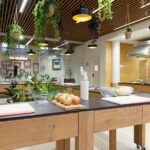
The location matters too. You’re based in central San Sebastián, and the class starts at 10:00 am, so you get a full morning of cooking without losing your entire day to it. For a city famous for eating, it’s a fun twist to participate instead of only sampling.
I also like the tone of the experience: serious, but not stiff. The instructors guide you through haute-cuisine-style dishes, and the group stays small enough that questions don’t bounce off the walls. In reviews, people singled out instructors Agus and Patric for both skill and teaching style, which is exactly what you want when you’re trying to improve your technique.
You can also read our reviews of more tours and experiences in San Sebastian.
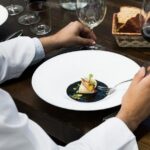
The 10am start at Mimo Bite: where you begin and what to expect
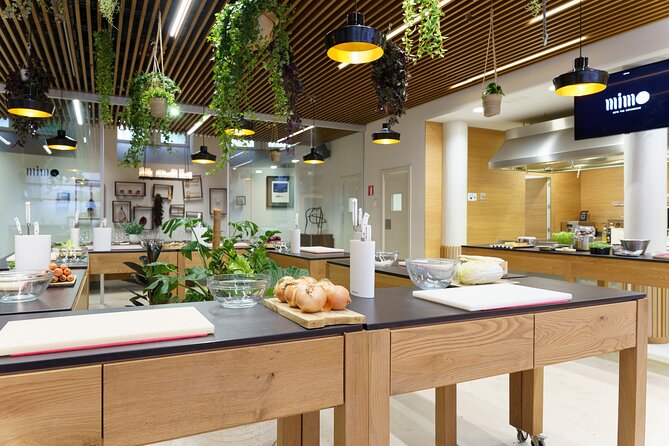
You’ll meet at Mimo Bite The Experience at Okendo Kalea (San Sebastián, 20004). The start time is 10:00 am, and you’ll finish back around the same meeting point area.
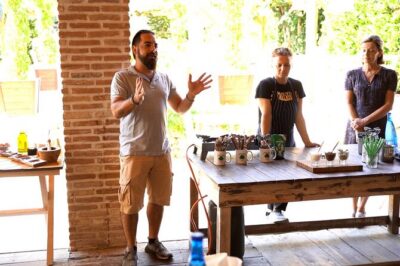
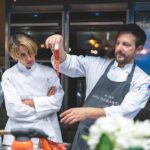
When you arrive, you’re greeted and brought into the workflow fast. You’ll wash your hands and put on an apron, then get a short intro to San Sebastián’s culinary status. That intro isn’t just trivia; it sets the context for why the dishes and techniques matter. In other words, it helps you understand what you’re trying to do, not just what you’re supposed to repeat.
This is one of those experiences where the morning rhythm is key. You’ll move from prep and technique practice into making multiple dishes, so show up ready to work. If you’re the type who likes to ease into a day slowly, you’ll want to plan for that caffeine or breakfast before you arrive.
Modern technique in your hands: foaming, precision, and presentation
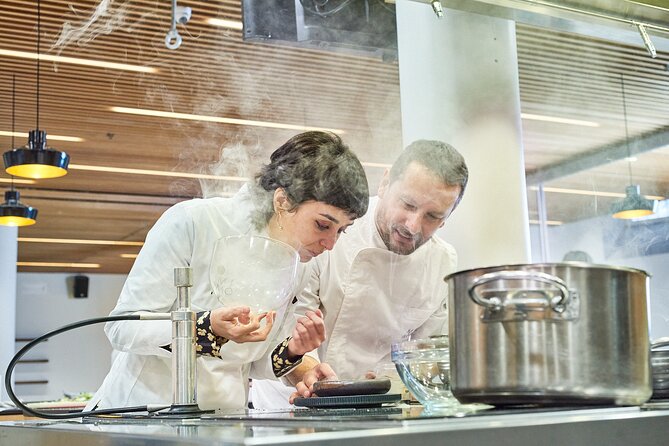
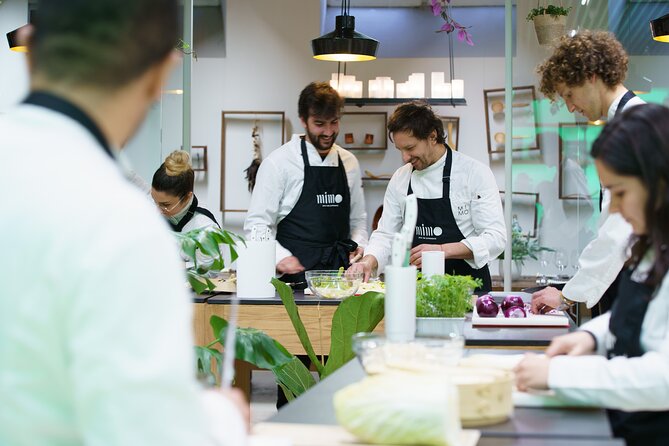
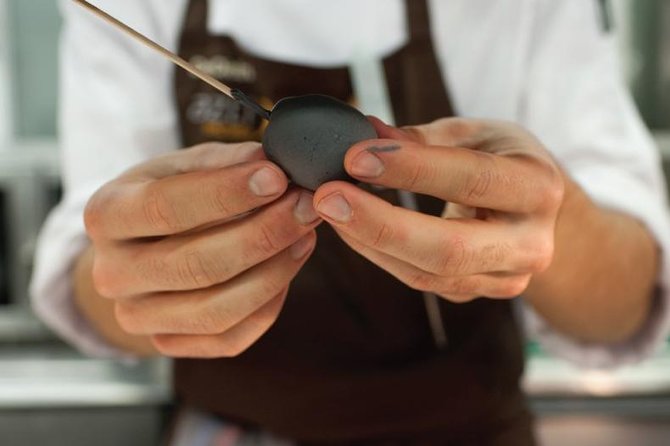
The class is built for passionate cooks who want more than basic methods. The highlights mention modern techniques like foaming and cutting-edge presentation, which is a big deal if you want food that looks and tastes like restaurant plating, not home improvisation.
Here’s the practical value: once you learn how chefs control air, temperature, consistency, and timing, your dishes stop tasting flat. They start tasting finished. That’s the difference between a good meal and a meal that looks like it belongs under bright dining-room lights.
You’ll replicate haute cuisine dishes that are associated with Michelin-star restaurants in the area. That means the coaching is about technique accuracy—how you approach the steps—rather than just the ingredients on paper. And because the group stays small, you’re not stuck waiting for your turn to be watched.
One more detail that makes this class feel professional: you follow hygiene rules at the start. It’s simple, but it signals the right mindset. You’re cooking in a real kitchen environment, not as a casual activity.
Your hands-on menu: oysters, sole, pichón, and Roca chocolate soufflé
The menu is structured like a restaurant experience, but you’re the one doing the work.
Starter: Oysters with Navarra Rosé Mousse
Oysters are already a showpiece ingredient. Pair that with a Navarra Rosé mousse, and suddenly the class is teaching you about texture and refinement, not just cooking seafood. The mousse element is where foaming-style thinking often comes into play—getting something light and smooth that still holds its shape and flavor.
Expect the starter to teach you how to handle something delicate: timing, temperature awareness, and not overworking what shouldn’t be worked hard.

Main: Sole with beans and pinions
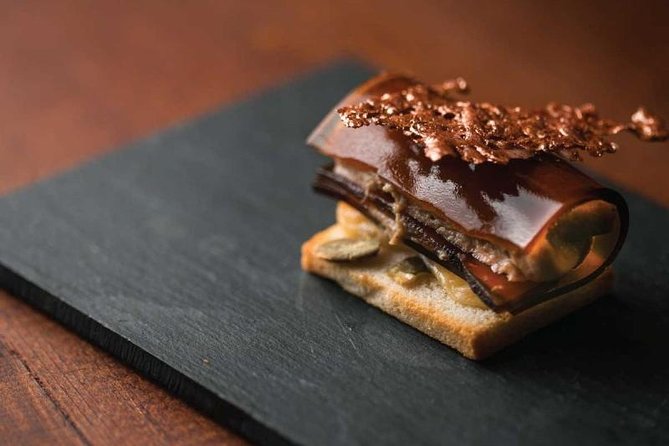
Sole is classic and elegant, but it can be tricky if you treat it like just another fillet. This part of the menu is where technique turns into flavor. You’ll learn how to pair delicate fish with richer elements like beans and pinions, which add structure and depth.
If you’ve ever cooked fish and wondered why it doesn’t taste like a plated entrée, pay attention here. This is the kind of pairing where small technique choices matter.
Main: Pichón with pickled mushrooms
Pichón (young pigeon) is not an everyday ingredient for most home kitchens, so this is where the class gives you true “only in San Sebastián” energy. The pickled mushrooms bring acid and contrast, which helps keep the whole plate from feeling heavy.
This is also a chance to learn how to balance a strong main with a tangy component, and how to think in terms of flavor arcs instead of single-note seasoning.
Dessert: Roca chocolate soufflé
The Roca chocolate soufflé is the dessert that tells you whether a class is really serious. Soufflés can go wrong for many reasons: timing, texture, heat management, and how the kitchen environment affects your final result. Even if you’ve made one before, having a guide in your ear can help you understand what you were missing.
And you’re not cooking it just to sample later. Dessert is part of the meal you’ll actually sit down to eat, which raises the stakes in a good way.
Lunch with wine: what you’ll eat after the work
After you cook, you sit down and feast on everything you made. Lunch is included, and it comes with carefully selected wines.
This part is more than a reward. It’s feedback. You’ll taste your own result and immediately connect technique decisions to outcomes. When you’ve spent a few hours learning how pros build texture and plating, tasting in the same session makes the lessons stick.
The wine pairing also matters for two reasons. First, it helps you understand balance—how acidity, fat, and richness interact. Second, it’s a quick way to learn what styles of wine work with each dish, even if you’re not a sommelier.
For food people, this is one of the best parts of the whole experience: you don’t just learn in theory and you don’t just leave with a recipe card. You leave with a full restaurant-style lunch, built from your labor.
Small-group attention: why the class size really matters
This is a small-group class limited to around 10 people, with a booking cap listed at a low number (and an overall maximum for the activity). In practice, that’s the difference between being carried through the class and being coached through it.
When the group is larger, you end up repeating steps with no feedback. Here, you’re more likely to get correction when something is off—especially important for advanced techniques and for timing-sensitive steps like soufflé-related work.
Also, small groups make it easier to ask practical questions while you’re working. You don’t have to wait until the end of the session when your confidence is already shaken.
Value and the $276.95 price: what you’re paying for
At $276.95 per person, this isn’t a cheap activity, so you should judge it by what you get.
You’re buying:
- Advanced Michelin-style instruction, including modern techniques like foaming
- A multi-course lunch that’s included and tied directly to your cooking
- English instruction
- Small-group coaching, which tends to cost more than big group demos
- A menu built from ingredients and cooking styles you likely won’t tackle at home
So the value calculation is simple: if you want a hands-on class where you cook multiple dishes and then eat them as a real lunch, the price starts to look reasonable. If you mainly want a casual experience or a quick taste of “something cooking-related,” you may feel like it’s more than you needed.
One more sign of value: it’s offered throughout the year, and it’s booked about 54 days in advance on average. That doesn’t mean you have to plan super early, but it does suggest it’s popular enough that your preferred dates may go first.
Who should book this cooking class in San Sebastián?
This experience is a great match if:
- You already cook at home and want coaching on advanced technique.
- You like structured lessons with real results you can taste immediately.
- You’re interested in Michelin-level plating, not just Spanish basics.
- You want an activity that still ends as a full meal, not a snack.
It may not be the best fit if:
- You’re vegan (this tour/activity is noted as not available for vegans).
- You need a menu adapted beyond what the organizer can handle with advance allergy information.
- You prefer low-effort “watch and learn” cooking demos.
If you’re bringing family, note that the minimum age is 16, which can make this work for older teens with real interest in cooking.
Practical tips that make the day easier
- Show up at 10:00 am ready to work. This is a morning of active cooking, not a slow tour.
- Think about allergies early. If you have one, tell the operator in advance so your lunch can be adapted while the group cooks the same menu.
- If you want a vegetarian option, ask at booking time. A vegetarian option is available, while the main format focuses on the listed menu.
- Plan your day around a 5-hour block. It ends back at the meeting point, which is helpful for keeping your afternoon plans simple.
Also, a good strategy for any advanced cooking class: watch how you’re told to hold ingredients and tools, not only what you’re told to add. With technique-focused lessons, small physical habits can be the whole game.
Should you book Michelin Star Secrets in San Sebastián?
I think you should book it if you’re the type who wants to improve, not just eat. The combination of advanced Michelin-star technique, a small group, and a full lunch you helped create makes this feel like more than a standard food tour.
However, if you’re vegan, or if your dietary needs are complicated without advance planning, you should look elsewhere. And if your cooking experience is mostly casual, you might want a simpler class first so the advanced steps feel motivating rather than intimidating.
If you want a top-tier food day in San Sebastián that’s hands-on and genuinely instruction-driven, this is one of the stronger choices in the city.
FAQ
What time does the Michelin Star Secrets cooking class start?
It starts at 10:00 am, and the experience runs for about 5 hours.
Where do I meet for the class?
You’ll meet at Mimo Bite The Experience, Okendo Kalea, 1, 20004 Donostia-San, Spain.
Is the class small-group?
Yes. It’s described as a small group, limited to 10 people, with a low maximum per booking, and an overall maximum for the activity.
What language is the class taught in?
The class is offered in English.
What will I eat during the class?
You’ll cook and then enjoy a multi-course lunch with these items: oysters with Navarra rosé mousse, sole with beans and pinions, pichón with pickled mushrooms, and Roca chocolate soufflé. Lunch is included.
Are vegetarian diets accommodated?
A vegetarian option is available. You’ll need to request it at the time of booking.
Is this class available for vegans?
No. This activity is not available for vegans.