REVIEW · UBUD
Ubud: Balinese Cooking Class with Hotel Transfers
Book on GetYourGuide →Operated by Bali AIU Tours & Travel · Bookable on GetYourGuide
Cooking in Ubud feels like a family visit. You get hotel transfers, a market run, and a hands-on Balinese lunch day in one smooth 5-hour package.
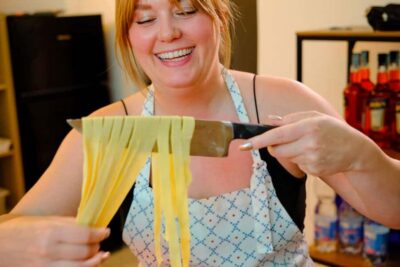
What I like most is that you do real food work, not just watching. You’ll shop for herbs and spices, cook multiple dishes, then sit down to eat what you made in a garden setting.
One thing to consider: the market visit is only for the morning class, so timing matters if you want every stop. You’ll also want light packing since luggage or large bags aren’t allowed, and it is not suitable for kids under 12.
In This Review
- Key things that make this cooking class worth your time
- From Ubud Pickup to a Market Basket of Ingredients
- Morning Market Only: The Stop You Should Plan Around
- A Quick Paddy Field Visit That Explains the Rice Connection
- Inside the Local Home Kitchen: Family Life, Not a Photo Set
- The Balinese Menu You Actually Make (Soup, Mains, Dessert)
- Lunch in the Garden: Eating What You Cooked
- Price and Value: Is $26 Actually a Good Deal?
- Who This Balinese Class Fits Best (and Who Should Skip It)
- Practical Tips for a Smooth, Comfortable Day
- Should You Book This Ubud Balinese Cooking Class?
- FAQ
- How long is the Ubud Balinese cooking class?
- Does this include hotel pickup and drop-off?
- Is a market visit included?
- Do I cook and eat meals during the class?
- What language is the class taught in?
- Is it suitable for kids or seniors?
- Can I reserve now and cancel later?
Key things that make this cooking class worth your time
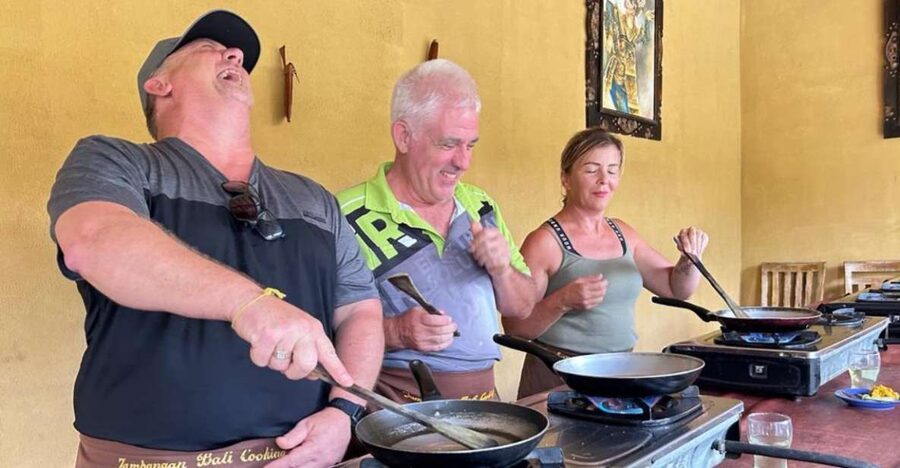
- Market-first ingredient shopping with a guide so you know what you’re actually cooking
- Paddy field visit that connects the rice story to your plate
- English instruction from local chefs in a home-style setting
- You cook a full menu including soup, mains, and dessert (with veg or meat choices)
- Lunch in the garden so the meal feels like the payoff, not an afterthought
From Ubud Pickup to a Market Basket of Ingredients
This starts with an early pickup from your hotel in Ubud. You wait in the lobby about 10 minutes before your scheduled time, and the driver won’t stick around for long after pickup is due, so plan to be ready. The whole point is to get you out early, when ingredients and vendors are in motion.
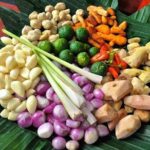
Next comes the local market visit (morning class only). You’ll pick up fresh herbs and spices, crisp vegetables, and choice cuts of meat. This is more than sightseeing. You get to see what Balinese cooking starts with, and you can smell the difference between fresh herbs and dried spices that you might use later at home.
Your guide also adds context as you go. You’ll learn how ingredients connect to Balinese daily cooking, and the session is designed to keep you engaged rather than rushing you through a checklist.
You can also read our reviews of more tours and experiences in Ubud.

Morning Market Only: The Stop You Should Plan Around
If you want the full experience with the market, book the morning class. The market stop is explicitly tied to morning, while other parts of the day still happen without that market portion. It’s a small detail, but it changes the feel of the class.
Morning classes also tend to be the better match if you like seeing how food gets chosen at street level. You’ll come away knowing what to look for next time you cook Balinese flavors, even if you don’t recreate everything perfectly.
A Quick Paddy Field Visit That Explains the Rice Connection
After the shopping, the day slows down for a rice-farm moment. You’ll get a glimpse of rice farmers doing their daily activities and have a chance to chat with local farmers. This is brief compared to a full-day rice tour, but it adds meaning to your meal.
Balinese food leans on rice and rice culture, and this is one of the easiest ways to understand the link without reading a book. You’ll likely notice how many dishes on the table are built around rice or rice-based staples, and that makes lunch feel more intentional.
This stop also helps balance the day. You start with market energy, then you get that calmer rural rhythm before heading into cooking.
Inside the Local Home Kitchen: Family Life, Not a Photo Set
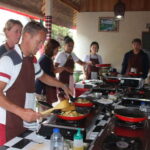
The cooking happens in a local home setting, not a sterile demonstration hall. You get a personal look at Balinese family life, and that changes how you experience the class. It feels like you’re being invited in, not processed through.
In at least some cases, you’ll also meet the hosting family right away and wait in a garden space with a welcome drink (complimentary coffee is one example from the experience). That sets the tone before you touch a mortar or start chopping.
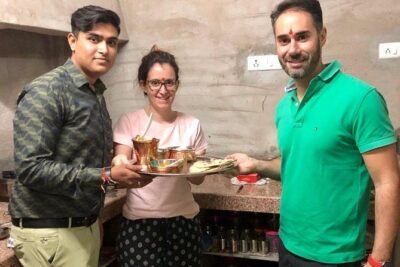
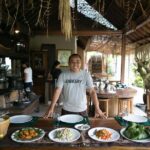
One of the nicest touches is the guides and chefs are genuinely friendly. In one instance, the guide Goose was described as funny and kind, keeping the group engaged with stories about Balinese culture and tradition. That kind of energy matters here because cooking classes can get dry if the talk stops.
The Balinese Menu You Actually Make (Soup, Mains, Dessert)
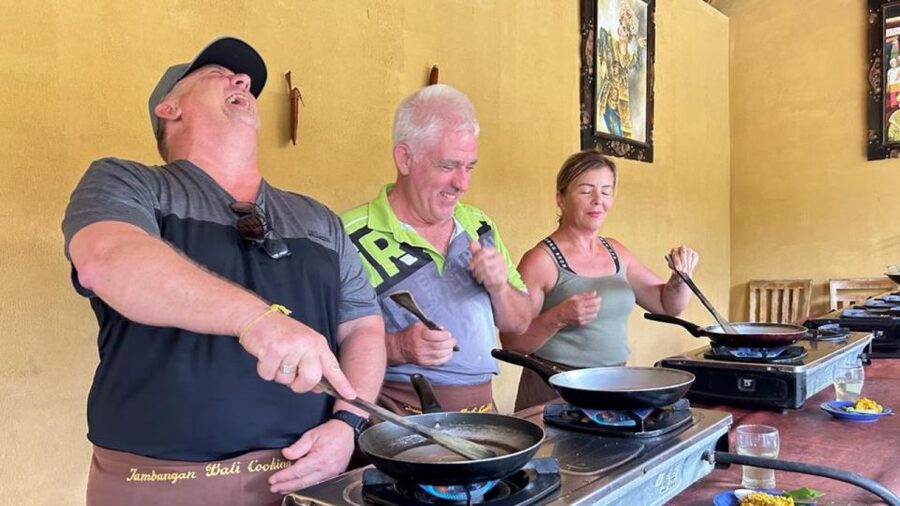
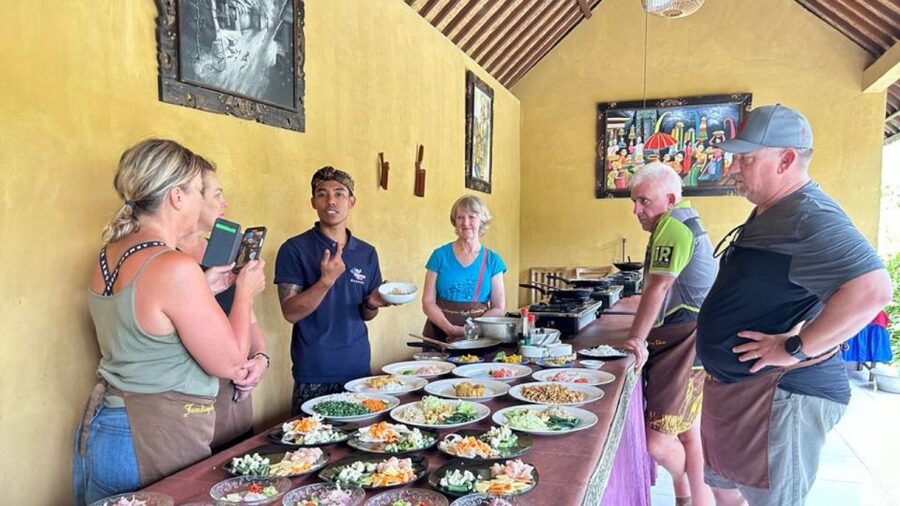
This is hands-on from start to finish. All classes are conducted in English, and the local chefs guide you through traditional Balinese dishes using the ingredients you picked up.
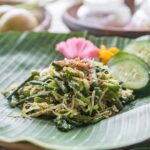
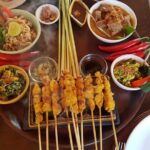
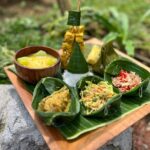
A standout detail is the meal structure. One experience included making 1 soup, 6 mains, and 1 dessert, with a choice of vegetarian or meat options at the start. Even if your exact menu differs by timing and availability, the class is built to give you a real spread of dishes, not one or two items.
Here’s why that matters for value. Many cooking classes in Bali focus on a single signature dish and call it a day. This one is designed so you leave with a fuller understanding of flavors, textures, and how dishes build on each other. You’ll notice how herbs, spices, and aromatics show up across multiple recipes, so your home cooking later becomes easier.
If you prefer vegetarian, you should be able to choose that option. If you want the meat version, you’ll have that route too. It’s a practical setup that helps you leave satisfied.

Lunch in the Garden: Eating What You Cooked
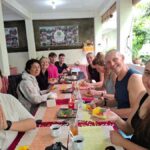
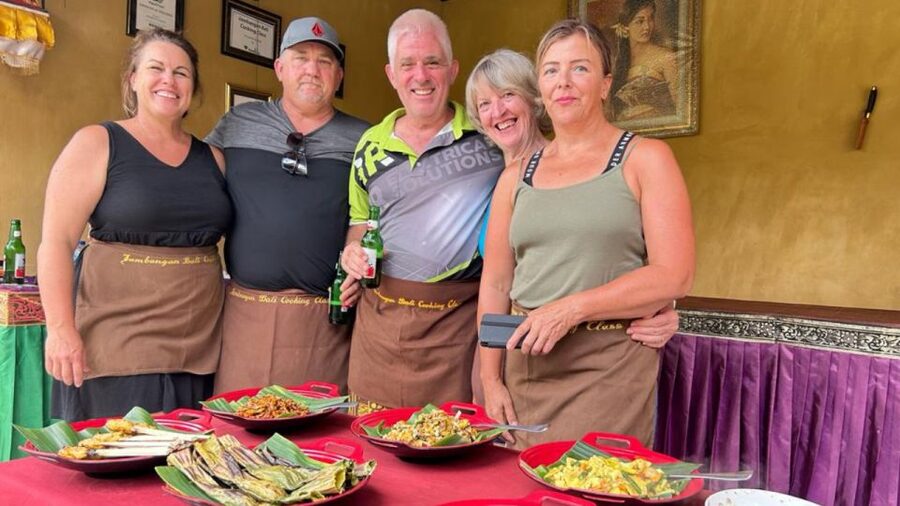
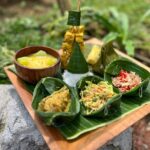
After you finish the recipes, you sit down to lunch in the garden. This is not a rushed buffet situation. The meal is the direct result of your work, which makes it more rewarding than eating after a passive cooking demonstration.
The garden setting also keeps the day from feeling like a classroom. You get to relax, taste, and ask questions about what you cooked. That’s where the English guidance pays off, because you can connect ingredients to flavor outcomes while everything is fresh in your mind.
If you’ve ever taken a cooking class and wondered if you could repeat the results later, this part helps. You’ll leave with memories of what the dishes should taste like, not just the steps.
Price and Value: Is $26 Actually a Good Deal?
At $26 per person for about 5 hours, this class lands in the lower-cost range for Bali food experiences, especially with hotel pickup and drop-off included. That matters because transport in Ubud can quietly add up, and cooking classes often assume you’ll handle your own way.
Your inclusions are also practical:
- Balinese food and a lunch meal you cook
- Welcome drink
- Local market visit for the morning class
- Paddy field visit
- Transfers (pickup and drop-off)
What you’re really paying for is time with local chefs plus the structured experience: market + rice farm context + home-kitchen cooking + garden lunch. When you combine all of that, the price feels fair.
One more value point: in at least one instance, the group return was described as flexible, with the option to leave when ready after lunch. That’s a small thing, but it can make the day feel less like a rigid schedule.
Who This Balinese Class Fits Best (and Who Should Skip It)
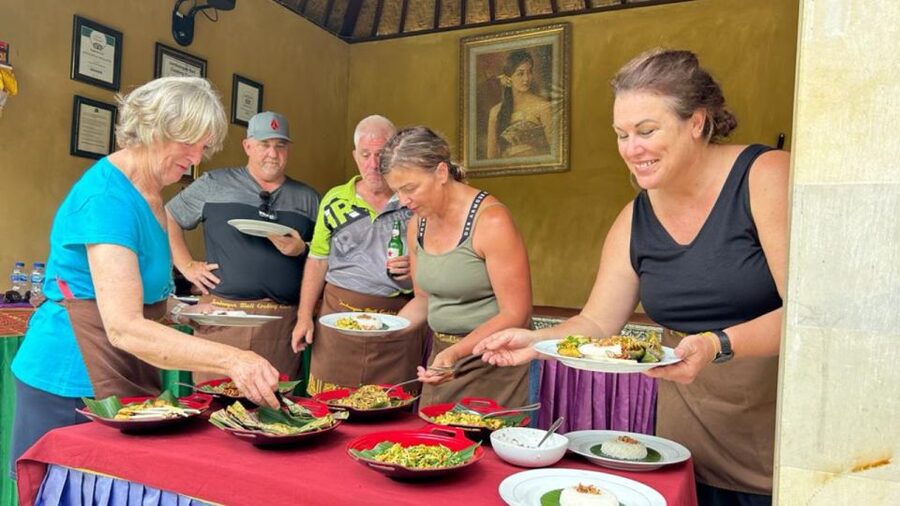
This experience is a good fit if you want hands-on cooking plus culture context, all in a half-day. It’s especially ideal for food-focused travelers who enjoy markets, herbs, and understanding where ingredients come from.
It is not suitable for children under 12. It is also not suitable for people over 95. And you’ll want to keep your packing light since luggage or large bags aren’t allowed.
If you’re a solo traveler, couples, or friends who want a guided food day with English support, it works well. If you hate hands-on cooking and want pure tasting, you might find it too active.
Practical Tips for a Smooth, Comfortable Day
Before you go, plan for comfort. Wear comfortable shoes and clothes since you’ll be moving between stops and cooking in a home-style environment.
Bring:
- Comfortable shoes
- Comfortable clothes
Don’t bring:
- Luggage or large bags
- Alcohol and drugs
If you’re prone to showing up late, set an internal alarm. The driver waits no longer than 5 minutes after the scheduled pickup time, so being punctual is part of getting the smooth experience.
Also keep your expectations grounded: the class is in English, but it’s still a local kitchen day. You’ll learn by doing, and questions are welcome, especially when flavors start making sense.
Should You Book This Ubud Balinese Cooking Class?
Book it if you want a balanced day that mixes real cooking with ingredient context. For $26 and 5 hours with hotel transfers, it’s a strong option if you like markets, rice-farm stories, and leaving with multiple dishes you can realistically recreate.
Skip it if you only care about one recipe and would rather do a simple tasting tour. Also skip if morning timing matters and you cannot make that schedule, since the market visit is only included with the morning class.
If you’re excited to cook soup, multiple mains, and dessert style dishes with clear English guidance, this is the kind of activity that stays with you because you eat it right away—then take the flavors home.
FAQ
How long is the Ubud Balinese cooking class?
The duration is listed as 5 hours.
Does this include hotel pickup and drop-off?
Yes. Hotel pickup and drop-off are included.
Is a market visit included?
A local market visit is included only for the morning class.
Do I cook and eat meals during the class?
Yes. You make Balinese dishes during the workshop and then savor your creations for lunch.
What language is the class taught in?
The class is conducted in English.
Is it suitable for kids or seniors?
It is not suitable for children under 12 years, and it is also not suitable for people over 95 years.
Can I reserve now and cancel later?
You can reserve now and pay later. Free cancellation is available up to 24 hours in advance for a full refund.