REVIEW · BANGKOK
Sathon: Hands-on Thai Cooking Class & Market Tour in Bangkok
Book on GetYourGuide →Operated by House of Taste Thai Cooking School · Bookable on GetYourGuide
Cook Thai food with real technique.
This Suan Phlu, Sathon class is interesting because it starts in a local market and turns what you pick into dinner. I love that you’ll shop with a guide for fresh ingredients, not just stand around watching. I also like that the cooking isn’t just assembly work: you make fresh coconut milk and curry paste from scratch, then you eat what you made while it’s still hot and fresh.
The one drawback to think about is heat. Several of the menu options are spicy by Thai standards, so if you’re sensitive, tell your instructor Pitch up front and plan to customize where they allow substitutions.
In This Review
- Key things to know before you go
- Suan Phlu Market Tour at Sathon: Where your ingredients start
- Making Coconut Milk and Curry Paste From Scratch (Yes, really)
- Your 4-Course Daily Menu: What you’ll cook and eat
- Instructor Pitch and the small-group vibe: how the class feels
- What’s included for $45: the value is in the full meal + tools
- Getting to the school: BTS and MRT options near Silom
- Dietary needs: how flexible is it?
- Should you book this Thai cooking class in Bangkok?
- FAQ
- What time and how long is the cooking class?
- Where do I meet for the tour?
- Is the Suan Phlu market tour included?
- What dishes will I cook?
- Can the class handle dietary restrictions or allergies?
- Are alcohol drinks included?
Key things to know before you go
- Market tour right before cooking: you shop Suan Phlu and choose ingredients for your dishes
- From-scratch curry skills: curry paste and coconut milk are made during class
- 4-course Thai meal included: your menu depends on the day, with mango sticky rice every day
- Small-group feel and friendly instruction: English and Thai, plus Pitch’s style of teaching
- Dietary options are handled: vegetarian, halal, kosher, and allergy-sensitive substitutes are available
- Alcohol costs extra: drinking water is included; beer or spirits are for purchase
Suan Phlu Market Tour at Sathon: Where your ingredients start
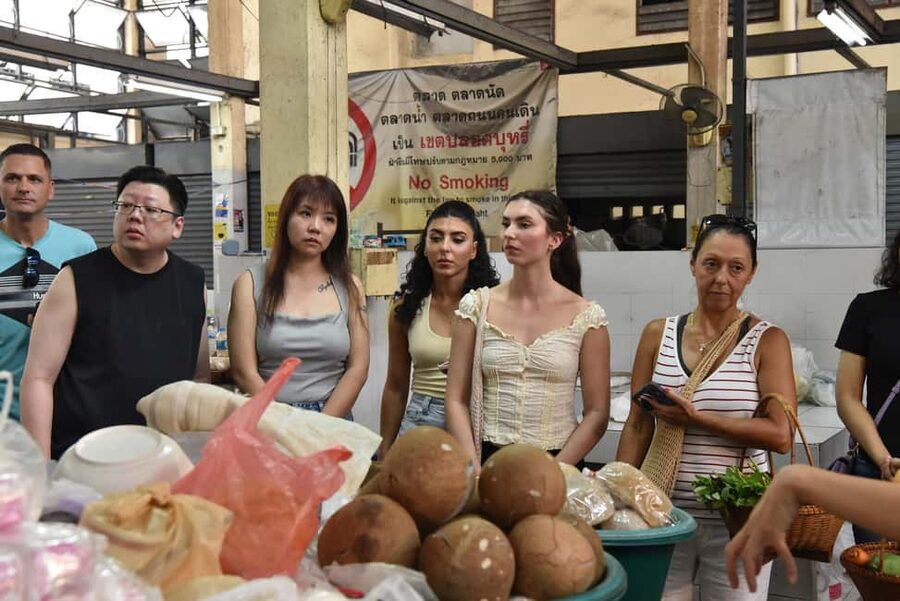
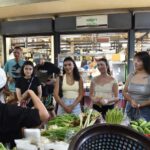
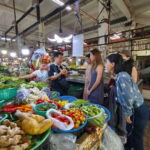
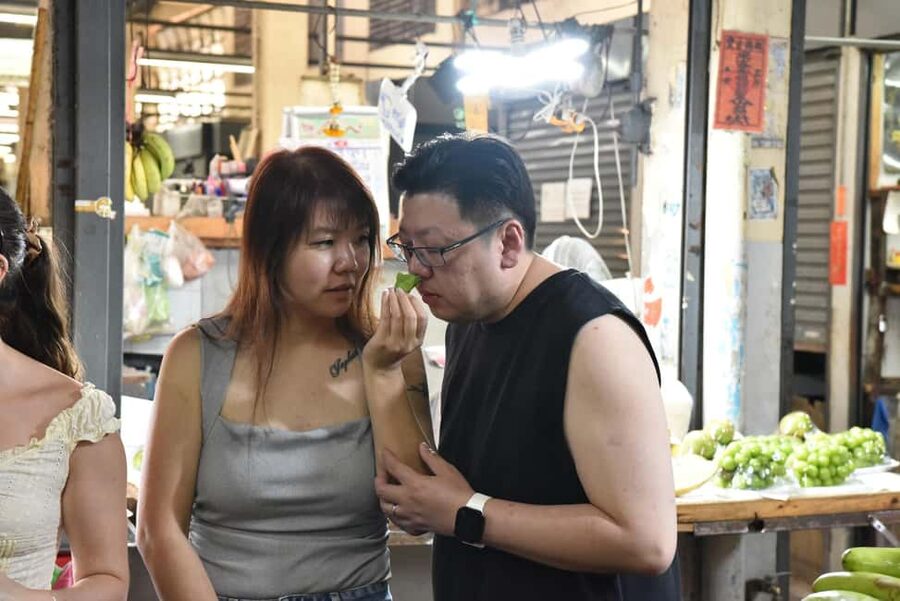
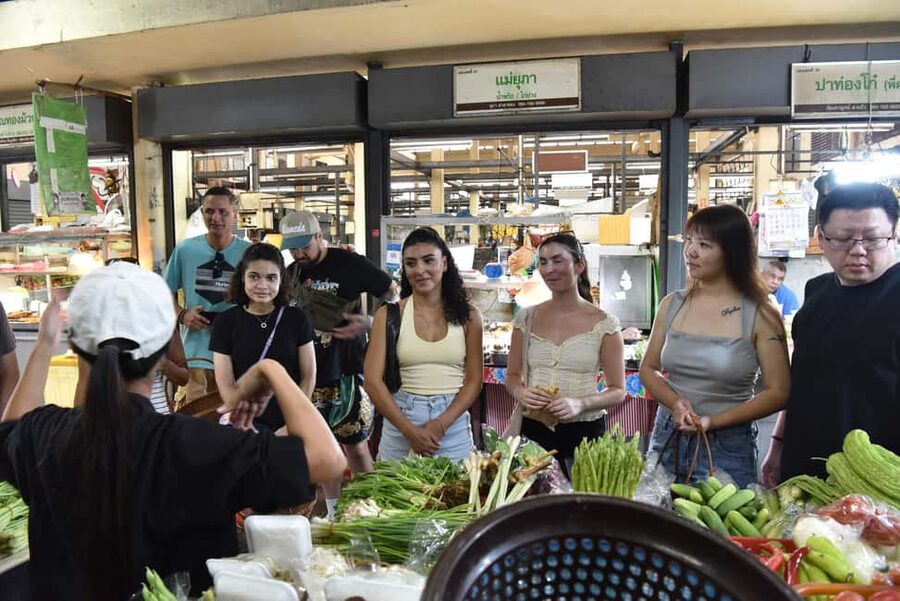
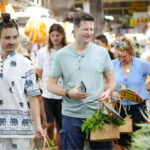
Most Thai cooking classes skip the part that matters most: sourcing. Here, you meet at the school in Sathon (near Silom), then you walk a short distance to the Suan Phlu fresh market. The market is just behind Suan Phlu Market, with the school about a minute away on foot, so you spend your time picking ingredients rather than traveling.
Why this matters: in Thai food, the quality of herbs, aromatics, and produce changes the outcome fast. A curry paste made with fresh aromatics tastes alive compared to something that’s been sitting around. The market tour is your chance to see what “fresh” looks like in Bangkok—vegetables, herbs, and spices you might not buy back home.
You’ll also get the guide’s framing as you shop. Instead of memorizing a recipe on day one, you learn what each ingredient is doing—texture, aroma, acidity, sweetness, and heat. That makes the cooking part easier, because you’re not just following steps. You’re building flavor on purpose.
Practical tip: go with an open mind even if you’ve never tasted some ingredients. This is one of those classes where the market tour gives you confidence, not just shopping bags.
You can also read our reviews of more tours and experiences in Bangkok.
Making Coconut Milk and Curry Paste From Scratch (Yes, really)
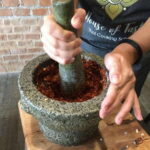
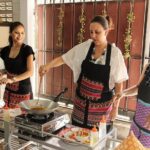
This is the star skill of the class. You’ll make fresh coconut milk and curry paste from scratch, and you’ll do it hands-on—expect to get involved. Curry paste isn’t a one-bowl shortcut here. It’s a process that trains your palate and your technique.
Here’s what I think makes this portion valuable for you:
- You learn the core Thai flavor system. Curry paste is the aromatic engine. When you build it yourself, you start understanding how Thai flavors stack: spice, sweet, savory, and herbal lift.
- You can re-create results later. Store-bought paste can be good, but it rarely tastes like the version you make at a Thai kitchen table with fresh aromatics.
- You get an instinct for texture. The way paste comes together affects the finished curry. That’s hard to pick up from a video.
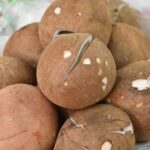
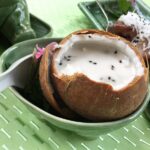
Coconut milk also changes the game. Fresh coconut milk gives a creaminess that feels different from boxed versions. And because you’re making it as part of your cooking flow, you’ll understand how it’s used rather than just learning it as a fact.
If you’re worried about cooking fear or mess: good. You’re supposed to try. The whole point is learning a technique, not just sampling a finished plate.
Your 4-Course Daily Menu: What you’ll cook and eat
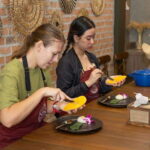
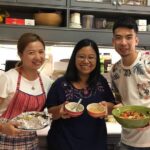
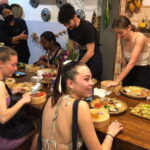
The class is built around a four-course meal—so you don’t just cook. You also eat what you made, while it’s hot. The menu changes by day, which keeps the class flexible if you’re in Bangkok for a week.
Every day includes mango sticky rice as your dessert. The other three courses switch. Here’s the day-by-day lineup you can choose from:
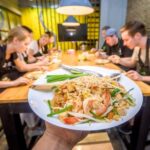
- Monday: Thai Papaya Salad (Som Tum), Stir-Fried Noodles with Shrimp (Pad-Thai), Green Curry with Chicken, Mango Sticky Rice
- Tuesday: Spicy Coconut Soup with Chicken (Tom Kha Gai), Stir-Fried Thai Basil Chicken (Pad Krapow Gai), Red Curry with Chicken, Mango Sticky Rice
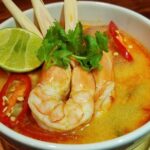
- Wednesday: Hot and Sour Soup with Shrimp (Tom Yum Goong), Stir-Fried Flat Rice Noodles with Chicken (Pad See Ew), Green Curry with Chicken, Mango Sticky Rice
- Thursday: Spicy Minced Chicken Salad (Larb Gai), Stir-Fried Noodles with Shrimp (Pad-Thai), Panang Curry with Chicken, Mango Sticky Rice
- Friday: Thai Papaya Salad (Som Tum), Stir-Fried Thai Basil Chicken (Pad Krapow Gai), Red Curry with Chicken, Mango Sticky Rice
- Saturday: Spicy Coconut Soup with Chicken (Tom Kha Gai), Stir-Fried Noodles with Shrimp (Pad-Thai), Green Curry with Chicken, Mango Sticky Rice
- Sunday: Hot and Sour Soup with Shrimp (Tom Yum Goong), Stir-Fried Flat Rice Noodles with Chicken (Pad See Ew), Panang Curry with Chicken, Mango Sticky Rice
How to think about this menu:
- If you want sweet-tangy freshness, Som Tum and Larb Gai are great choices. They teach you how Thai salads get their balance.
- If you want soup as comfort, Tom Kha Gai and Tom Yum Goong show off Thai sour-spice aromatics in a way most home cooks don’t get to practice.
- If you want no-fuss technique you can repeat, stir-fries like Pad Thai and Pad See Ew make sense because timing and heat control are the lesson.
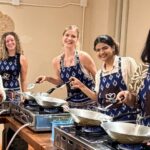
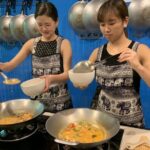
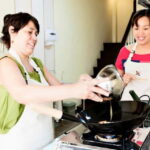
Also, you’ll cook two hours on the stove. So the experience isn’t rushed, and it’s paced well enough to keep you from feeling lost.
Instructor Pitch and the small-group vibe: how the class feels
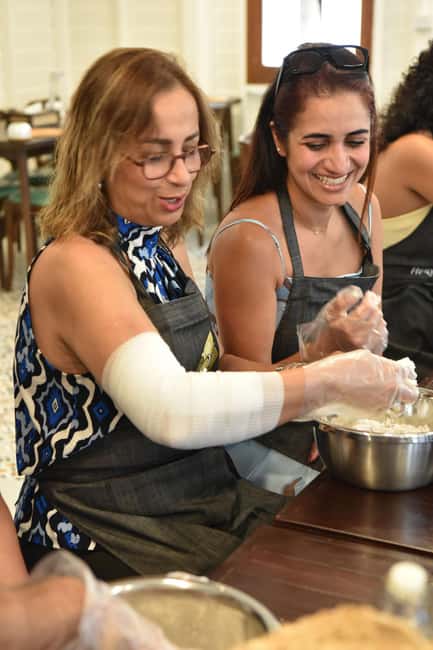
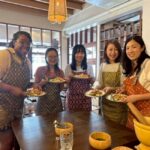
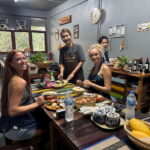
From what I’ve picked up about this school’s style, the class works best when you’re open to questions. The instructor Pitch teaches in English and Thai, and the tone is friendly—more like a cooking lesson among people who want to share than a formal demonstration.
A small group matters. It means you get closer attention when you’re learning curry paste technique or when your stir-fry is hitting the pan. It also makes it easier to ask: Should I crush more? Should I adjust thickness? How do I balance salt and sour? That’s how you leave with skills, not just recipes.
You’ll also receive standard recipes (free of charge). That’s important because it turns the class into something you can use again. Even if you forget tiny steps, you’ll have a written guide to refresh your memory.
Bottom line on teaching: if you enjoy learning by doing and you like asking small questions mid-cook, this class will feel comfortable fast.
What’s included for $45: the value is in the full meal + tools
At $45 per person for about 210 minutes, you’re paying for more than a seat in a chair. You’re getting:
- Four-course meal (including mango sticky rice)
- All ingredients and cooking equipment
- Personal locker
- Drinking water
- Market tour included every class
- Recipes you can take home
That combination is the real value. In Bangkok, you can definitely eat well for less money. But this experience is different because you’re paying to learn how the food is built—market ingredients, from-scratch coconut milk and curry paste, and hands-on cooking for a complete meal.
What’s not included is alcohol. Non-alcoholic drinks beyond the included water aren’t part of the package, but you can buy alcohol if you want.
Practical budgeting thought: if you plan to buy spices or ingredients anyway after your trip, the “learning” portion can still make sense even when you compare against meals outside.

Getting to the school: BTS and MRT options near Silom
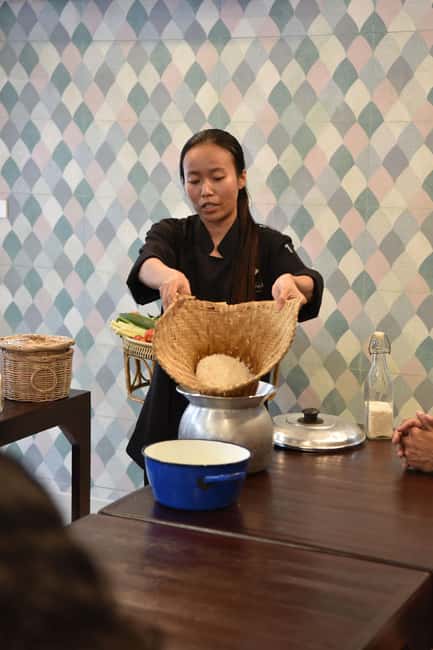
The meeting point is on 33, Thanon Suan Phlu, behind Suan Phlu Market, Thung Maha Mek, Sathon Bangkok 10120. If you’re map-reading, use that exact text so you land at the right spot.
Public transport is close. You can take:
- BTS Saint Louise, Exit 1
- BTS Chongnonsi, Exit 2
- BTS Sala Daeng, Exit 2
- MRT Lumphini, Exit 2
- MRT Silom, Exit 2
You can also use a motorcycle/taxi to get nearer to the school, which is helpful if it’s hot out or you’re carrying bags.
One tip: plan to arrive a little early. You’ll want time to settle in and meet your instructor before the market walk.
Dietary needs: how flexible is it?
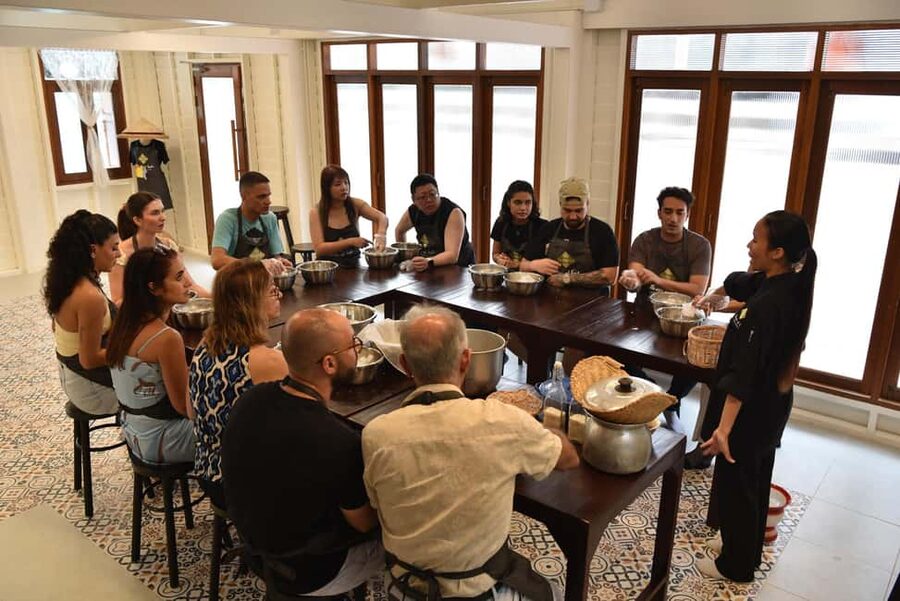
If you have dietary restrictions, this school is set up to handle them. They can provide suitable substitute ingredients for:
- vegetarian
- halal
- kosher
- allergy-sensitive guests
That matters because Thai food often depends on specific ingredients (shrimp paste, fish sauce, certain proteins). If you tell them your needs, you’re less likely to end up with a watered-down “safe version.”
Also, if you’re vegetarian or avoiding certain foods, check what your day’s menu includes. Some days have shrimp or chicken in multiple courses, and substitutions will be part of making the experience work for you.
Should you book this Thai cooking class in Bangkok?
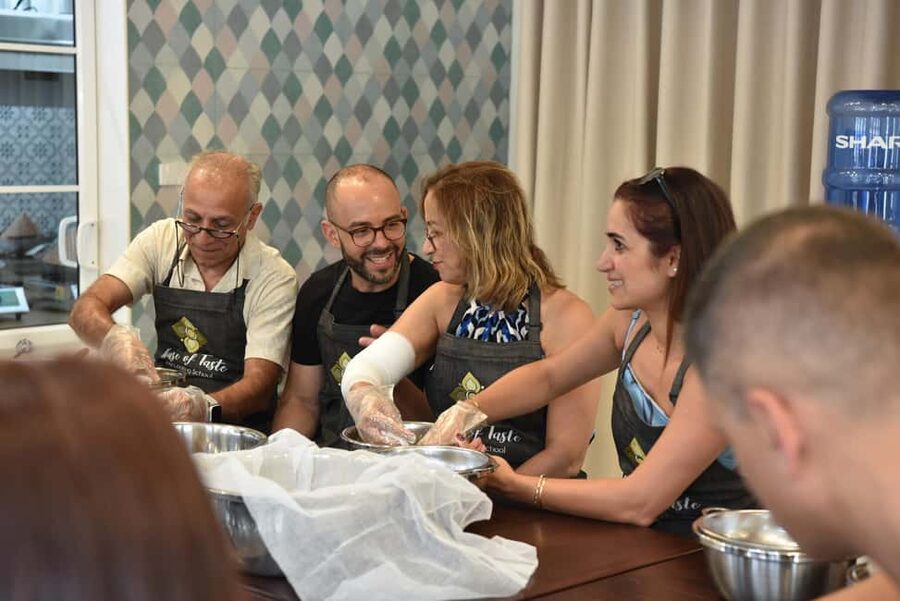
Yes—if you want real technique, not just tasting. I’d book it if you care about learning curry paste and coconut milk from scratch, and if you like the idea of starting with a market tour in Suan Phlu before you cook.
Skip it or think twice if you want a quiet, hands-off food experience. This class is practical. You’ll cook, you’ll taste, and you’ll get into the rhythm of Thai cooking. If spicy food overwhelms you, tell Pitch early and be ready to customize where possible.
Finally, if you’re a first-time Thai-food fan, this is a strong sampler: papaya salad, stir-fries, classic curries, and soups, plus mango sticky rice every day. It’s one of the easiest ways to leave Bangkok with dinner skills you can actually repeat.
FAQ
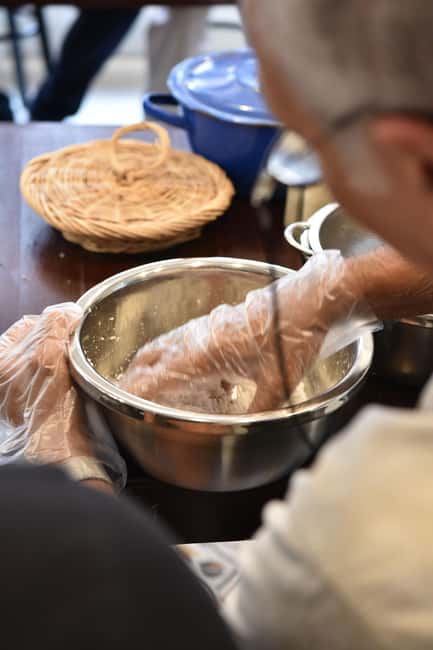
What time and how long is the cooking class?
The duration is 210 minutes. Starting times vary by availability.
Where do I meet for the tour?
Meet at 33, Thanon Suan Phlu, behind Suan Phlu Market, Thung Maha Mek, Sathon Bangkok 10120. Search that exact address on your map.
Is the Suan Phlu market tour included?
Yes. A market tour is included in every class (morning, afternoon, and evening).
What dishes will I cook?
You cook four authentic Thai dishes as a four-course meal, and the exact menu depends on the day. Mango sticky rice is included every day.
Can the class handle dietary restrictions or allergies?
Yes. Suitable substitute ingredients are available for vegetarian, halal, kosher, and allergy-sensitive guests.
Are alcohol drinks included?
No. Alcoholic drinks are not included, but they are available for purchase.