REVIEW · PUERTO RICO
Modern Puerto Rican Cooking Class in a Historic San Germán Home
Book on Viator →Operated by Traveling Spoon · Bookable on Viator
Cooking in a 1912 home feels like time travel. In San Germán, Tony’s hands-on Puerto Rican cooking class takes place in a 1912 Victorian Creole B&B, with art nouveau wall art that you see before you cook.
I especially like that Tony reaches out ahead of time to learn what you want on your menu, so the class feels personal. I also like the house tour: original stencil-style paintings from 1912 give you context for the flavors you’ll learn next.
One thing to consider is the logistics: there’s no hotel pickup, so you’ll want your own transport plan and enough time to get to San Germán.
In This Review
- Key highlights
- A 1912 Victorian Creole Home Starts the Meal Before the Stove
- Meet Chef Tony: A Johnson and Wales Trained Host Who Cooks to Eat
- The Kitchen Lesson: You Cook Three Seasonal Dishes With a Modern Twist
- How the Modern Twist Actually Shows Up on Your Plate
- The Historic Home Tour Isn’t a Side Quest
- After You Cook: Terrace Meal With Sangria or Beer
- Private, Hands-On, and Actually Personal
- Price and Value: What $99 Buys You in San Germán
- Practical Tips Before You Go
- Who This Is For (And Who Might Want Something Else)
- Should You Book Tony’s San Germán Cooking Class?
- FAQ
- How long is the Puerto Rican cooking class?
- Where does the class start?
- Is this a private class or shared with strangers?
- Do I need cooking experience?
- Is transportation included from hotels?
- What’s included with the class?
- Will I definitely cook rice fritters and guava sauce?
- Are vegetarian options available?
- What is the cancellation policy?
Key highlights
- Tony’s pre-class call to match your preferences, including flexibility around what you cook
- Historic home tour with original 1912 art nouveau paintings on wood
- Hands-on cooking of 3 seasonal dishes using ingredients from Tony’s garden and local markets
- Modern twists on traditional recipes with examples like rice fritters and guava sauce
- You eat what you make, plus extra dishes that may be prepared in advance
- Sangria or beer served with your meal during the hangout on the terrace or indoors
A 1912 Victorian Creole Home Starts the Meal Before the Stove
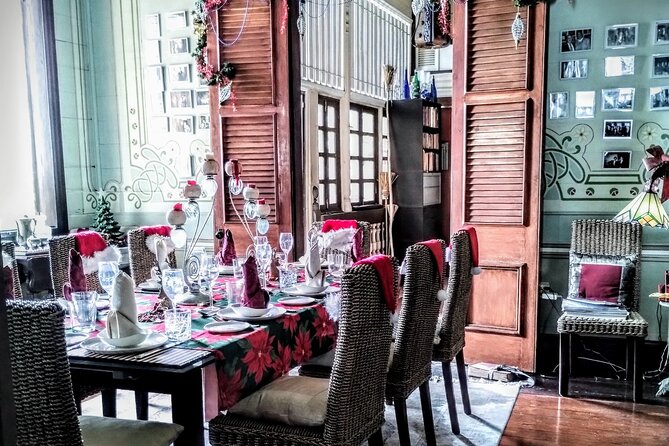
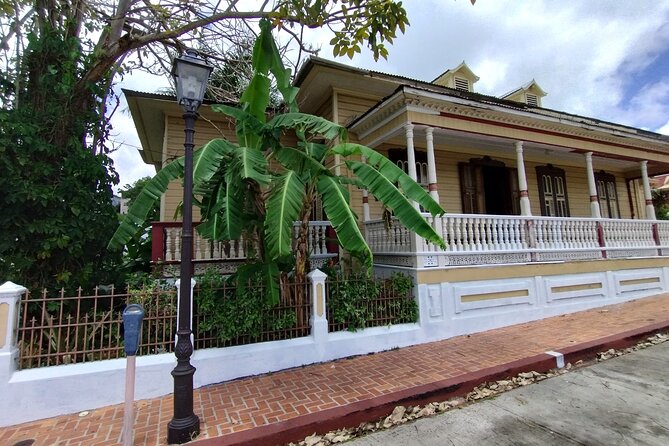
This experience isn’t only about food. It begins with the building itself. You meet at Tony’s place, A2Tiempos AyS Bed and Breakfast, at 70 C. Felix Arce Lugo in San Germán. From the moment you arrive, you’re in the middle of a real neighborhood home base, not a hotel lobby or a storefront classroom.
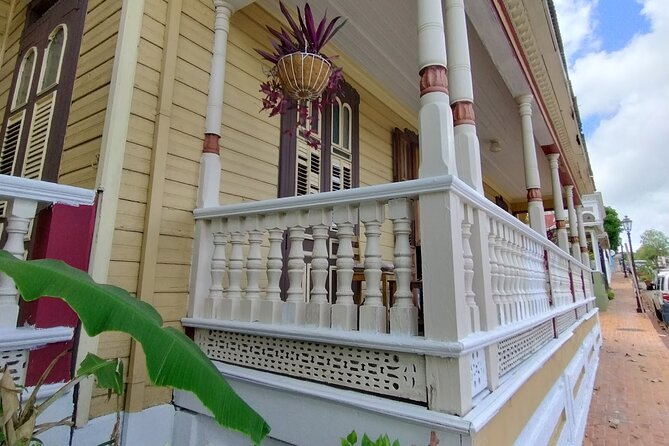
Tony’s B&B is an architectural gem built in 1912, and the interior details are a big part of why this works. The walls feature original art nouveau paintings from that era, made with handmade stencil designs on wood. It’s the kind of detail that makes you slow down and look closer, because you can practically feel the “craft” behind it. And that matters, because Puerto Rican cooking is craft too: technique, seasoning, and an understanding of what’s in season.
If you’re the type who likes to connect food to place, you’ll enjoy this start. You’re getting a quick cultural setting, which makes the kitchen lesson feel more grounded and less like a generic cooking show.
Meet Chef Tony: A Johnson and Wales Trained Host Who Cooks to Eat
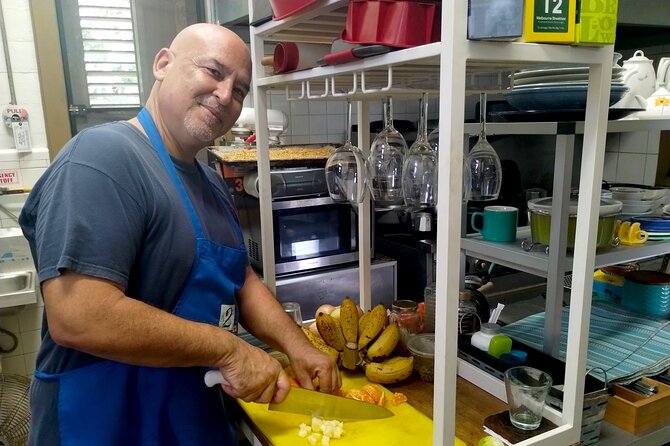
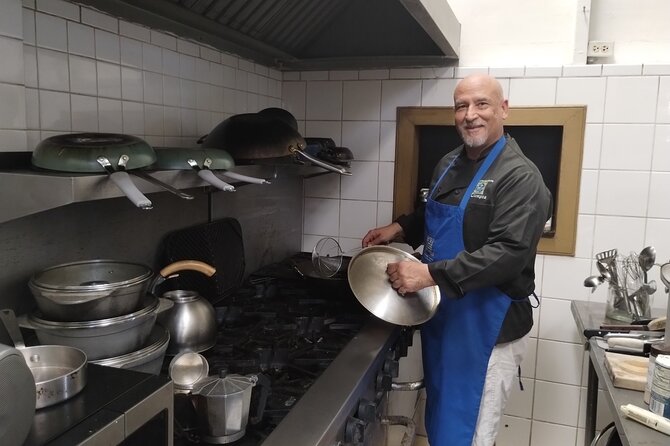
Tony’s the heart of the class. He’s a Johnson and Wales trained chef, born and raised in San Juan. After years in New York, he returned to Puerto Rico to share what he grew up eating and how he learned to cook more formally.
In practice, what I like about a host like this is how the lesson stays both relaxed and structured. The vibe is friendly and warm, but you’re still taught clearly enough to actually cook, not just watch.
One small detail you’ll feel right away: Tony takes menu preferences seriously. You get a call before your class to talk through what you like, and he’ll customize the menu based on those preferences and what’s fresh.
That’s a big deal with a cooking class. When the plan matches your tastes, the whole three-hour flow feels smoother. You’re not trying to get through a dish you don’t even want to eat later.
The Kitchen Lesson: You Cook Three Seasonal Dishes With a Modern Twist
After the house tour, you move into the kitchen for the main event: a hands-on cooking class designed for people with no cooking experience necessary. The teaching style is practical, with you working step by step so you end up with food you can be proud of.
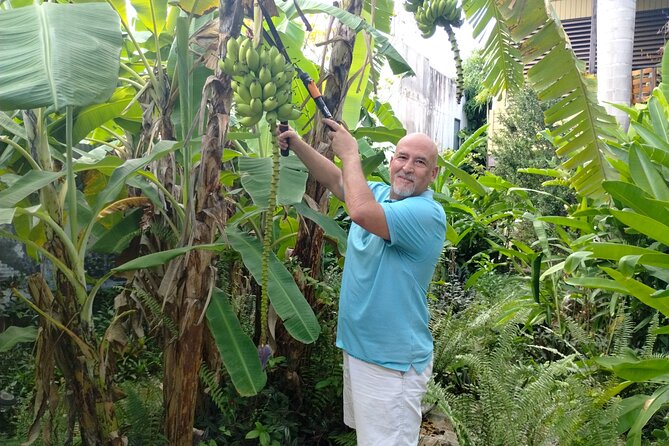
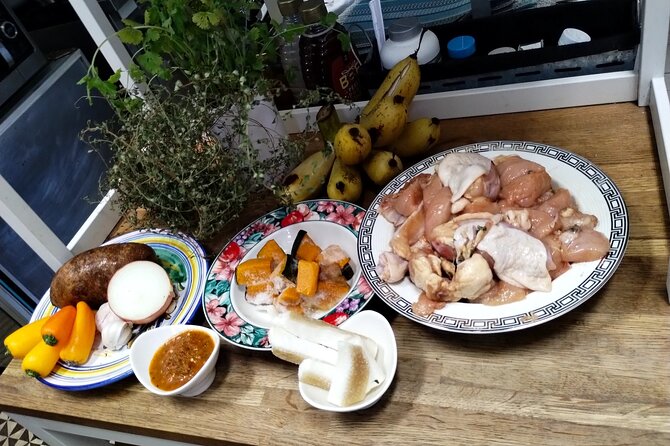
The class focuses on three seasonal Puerto Rican dishes, and the key word is seasonal. Tony uses locally sourced ingredients from his garden or local markets, and he builds the menu around what looks best that day.
A few dish examples you might cook:
- Rice fritters with a guava sauce (sweet, tangy, and made for dipping)
- A traditional stew or chayote escabeche (that pickled/seasoned tang that Puerto Rican kitchens do so well)
- A local squash marinated in citrus and olive oil (the listing notes it as packed with antioxidants)
Important: those are examples, not promises. Tony prefers to cook based on what’s fresh, and he’s happy to adjust. That means you should think of the menu as a direction, not a fixed script.
Also, vegetarian options are available. So if your group has dietary limits, you don’t need to assume you’ll be sidelined with a plate of something boring.
How the Modern Twist Actually Shows Up on Your Plate
The phrase modern twist can mean different things in food tours. Here, it feels more like technique and balance than “reinvention for the sake of it.”
Because you’re cooking with fresh ingredients and learning the “why” behind combinations, the dishes tend to land as Puerto Rican classics with a cleaner, more intentional finish. For example:
- A guava sauce isn’t new to Puerto Rican flavors, but turning it into a crisp, well-balanced partner to fritters is the kind of modern move that helps the dish taste current.
- Chayote escabeche brings traditional roots, but learning how to season and handle it in a way that tastes bright can make it feel more approachable.
- Citrus-and-olive-oil marinades show up across cuisines, but the specific local squash and the way it’s prepared reflect Puerto Rican kitchen logic.
The practical takeaway: you’re leaving with a method, not just a recipe. You can adapt it later when you’re shopping for produce back home.
The Historic Home Tour Isn’t a Side Quest
A lot of cooking experiences rush through the “setting.” This one starts with the house for a reason: Tony’s home is part of his story and part of the local identity you’re learning through food.
You’ll see:
- The B&B setting inside the historic structure
- The 1912 art nouveau paintings, described as original stencil work on wood
- The broader atmosphere of a home that’s been cared for and decorated with thought
This matters because it changes what you remember later. You’ll likely remember Tony’s kitchen lesson, yes. But you’ll also remember the house details, which makes the whole afternoon feel like a real cultural encounter rather than a one-time class.
It also gives you something useful to talk about at the end. When you’re eating, you’re not just chewing food. You’re connecting it to what you learned and what you saw.
After You Cook: Terrace Meal With Sangria or Beer
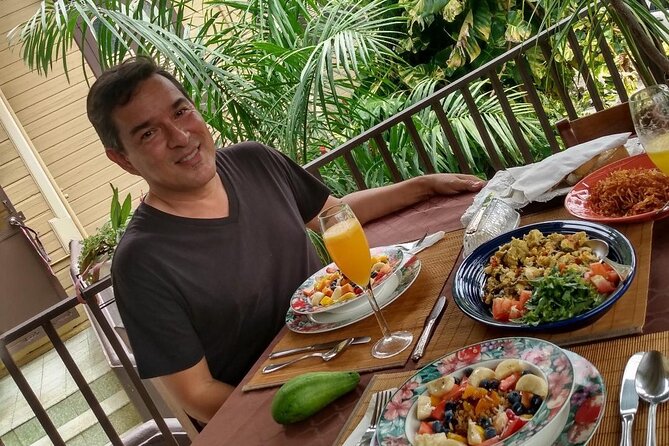
Once the cooking is done, it turns into a proper sit-down meal. You’ll eat your seasonal Puerto Rican dishes with a carafe of sangria or beer included.
Weather determines where you eat:
- If conditions are right, you’ll dine on the terrace with a view of the garden
- If not, you’ll eat inside in the main dining area
And you might get more than the three dishes you cooked. The meal can be supplemented with additional dishes Tony prepared in advance. So even though you’re the one learning key recipes, you won’t feel like your plate is limited to just the bare minimum.
This is also the part where the experience becomes more than food instruction. The conversation is a featured element. Tony shares family stories and local context, and the setting makes it easy to relax between bites.
If you’re celebrating something, this meal portion is also where a birthday or anniversary can feel special without being formal. The class doesn’t feel like a production. It feels like an invitation.
Private, Hands-On, and Actually Personal
This is set up as a private tour/activity, meaning only your group participates. That alone changes the energy. You can ask questions, slow down if something isn’t clicking, and get help when you need it.
You also get a class that’s built for real people. No one is expecting culinary expertise. The point is to teach you how to make traditional Puerto Rican dishes in a way you can repeat later.
It helps that Tony is described as very hospitable and engaged, including a focus on safety in the kitchen. When you’re cooking with sharp tools and hot pans, it’s comforting to feel like the host is paying attention to the group, not just the food.
Price and Value: What $99 Buys You in San Germán
At $99 per person for about three hours, you’re paying for several things at once:
- A private, chef-led cooking class
- A tour of a historic 1912 home
- Hands-on cooking with ingredients sourced locally (garden and markets)
- A sit-down meal that includes sangria or beer
- Flexibility around menu preferences and vegetarian needs
Some cooking classes cost less but feel like a workshop where you do a small amount and then eat. Here, you do more of the actual cooking and then stay for the full meal. That’s where the value lands.
Also, you’re in San Germán, a place that’s not always the focus of bigger Puerto Rico itineraries. So part of what you’re paying for is access: to a specific home, to a chef’s routine, and to a slice of island culture that’s hard to replicate on your own.
The only “cost” to factor in is time and transport. No pickup means you need to plan how you’ll get there. If your Puerto Rico base is far from San Germán, you’ll feel that drive in your schedule.
Practical Tips Before You Go
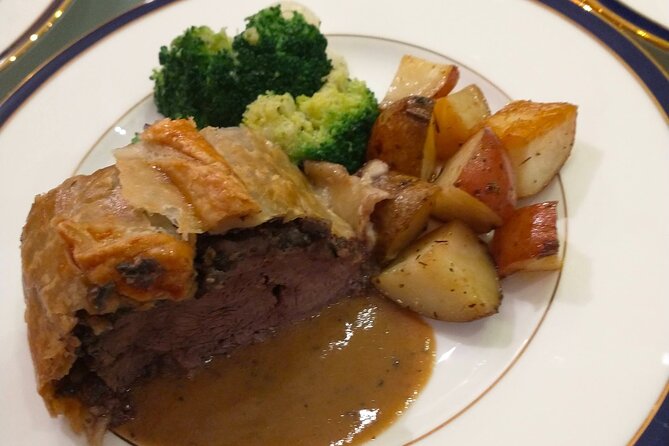
A few small choices make your experience better.
- Think through menu preferences in advance, even if you’re flexible. Tony asks ahead, so your preferences actually influence what you cook.
- Mention dietary needs early. Vegetarian options are available, but you’ll want that confirmed before you arrive.
- Wear comfortable shoes. You’ll move between the house tour space and the kitchen.
- Bring your appetite. You cook multiple dishes and then eat a full meal that may include extra dishes prepared in advance.
- Plan extra travel time if San Germán isn’t near where you’re staying. People can end up driving well over an hour one way depending on where they start.
Who This Is For (And Who Might Want Something Else)
This cooking class fits best if you want:
- A local chef experience over a cooking demo
- Hands-on instruction that works even if you’re not a confident cook
- Cultural context tied to the food and the historic home setting
- A relaxed meal afterward with drinks and conversation
It’s also a strong choice for couples and small groups, since private means you won’t be waiting for your turn while strangers do their own thing.
You might want a different style of tour if you prefer:
- A large-group party atmosphere
- A fixed menu with no changes based on what’s fresh
- A class that includes transportation from your hotel (this one does not)
Should You Book Tony’s San Germán Cooking Class?
If you like food that’s tied to real places, and you enjoy learning by doing, I think this is an easy yes. The combination of a historic 1912 home tour, hands-on cooking of three seasonal dishes, and a full meal with sangria or beer makes the three hours feel like you’re getting the whole package, not just the class.
Book it if you can handle the no-pickup reality and you’re willing to spend the afternoon in one neighborhood, fully focused on cooking and conversation. If that sounds like your kind of Puerto Rico day, you’ll leave with recipes, techniques, and a story you can keep telling long after the meal is gone.
FAQ
How long is the Puerto Rican cooking class?
The experience lasts about 3 hours.
Where does the class start?
You’ll meet at A2Tiempos AyS, Bed and Breakfast, 70 C. Felix Arce Lugo, San Germán, 00683, Puerto Rico.
Is this a private class or shared with strangers?
It’s private. Only your group participates.
Do I need cooking experience?
No. The class is designed so you don’t need prior cooking experience.
Is transportation included from hotels?
No. Hotel pickup and drop-off are not included.
What’s included with the class?
You get the private cooking class and meal in Tony’s home, plus a carafe of sangria or beer.
Will I definitely cook rice fritters and guava sauce?
The sample dishes are examples. Tony cooks based on what’s fresh and can customize the menu.
Are vegetarian options available?
Yes. Vegetarian options are available.
What is the cancellation policy?
Free cancellation is available up to 24 hours in advance of the experience’s start time for a full refund. Changes within 24 hours aren’t accepted. Service animals are allowed. Confirmation is received within 48 hours of booking, subject to availability.