REVIEW · TANGIER
Tangier Cooking Class With a Local Family
Book on Viator →Operated by Tangier Private Tours&Activeties _Day Trips · Bookable on Viator
Cooking with a Tangier family feels like an invitation.
This hands-on Tangier cooking class pairs a market run with the real reason you came: cooking a tagine (plus sides and Moroccan bread) step by step with locals. I like that it is not just recipes on paper. You see the ingredients, learn how they get used, and then you eat what you helped make.
One thing to consider: it is private, so you won’t get the social mix of a bigger group tour. If you want a lively crowd, this is quieter by design, but it also means you get more attention at the stove.
In This Review
- Key highlights you can plan around
- Why this Tangier cooking class starts at the market
- The Berber pharmacy stop: spices, argan, and practical know-how
- At home with Bilal and Sanae: learning tagine in a real kitchen
- Khobz, tagine, and how Moroccan bread fits the meal
- Couscous, salads, and building flavor the Moroccan way
- Tea, lunch, and the moment the table becomes the lesson
- Price and value: what $87.11 buys you in Tangier
- Getting to the meeting point and what the 4-hour rhythm feels like
- Who this cooking class suits best (and who might not love it)
- Tips for making this class stick after you leave Tangier
- Should you book this Tangier cooking class?
- FAQ
- How long is the Tangier cooking class?
- What does the class include?
- Do I get picked up?
- Will I cook more than one dish?
- Is Moroccan bread included?
- Is this a private tour?
- Where does the experience start and end?
- Can I cancel for a refund?
Key highlights you can plan around
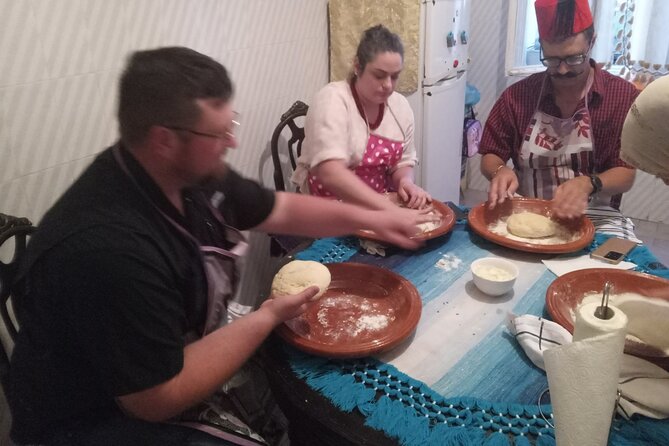
- Medina market shopping for the ingredients you’ll actually cook
- Berber pharmacy visit to learn how Moroccan spice blends are put together
- Cooking at the family home where you go from shopper to chef
- Tagine plus Moroccan bread (khobz), not just one dish
- Mint tea and lunch so the meal is part of the learning, not an add-on
- Private transportation and a dedicated guide for a smooth 4-hour flow
Why this Tangier cooking class starts at the market
The best Moroccan meals start before the pot hits the flame. This experience follows that logic by taking you through the daily market first, so you can choose the produce and pantry items that make the flavors work.
In practice, you’ll be guided through the food stalls with an eye for freshness and the kind of ingredients that show up repeatedly in Moroccan cooking. I like this approach because it teaches you what matters in the dish. You’re not just memorizing steps. You’re learning what to look for when you cook later.
A dedicated private guide helps you navigate and make sense of the market rhythm, and you’ll return with the ingredients you’ll use in class. That makes the cooking time feel purposeful instead of rushed.
You can also read our reviews of more tours and experiences in Tangier.

The Berber pharmacy stop: spices, argan, and practical know-how
After the market, you head to a traditional Berber pharmacy stop focused on spices and how they’re used. This is where the class gets more than hands-on cooking. You get a fast, practical education in Moroccan flavor building.
The experience includes learning about spice mixing, with special mention of argan oil and common spices used in Moroccan cuisine. Even if you don’t become a spice-expert overnight, you’ll leave with a clearer sense of what goes together and why.
A pharmacy stop like this also helps you understand something many visitors miss: Moroccan cooking is not only about one magic ingredient. It’s about balance, timing, and layering flavor. That mindset will help you adapt recipes at home.
At home with Bilal and Sanae: learning tagine in a real kitchen
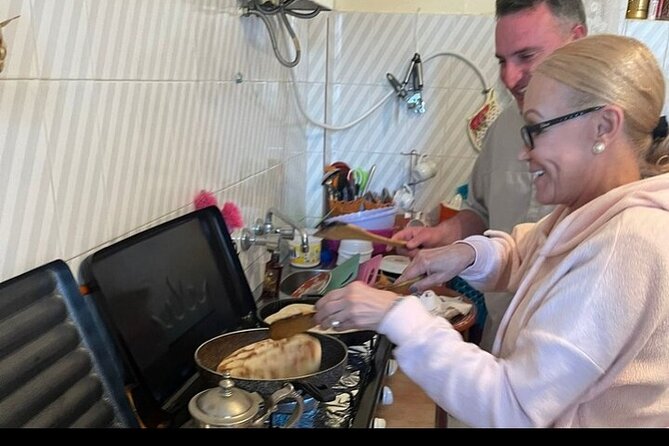
The class moves to the family home, where you switch roles. At this point, the experience shifts from sightseeing to doing. You’ll become the chef and prepare your own tagine with guidance from your host and the household team.
From what you’re likely to experience, the cooking is organized so you’re not just watching. You follow the chef’s steps, use the spices you picked and learned about, and cook your meal alongside the family.
If you meet Bilal (often the guide/host) and Sanae (frequently mentioned in the home-side teaching), you’ll feel how much pride goes into the food. It’s not rehearsed. It’s everyday Moroccan hospitality, the kind that makes the kitchen feel welcoming.
One small caution: cooking happens in real kitchen conditions, so expect spices, heat, and a bit of kitchen chaos. That’s part of the fun, but it’s good to know if you like ultra-controlled, studio-style cooking.
Khobz, tagine, and how Moroccan bread fits the meal
Moroccan meals often come with bread that’s part of the structure of the dish. Here, the experience specifically includes traditional Moroccan bread, khobz, which matters because it’s not a side you ignore.
Learning khobz in this setting helps you see why Moroccan eating is so communal and practical. Bread is for scooping sauce, balancing flavors, and making sure no ingredient goes to waste.
If you’re the type who usually leaves bread behind, this is a great moment to break that habit. Once you taste how the bread works with the tagine, you’ll understand why it shows up at the table so often.
Couscous, salads, and building flavor the Moroccan way
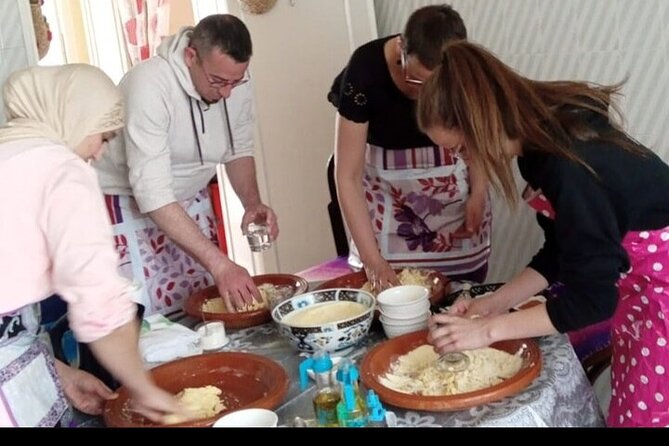
Tagine is the headline, but the experience is set up so you cook more than one element. You’ll also prepare couscous and a mint tea drink, plus you’ll enjoy the dishes you helped make.
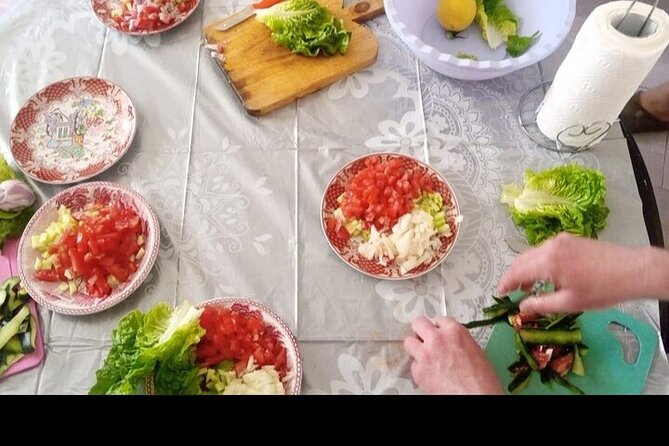
Your menu can include vegetable sides and simple salads, and some classes feature dishes like cucumber, onion, and tomato salads, as well as eggplant-style preparations. The exact mix can vary by day and what the household is cooking, but the structure stays the same: learn the flavor logic, then apply it to a full plate.
This is also where you start to understand the spice lessons from the Berber pharmacy. You’ll see how spices change aroma, color, and taste as the ingredients cook together, not just at the moment you sprinkle them in.
If you’re hoping to leave with a meal you can recreate at home, you’ll get more value from learning the process than from memorizing a single recipe. That’s what this class aims to teach.
Tea, lunch, and the moment the table becomes the lesson
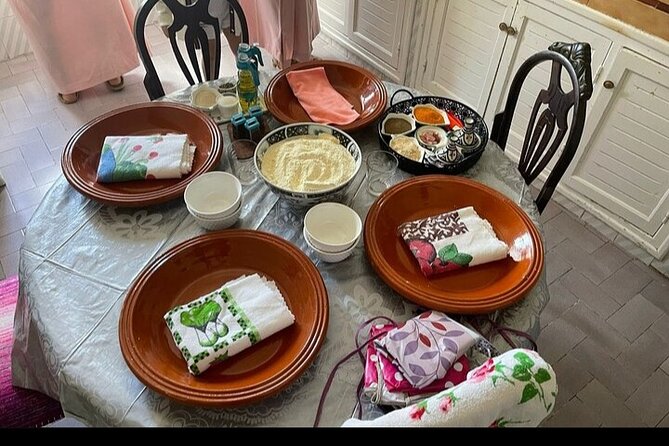
After the cooking, you sit down and enjoy everything you prepared. Lunch is included, along with coffee and/or tea, and soda/pop.
This part matters more than it sounds. The taste test is not only for enjoyment. It’s where the lessons click. When you eat the tagine and couscous, you can connect spice blending and cooking choices to real results.
And then there is mint tea. It’s included, and it’s not served as a random beverage. It’s part of Moroccan hospitality and a natural way to slow down after cooking.
I like that the experience is built to end with eating together. You leave with flavors you can name, and you also leave with a better sense of how a Moroccan home meal unfolds.
Price and value: what $87.11 buys you in Tangier
At $87.11 per person for about 4 hours, this can feel like a fair deal if you value more than a single dish. You’re paying for the whole package: market shopping, a Berber pharmacy stop, private guidance, lunch, drinks, and private transportation.
In Tangier, the value often comes from the time savings and context. You’re not trying to figure out medina logistics on your own, and you’re not guessing what ingredients to buy. Your guide and household team handle the flow so you can focus on learning and cooking.
You also get a more personal experience because it’s private. That can be a big plus if you travel with a partner, friend, or family member and want attention at the stove.
A final value note: tips are not included. Since this is a family-based hospitality setup, budgeting a little extra for appreciation can make sense if you feel you were genuinely looked after.
Getting to the meeting point and what the 4-hour rhythm feels like
The meeting point is Place 9 Avril 1947 (Pl. du 9 Avril 1947), Tangier. The activity ends back at the same meeting point, which keeps the timing simple and predictable.
With pickup offered and private transportation included, you’re not spending the best part of your day figuring out directions. For a short, focused experience, that’s a genuine advantage.
Because confirmation is received at booking and the ticket is mobile, you won’t be scrambling for paperwork. You can also expect the tour to be near public transportation, which helps as a backup plan if you’re coordinating your own timing.
Who this cooking class suits best (and who might not love it)
This class is recommended for everyone, and the structure fits many types of travelers. It’s especially good if you want:
- A hands-on Moroccan cooking experience beyond restaurant meals
- A market-to-kitchen flow that teaches ingredient choices
- A private setup with a real local family environment
It may be less ideal if you want a large group party vibe or you prefer learning via tasting only. This is about cooking, spices, and being involved, not just watching someone else.
If you’re sensitive to strong aromas from spices, plan for that. Moroccan cooking smells intense in the best way, but it can be overpowering for some people at first.
Tips for making this class stick after you leave Tangier
If you want to reproduce flavors at home, bring two things back with you: ingredient logic and spice confidence.
When you’re shopping (and later cooking), pay attention to the texture and form of ingredients. Moroccan food often starts with how things are prepared—chopped, toasted, layered—not just which spices appear in the final dish.
For your spice blending takeaway, focus on balance rather than copying measurements. The pharmacy stop is designed to explain how blends get built. If you understand the idea behind the mix, you can adapt it to your pantry.
Finally, eat your meal slowly after cooking, even if you’re tempted to rush. The mint tea and lunch are part of the learning arc, and the flavors make more sense when you give them a moment.
Should you book this Tangier cooking class?
Book it if you want a real Moroccan home meal experience that starts in the market and ends with you eating what you cooked. The best part is the chain reaction: market ingredients lead to spice learning, which leads to a tagine and full plate you can actually taste and remember.
Skip it if you’re only looking for a quick, casual activity or you want a big group atmosphere. Since it’s private, it’s more intimate and more hands-on, with less social crowd energy.
If you’re open to cooking, interested in spices, and want Tangier beyond the sights, this is one of the most practical ways to spend a few hours in town and leave with real food knowledge, not just photos.
FAQ
How long is the Tangier cooking class?
It lasts about 4 hours.
What does the class include?
It includes private transportation, coffee and/or tea, lunch, soda/pop, a private guide, a Berber pharmacy visit, all fees and taxes, and you’ll cook and eat your meal.
Do I get picked up?
Yes, pickup is offered, and the tour includes private transportation.
Will I cook more than one dish?
Yes. The experience includes preparing your own tagine and couscous, plus traditional mint tea.
Is Moroccan bread included?
Yes. Traditional Moroccan bread (khobz) is included.
Is this a private tour?
Yes. It’s private, so only your group participates.
Where does the experience start and end?
It starts at Place 9 Avril 1947 in Tangier and ends back at the same meeting point.
Can I cancel for a refund?
Yes. Free cancellation is available up to 24 hours in advance for a full refund. If you cancel within 24 hours, there is no refund.