REVIEW · BANGKOK
Bangkok: Cooking Class with Market Visit & Tuk Tuk Ride
Book on GetYourGuide →Operated by Sabieng Cooking · Bookable on GetYourGuide
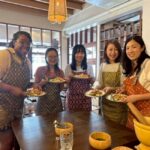
Bangkok can feel like a food maze, but this tour gives you a map. You start with a market visit and end with a tuk-tuk ride, then cook four Thai favorites at Sabieng Thai Cooking in Sukhumvit 22.
Two things I really like. First, the teaching team includes a MasterChef Thailand Season 3 finalist, so you’re not just copying recipes—you’re learning technique and why ingredients matter. Second, the group stays small (about 8–12), which makes it easier to get hands-on help without feeling lost.
One thing to consider: some ingredients are likely prepped ahead, so even if you’re cooking four dishes, your hands-on time can feel lighter than a do-everything-from-scratch workshop. If you want a lot of chopping and full-on station work for the whole class, go in with that expectation.
In This Review
- Key things I’d center in my decision
- Getting There at Queen Sirikit MRT: Start Here or Miss the Market
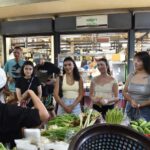
- Bangkok’s Fresh Market Stop: How to Choose Ingredients Like a Local
- Tuk-Tuk Ride Back: Fun Factor Plus Real Bangkok Traffic
- Cooking the Four Dishes: What You’ll Actually Learn
- Spice Level, Station Setup, and Timing That Shapes the Experience
- Dietary Options and Multilingual Help: Built for Real Differences
- Price and Value: What $48 Buys in Bangkok Cooking Time
- Who Should Book This Thai Cooking Class (and Who Might Skip It)
- Should You Book Sabieng Thai Cooking With Market and Tuk-Tuk?
- FAQ
- How long is the Bangkok cooking class with market visit and tuk-tuk?
- Where do I meet for the class?
- What dishes will I cook?
- Does the class offer dietary options?
- What languages are used during instruction?
- What happens if I’m late?
- FAQ
- Can I cancel for a refund?
Key things I’d center in my decision
- Largest market visit included in both morning and afternoon sessions, so you’ll see how locals shop.
- MasterChef Thailand Season 3 finalist on the teaching team, plus certified, experienced chefs.
- Curry paste from scratch, which is the kind of skill you can actually repeat at home.
- Small-group size (8–12), with plenty of attention at the cooking stations.
- Dietary flexibility for regular, food allergy, vegetarian, halal, and kosher (with details to request).
- English-led instruction, supported by Chinese, Thai, and Korean translation.
Getting There at Queen Sirikit MRT: Start Here or Miss the Market
Your day hinges on the meetup point. You meet at the MRT Queen Sirikit National Convention Centre station, Exit 1, at street level outside the underground entrance. Important detail: this isn’t the convention center building itself—just the station exit.
If you’re more than 10 minutes late, don’t try to catch up mid-market. The plan is blunt: you should go straight to the Sabieng Thai Cooking School. And if you’re an hour late, you’ll be marked as a no-show and it’s neither refundable nor reschedulable. That’s a clear “be early, not brave” rule.
The good news is that once you’re there on time, you get right into the market portion and the whole cooking flow makes sense. No waiting around while hungry people start negotiating for extra snacks.
You can also read our reviews of more tours and experiences in Bangkok.
Bangkok’s Fresh Market Stop: How to Choose Ingredients Like a Local
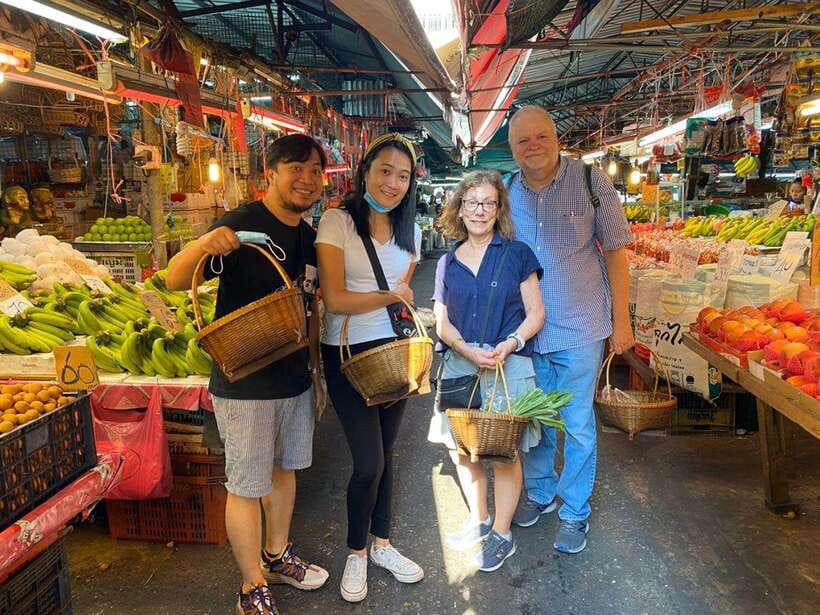
The market visit is the heart of the experience, because it turns cooking into ingredient knowledge. You’ll explore the largest fresh market included with both the morning and afternoon classes, and you’ll learn what to look for before you ever turn on a stove.
What you’ll gain is less about memorizing names and more about recognizing quality. You’ll see the building blocks of Thai flavors: aromatics, herbs, sauces, and produce that show up again later in your dishes. You’re also doing this with a guided explanation, not just wandering with a camera.
One practical tip: come hungry. The class ends with you sitting down to the four-dish meal, and you’ll appreciate it more if you arrive with an empty stomach. (If you snack heavily first, you’ll still learn, but the payoff of eating together feels smaller.)
There’s also a key consideration from real-world feedback: some market stops can be more about viewing and explanations than deep conversations with vendors. Still, if your goal is to understand ingredients and get oriented to Thai pantry items, the structure works well.
Tuk-Tuk Ride Back: Fun Factor Plus Real Bangkok Traffic
After the market, you hop into a traditional tuk-tuk ride back to the modern cooking school in the Sukhumvit 22 area.
Is it a highlight? It’s fun, yes. It also functions as a transition: you go from street-level food shopping to controlled cooking stations with tools and ingredients laid out. That matters because Bangkok can be overwhelming, and a quick, guided change of setting helps you stay focused.
The trade-off is simple: the ride can be short and slow if traffic builds. One review specifically pointed out that the ride was only around a couple of kilometers and felt less exciting during congestion. So think of this tuk-tuk as a nice add-on and cultural flavor, not a scenic drive where you’ll see Bangkok sweep past the windows.
If you’re expecting a long sightseeing moment, you might feel slightly underwhelmed. If you want a smooth handoff from market to kitchen, it does the job.
Cooking the Four Dishes: What You’ll Actually Learn
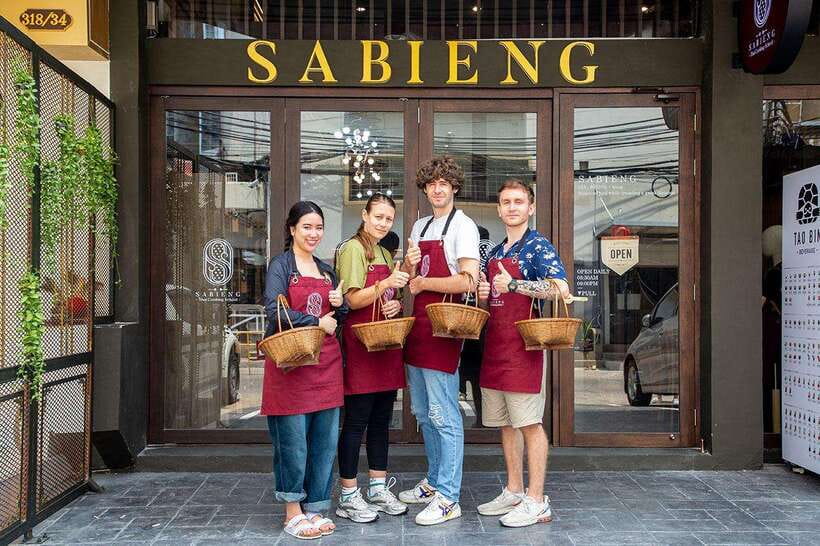
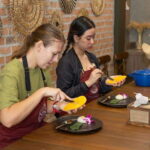
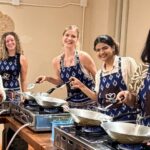
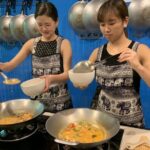
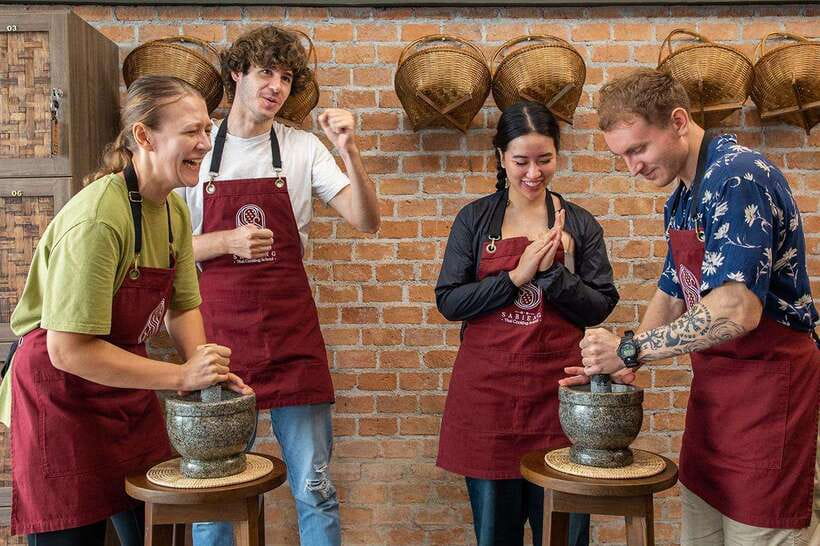
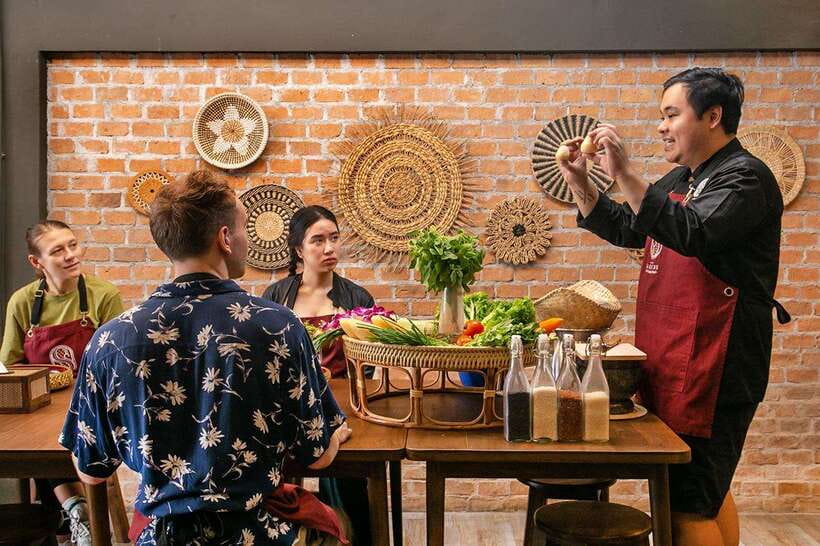
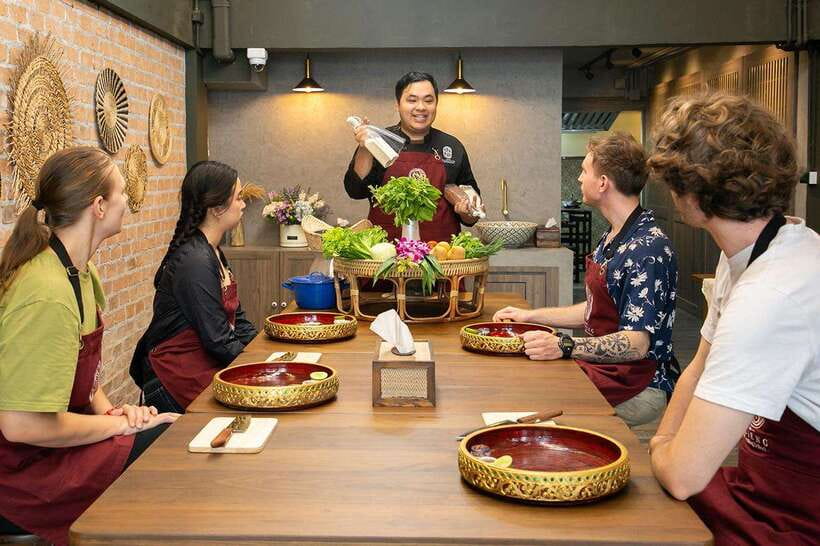
Back in the kitchen, the class becomes a real skill session. The format is hands-on instruction at professional-grade cooking stations, in an air-conditioned facility designed for comfort and hygiene. And you’re not just cooking randomly—you’re following a plan with guidance throughout.
The big technique win is curry paste from scratch. That’s the kind of thing that makes Thai food taste like Thai food at home, because paste quality drives flavor. You learn how ingredients come together and how to think about the process, not just what to stir.
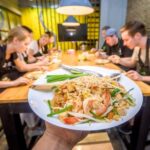
You’ll cook four classic Thai dishes under the guidance of the instructors (including that MasterChef finalist). You’ll also hear about cultural significance behind what you’re making, which helps your dishes feel like more than “a meal from a class.”
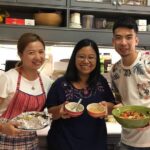
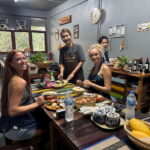
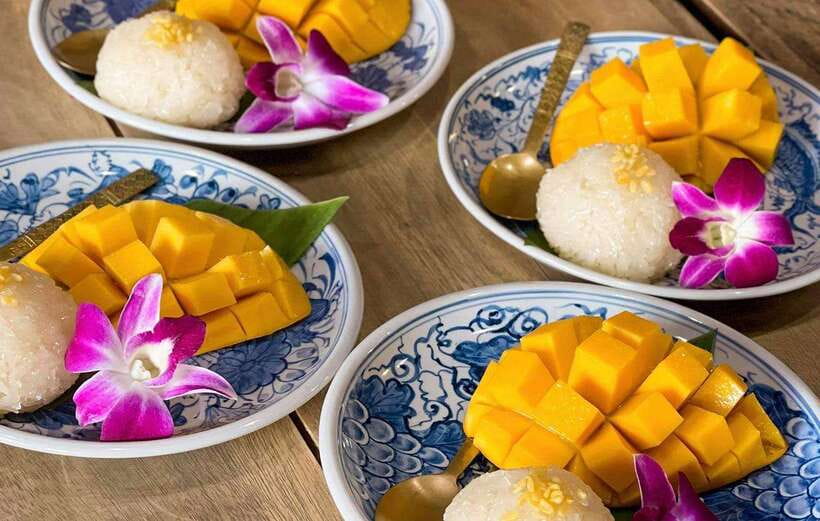
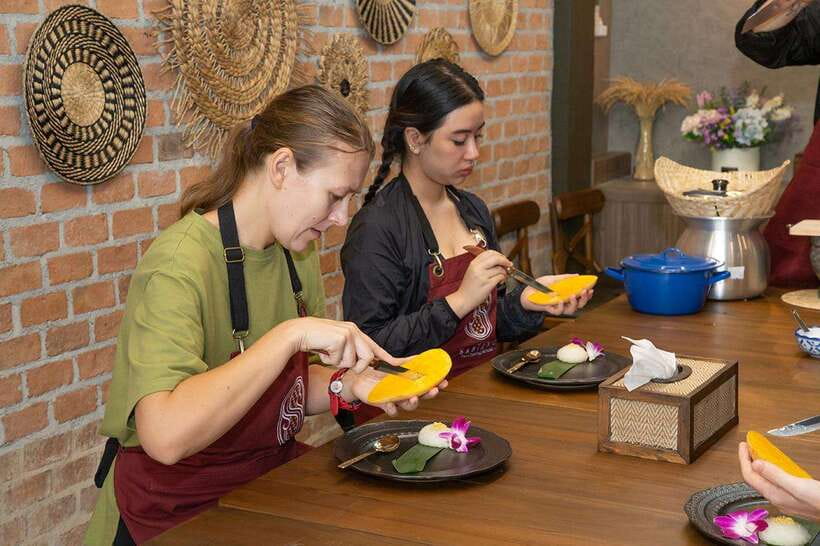
When it’s time to eat, it’s not a tasting party with tiny bites. One detailed review described the meal as an appetizer, two main dishes, and a dessert. You’ll sit down with your group and enjoy what you made. That shared lunch is part of the value: you get practice, then payoff.
A balanced note from a review: some prep is done ahead of time, so you may do cooking steps like wok work and cutting herbs/leaves rather than completely building every element from zero. If your dream is a full production workshop, you’ll want to adjust expectations. If your goal is to learn core techniques you can repeat, you’ll likely feel satisfied.
Spice Level, Station Setup, and Timing That Shapes the Experience
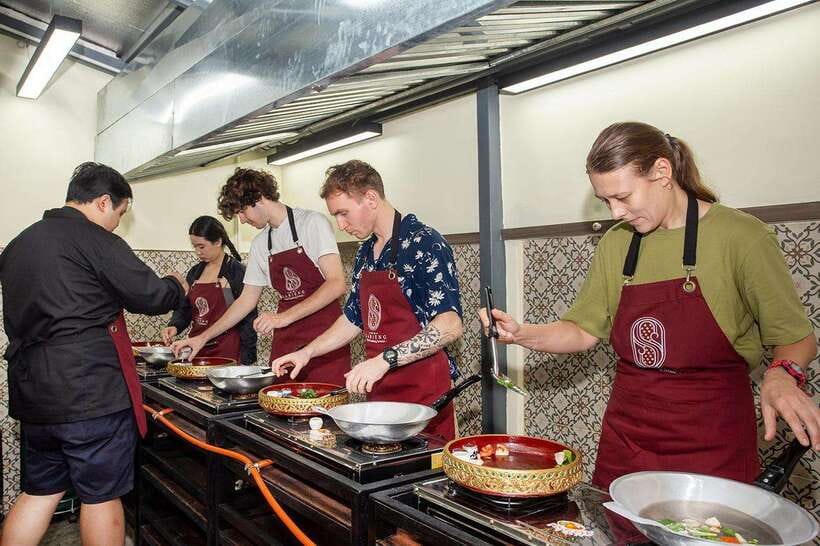
Thai cooking is rarely one-size-fits-all, and this class lets you pick your comfort zone. You’ll choose the level of spice, so you can go mild or lean into heat.
That choice matters because spice affects more than taste—it affects pacing and texture. If you keep it gentler, you can focus on the method without feeling rushed by your own chili tolerance.
Now, about the station setup. The school uses a modern, air-conditioned kitchen with professional stations, which is a big plus in Bangkok humidity. But at least one review wished for more workspace and more room to cook in a way that felt more like a full class-on-a-stage workshop. Translation: the setup is functional and clean, but it’s still a shared group environment, so you may not have a huge personal cooking footprint.
Timing is also part of the feel. The class runs 210 minutes (about 3.5 hours). Since that includes market time and transportation, the cooking window isn’t the entire afternoon. That’s why some people end up doing fewer “prep-heavy” tasks than they hoped. Still, for most visitors, the mix is the point: you learn ingredients first, then you cook with confidence.



Dietary Options and Multilingual Help: Built for Real Differences
This is one of the most practical “value” features: dietary flexibility. The class supports regular, food allergy, vegetarian, halal, and kosher options.
If you have food allergies, you need to notify the team 24 hours in advance. That isn’t just polite—it’s how they can plan ingredient choices properly. For kosher needs, the details are specific: kosher ingredients are available upon request and may have extra cost, and new kosher equipment may require an extra charge (and you keep that equipment).
Language support is also genuinely helpful. Instruction is primarily English, with translation support in Chinese, Thai, and Korean. That reduces the “I’m watching but not understanding” problem, especially for cooking techniques where timing and wording matter.
If you’re nervous about language barriers, this kind of translation setup helps you stay engaged. And if you’re cooking with dietary limits, having structured options makes this class feel less like a compromise and more like a plan.
Price and Value: What $48 Buys in Bangkok Cooking Time

At $48 per person for about 3.5 hours, you’re paying for three things at once: market education, transportation, and a small-group cooking lesson.
Here’s how I’d judge the value. A cooking class alone can cost similar money, but many don’t include a big market visit plus tuk-tuk transportation. Including curry paste from scratch and four dishes also makes it feel like you’re getting more than a demo. Plus, you receive digital recipes and a souvenir, which is a small thing but helps you remember what you learned.
The group size (8–12, limited to 10) also matters. In a crowded class, you’d spend your time waiting for turns. In a smaller group, you’re more likely to get the quick correction you need when you’re making paste or adjusting flavor.
Now the “be fair” part. One review suggested that the hands-on effort felt lighter than expected because many ingredients were prepared already, and that some parts like the tuk-tuk ride didn’t add much. That complaint is most relevant if your personal priority is heavy skill-building through constant cutting and stirring. If your priority is guided technique plus a meal that you can repeat at home, the price still looks reasonable.
Who Should Book This Thai Cooking Class (and Who Might Skip It)
This tour fits best if you want a structured way to learn Thai cooking without scrambling around Bangkok on your own.
You’ll likely enjoy it if:
- you like the idea of a market visit with explanations before cooking
- you want to cook four dishes and eat what you make
- you’re a beginner who wants clear steps, not a solo kitchen experiment
- you care about having dietary options handled in advance
You might want to think twice if:
- you’re expecting a long, sightseeing-style tuk-tuk ride
- you want intense nonstop prep work for the entire class
- you’re dealing with mobility limitations, since the experience is not suitable for people with mobility impairments or wheelchair users
- you have health constraints where you’d struggle with being out and about (the info notes it’s not suitable for people with a cold, altitude sickness, or babies under 1 year)
Also remember the practical “show up on time” rule. If you miss the market segment due to late arrival, you’ll be moved to the school-only option—and being an hour late is treated as a no-show.
Should You Book Sabieng Thai Cooking With Market and Tuk-Tuk?
I’d book it if you want a mix of Bangkok food culture and real kitchen technique. The best reason is curry paste from scratch plus four dishes, taught in a small group with English-led instruction and translation support. Add a guided market visit and you get both ingredient education and a finished meal, not just cooking theater.
If your budget allows and you’re open to a format where some prep may be handled for you, this is a strong choice. The class gives you enough structure to replicate results later, which is what matters if you’re planning Thai cooking at home.
If you only care about maximum hands-on time and zero guided steps, you might feel the experience is more efficient than expansive. But for most visitors, that efficiency is a feature, not a bug.
FAQ
How long is the Bangkok cooking class with market visit and tuk-tuk?
The experience lasts 210 minutes, or about 3.5 hours, including the market visit and the transportation between the market and the cooking school.
Where do I meet for the class?
Meet at the MRT station named Queen Sirikit National Convention Centre at Exit 1 (outside the underground exit, street level). It’s the station exit, not the convention center building.
What dishes will I cook?
You’ll learn to cook four classic Thai dishes, including making curry paste from scratch.
Does the class offer dietary options?
Yes. Options include regular, food allergy, vegetarian, halal, and kosher. Food allergy details need to be provided at least 24 hours in advance.
What languages are used during instruction?
The class is primarily taught in English, with translation available in Chinese, Thai, and Korean.
What happens if I’m late?
If you arrive more than 10 minutes late, you should go directly to Sabieng Thai Cooking School since you’ll miss the market visit. If you’re an hour late, it’s marked as a no-show and is neither refundable nor reschedulable.
FAQ
Can I cancel for a refund?
Yes. Free cancellation is available up to 24 hours in advance for a full refund.
You Might Also Enjoy
 Rome: Pizza and Tiramisu Cooking Class in Piazza Navona
 Xiao Long Bao, Chicken vermicelli with mushroom and sesame oil, Tofu strips salad, Bubble milk tea. Taiwan Traditional Delicacies Experience-A (Taipei Cooking Class)
 Private Greek Cooking Class in Kos with Lunch
 Deep Dish Cooking Class at Pizzeria Uno in Chicago