REVIEW · BANGKOK
Tingly Thai Cooking Class with Morning Market Tour
Book on Viator →Operated by Tingly Thai Cooking School · Bookable on Viator
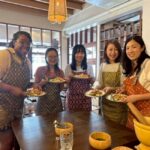
Thai cooking starts with a market walk. This small-group morning class pairs a visit to Wat Kheak Fresh Market with hands-on cooking at Tingly Thai Cooking School, then finishes with the lunch you make. I love how the instructor points out ingredients you’d usually miss, like the specific herbs, spices, fruits, and vegetables that show up in everyday Thai cooking. I also love the up-to-12 guest size, so you can actually cook, not just stand around watching.
One thing to plan for: you will eat a lot. This is not a light snack class—when you’re making four dishes and then eating them right after, skipping breakfast helps a ton.
In This Review
- Key things I’d circle first
- First steps: Tingly Thai Cooking School at 8:30 a.m.
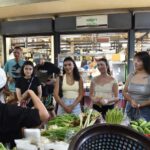
- Wat Kheak Fresh Market: learning ingredients the Thai way
- The cooking class from 9:00 to 11:30: curry paste and real prep work
- What you make: four Thai dishes you actually finish
- Lunch included: why coming hungry pays off
- Spice control and dietary options that aren’t just checkbox talk
- Price and value: what $42.10 gets you in real Bangkok terms
- Timing and group size: why this feels orderly
- Who should book the morning session (and who might not)
- My take: should you book Tingly Thai?
- FAQ
- What time does the activity start?
- How long is the cooking class and market tour?
- Where is the meeting point?
- Do I visit a market before cooking?
- What will I cook during the class?
- Is lunch included?
- Are vegetarian options available?
- Is the instructor English-speaking?
- Is transportation included?
- What happens if the activity is canceled due to weather?
Key things I’d circle first
- Wat Kheak Fresh Market shopping + ingredient lessons with real talk on herbs, spices, and produce
- Hands-on curry paste and cooking techniques taught step-by-step
- You cook and then eat four Thai dishes, lunch included
- Small-group setting (max 12) that keeps things active and organized
- Vegetarian options available, including adjustments for different needs
- English-speaking instruction plus a recipe book to take home
First steps: Tingly Thai Cooking School at 8:30 a.m.
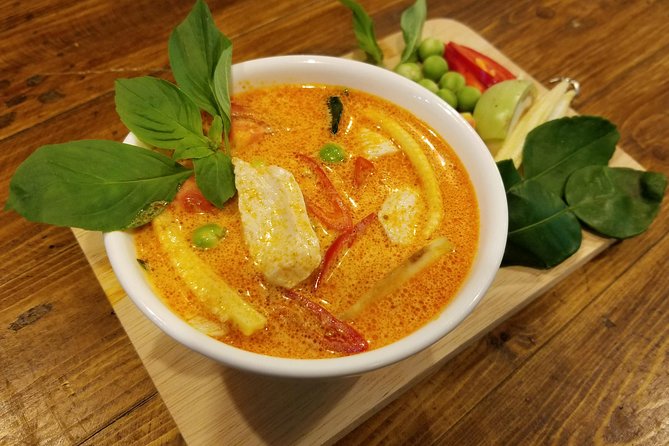
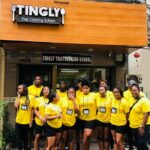
The day begins at Tingly Thai Cooking School around 8:30 a.m. so you’re in motion early, before the city fully warms up. The meeting point is on Suriyawong 17/1 Soi Prachum in Bang Rak, and it’s noted as near public transportation, which matters in Bangkok where traffic can slow everything down.
This part is simple: get checked in, settle your gear, and get ready for the market walk. One practical benefit is that it uses a mobile ticket, so you’re not hunting for paper when you’re already on a morning schedule.
If you’re the kind of person who likes structure (and who doesn’t, on vacation), you’ll probably appreciate the way the class is timed. Multiple instructors are mentioned in the experiences I’ve seen associated with this school, including hosts like Cho, Nam, Song, and a guide Nui who helps keep the day moving. Whoever teaches your group, the pattern stays consistent: you meet, you go shopping, you cook, you eat.
You can also read our reviews of more tours and experiences in Bangkok.
Wat Kheak Fresh Market: learning ingredients the Thai way
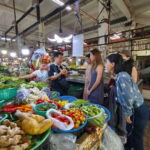
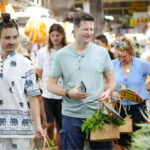
The market portion starts at about 8:35 a.m., right after meeting. The focus here isn’t just browsing. You’re shown how to recognize and choose ingredients that are the foundation of Thai flavors—traditional fruits, herbs, vegetables, and spices used for authentic Thai food.
Why this matters: Thai cooking can feel mysterious if you only know the end result (pad thai, curry, soup). The market walk gives you the “what is it?” and “what does it do?” part. You learn how these ingredients show up in everyday cooking, not just in tourist recipes.
In many Thai kitchens, flavor comes from balance: aromatic herbs, sour or tangy elements, heat, and a fragrant backbone from spices. A market tour helps you start seeing those pieces separately. Then later, when the class talks about prep steps—chopping, grinding, and combining—you’ll have mental labels for what you’re handling.
Also, you’re shopping as part of the process. That’s one of the reasons the cooking session feels grounded: you’re working with ingredients you were introduced to earlier that morning.
The cooking class from 9:00 to 11:30: curry paste and real prep work
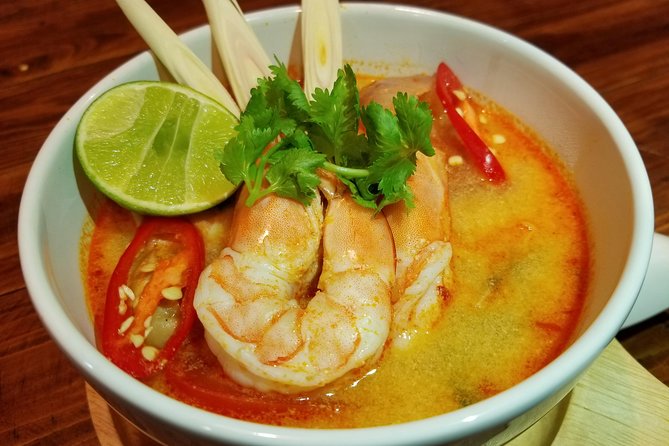
Around 9:00 a.m., you head back to Tingly Thai Cooking School to start the main event. The cooking session runs until about 11:30 a.m., and the pacing is built around doing the work yourself.
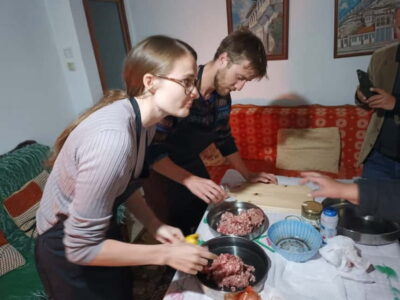
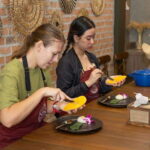
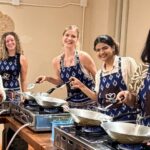
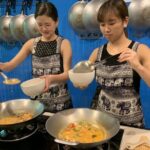
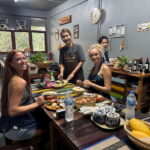
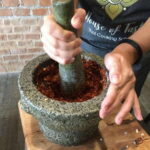
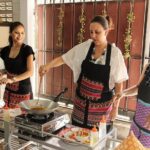
The class format is very “process-driven.” You’ll practice traditional Thai food prep techniques, and you’ll do key tasks like making curry paste. The emphasis is on steps you can replicate later, not just a finished dish you can copy once. Then you cook and assemble all dishes yourself—which is exactly what makes cooking classes worth the time.
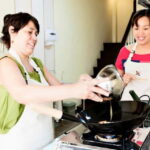
One timing detail I really like: the day is segmented so you prepare, cook, and eat in cycles. That means you’re not stuck staring at a finished pot for long stretches while someone else does everything. Staff assistance is part of how the schedule stays smooth, but you’re still doing the hands-on work.
Instructors in this school are repeatedly described as upbeat and interactive. Names that come up include Cho and Nam, and you’ll often see the same theme: clear directions, friendly energy, and spice flexibility. The class isn’t trying to force one flavor profile on everyone.
What you make: four Thai dishes you actually finish
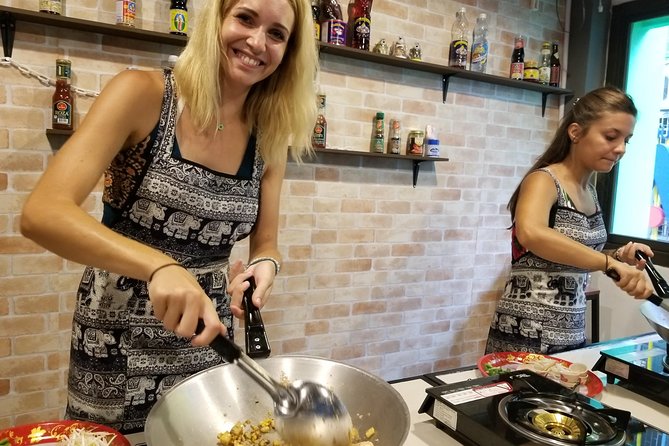
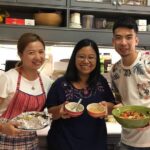
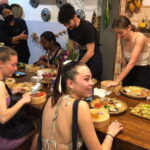
The experience includes cooking and eating four Thai dishes, plus lunch. The itinerary notes you’ll enjoy your food, and the format described in the class timing supports why: you don’t just cook and leave. You cook, then you sit down and eat what you made.
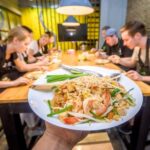
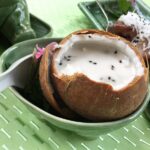
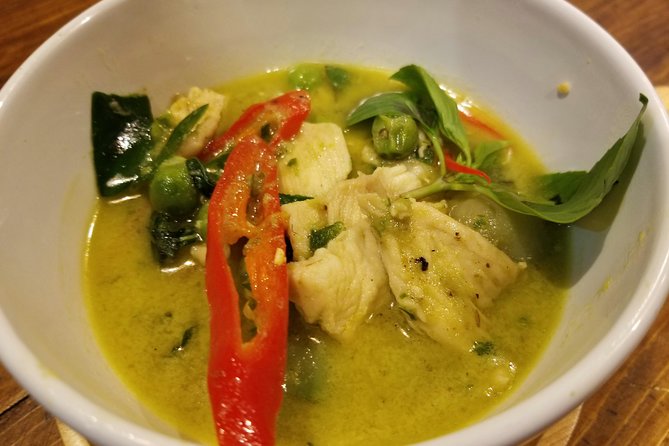
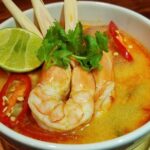
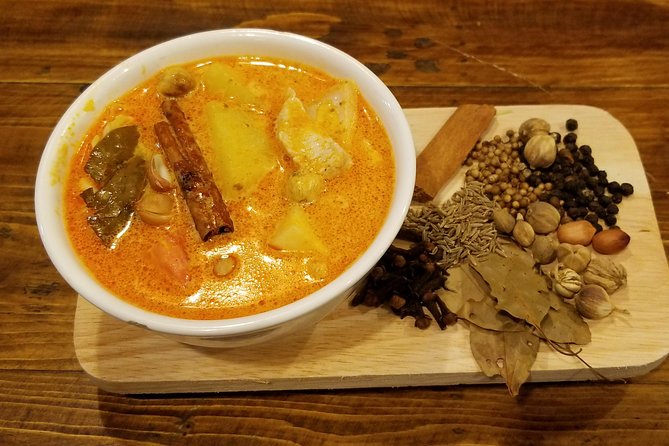
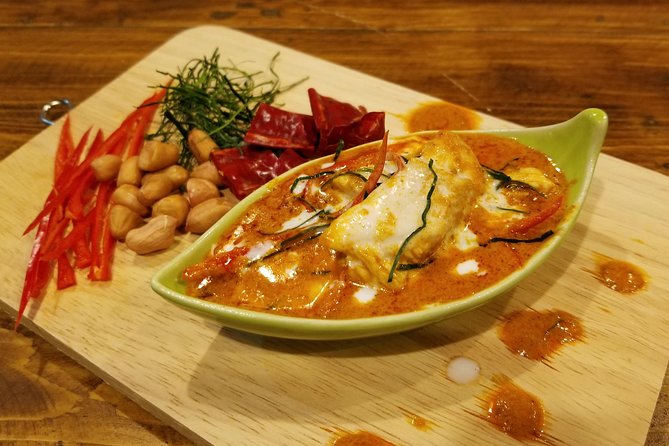
From the dishes mentioned in this set of experiences, you may see classics such as tom yum soup, pad Thai, red curry, and mango sticky rice. Even if the exact combination varies slightly by session, the set-up stays the same: you learn multiple dishes in one morning and eat them without waiting.
Here’s the practical value in making multiple dishes in a single session: you get variety without wasting a whole day. One dish teaches sour heat (think tom yum-style balance). Another builds a stir-fry framework (pad thai-style timing). Then curry paste teaches the “flavor engine” concept—how aromatics and spices become something cohesive. Finally, a sweet finish like mango sticky rice shows how Thai desserts can be simple but exact.
And yes, you’ll probably feel full. That’s not a vibe check; it’s the design of the day.
Lunch included: why coming hungry pays off
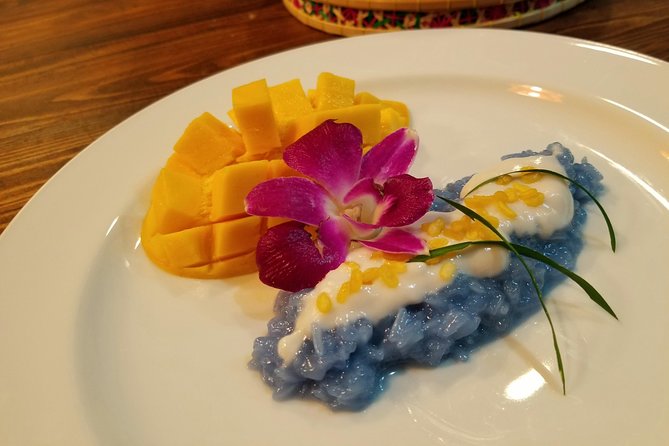
Lunch is included, and it’s the food you helped create. Since you’re making four dishes, the meal is substantial. More than once, the advice is straightforward: don’t eat breakfast first. If you roll in already full, you’ll end up eating less than you should, and you’ll miss the best part—tasting the dishes at their peak right after cooking.
This lunch is also where the class locks in for your brain. When you taste what you made, you notice things more. You catch how curry paste flavors bloom after heating. You understand why certain herbs are added at specific steps. You also get a reference point for what Thai cooking should taste like at home.
Portioning is handled well because everyone is cooking and then eating their own work. It’s not one big communal pot situation where your dish ends up an afterthought.


Spice control and dietary options that aren’t just checkbox talk
Thai food is famous for heat, but this class is set up so you can manage spice. Instructions and adjustments are part of the experience, and spice level is described as easily modifiable to your palate.
If you eat vegetarian, you’ll be glad to know this experience lists available vegetarian options. Also, the way different groups are handled comes up in the experiences I’ve read: the class has accommodated people who avoid fish, and instructors are described as able to cater to vegetarians and people with allergies.
There’s also mention of halal meat available for cooking in at least one of the experiences, which is a useful detail if that matters to you.
Practical takeaway: if you have strict needs—vegetarian with no fish, allergies, or halal—tell the school ahead of time when you book. The format includes a take-home recipe book, but you want the recipe and ingredients aligned with what you can actually eat.
Price and value: what $42.10 gets you in real Bangkok terms
At $42.10 per person, this is priced in a way that feels fair for what’s included. You’re not only paying for a cooking lesson. Your ticket includes:
- Market tour ingredient shopping for the morning class
- All ingredients (as noted for the market tour portion)
- English-speaking instructor
- All necessary equipment
- 4 Thai dishes
- Lunch (the dishes you helped cook)
- Recipe book after the class
- Vegetarian options
Not included: transportation and personal expenses.
So where’s the value? It’s the combination. Market access plus an instructor-led cooking session usually costs more when you try to piece it together on your own. Here, the market time sets you up with ingredient knowledge, and the cooking time turns it into muscle memory. Then lunch is built in, so you’re not trying to find food afterward while you’re already hungry and tired.
If you enjoy learning by doing, this is one of those Bangkok activities that doesn’t just fill time—it gives you skills you can reuse.
Timing and group size: why this feels orderly
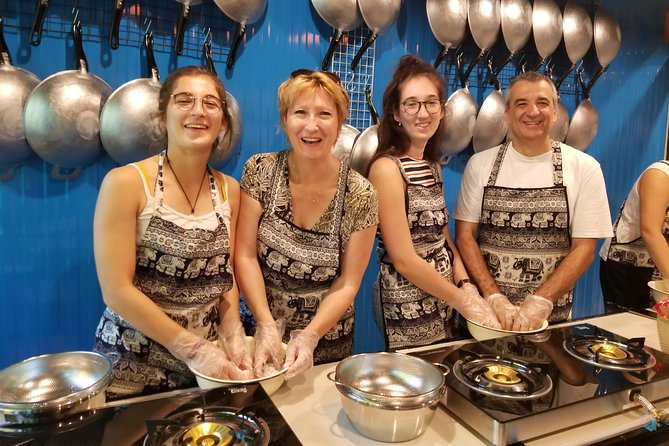
This class is capped at a maximum of 12 travelers. That matters because cooking is not a passive sport. When the group is too big, someone always gets left behind: either you wait for ingredients, or you lose attention while your station is set up.
Here, the smaller size keeps the flow moving. Experiences associated with this school also describe things like “clockwork” timing and quick transitions between steps, with back-end staff preparing the next items so there’s minimal dead time.
The schedule is also clearly laid out:
- Meet around 8:30 a.m.
- Market tour starting about 8:35 a.m.
- Return for cooking around 9:00 a.m.
- Cooking and eating until about 11:30 a.m., with the activity ending around 12:00
Weather matters too. The experience notes it requires good weather, and if it’s canceled due to poor weather, you’ll be offered another date or a refund. If you’re planning other morning activities, leave a little flexibility so you’re not forced into a tight domino schedule.
Who should book the morning session (and who might not)
This is a great choice if you:
- Want an introduction to Thai ingredients without guessing
- Like hands-on classes where you cook multiple dishes in one go
- Travel with family or mixed cooking skill levels (the format is described as interactive and doable for beginners)
- Care about vegetarian adjustments and practical spice control
It may not be the best fit if you’re an advanced Thai cook looking for deep professional technique. Some experiences note that the class is approachable and timed for a general group, so don’t expect a slow, super-specialized training camp for expert cooks.
Also, the early start means it fits best when you want a real morning activity, not a sleep-in day.
My take: should you book Tingly Thai?
Yes, I’d book this—especially if you want the full Thai cooking arc in one morning: market ingredients first, curry paste and prep next, then lunch while it’s still fresh and hot.
The strongest reasons are the ones that keep showing up in the details:
- Market tour that actually teaches you what you’re buying and why
- Small group that keeps you cooking
- Four dishes plus lunch, so the value is tangible
- Vegetarian options and workable spice levels
If you’re deciding between this and a more basic class, choose this one for the market component. It gives context, and that context makes the cooking steps easier to remember later.
FAQ
What time does the activity start?
You meet at 8:30 a.m. at Tingly Thai Cooking School, and the market tour begins at about 8:35 a.m.
How long is the cooking class and market tour?
The experience runs for approximately 3 hours 30 minutes.
Where is the meeting point?
The meeting point is Tingly Thai Cooking School, Suriyawong 17/1 Soi Prachum, Khwaeng Suriya Wong, Khet Bang Rak, Krung Thep Maha Nakhon 10500, Thailand.
Do I visit a market before cooking?
Yes. You go to Wat Kheak Fresh Market for a market tour focused on ingredients like fruits, herbs, vegetables, and spices.
What will I cook during the class?
The class includes cooking four Thai dishes and teaches traditional Thai prep techniques, including making curry paste, plus cooking and assembly.
Is lunch included?
Yes. Lunch is included and it consists of the dishes you helped prepare.
Are vegetarian options available?
Yes. Vegetarian options are available.
Is the instructor English-speaking?
Yes. The experience includes an English speaking instructor.
Is transportation included?
No. Transportation is not included, so you’ll need to get to the meeting point yourself.
What happens if the activity is canceled due to weather?
The experience requires good weather. If it’s canceled due to poor weather, you’ll be offered a different date or a full refund.