REVIEW · BANGKOK
Bangkok: Mango Cooking School Thai Cooking Class
Book on GetYourGuide →Operated by Mango Cooking School · Bookable on GetYourGuide
Cooking Thai food starts at the neighborhood market. I love the market walk and the spotless, air-conditioned kitchen, and the trade-off is simple: you generally need to be a registered participant since non-registered people can’t just watch from the sidelines.
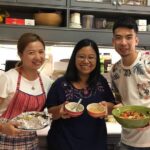
This is a 3-hour, English-led class near BTS On Nut, built for hands-on learning. You’ll cook a lineup of familiar favorites like Som Tum and Pad Thai, plus Thai milk tea and mango sticky rice, using fresh ingredients you pick up during the local market stop.
In This Review
- Quick reasons this class is worth your time
- Finding Mango Cooking School in On Nut, right by the market
- The market walk: herbs, chilies, and the shortcuts to real Thai flavor
- Three hours of hands-on cooking: your dish lineup and what you’ll actually do
- Coconut milk for mango sticky rice
- Som Tum (green papaya salad)
- Pad Thai
- Tom Yum Goong
- Stir-fried morning glory
- Mango sticky rice plus Thai milk tea
- How the instruction works: pacing, helpers, and why the food shows up as you cook
- The school’s studio setup: AC, air purifiers, and kid-friendly tools
- Price and value: what $27 buys you in Bangkok
- Who should book Mango Cooking School, and who might hesitate
- A few considerations before you go
- Best way to plan your day around this class
- Should you book Mango Cooking School in Bangkok?
- FAQ
- How long is the Bangkok Mango Cooking School Thai cooking class?
- Where is the meeting point near BTS On Nut?
- What dishes do I cook?
- Is the class taught in English?
- What should I bring?
- Can kids attend, and do parents stay to watch?
Quick reasons this class is worth your time
- On Nut location: short walk from BTS, and easy to pair with other plans in Bangkok
- You cook 6 dishes/items: from coconut cream for mango sticky rice to Thai classics
- Clean, cool facility: air conditioning on every floor plus air purifiers
- Market shopping matters: you learn which herbs and seasonings create real Thai flavor
- Family-friendly tools: kid-sized equipment is provided, with clear age rules
Finding Mango Cooking School in On Nut, right by the market
Mango Cooking School is set up for convenience. You’ll take a 5–10 minute walk from BTS Skytrain On Nut and then head across from BIG-C (On Nut) Market. The school is also described as being right next to BTS Onnut Station, roughly a couple minutes from the nearby market area, which keeps things low-stress.
That location choice is more than just nice geography. It means your market stop feels real and close-by instead of like a distant detour. If you’re building a day around Thai food, this is one of the easier “get in, learn, eat, move on” activities in central Bangkok.
Inside, the vibe is practical. The facility is described as clean, with air conditioning on every floor and air purifiers. After you’ve spent time in the Bangkok heat, that kind of indoor setup is a big quality-of-life win.
You can also read our reviews of more tours and experiences in Bangkok.
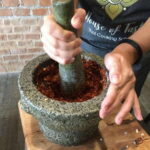
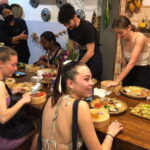
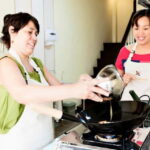
The market walk: herbs, chilies, and the shortcuts to real Thai flavor
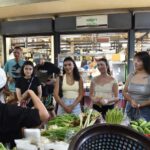
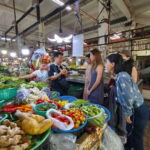
You’ll do a Thai local market visit as part of either the morning or afternoon class. Walking through the market with your instructor is where Thai cooking stops being mysterious and becomes measurable.
Here’s what that typically changes for you:
- You stop thinking of Thai food as just spicy and start seeing it as balanced flavors—sweet, sour, salty, and heat working together.
- You learn what fresh ingredients look like when they’re picked with intention, not just sold in a plastic tub.
The school’s format is designed for learning while you shop. You’ll be guided through herbs, seasonings, and spices that show up again and again in the dishes on your menu. You’ll also see how Thai flavor begins before the pan ever heats up.
And yes, you get the fun part too: ingredient shopping. It’s not only about buying items. It’s about learning what to look for, and why those choices matter once you’re back at the station.
Three hours of hands-on cooking: your dish lineup and what you’ll actually do
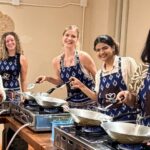
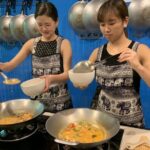
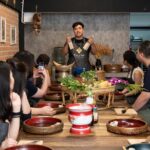
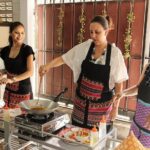
The class is built around cooking at stations, with a professional chef guiding you step by step. The menu can change depending on the school’s availability, but the core dishes and dessert elements are consistent.
Coconut milk for mango sticky rice
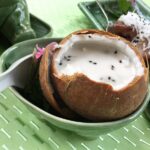
You start with the sweet base work: making coconut cream and coconut milk for mango sticky rice. This matters because Thai coconut sauce isn’t just “pour some cream.” You’re learning how coconut flavor gets shaped for dessert.
Som Tum (green papaya salad)
Som Tum is one of those dishes that teaches technique fast. You’ll make a tangy, fresh salad that depends on the right balance of sour, salty, and chili heat. Expect plenty of chopping and mixing, plus guidance on how to get the flavor right without going overboard.



Pad Thai
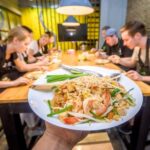
Pad Thai is a classic reason people sign up for Bangkok cooking classes, and this one keeps it grounded. You’ll learn the method for sweet-and-savory stir-fried noodles, and you’ll get the real idea of how the sauce coats and clings.
Tom Yum Goong
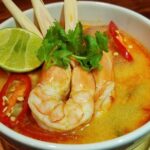
Tom Yum Goong is your aromatic, tangy soup moment. You’ll cook a shrimp soup that hits spicy and sour notes in a way that feels very Thai. If you like soup but don’t want a long restaurant wait, this is an efficient way to learn the backbone flavor.
Stir-fried morning glory
Morning glory is fast, focused stir-fry work. You’ll cook crispy morning glory with garlic and chili, learning how the pan timing and seasoning keep it from turning soggy.
Mango sticky rice plus Thai milk tea
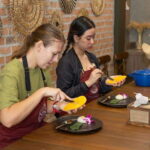
You finish with the dessert payoff. Mango sticky rice is built from the coconut work you did earlier, plus the mango-topped sticky rice experience that tastes like Thailand in dessert form.
You’ll also get Thai milk tea, and the school adds an additional traditional dessert specially selected by the Mango Chef. So even if you’re not a dessert person, you’re likely to be turned into one by hour three.
How the instruction works: pacing, helpers, and why the food shows up as you cook
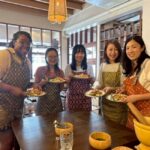
One of the most praised parts of this experience is how smoothly it runs. People describe it as well organized, with staff that explain what to do and then check in while you cook.
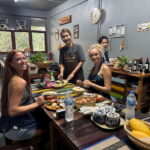
A detail that matters: you aren’t just making everything and waiting forever to eat. The class layout is described as having you cook, then eat the dishes, while the staff prepares the next ones. That means fewer long gaps and less of that end-of-class food rush.
The chefs and hosts also adjust to the group. One person noted spice levels were handled with care for different preferences. If you’re not comfortable with strong heat, you should still plan to tell the instructor at the start so they can guide you in the moment.
If you’re traveling with kids, this part is even more important. The school provides kid-friendly cooking tools, and the process is set up so young participants can actively participate without the whole class grinding to a halt. The tools and the stations make a difference.
The school’s studio setup: AC, air purifiers, and kid-friendly tools
Bangkok cooking classes can range from charming chaos to controlled chaos. Mango Cooking School leans controlled.
You get a clean facility with air conditioning on every floor, plus air purifiers. It’s not a tiny kitchen either; it’s described as a new facility with a setup that keeps things organized during a group class.
For families, the studio also provides kid-oriented tools. That means children aren’t trying to use adult-sized knives and gadgets that make cooking feel harder than it needs to be. In practice, this makes the experience more about learning Thai food flavors than wrestling equipment.
Also worth noting from the experience descriptions: there’s free unlimited drinking water available. That’s a small comfort that can matter a lot in Bangkok’s heat.
Price and value: what $27 buys you in Bangkok
At about $27 per person for a 3-hour class, this sits in the “good value” zone for Bangkok cooking experiences. The value isn’t only in the dishes. It’s in what’s included:
- Five-course meal
- Cooking equipment
- Ingredients
- QR recipes (video)
- A special gift
You’re also getting the market component as part of the experience, either morning or afternoon. Even if you’ve visited markets before, having an instructor steer you through herbs, spices, and what to buy changes the payoff. You leave with more than food—you leave with shopping literacy.
And the QR recipes are practical. Thai cooking relies on repeated technique and ingredient recognition, not just memorizing one sauce ratio. Video recipes help you recreate dishes at home without guessing.
The one thing not included is hotel pickup and drop-off, so you’ll want to plan on getting yourself to the meeting point. The good news is the BTS connection makes that easier than it would be from somewhere deeper in traffic.
Who should book Mango Cooking School, and who might hesitate
This class is a strong fit if:
- you’re a first-time cook who wants step-by-step guidance
- you like the idea of learning flavors at the market and then cooking them right away
- you want a family activity that’s built for kids to participate
- you want English instruction and clear pacing
It’s also a great match if you care about cleanliness and comfort. The AC setup and air purifiers aren’t just nice. They make the class feel more like a real workshop than a sweaty side street.
A few considerations before you go
- Observation rules: people who haven’t registered aren’t allowed to observe or wait during the class. If you’re hoping to bring along an extra adult just to watch, you should rethink that plan.
- Parent role with kids: parents are not allowed to observe or assist during the program. Kids can’t attend alone, and the guardian rules are strict for younger participants.
- Menu can shift: while the class generally centers on the classic lineup and mango sticky rice, the menu may change based on school availability.
- Seafood is part of the menu: Tom Yum Goong includes shrimp, so this is relevant if you have seafood restrictions.
Best way to plan your day around this class
Because the class is only 3 hours, it’s easy to place between other Bangkok highlights. The On Nut area location helps too. You can pair it with a BTS-friendly day plan since getting there doesn’t require long taxi rides.
Bring comfortable shoes. You’ll walk a bit from BTS and move through market areas before you cook. A camera is also useful if you like capturing ingredient colors and final plates.
If you’re picky about spice or specific ingredients, try to communicate your preferences early. The class is set up with enough coaching that you can often steer your dish toward your comfort zone without losing the Thai flavor logic.
Should you book Mango Cooking School in Bangkok?
Book it if you want a well-run, hands-on Thai cooking experience that starts at a local market and ends with food you can actually repeat at home. The big wins for me are the combination of market learning, a clean air-conditioned studio, and a dish lineup that covers both savory Thai classics and mango sticky rice plus Thai milk tea.
Skip—or at least think twice—if you need a sit-and-watch activity where adults observe from the sidelines, or if you’re traveling with very young kids who fall under the school’s age limits. Also factor in that the class is designed around participation, not just attendance.
FAQ
How long is the Bangkok Mango Cooking School Thai cooking class?
The class lasts 3 hours.
Where is the meeting point near BTS On Nut?
Meet by walking 5–10 minutes from BTS Skytrain On Nut Station, across from BIG-C (On Nut) Market.
What dishes do I cook?
The class menu includes items such as coconut milk for mango sticky rice, Som Tum (green papaya salad), Pad Thai, Tom Yum Goong (shrimp soup), stir-fried morning glory, plus mango sticky rice. Thai milk tea and an additional dessert are also part of the experience, and the menu can change based on availability.
Is the class taught in English?
Yes. The instructor speaks English.
What should I bring?
Bring comfortable shoes and a camera.
Can kids attend, and do parents stay to watch?
Children under 5 are not suitable. Children aged 5–11 must be accompanied by one guardian who also makes a reservation. Children cannot attend alone, and parents are not allowed to observe or assist during the program.