REVIEW · BANGKOK
Thai Cooking Class with Market Visit by Maliwan
Book on Viator →Operated by Maliwan Thai Cooking Class · Bookable on Viator
Thai flavor starts at a local market. This small-group Bangkok cooking class with Maliwan pairs a tuk-tuk market visit with hands-on cooking, so you learn the why behind Thai flavors, not just the steps.
I especially like the small-group feel. With a max of 7 people, you get quick help at your station and you can ask real questions as you cook. Another big win is the takeaway format: you leave with printed recipes plus an e-certificate, so you can recreate the meal after you’re back home.
One consideration: the market stop can get wet and muddy, so you’ll want sturdy closed shoes you don’t mind getting dirty. Also, late arrival matters a lot here since arriving an hour late means you miss the whole class.
In This Review
- Key takeaways before you go
- Meeting Maliwan in Bangkok: logistics that keep it easy
- The tuk-tuk market visit: how you learn Thai ingredients fast
- What to watch for at the market
- Cooking like you belong at a real Thai kitchen
- How the class runs in the kitchen
- The flavor part: customizing to your taste
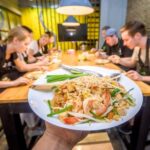
- Your meal: what you get to eat at the end
- Allergy and dietary adjustments
- What you take home: recipes that actually help
- Price and value: why $43.86 can make sense in Bangkok
- Who should book this class (and who should pause)
- People who should think twice
- Quick practical tips to help you get better results
- Should you book this Thai cooking class with Maliwan?
- FAQ
- How long is the Thai cooking class with Maliwan?
- Where does the class start and where do you end?
- Do I need hotel pickup or drop-off?
- Is there a market visit and how do you get there?
- What dietary restrictions can you accommodate?
- How big is the group?
Key takeaways before you go
- Tuk-tuk market visit to pick ingredients you’ll actually cook with, not pre-selected supplies
- Max 7 people means hands-on attention while you work at your own cooking station
- Instructor-led customizations so you can adjust taste and spice to your preference
- Recipes you can use later via printed handouts plus an e-certificate of completion
- Short, focused timing (about 4 hours) from meeting point back to the same spot
Meeting Maliwan in Bangkok: logistics that keep it easy
The class starts at Maliwan Thai Cooking Class, 9 Thanon Sap Sam Hang, Taladyod, Khet Phra Nakhon, Bangkok. There’s no hotel pickup or drop-off, so you’ll need to make your own way to the meeting point. The good news: it’s near public transportation, which helps a lot when you’re moving around Bangkok anyway.
Plan for about 4 hours total. That time is structured to include both the market ingredient hunt and the cooking session, with your meal as the payoff. You also get a mobile ticket, which makes entry simpler than printing papers.
If you’re the type who hates “lost time,” this format works. You’re not spending hours waiting around. You’re doing a clear sequence: go out for ingredients, come back to cook, and eat what you made.
One more practical note: the cooking menu is decided by the instructor in advance of your travel date. That’s common for classes like this, but it also means you should expect the dishes may vary depending on what’s planned for your day.
You can also read our reviews of more tours and experiences in Bangkok.

The tuk-tuk market visit: how you learn Thai ingredients fast
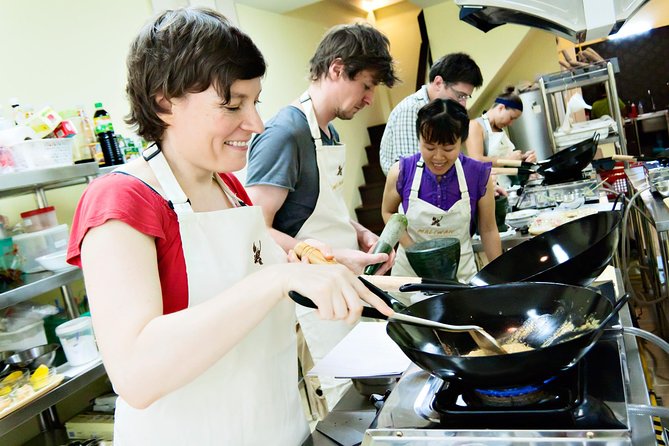
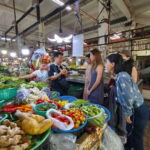
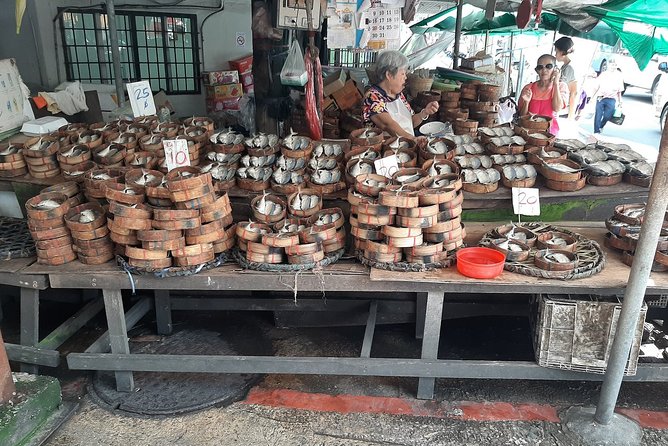
The market stop is where the experience clicks. You don’t just look around. You choose ingredients for the dishes you’ll cook later. That single change turns a normal sightseeing stroll into a cooking skill session.
You’ll ride in a tuk-tuk from the meeting point area to the local market. The ride itself is part fun, part context. Once you’re at the stalls, your instructor explains what you’re buying and why, including the role of key flavors and how ingredients behave in Thai cooking. You’re learning how cooks shop, not just what they cook.
From a practical standpoint, this is also where you get a real sense of freshness. Thai markets are built around daily buying, so ingredients like herbs, aromatics, and produce often taste more intense than what you’ll find in a typical supermarket.
What to watch for at the market
Wear sturdy closed footwear. The market area is described as wet and muddy, so sandals can turn into a bad idea fast. Think shoes you can wipe off easily afterward.
Also, keep dietary needs in mind early. You’ll need to inform the provider about restrictions such as vegetarian, vegan, gluten-free, or allergies within 2 hours of booking. Last-minute changes may not be possible, so if you have allergies, plan ahead rather than hoping to sort it out on the day.
Cooking like you belong at a real Thai kitchen
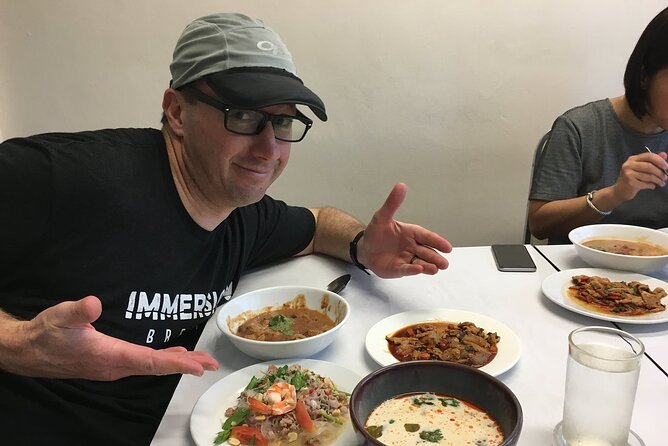
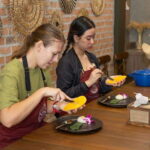
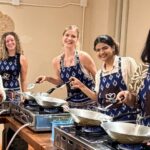
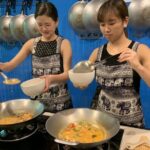
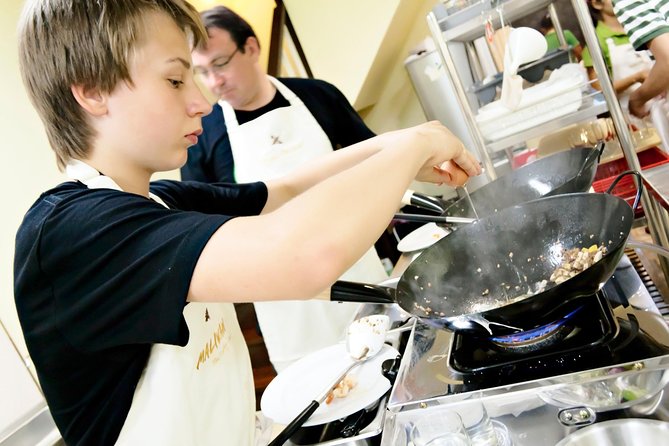
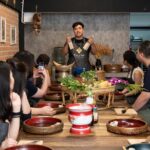
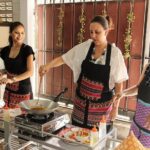
Back at the class site, you cook at a personal cook station. This matters because Thai cooking is hands-on. Chopping, mixing, tasting, adjusting heat, and balancing sour, salty, sweet, and spicy flavors all need your hands, not just your attention.
With a small group (up to 7), the instructor and assistants can check in as you go. That’s a big difference from classes where you’re watching one person cook and hoping your turn comes before the session ends. In this setup, you move dish to dish with support.
How the class runs in the kitchen
Expect a pattern like this:
- The instructor demonstrates how to prep and cook one dish at a time
- Then you cook that dish yourself
- You keep moving through the menu at a pace designed for small groups
This is one reason the class works so well for beginners. It’s not you guessing from a recipe book. You’re learning in the moment, with guidance when you need it. Several instructors are mentioned in past sessions by name, including May, Mei, Matinee, and Mae. So regardless of which instructor you get on your date, you should expect a friendly, structured teaching style geared toward getting your food right.



The flavor part: customizing to your taste
Thai food is flexible. One of the best takeaways is how you can adjust flavor for your own palate. The class teaches you how to customize dishes, including tailoring spice and balance while you’re cooking. That skill is what helps you recreate the meal at home later, because home kitchens and local ingredient brands don’t always match what you’d find in Thailand.
If you’re worried you’ll mess it up, don’t be. This is built around helping you succeed. You’ll work with the equipment and ingredients you need, and assistants are on hand to keep things moving.
Your meal: what you get to eat at the end
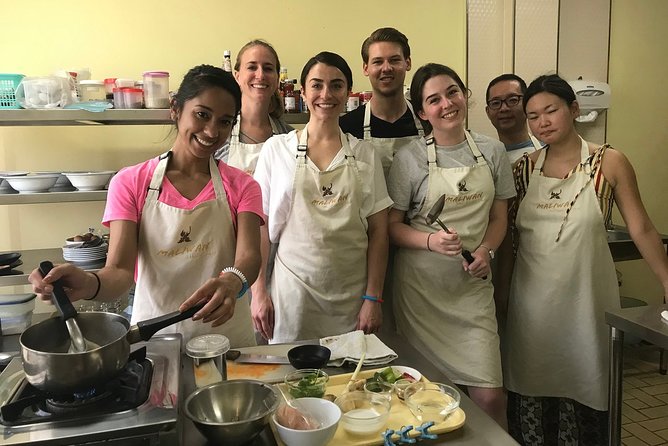
You’ll have a welcome drink during the experience, and you’ll also get rice serving included. At the end, you eat what you made. That’s a simple but underrated perk: you’re not just cooking for practice. You’re cooking for lunch or dinner, depending on your session time.
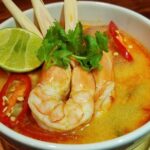
How many dishes you cook can vary because the menu is set by the instructor in advance. Based on common class outcomes, you should think in terms of a full meal built from several classic Thai dishes, usually around four to five plates. Either way, the practical goal is the same: you’ll leave with multiple techniques and flavor combinations you can repeat.
Allergy and dietary adjustments
The class asks you to share dietary restrictions early, and it’s designed to accommodate needs such as vegetarian and allergies when you notify them on time. If you have a serious allergy, be extra clear in your message so the team can plan safely.
What you take home: recipes that actually help
The best cooking classes end with more than a certificate. This one includes printed recipes, so you can recreate your dishes without trying to remember everything from memory. You also receive an e-certificate of completion, which is a nice finishing touch if you like having proof your new skill is real.
Here’s why the printed recipe matters: Thai cooking often depends on technique and taste adjustment. A recipe can’t replace tasting in the moment, but a good handout helps you repeat the same method and ingredient balance later. You’ll be able to rebuild your dish even if you don’t remember every detail exactly.
Price and value: why $43.86 can make sense in Bangkok
At about $43.86 per person for roughly four hours, this class may look budget-friendly at first glance. But the real value is what you’re getting in that time.
You’re paying for:
- A tuk-tuk market visit where you select ingredients
- All ingredients and equipment (you don’t have to hunt for specific items afterward just to learn)
- Tuition for a small-group, hands-on lesson
- Printed recipes and an e-certificate
- A welcome drink and rice serving
Also, you’re getting a capped group size (max 7). That tends to improve instruction quality without you needing to “upgrade” to a private class. If you’ve ever done a large cooking workshop where you barely cook, you’ll understand why this matters.
Is it the cheapest thing in Bangkok? Probably not. But when you compare it to paying for an expensive restaurant meal plus a separate shopping trip for ingredients plus a cooking course with no structure, the math often favors this kind of market-to-kitchen experience.
Who should book this class (and who should pause)
This experience is a strong fit if you:
- Want practical Thai cooking skills you can repeat at home
- Like food that comes with an ingredient story, not just a plate in front of you
- Prefer small groups where you can ask questions
- Are traveling solo or as a couple and want an active, social day without big group chaos
People who should think twice
If you have back or leg problems, it’s noted as not recommended. That’s worth taking seriously since markets and kitchen movement involve standing and walking.
If you hate the idea of getting shoes dirty, keep in mind the market can be wet and muddy. Bring shoes that can handle it, or accept that you’ll likely leave with some grime on them.
Finally, the class has a strict timing rule: arriving an hour late results in a no-show. So if your day is packed with Bangkok traffic and you’re prone to running behind, build buffer time.
Quick practical tips to help you get better results
These are the small things that make your class smoother and help your cooking turn out better:
- Wear closed, sturdy shoes for the market stop
- Let the provider know about dietary restrictions within 2 hours of booking
- Be on time. Bangkok traffic is real, so aim early
- Come hungry but not overly stressed. You’ll be cooking most of the time
- Ask questions while you cook. The class is set up for you to adjust flavors and learn the logic behind them
Should you book this Thai cooking class with Maliwan?
Book it if you want a true market-to-kitchen lesson in Bangkok. The tuk-tuk ride and local market stop are not filler. They’re the start of learning how Thai cooks build flavor from real ingredients. The small group size also makes a real difference in how much you actually do and how much help you get while you’re cooking.
Skip (or at least reconsider) if you can’t handle wet, muddy surfaces or if you have mobility limitations that make standing and moving difficult. And if you’re the type who needs hotel pickup, you’ll need to plan your own route to the meeting point near public transportation.
If those points fit you, this is a high-value day: you’ll come back with skills, not just souvenirs, plus a meal you can recreate at home.
FAQ
How long is the Thai cooking class with Maliwan?
It runs for about 4 hours.
Where does the class start and where do you end?
You start at Maliwan Thai Cooking Class, 9 Thanon Sap Sam Hang, Taladyod, Khet Phra Nakhon, Bangkok, and the experience ends back at the meeting point.
Do I need hotel pickup or drop-off?
No. Hotel pickup and drop-off are not included.
Is there a market visit and how do you get there?
Yes. You visit a local market and travel there by tuk-tuk.
What dietary restrictions can you accommodate?
The class can handle dietary restrictions like vegetarian, vegan, gluten-free, and allergies, as long as you inform the provider within 2 hours of booking.
How big is the group?
The class has a maximum of 7 travelers.