REVIEW · MARRAKESH
Marrakech: Moroccan Cooking Class with Local Chef
Book on GetYourGuide →Operated by ACTIVITIES AND EVENTS · Bookable on GetYourGuide
Your Moroccan meal begins at the souq. This class takes you into the Medina to shop for ingredients and then cook in the heart of the Riad Black Doors workshop with Moroccan Berber chefs Marouane and Abdou.
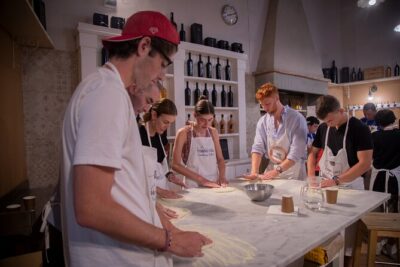
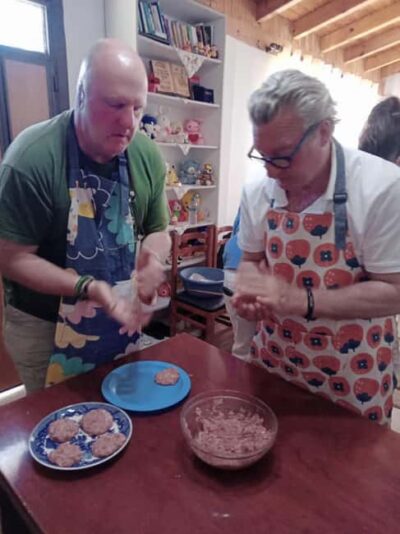
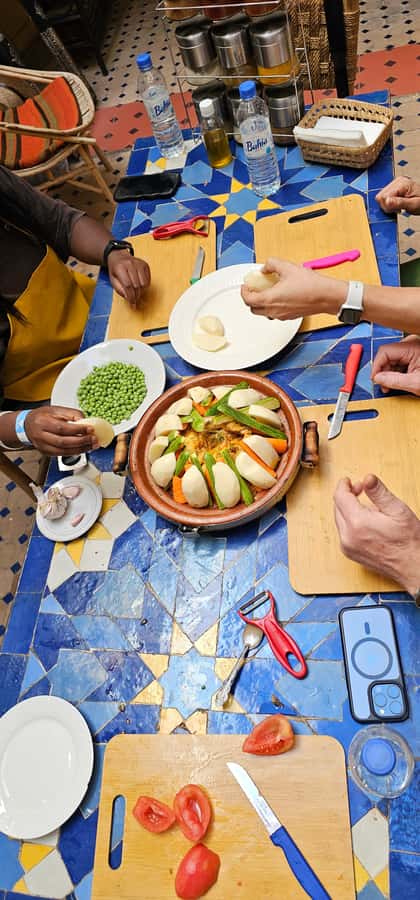
I love the hands-on, family-style pace. You’re not just watching— you prep, season, and cook, then sit down to taste what you made, with clear explanations of techniques and spices.
One thing to plan for is time. Tagine-style dishes take longer than the prep, so you may end up waiting for about 1 to 1.5 hours, and the market step is not included on Ramadan or Friday.
In This Review
- Key things worth knowing
- Meeting at Café de France: start in the right spot
- Riad Black Doors: cooking where the Medina feels lived-in
- Souq shopping with a local chef: what you learn to buy
- Cooking class: tagine, salads, and spice logic you can repeat
- Why the chefs’ approach helps at home
- The one drawback: tagine takes time
- Moroccan mint tea ritual: the moment you start tasting the culture
- Food tasting and sharing the meal you made
- Price and value: is $35 a good deal?
- Group sessions, private options, and the pace of the day
- Who should book this Marrakech cooking class
- Should you book this Marrakech Cooking Class with Local Chef?
- FAQ
- Where do I meet the guide?
- How long is the experience?
- Is the local market visit included every day?
- What languages does the guide speak?
- Is pickup included?
- What’s included in the price?
- Can I arrange a private session, and is booking flexible?
Key things worth knowing
- Souq shopping for fresh produce and spices away from the tourist lanes
- Chefs Marouane and Abdou teaching practical Moroccan technique, not just recipes
- Moroccan mint tea ritual with hands-on preparation before you start cooking
- Classic menu structure (starter, main, dessert) plus vegetarian-friendly options
- Tagine timing can mean a long wait once the dish is cooking
Meeting at Café de France: start in the right spot
The day begins at Café de France on Jamaa el Fna Square. The meeting point is right in front of the principal door, and there’s a short walk (about five minutes) to the cooking space.
This matters more than it sounds. Jamaa el Fna is big, and “meet at the square” is how people waste time. If you give yourself a few extra minutes and stay by the main entrance, you’ll find the group without stress.
You can also read our reviews of more tours and experiences in Marrakesh.

Riad Black Doors: cooking where the Medina feels lived-in
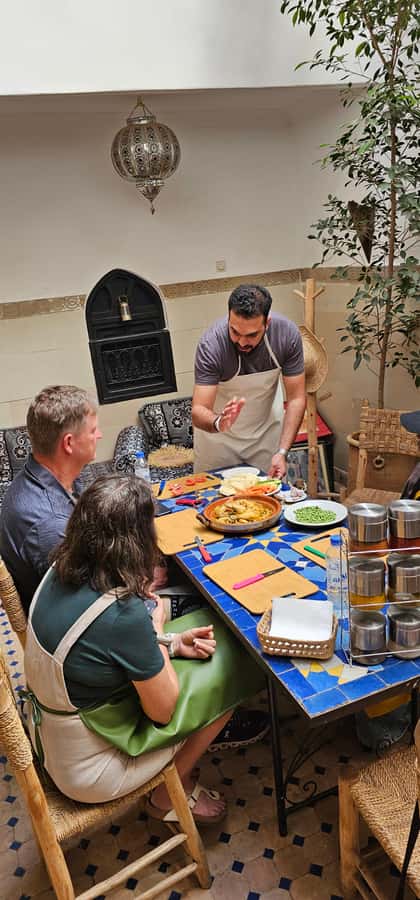
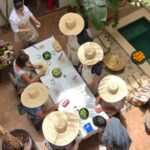
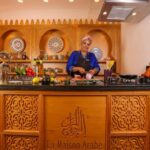
Your hosts welcome you at the Riad Black Doors workshop in the Medina. That location is a big part of the value: you get a real neighborhood setting rather than an all-purpose kitchen far from Marrakech life.
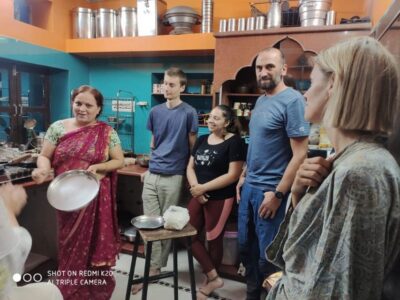
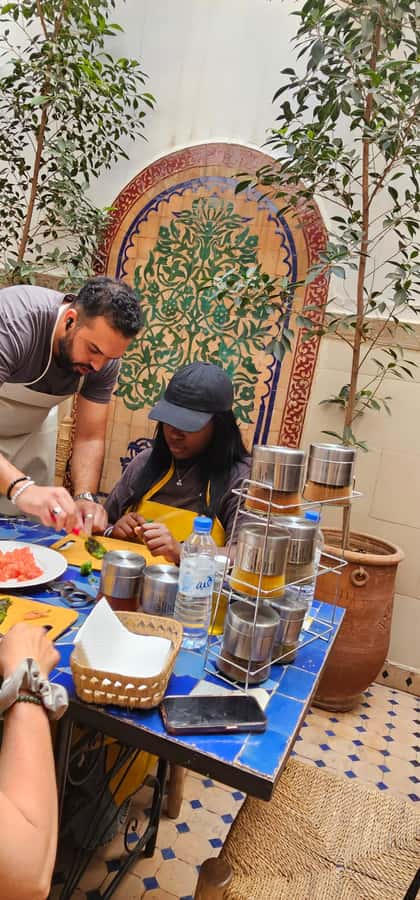
The class is run in a warm, family-friendly atmosphere. The goal isn’t formality. It’s collaboration, with the chefs coaching you through what to do and why, and letting you take part in the full process.
Souq shopping with a local chef: what you learn to buy
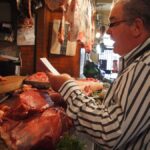
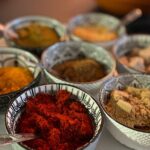
You start with a visit to a local food market (souq) to pick ingredients. The idea is simple and smart: you’ll learn what Moroccan cooking is actually built from—fresh produce, spices, and local staples—rather than buying only what’s available in tourist shops.
The market is described as being away from tourist areas, so you’re shopping in a more local context. You’ll also have a chance to discuss any allergies or dietary restrictions before you buy.
Two timing notes you should know:
- The market step is not included on Ramadan or Friday. Your day may start differently inside the riad kitchen on those days.
- This is part of the experience, not just a quick photo stop. You’re there to purchase ingredients you’ll use later, so arrive hungry in the best way—ready to work and taste.
Cooking class: tagine, salads, and spice logic you can repeat
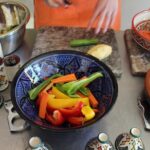
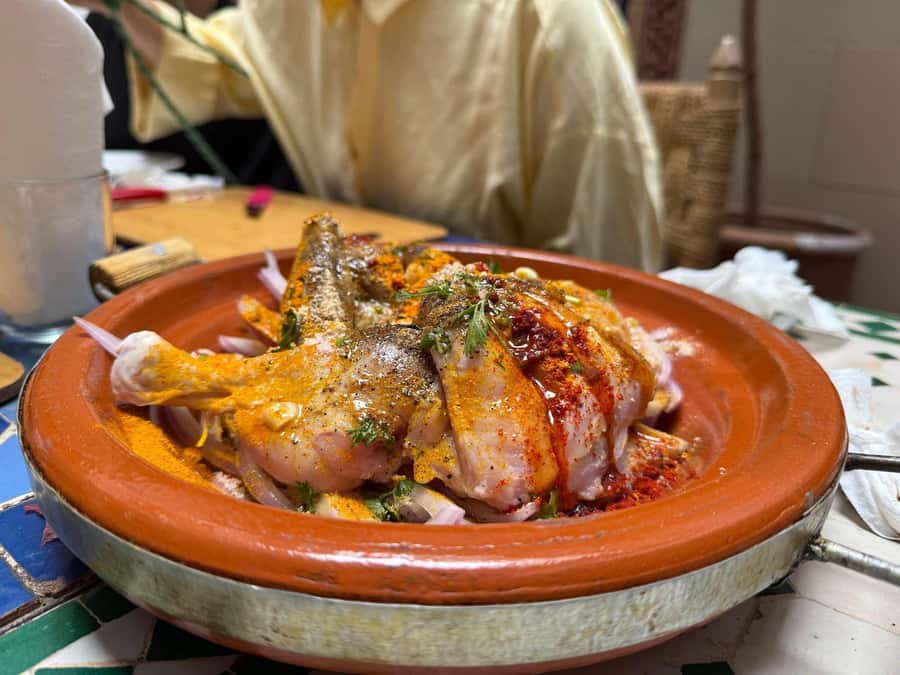
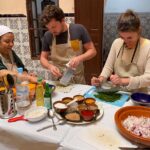
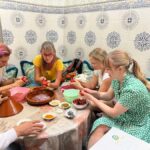
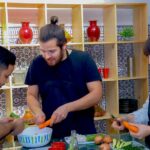
The main cooking portion runs about 1.5 hours, and it’s hands-on from the start. You work with the chefs as they guide you through classic Moroccan methods and how spices are used in context.
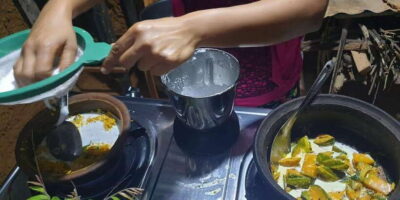
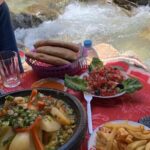
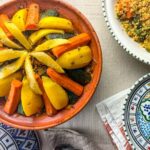
The menu is designed to cover the full flow of a Moroccan meal—starters, a main course, and a dessert. In one example described, the session included a chicken tagine, a Moroccan salad, and an eggplant dish (zaalouk). You may also find vegetarian versions and shared sides, depending on the day and group needs.
Why the chefs’ approach helps at home
What you’re really buying with this class is usable technique. The chefs are there to explain the logic behind things like seasoning, balancing flavors, and how Moroccan dishes get their character.
You also learn cooking as a process, not a one-off recipe. That’s why people leave with the sense they can cook again at home rather than only recreating a single meal.
The one drawback: tagine takes time
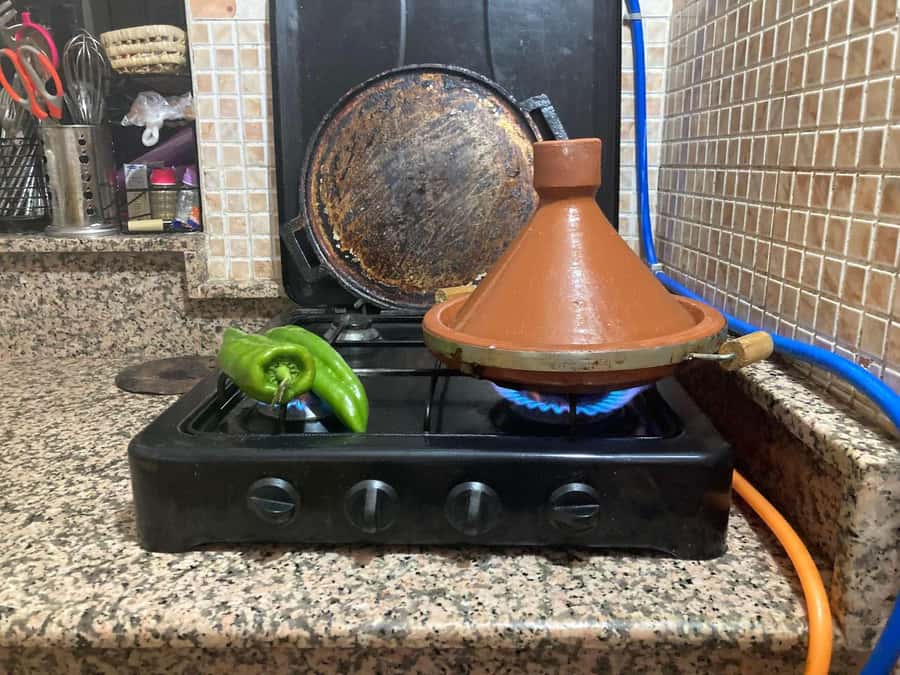
Tagines don’t finish instantly. One downside you should expect is the waiting time once the dish is cooking—about 1 to 1.5 hours in at least one instance after prep. If you’re the kind of person who hates idle time, this is the moment to mentally shift from task mode to chat-and-lean-back mode.
The good news is that you’re not completely left hanging in spirit. The chefs and your group can talk culture and food while the dish cooks, and the tea portion comes into play as a natural break in the schedule.
Moroccan mint tea ritual: the moment you start tasting the culture
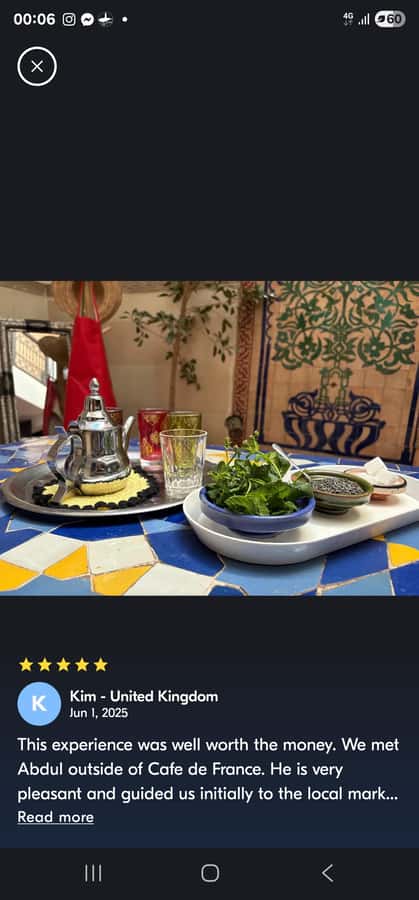
After cooking prep, you’ll enjoy traditional mint tea and learn how it’s prepared as a ritual. The focus here is on the method and the meaning—not just sipping something sweet.
This timing works well. It gives your hands a rest, and it also resets your attention so you taste with a sharper palate for what you’ve been cooking.
If you care about food culture (not only food), this is one of the best parts of the day. Moroccan mint tea sits at the crossroads of hospitality, daily rhythm, and flavor balance, and you’ll understand that context while you learn the steps.
Food tasting and sharing the meal you made
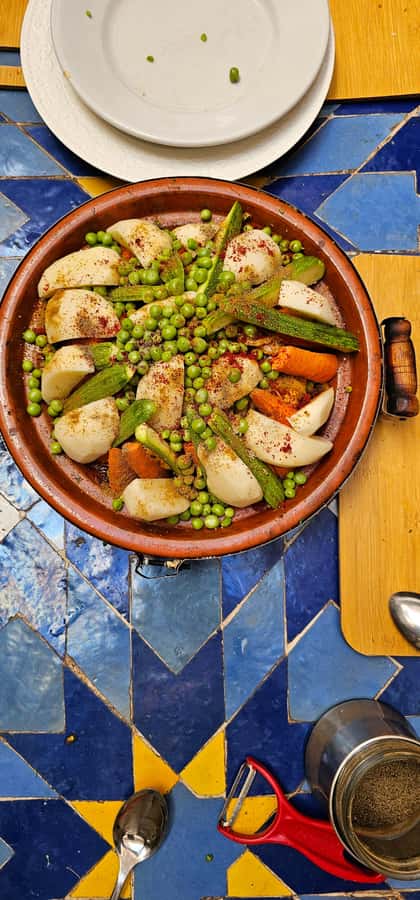
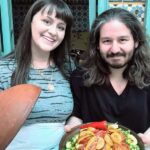
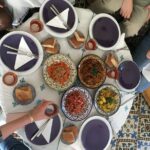
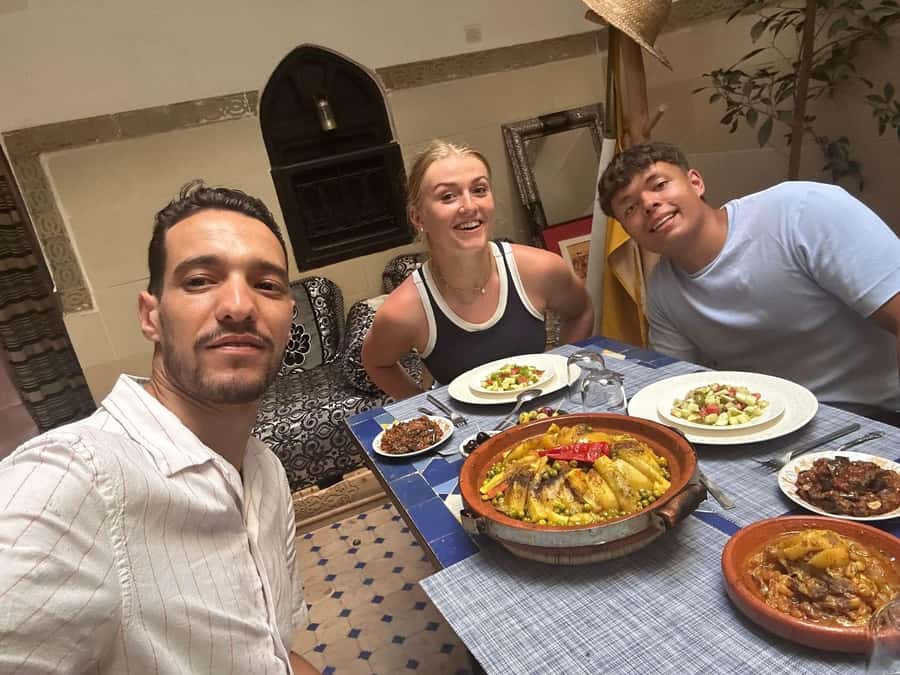
You’ll have about 1 hour for tasting. This is where the experience becomes more than instruction. You sit down and eat what you prepared, often with the chefs alongside you to answer questions.
This is also your chance to connect the dots between what you bought at the souq and what ends up on the plate. When you taste, you can finally clock which ingredients drive the flavor the most—and you’ll remember it when you recreate the meal later.
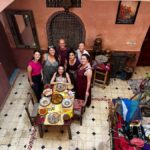
Even if the group is small, the experience is designed to feel social. One described session had a group of four and felt like being folded into a family-style table moment rather than being treated like a class that’s just passing through.
Price and value: is $35 a good deal?
At $35 per person for about 5 hours, the price is strong if you want more than a quick cooking demo. You’re getting:
- A guide
- Tea
- A full meal (you eat what you cook)
- A hands-on cooking class
There’s also a built-in value in the souq portion because you’re practicing choosing ingredients in a real Moroccan setting. That said, the day involves buying ingredients at the market, and the information provided doesn’t specify whether those purchases are fully included or separate. So treat the $35 as the class cost, and expect that market purchasing may be additional.
If you compare that to paying for a standalone dinner plus a cooking workshop elsewhere, the math often works in this class’s favor. The total package is designed to feel like a shared afternoon with real food, not a lecture with snacks.
Group sessions, private options, and the pace of the day
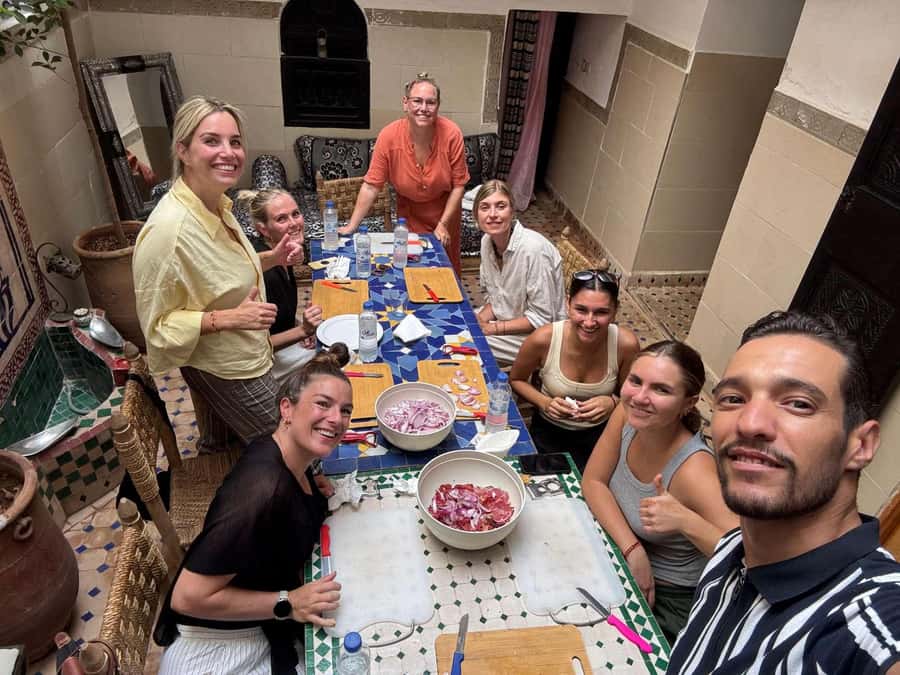
Most sessions run as group experiences, which helps keep the cost reasonable and adds a social element. Private sessions are available upon request, which can be a smart choice if you want one-on-one attention or you’re traveling with multiple dietary needs.
The pacing is interactive and collaborative, with everyone taking part in prep and cooking. If you like learning by doing—chopping, mixing, seasoning—this format fits well.
Who should book this Marrakech cooking class
Book it if you want:
- A Moroccan cooking class in Marrakech that includes shopping at a local souq
- A focused lesson with Moroccan mint tea as part of the experience
- The chance to learn multiple dishes, including options that can be vegetarian
- A real Medina riad setting at Riad Black Doors
You might rethink it if:
- You hate waiting for tagine-style cooking time
- You’re visiting on Friday or during Ramadan, because the market stop won’t happen then and the flow may be different
Should you book this Marrakech Cooking Class with Local Chef?
Yes, if you want a hands-on Moroccan meal and you value learning from chefs who talk through technique. The mix of souq shopping, cooking, mint tea preparation, and shared eating makes it feel like a complete cultural afternoon rather than a quick activity.
I’d book it especially if you’re cooking-curious and want recipes you can actually repeat. Just go in knowing the day can include downtime while dishes cook, and plan your expectations around tagine timing and the possible absence of the market on Friday or during Ramadan.
FAQ
Where do I meet the guide?
Meet in front of the principal door of Café de France on Jamaa el Fna Square.
How long is the experience?
The total duration is 5 hours.
Is the local market visit included every day?
The souq (market) step is not included on Ramadan or Friday.
What languages does the guide speak?
English, French, and Arabic.
Is pickup included?
No, pickup is not included.
What’s included in the price?
The experience includes the guide, mint tea, the meal, and the cooking class.
Can I arrange a private session, and is booking flexible?
Private sessions can be arranged upon request. You also get free cancellation up to 24 hours in advance for a full refund and the option to reserve now and pay later.