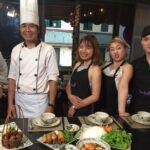
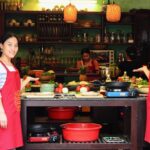
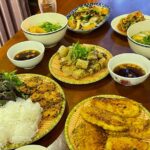
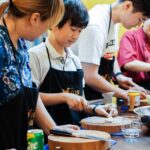
Hanoi smells better when you pick ingredients yourself. This 3-hour cooking class starts with a guided market walk, then you cook five Vietnamese dishes with an expert host and share a full meal afterward. It is hands-on, practical, and built for people who want food culture, not just a photo stop.
Two things I like a lot: the market guidance (so you know what to buy and why) and the way the class actually teaches you dishes you will recognize—pho, bun cha, and fried spring rolls are called out as core targets. One thing to consider: cooking happens as a group, not in separate high-tech cooking stations, so you may do fewer individual hand-steps than you expect.
In This Review
- What the Meal and Extras Feel Like
- Quick Heads-Up Before You Go
- Key Things to Know Before You Book
- Market Trip in Hanoi: Picking Ingredients Like You Mean It
- Cooking Pho, Bun Cha, and Spring Rolls Without Fear
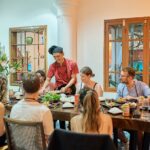
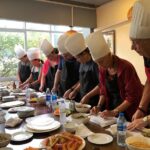
- The Shared Kitchen Setup: More Together Than Solo
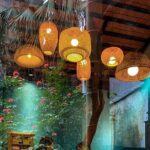
- Lunch, Brunch, or Dinner in a Cozy Space
- Drinks, Fruit Wine, and That Included Coffee Moment
- Price and Value: Why $35 Can Make Sense
- Where You Start, How the Time Feels, and What to Bring
- Who This Class Suits Best (and Who Should Skip)
- The Bottom Line: Should You Book This Cooking Class?
- FAQ
- How long is the Hanoi cooking class?
- Where does the class start?
- What will I cook during the class?
- What meals and drinks are included?
- Is local fruit wine included?
- Do I get recipes or any kind of certificate?
- Do I need to worry about taxes or fees being included?
What the Meal and Extras Feel Like
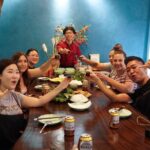
After shopping and prep, you get to sit down in a cozy space and eat what you made. The menu is structured around your session time—morning guests get lunch, midday guests get brunch, and evening guests get dinner—so you can match it to the rest of your day.
Value-wise, the extras matter. You get coffee and/or tea, free unlimited mineral water, recipes after the class, and a completion certificate. Alcohol is part of the package too: a free 350ml bottle of local fruit wine is included per class, and one review even pointed to egg coffee as a standout with the included coffee/tea.
Quick Heads-Up Before You Go
The class is friendly and family-style, but it is not designed for maximum one-person control. Because it is a shared kitchen setup, the pace can feel more like cooking together than cooking independently.
That said, the host style is a big part of the charm—people mentioned hosts like Maxie and Alex being patient, teaching easy steps, and making it feel like hanging out with a friend rather than performing for a crowd.
You can also read our reviews of more tours and experiences in Hanoi.
Key Things to Know Before You Book
- Market tour with ingredient picking so you understand what goes into Hanoi cooking, not just what it tastes like
- Five dishes you create including pho, bun cha, and fried spring rolls as part of the core lineup
- Group cooking format (more teamwork, less solo action at separate stations)
- Meal built into the class with lunch, brunch, or dinner depending on your session
- Included drinks: coffee and/or tea plus unlimited mineral water, and a free 350ml bottle of local fruit wine per class
- You leave with recipes and a certificate—useful if you want to recreate the food later
Market Trip in Hanoi: Picking Ingredients Like You Mean It
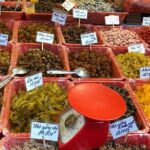
The experience starts at Hanoi Solo Hostel (37 P. Mã Mây, Hàng Buồm, Hoàn Kiếm). From there, you head into the market with a guide who helps you select fresh ingredients. This is not just walking and pointing. The whole point is that you learn the logic behind Vietnamese cooking choices: what herbs matter, what fresh proteins look like, and what brings flavor together in Hanoi-style dishes.
A standout detail from reviews is that you do not stay passive. Maxie is specifically mentioned for teaching basic Vietnamese phrases so you can buy items yourself. That small skill changes the whole market vibe. You are not only shopping; you are communicating. Even if your accent is brave-but-bad, it is a fun way to get your bearings fast.
The market portion also has a practical payoff. When it is time to cook, you already know what you bought. That reduces the usual cooking-class frustration where everything feels like a mystery box of ingredients. Here, you can trace flavors back to the real produce and pantry staples.
One more detail that helps: the class keeps the tone easy. Reviews describe the host as chatty and patient—like you are hanging out, not being tested. That matters because market learning can feel overwhelming if the group is rushed, but the guidance style seems designed to keep you moving without losing the story.
Cooking Pho, Bun Cha, and Spring Rolls Without Fear
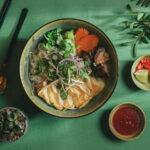
Once you return, you shift into the cooking class portion. This is where the experience earns its value: you are not just watching someone else cook. You are making dishes. The experience specifically calls out learning iconic Hanoi dishes like pho and bun cha, plus fried spring rolls.
Even with a shared kitchen format, the host guidance is described as clear and patient. Alex is noted for giving easy instructions and waiting for people to catch up. That is key in a class like this, because Vietnamese cooking can involve multiple steps—mixing, rolling, timing, and heat control. If you are prone to cooking-by-guesswork at home, you will probably appreciate that the instructions keep you grounded.
Here is what I think you should focus on during the cooking time:
- Ask what each ingredient is doing. Vietnamese food is often about balance—herbs, acidity, sweetness, salt, and texture.
- Watch for texture cues, especially for spring rolls. Oil temperature and wrapper handling can make or break the final result.
- Take notes on timing. If you want to recreate these dishes later, it is usually not the ingredients that are hard—it is the sequence.
Because you cook five dishes total, the class gives you a realistic spread rather than a single “signature” dish. That diversity is what makes it worth it if you like variety. It also helps you see how Vietnamese flavors repeat across different foods—herbs, dipping sauces, and the way fried items still depend on fresh toppings for balance.
One review also mentioned vegan dishes for a group, which suggests the class can accommodate different food preferences depending on the session/menu. Since the exact dishes beyond the core three are not listed in the details, you should expect that the five you make are curated for your group and session.
The Shared Kitchen Setup: More Together Than Solo
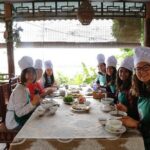
The class does not split everyone into isolated stations where you each do every step start-to-finish alone. Reviews explicitly mention that the group cooks together, which makes the experience feel more family-like.
This is both a plus and a small trade-off.
- The plus: you learn faster because you see what others are doing, and the host can explain once to the whole group.
- The trade-off: you might not be hands-on for every single micro-step every minute, especially during busy prep and frying.
So, if you love cooking because you want maximum personal control, manage expectations. If you love cooking because you want to learn, laugh, and get a solid result at the end, you will likely enjoy this setup more than a rigid “conveyor-belt” class.
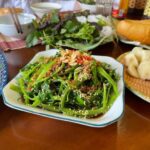
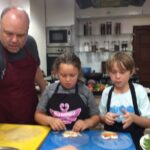
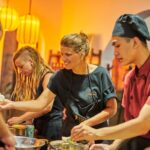
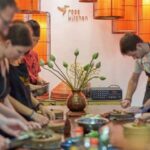
Lunch, Brunch, or Dinner in a Cozy Space
After cooking, you sit down and eat. The experience is built around your meal timing:
- Morning session: lunch
- Midday session: brunch
- Evening session: dinner
That design is surprisingly useful. It lets you plan your day around one event instead of trying to squeeze in food after. You are fed right after the cooking experience, when the food is still fresh and the whole group is hungry from market walking and kitchen work.
You also get coffee and/or tea along with mineral water. Mineral water is listed as free and unlimited, so you can stay hydrated during the cooking (and later during the meal). One practical tip: if you are sensitive to strong flavors, start with the lighter parts of the plate and use water to reset between tastier bites.
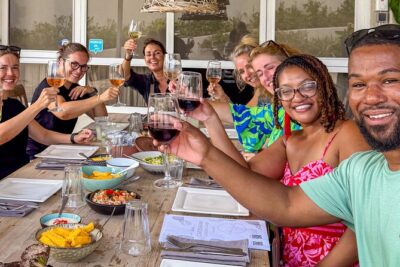
And yes, there is alcohol included. A free 350ml bottle of local fruit wine per class is listed as part of what you get. If you plan to skip alcohol, you can still enjoy the meal and the learning. If you do drink, treat it like a relaxed add-on rather than a party component; the class is about cooking and eating, not turning into a night out.
Drinks, Fruit Wine, and That Included Coffee Moment
Included drinks are not just filler. The package includes:
- Coffee and/or tea
- Free unlimited mineral water
- A free 350ml bottle of local fruit wine per class
One review highlighted egg coffee as a memorable item connected to the included coffee/tea setup. Egg coffee is not listed in the tour details, but it does show up as a real-life highlight in the experience, so it is worth staying open to what the host serves alongside coffee.
If you are thinking about value, this is part of what you pay for. Many cooking classes charge extra for drinks, and some keep meal portions small. Here, the meal is already built in and the drinks are included, so you are less likely to end up paying surprise costs once you are seated.
Price and Value: Why $35 Can Make Sense
At $35 per person, this class looks affordable on paper—but the real question is what you actually receive.
You get:
- A guided market walk where you pick ingredients
- A hands-on class that results in five dishes
- Coffee/tea and unlimited mineral water
- A full meal that matches your session (lunch, brunch, or dinner)
- Recipes after the class
- A certificate of completion
- A free bottle of local fruit wine per class
For Hanoi, that combination is the core value: food instruction plus food consumption, all in one block of time. The biggest “cost driver” in these experiences is usually not the cooking itself—it is the market component and the instructor attention. Here, the market tour and the fact you cook multiple dishes are what justify the price.
The other value lever is time. The whole thing runs about 3 hours, so you are not sacrificing half a day. You also get a predictable ending: it finishes back at the meeting point.
Where You Start, How the Time Feels, and What to Bring
You meet at Hanoi Solo Hostel at the address listed above. That is useful because you are starting from a clear landmark rather than a vague street corner.
From there, expect the day to flow in three stages:
- Guided market buying and ingredient learning
- Cooking and shared prep through the five dishes
- Eating your results in a cozy space
Because the class is about 3 hours, plan it as a primary activity, not something to squeeze between two other long plans. Wear comfortable shoes. Markets and kitchen floors are not always forgiving, and you will be standing and moving during the ingredient tour.
What to bring is simple:
- Comfortable clothes you can get slightly messy in
- A reusable water plan in your day (though unlimited mineral water is included here)
If you want to get the most out of the market portion, take note of the guide’s phrases and ingredient names. Reviews specifically mention learning basic Vietnamese phrases to buy food yourself, and using those words later in the day is a fun way to extend the benefit.
Who This Class Suits Best (and Who Should Skip)
This class is a good fit if you:
- Want hands-on cooking, not just tasting
- Like learning through real ingredients at the market
- Recognize Hanoi dishes like pho and bun cha and want to understand how they are built
- Appreciate an instructor who is patient and friendly, like the hosts named in reviews
It may be less ideal if you:
- Want a very quiet, personal, one-on-one cooking style
- Prefer isolated cooking stations where you do everything start-to-finish without sharing kitchen time
- Are not interested in any alcohol add-on (even though the meal and water are included, the fruit wine is part of the package)
For families, the experience also seems workable. One review mentioned a group with kids and adults, describing a fun cooking flow and good pacing thanks to a patient host.
The Bottom Line: Should You Book This Cooking Class?
If you want a food-focused Hanoi experience that combines market learning, hands-on cooking, and a meal in one tidy block, I think this is a smart pick. The fact that you cook five dishes and the class includes the drink setup and leave-with-you recipes pushes it into good value territory.
I would book it if you care about learning the process behind Hanoi staples like pho, bun cha, and fried spring rolls, and if you like hosts who teach in a friendly, low-pressure way. Just go in knowing it is a group cooking format, so you will cook together rather than control every step alone.
FAQ
How long is the Hanoi cooking class?
It runs for about 3 hours.
Where does the class start?
The meeting point is Hanoi Solo Hostel, 37 P. Mã Mây, Hàng Buồm, Hoàn Kiếm, Hà Nội 100000, Vietnam.
What will I cook during the class?
You will learn to cook iconic Vietnamese dishes such as pho, bun cha, and fried spring rolls, and you will enjoy 5 dishes you create during the class.
What meals and drinks are included?
Coffee and/or tea are included, along with free unlimited mineral water. You also eat the meal you create: lunch if you join the morning session, brunch if you join the midday session, and dinner if you join the evening session.
Is local fruit wine included?
Yes. A free 350ml bottle of local fruit wine is included per class.
Do I get recipes or any kind of certificate?
Yes. You receive recipes after completing the cooking class and a certificate of completion after finishing.
Do I need to worry about taxes or fees being included?
The tour details say all fees and taxes are not included.
If you tell me what session you’re considering (morning, midday, or evening) and what kinds of dishes you like most, I can help you decide whether this fits your Hanoi schedule.