REVIEW · NEW DELHI
14 Days Golden Triangle with Wildlife Safari & Heritage Rajasthan
Book on Viator →Operated by Golden Triangle Tours India · Bookable on Viator
A Golden Triangle trip with wildlife built in? That’s the hook. This private 14-day route strings together Delhi, Agra, Jaipur and then keeps going through Udaipur, Jodhpur, Pushkar, and Mandawa, with guided sightseeing plus safari time. I like that you get door-to-door air-conditioned transfers and real local guidance, not just a bus-and-board approach.
If you’re big on efficient travel, two things I’d pick right away are the private tour setup (your group only) and the included basics that save hassle, like bottled water and the battery bus ride to the Taj Mahal area. The one thing to consider: some major monument entry fees are not included, so you’ll want to budget for tickets on top of the tour price.
A small but meaningful detail: one booking contact named Mr. Gopal has been noted for reaching out to help add flexibility, which is exactly the kind of service that can make tight days feel smoother. Still, this is a serious amount of ground to cover—especially with early starts and long driving days—so pace is the trade-off for seeing a lot.
In This Review
- Why This Private Golden Triangle Trip Feels More Like Your Trip Than a Schedule
- Key Highlights That Actually Matter on the Ground
- Delhi Starter Pack: Gurdwara Peace, Qutub Minar Drama, and Old Delhi Foot Traffic
- Agra With Purpose: Taj Mahal Sunrise, Interior Time, and the River-Garden View
- Fatehpur Sikri, Chand Baori, and Ranthambore Safaris: When Heritage Turns Into Wildlife Time
- Jaipur in Full Color: Stepwells, Palaces, Jantar Mantar, and Jhalana Safari Nights
- Udaipur to Jodhpur to Pushkar to Mandawa: Rajasthan Heritage Beyond the Usual
- Udaipur: Lake views plus boat time
- Jodhpur: Mehrangarh and the Marwar story
- Pushkar: temple and lake rituals
- Mandawa: painted havelis
- Price and What You’re Really Buying at $835.72 per Person
- Smart Packing and Day-to-Day Comfort Notes (No Guesswork)
- Should You Book This 14-Day Safari and Heritage Golden Triangle Trip?
- FAQ
- How long is the tour?
- Where does the tour start?
- Is this a private tour?
- Are hotel stays and breakfast included?
- Are safari rides included?
- Does the tour include the Taj Mahal approach transport?
- Are monument entry fees included?
- What’s the accommodation setup for groups?
Why This Private Golden Triangle Trip Feels More Like Your Trip Than a Schedule

This tour is built around comfort and control. You’re not sharing vehicles with strangers, and you get private local guides for sightseeing, which matters when you want the story behind what you’re seeing (instead of just facts printed on signs).
A few practical pieces that really add up:
- Door-to-door transfers each day mean less hunting for meeting points.
- The ride type matches your group size: a 4-seater sedan for 1–2 people, a 6-seater wagon for 3–4, and a 10-seater minivan for 5–10.
- You’ll generally get twin-sharing rooms, and if you book as three people the default is triple-sharing unless you pay for two rooms.
For wildlife lovers, the “private” part isn’t just about city comfort. It also keeps the day fluid around safari timing.
Key Highlights That Actually Matter on the Ground
- Door-to-door, air-conditioned transfers to reduce daily stress.
- Private local guides for sightseeing, which helps you understand what you’re looking at.
- Two safari windows at Ranthambore plus an extra Jhalana safari experience.
- Battery bus ride to the Taj Mahal monument area, cutting down on the long approach.
- Included bottled water during journeys to keep long drives easier.
You can also read our reviews of more tours and experiences in New Delhi.



Delhi Starter Pack: Gurdwara Peace, Qutub Minar Drama, and Old Delhi Foot Traffic
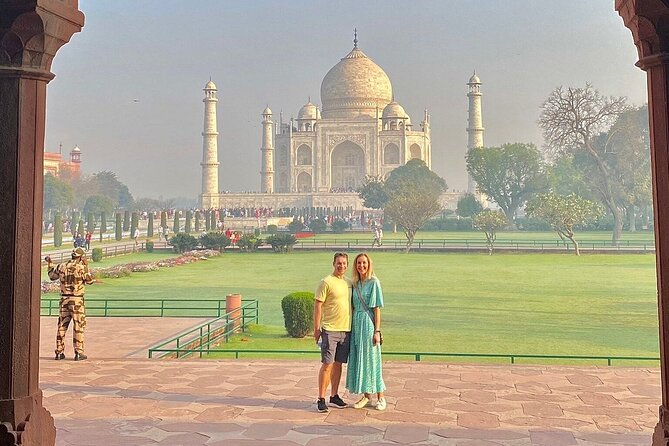
Delhi is where most people either get their bearings fast—or feel overwhelmed. This route does a bit of both by mixing major landmarks with Old Delhi energy.
Start in New Delhi with a gentle cultural landing: you’ll be picked up at Indira Gandhi International Airport (Terminal 3) and transferred to your hotel. Then you head to Gurdwara Bangla Sahib, a Sikh temple where the standout is the serene, lived-in atmosphere—large community spaces, simple routines, and that feeling of stepping into a place where faith is daily life, not a museum exhibit.
Next you’ll see Agrasen ki Baoli, a historic stepwell. It’s short on time compared to some big monuments, but stepwells hit differently once you understand they were built to manage water and shade for people moving through the city.
Day two leans classic Delhi:
- Qutub Minar (UNESCO) with its tall, layered architecture and the sense of how old Delhi’s skyline really is.
- Lotus Temple, open to everyone, with that clean, modern form that works surprisingly well as a visual reset between older sites.
- India Gate for a quick memorial stop.
- Jama Masjid and Chandni Chowk, which is where Delhi turns into a maze of shopping lanes—spices, silver jewelry, and narrow streets that demand you walk with intention.
You’ll also pass Humayun’s Tomb, a Mughal-era masterpiece that sits in a more spacious, garden-like setting than you might expect, which helps if you need a breather after Old Delhi.
Possible drawback here: Delhi is big, and moving between sites means you’ll spend time in the car. The advantage is that the tour keeps the driving purposeful, so you’re not bouncing randomly across the city.
Agra With Purpose: Taj Mahal Sunrise, Interior Time, and the River-Garden View
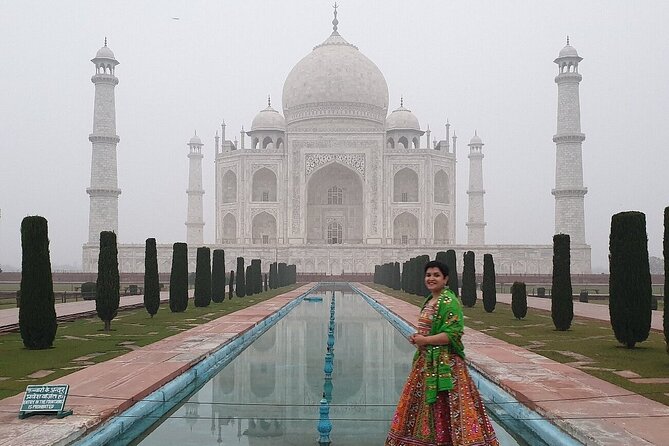
Agra is where you can feel the trip shift from sightseeing to something close to awe—especially when you’re doing the Taj Mahal twice.
First, you’ll go from Delhi to Agra (about a 4-hour drive over roughly 222 km). After check-in, you’ll see the Taj Mahal complex, plus key Agra companions:
- Agra Fort, tied to major Mughal rulers and filled with the kind of layered power-stories that make forts more than just stone.
- Itmad-ud-Daula, sometimes called the Baby Taj. It’s smaller, but it’s often a more intimate look at Mughal tomb design.
- Mehtab Bagh, the Moonlight Garden, which gives you that riverside framing for the Taj—best for photos when the light cooperates.
Then comes the highlight: watching the sunrise over the Taj Mahal, with a guided visit inside for about two hours. That combination is tough to beat because morning light changes how marble feels, and the guide time helps you see beyond the postcard.
One included perk that’s practical, not flashy: there’s a battery bus ride between the Taj Mahal parking area and the monument area. That matters because walking time around big tourist zones can eat your energy fast.
A small consideration: Taj Mahal entry tickets are not included, so plan for monument fees during your stay in Agra.
Fatehpur Sikri, Chand Baori, and Ranthambore Safaris: When Heritage Turns Into Wildlife Time
On the way to wildlife country, you’ll hit two heritage stops that most Golden Triangle trips either skip or rush.
Fatehpur Sikri is the Mughal “city of victory,” built in the late 1500s and used as a capital for about a decade. Even in the time you have, it feels like a place planned on a grand scale. If you like your history visual, you’ll appreciate how the buildings sit within a larger complex.
Then there’s Chand Baori in Abhaneri, a stepwell that stretches far into the ground. Stepwells are one of the most underrated heritage styles in Rajasthan, and this one is built to impress with sheer depth and geometry.
From there you reach Ranthambore National Park, check in, and the next day you start safari mode.
Ranthambore is the main wildlife anchor here, with two safari rides: one after breakfast and another in the evening. Each safari is around three hours, and the entrance is included, with safaris run as canter or jeep. You’re not guaranteed animal sightings—wildlife doesn’t work like a theme park—but this is one of the best ways to target tigers and other big cats, because you’re spending real time in the park.
Practical point: because you’re doing two safaris, you’ll want to pack for long stretches outdoors (water, sun protection, and whatever helps you feel comfortable in early morning light). The tour does include bottled water during journeys, which helps between drives.
Jaipur in Full Color: Stepwells, Palaces, Jantar Mantar, and Jhalana Safari Nights
Jaipur often gets reduced to Hawa Mahal photos. This route gives you more texture than that.
You start with Galtaji Temple, also known as the monkey temple. It’s a quick stop, but it’s lively in a way that’s hard to replicate elsewhere—temple pools, stone paths, and that constant sense of movement.
Next is Birla Mandir, perched on elevated ground. It’s a calmer stop, and it helps break up the day before you dive into Jaipur sightseeing.
Then you’ll check in and later head to Jhalana Safari Park, included as an evening safari option. This is a great addition because it lets you keep wildlife in the picture without replacing city days entirely.
The next full day in Jaipur is packed with landmarks people actually come here for:
- Panna Meena ka Kund, another stepwell, which gives you that “water architecture” theme across Rajasthan.
- A guided walk through the palaces and monuments area tied to the city’s royal past.
- Jal Mahal for a short photo stop at the palace on Man Sagar Lake.
- City Palace, where you’ll spend about an hour inside and see the palace as both a power center and a museum-style collection.
- Jantar Mantar, a UNESCO site of astronomical instruments built in the 1700s by Sawai Jai Singh II. It’s fun to watch people pause and realize these aren’t random sculptures—they’re tools built for measuring the sky.
- Hawa Mahal, the Palace of Breeze, a quick hit that’s best when you view it from a few angles rather than treating it like a single-stop photo.
Possible drawback: Jaipur days can feel like a “hit parade” because the sites are close-ish, but you’re still stacking many entrances and walking blocks into limited daylight. The good news is that the pacing is guided, so you’re not spending hours figuring out what to do next.






Udaipur to Jodhpur to Pushkar to Mandawa: Rajasthan Heritage Beyond the Usual
After Jaipur, the route shifts from the Golden Triangle label into a broader Rajasthan heritage sweep.
Udaipur: Lake views plus boat time
You’ll drive early to Udaipur, check in, and then get an easy evening framework: local markets and dinner on your own. The next day includes time by Lake Pichola, with an included private boat ride and stops connected to Jagmandir Palace island.
Then it’s City Palace and Jagdish Temple. The palace gives you a sweeping view back toward the lake, and the temple adds a more religious, everyday rhythm inside the city-palace complex area.
There’s also Bagore Ki Haveli Museum, which is included with guide and private transportation, with an option to skip. That flexibility is useful if you prefer to spend time walking outside rather than inside a museum.
Jodhpur: Mehrangarh and the Marwar story
You’ll go to Jodhpur early and start with the Clock Tower Market area. Later, Mehrangarh Fort takes the spotlight. It’s a former royal stronghold turned museum, with weapons, paintings, and royal palanquins on display. Fort museums work best when you have a guide explaining why certain items were collected and how daily life functioned inside a royal system.
You’ll also see Umaid Bhawan Museum and Jaswant Thada, the marble cenotaph associated with the Marwar kings.
Then there’s a standout nature/culture add-on: an afternoon excursion to a Bishnoi village (highly recommended). This is where the day feels less like forts and more like how people live nearby, though you’ll want to keep an open mind and follow your guide’s cues for respectful interaction.
Pushkar: temple and lake rituals
After driving to Pushkar, you’ll visit Brahma Temple and then head to Pushkar Lake and Brahma Ghat. The tour framework includes prayer moments and photo opportunities around the ghat area.
Mandawa: painted havelis
On the last stretch before returning to Delhi, Mandawa brings a calmer, heritage-focused end. You’ll visit Francisco painted havelies, then explore the village area in the evening. This part of the route is ideal if you like textured streets and old architecture rather than only famous monument lists.
Price and What You’re Really Buying at $835.72 per Person
At $835.72 per person for a roughly 14-day trip, the headline value comes from how much is handled for you. This isn’t just “transport between places.” It includes:
- Private, air-conditioned vehicle with a driver
- Hotel or airport pickup and drop-off
- Daily breakfast if you choose the hotel-included option
- Private local guides for sightseeing stops
- Ranthambore safari entrance with canter/jeep
- Jhalana safari entrance
- Battery bus ride to the Taj Mahal monument area
- Bottled mineral water during journeys
What you should budget separately:
- Monument entry fees (listed as not included)
- Any meals (also not included)
- Tips for driver/guide
- Travel insurance and flights or train tickets
So the value equation becomes clear: if you’re someone who hates adding up entrance fees and trying to coordinate tickets yourself, the included guidance and safari access makes this feel fair. If you’re comfortable self-ticketing and you’re already set up with hotels and local guides, you might feel like you’re paying extra for convenience.
Also note room structure: you’ll usually get twin-sharing rooms, and group-size booking can change room occupancy unless you request two rooms for a party of three.
Smart Packing and Day-to-Day Comfort Notes (No Guesswork)

This tour is built for movement. To make it feel good, plan around:
- Early starts, especially with the Taj Mahal sunrise day.
- Long driving blocks, like Delhi to Agra and later the multi-city Rajasthan drives. You’ll feel it most if you’re sensitive to time on the road.
- Sunscreen and water habits, since days include outdoor walking and safari time. Bottled water during journeys is included, but you should still keep your own comfort items ready.
- Footwear for uneven stone steps, forts, and stepwells. You’ll thank yourself on the Chand Baori and fort/museum days.
Because this is a private tour, the experience hinges on your group’s energy level. If you like fast pacing with guided context, you’ll enjoy it. If you want a slow travel pace with fewer hotel changes, this route might feel like too much.
Should You Book This 14-Day Safari and Heritage Golden Triangle Trip?
Yes, if you want a single trip that mixes the famous Golden Triangle sights with actual wildlife time and extra Rajasthan heritage. The private setup, daily transfers, private guiding, and safari inclusions are the reasons this works.
I’d hesitate only if you strongly dislike early mornings, you’re counting every entrance fee in advance, or you want lots of free unscheduled downtime. This trip is built to keep the days moving, which is great for seeing more—but you’ll need to meet it halfway.
If you’re the type who wants great landmarks and the chance to spot animals in the wild, this is a solid match.
FAQ
How long is the tour?
The experience is about 14 days.
Where does the tour start?
It starts with pickup at Indira Gandhi International Airport, New Delhi (Terminal 3).
Is this a private tour?
Yes. It’s a private tour/activity, and only your group participates.
Are hotel stays and breakfast included?
Accommodation and daily breakfast are included if you book the option that includes hotels.
Are safari rides included?
Yes. Ranthambore Safari Park entrance is included with canter or jeep, and Jhalana Safari Park entrance is also included.
Does the tour include the Taj Mahal approach transport?
Yes. A battery bus ride to and from the Taj Mahal parking lot up to the monument area is included.
Are monument entry fees included?
No. Monument entrance fees are listed as not included.
What’s the accommodation setup for groups?
Rooms are generally twin-sharing. For a booking of 3 people, rooms are generally provided on triple-sharing by default unless an additional charge is paid for 2 rooms.