REVIEW · NEW DELHI
Five Course Cooking Class & Meal
Book on Viator →Operated by TASTESUTRA · Bookable on Viator
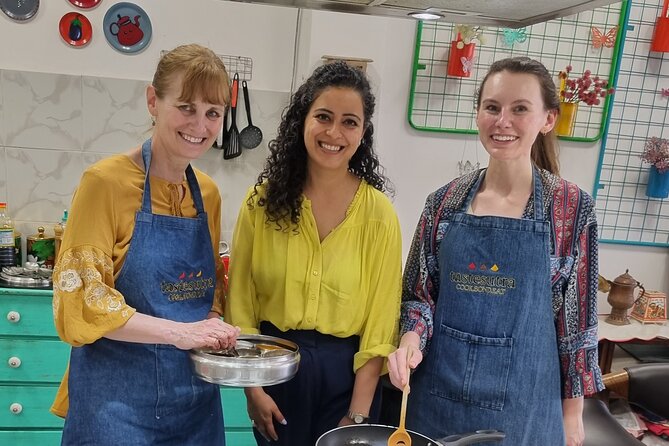
Spice lessons, then you eat what you cook. In a clean studio near Lajpat Nagar Metro, Tastesutra turns Indian flavor into a hands-on class with step-by-step coaching and a sit-down lunch you make yourself. I love how the chef-guided workflow keeps you actually cooking, not hovering. I also love the attention to spice timing and ratios, which is the difference between bland and properly Indian at home.
One caution: three hours is tight, so the class moves at a steady pace. If you prefer slow, relaxed cooking with lots of wandering around, you may feel a bit rushed—but that pace is also why you get five courses in one go.
In This Review
- Key highlights at a glance
- A five-course cooking studio in South Delhi (easy to reach)
- Your spice “how” and “when” lesson (the part that sticks)
- The five courses you’ll cook (and what each teaches you)
- Chicken dish: learning depth, not heaviness
- Paneer dish: getting creamy without turning rubbery
- Lentils: the thickness and flavor you can reproduce
- Seasonal vegetable: spice behavior across ingredients
- Rice, breads, and dessert: turning ingredients into a real table
- Hands-on kitchen time: you cook every step, not just watch
- The meal: what lunch feels like after you’ve cooked it
- Vegetarian, vegan, and gluten-free: request it early and you’ll be happier
- Price and value: why $60.82 makes sense here
- Who should book this cooking class in New Delhi?
- Should you book? My take
- FAQ
- How long is the five-course cooking class?
- Where does the class start?
- What’s included in the price?
- What dishes will I learn to make?
- Can I request vegetarian, vegan, or gluten-free options?
- Is this a private group?
- What is the cancellation policy?
Key highlights at a glance
- Near Lajpat Nagar Metro Station for an easy start and quick escape when you’re done
- Five-course hands-on menu with chicken, paneer, lentils, seasonal vegetable, rice, breads, and dessert
- Spice timing and mixing taught clearly, not just listed as ingredients
- Vegetarian, vegan, and gluten-free options you can request at booking
- Private group setup, with a max group size of 20, so it still feels personal
- Beverages and lunch included, and you eat what you cooked
A five-course cooking studio in South Delhi (easy to reach)
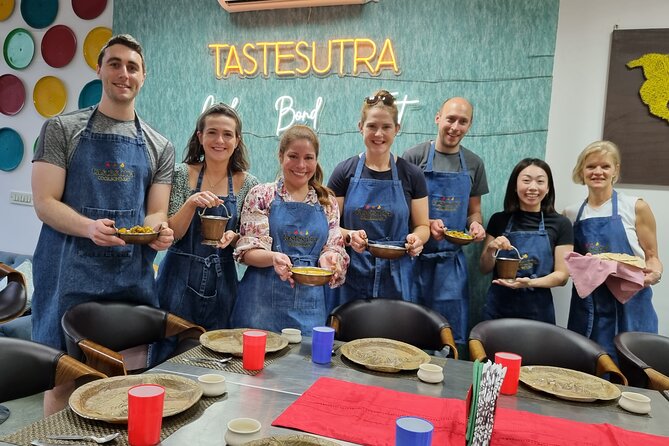
This class runs for about three hours and starts at Tastesutra Cooking Studio, first floor, A-20, near Lajpat Nagar Metro Station in Lajpat Nagar II. The location matters more than you’d think. South Delhi can feel spread out, and being close to the metro means you spend less time negotiating traffic and more time in the kitchen.
You’ll be in a private group for your booking, with a minimum of two people and a maximum of 20. In plain terms: it’s small enough for the instructor to help when things go wrong (and things sometimes do), but big enough that the energy stays fun.
You also get a mobile ticket, and confirmation comes at the time of booking. That’s handy if you like to plan day-by-day and don’t want to chase email chains right before class.
You can also read our reviews of more tours and experiences in New Delhi.


Your spice “how” and “when” lesson (the part that sticks)
The standout theme here is spices with context. You’re not just following a recipe. You’re learning why a spice goes in early versus late, and how mixing changes the final flavor.
In this type of cooking, timing is everything. Whole spices might bloom in hot oil to wake up flavor. Ground spices often need a shorter, gentler cook so they don’t turn flat. And heat level? You should feel free to adjust. One helpful review-note you can take seriously: people appreciated being able to reduce chili when they wanted.
Instructors also tend to connect spices to Indian daily cooking and eating customs. Some guests mention story-telling and even health angles, like how spices are used beyond taste. If you care about making Indian food at home without it turning into a one-note curry, this is the right focus.
And yes, drinks are part of the experience too. Multiple guests single out the chai as a favorite moment, which makes the class feel less like a rushed cooking lab and more like a warm, food-centered afternoon.
The five courses you’ll cook (and what each teaches you)
This is a structured class built around five courses, plus the sides and dessert that make it feel like a full meal, not a snack session. The core list includes:
- one beverage
- a chicken dish
- a paneer dish
- lentils
- a seasonal vegetable dish
- rice
- breads
- dessert
What I like about this menu is that it teaches variety. Chicken and paneer train you on handling proteins and balancing richness. Lentils teach texture and thickness, and how to build depth without relying on just one flavor trick. Seasonal vegetables keep you thinking about crunch, tenderness, and how spices behave with different ingredients.
Chicken dish: learning depth, not heaviness
You’ll work through a chicken recipe that’s meant to taste balanced—spices, aromatics, and technique all doing their jobs. The goal isn’t to overpower everything with chili or salt. It’s to learn how Indian cooking builds flavor layers.
Paneer dish: getting creamy without turning rubbery
Paneer can go wrong fast if you overcook it. The class format helps you understand when to add it and how to keep the texture right. If you’ve ever had paneer that was either bland or oddly firm, this is the fix.





Lentils: the thickness and flavor you can reproduce
Lentils are where many home cooks get stuck. You may know the spices, but getting the right consistency and seasoning takes practice. A dedicated lentil course is a great use of your time because it teaches technique you’ll use for dals back home.
Seasonal vegetable: spice behavior across ingredients
A seasonal vegetable dish is smart training. Vegetables don’t behave like meat or paneer. They respond differently to heat, oil, and spice timing. Cooking it in class helps you learn what to tweak when the ingredient changes.
Rice, breads, and dessert: turning ingredients into a real table
The meal includes rice and breads, which is key. Indian food is often about the combination: sauce plus bread or rice, and how each bite works. Dessert rounds it out so you don’t leave with the feeling that you only learned savory dishes.
Hands-on kitchen time: you cook every step, not just watch
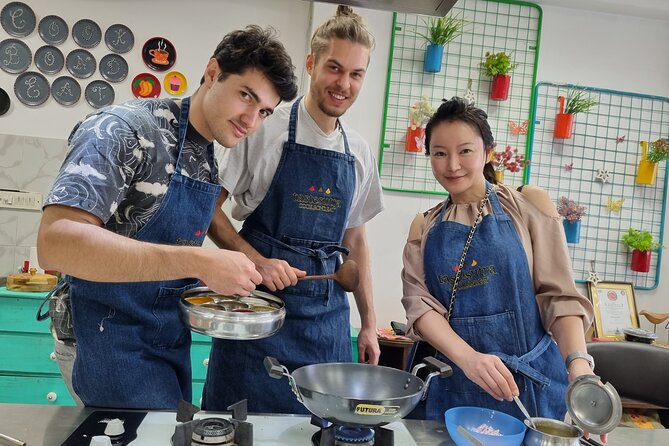
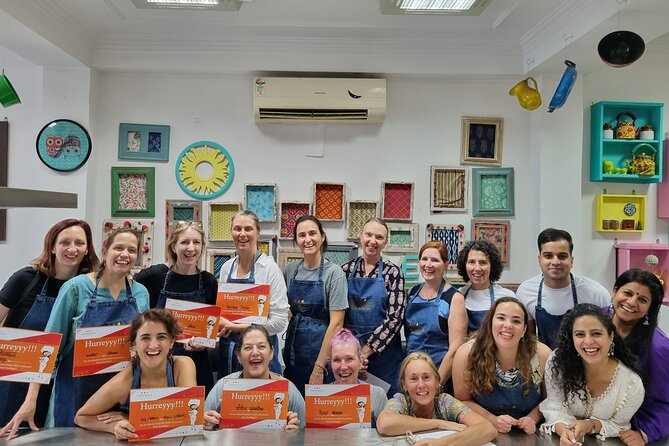
One thing that shows up again and again in the feel of this class is participation. The teaching is built so you do the work—prep, cooking, mixing, tasting. If you’ve taken cooking classes before where you basically stand there and cheer, you’ll notice the difference here.
The studio is described as very clean, which matters when you’re chopping, tasting, and cooking with spices. It also makes you trust the process. When the workspace is tidy, you can focus on technique instead of worrying about hygiene.
Group size is capped at 20, which can help keep things moving. Still, every class day has its rhythm. Three hours means you’ll likely jump between tasks—stir here, taste there, keep an eye on timing—so arrive with a good attitude and expect to work a little.
If you’re worried about being a beginner, don’t be. Step-by-step instruction is part of what guests praise most. A class like this is basically a structured path to confidence.
The meal: what lunch feels like after you’ve cooked it
Lunch (and drinks) are included, and it’s served after the cooking. That matters. When you cook and then eat the same dishes, you instantly learn what “done” tastes like.
This isn’t just about filling your stomach. It’s about reinforcing technique:
- If the lentils are too thick, you notice.
- If the spice level needs tweaking, you notice.
- If the bread timing is off, you notice.
Many people also mention the warmth of the hosts and how clearly the recipes are explained. Some guests remember learning about table manners and daily customs too, which makes the meal feel tied to culture rather than just food science.
And since beverages are included from the start, the class has a nice flow: settle in, learn, cook, then sit down with the results.
Vegetarian, vegan, and gluten-free: request it early and you’ll be happier
Options are available: vegetarian/vegan and gluten-free can be specified at booking. That’s a big deal because dietary needs aren’t a last-minute checkbox here. If you want to avoid surprises, request your needs right when you book.
One practical tip: pick what matters most to you. If gluten-free is critical, mention it clearly during booking. The class is designed to accommodate changes, but it’s still best to be direct so the kitchen can plan.
Also, don’t assume every dish changes the same way. The class menu includes a chicken dish by default, but with vegetarian or vegan options, you should expect the instructor to guide you through an adapted set. The key is that the option exists and can be arranged ahead of time.
Price and value: why $60.82 makes sense here
At $60.82 per person, you’re paying for more than a cookbook experience. You’re paying for:
- about three hours of instructor-led, hands-on cooking
- a full meal (lunch) plus beverages
- five courses with rice, breads, and dessert
- private group participation for your booking
- instruction focused on technique—especially spice mixing and timing
If you tried to replicate this alone, you’d buy spices, staples, and ingredients first. Then you’d spend time learning what went wrong. Here, you borrow the instructor’s shortcuts: what to cook first, how long to cook spices, how to balance a dish so it tastes like Indian home cooking rather than just “spices thrown in.”
It’s also close to the metro. That lowers the hidden cost of time and transport stress, which is part of value too.
Who should book this cooking class in New Delhi?
You’ll likely enjoy this most if you want:
- a hands-on way to learn Indian cooking basics
- practical spice knowledge you can actually use later
- a full meal experience that’s not just restaurant sightseeing
It’s also a nice fit for couples. Many people book it for a meaningful activity that still feels social. Family groups can enjoy it as well, since you’re making food together and eating together.
If you only want a quick taste of Indian flavors, this may be more work than you’re hoping for. It’s cooking class energy, not a casual snack tour. But if you like learning by doing, you’ll probably leave feeling capable.
One last note from guest experiences that I’d take seriously: some people mention receiving recipes after the class by email. That can be a useful follow-up if you want to recreate the dishes while the steps are fresh in your mind.
Should you book? My take
Book it if you want a real skill, not just a meal. The mix of five courses, emphasis on spice timing, and the fact that you cook and then eat are exactly what makes this kind of class valuable.
Skip it only if you hate structured cooking, feel uncomfortable following a pace, or you’re looking for a purely sightseeing day. Otherwise, this is one of those Delhi experiences that gives you something you can use long after your trip ends.
FAQ
How long is the five-course cooking class?
The class runs for approximately 3 hours.
Where does the class start?
You meet at Tastesutra Cooking Studio, First Floor, A-20, near Lajpat Nagar Metro Station, Block A, Lajpat Nagar II, Lajpat Nagar, New Delhi.
What’s included in the price?
Beverages and lunch are included. No items are listed as not included.
What dishes will I learn to make?
The class includes one beverage, a chicken dish, a paneer dish, lentils, a seasonal vegetable, rice, breads, and dessert.
Can I request vegetarian, vegan, or gluten-free options?
Yes. Vegetarian/Vegan/Gluten Free options are available, and you should advise at booking.
Is this a private group?
Yes, it’s a private tour/activity where only your group participates. The group size is a minimum of 2 people and a maximum of 20.
What is the cancellation policy?
You can cancel up to 24 hours in advance for a full refund. If you cancel within 24 hours of the start time, there is no refund.