REVIEW · WARSAW
Warsaw’s No 1 cooking class-Polish dumplings with liqueur tasting
Book on Viator →Operated by Maria Oskroba · Bookable on Viator
Pierogi-making beats another museum hour. In this Warsaw class, you’ll learn how to form Polish dumplings from dough to folding, and you’ll cap it with an included Polish liqueur tasting. It’s also run in English, with a tight group size that makes it feel like a real small-table dinner, not a factory.
I especially love the hands-on step-by-step teaching: kneading, rolling, choosing fillings, and using smart folding methods so your pierogi actually hold together. I also like the fact that vegetarian and vegan options are available on request, with careful handling so everyone can eat comfortably.
One thing to consider: the room can run warm, so bring a water-friendly mindset and expect a bit of heat while you cook and stand at your station.
In This Review
- Key highlights you’ll care about
- Warsaw Pierogi Cooking Class Basics: Small Group, English, and a Real Dinner
- From Dough to Dumplings: What You’ll Learn During the Class
- Meat and Veg Fillings, Plus Vegan Pierogi Done Right
- Rolling, Sealing, and the Folding Tricks That Actually Work
- Cooking and Boiling: When to Eat (and Not Before)
- Polish Liqueur Tasting: A Fun Finish, Not a Hard Sell
- Price and Value: What $77.97 Gets You in Warsaw
- Location and Getting There: Stawki 3 Is Convenient Enough
- The Social Side: Meeting People Over Your Own Pierogi
- Who Should Book This Pierogi Class (and Who Might Not)
- Should You Book Warsaw’s No 1 Cooking Class for Pierogi and Liqueurs?
- FAQ
- How long is the Warsaw pierogi cooking class?
- Is the class offered in English?
- Does the class include liqueur tasting?
- Are vegetarian or vegan options available?
- How many people are in the class?
- Is it suitable for children?
- What is the cancellation policy?
Key highlights you’ll care about
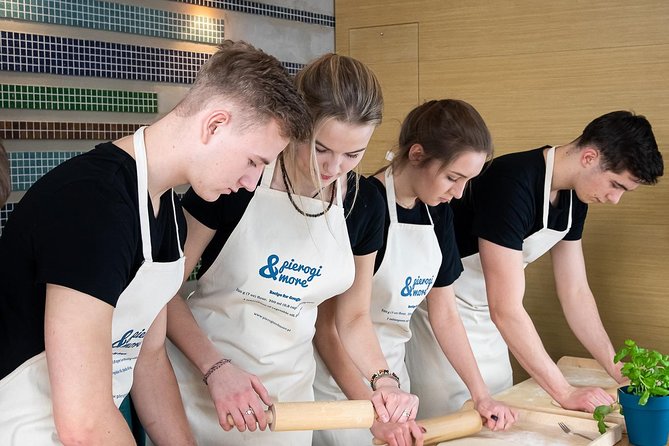
- Pierogi from scratch: dough work, rolling, and multiple folding techniques
- Meat + veg fillings, plus vegan on request
- You cook and then eat what you make family-style at the end
- Polish liqueur tasting included, with a playful guided moment
- Small groups (max 10) with lots of coaching at each station
- Follow-up help: photos and a recipe/tips may be sent after the class
Warsaw Pierogi Cooking Class Basics: Small Group, English, and a Real Dinner
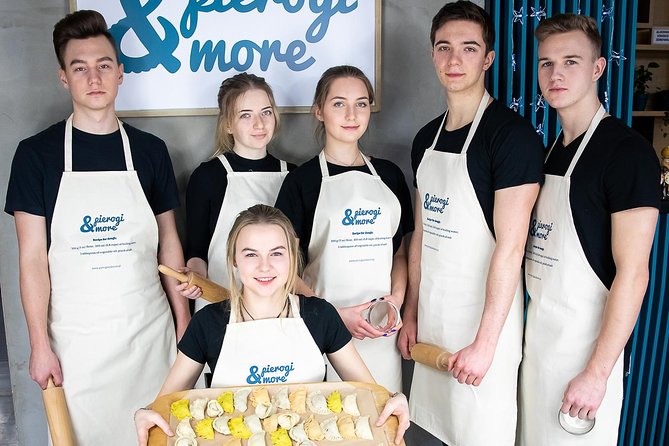
This experience is based in Warsaw at PIEROGI & MORE, Stawki 3 (00-193 Warszawa). Plan on about 2 hours, and know you’re usually booking a month ahead on average—so if you’re set on a specific evening, I’d lock it in early.
You’re paying $77.97 per person, which sounds like a lot until you remember what you’re getting: actual cooking instruction, ingredients and equipment handled for you, a full meal (you do the work and then eat the results), plus a Polish liqueur tasting. In places where you only watch or snack, the value often slips. Here, the structure is built around doing and eating.
The class runs in English and is capped at 10 travelers. That matters. With small groups, instructors can keep an eye on your dough consistency and your sealing technique, so you spend less time guessing and more time learning.
You can also read our reviews of more tours and experiences in Warsaw.

From Dough to Dumplings: What You’ll Learn During the Class
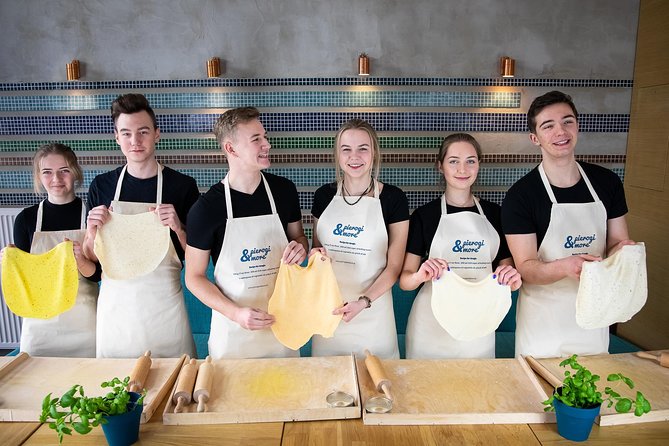
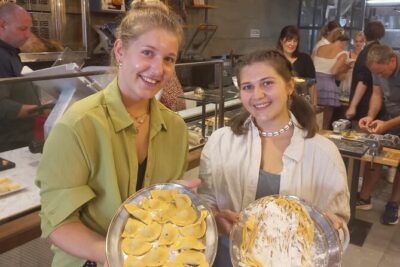
The core of the class is learning how pierogi are made the Polish way, not just assembling something pre-made. You start with a short introduction that covers pierogi origins and how the dish fits into Polish food culture. Then it’s straight into the work.
Here’s what you’ll do, in practical order:
- Knead the dough so it becomes smooth and workable (not sticky, not dry)
- Roll it out properly so it’s thin enough to cook well, but sturdy enough to fold
- Learn filling options and how to portion them without overstuffing
- Practice folding techniques to seal dumplings cleanly
- Get tips and hacks that make the result more tasty and more reliable
What I like about this setup is that it treats pierogi like a skill. You’re not just copying one shape. You learn patterns and methods, so if you want to tweak a style later, you’re doing it with a reason.
The teaching pace also helps. Multiple reviews mention clear instructions and an organized flow, with instructors moving around constantly to coach and correct in real time. If you’re the type who hates feeling rushed, the small-group format is a big plus.
Meat and Veg Fillings, Plus Vegan Pierogi Done Right
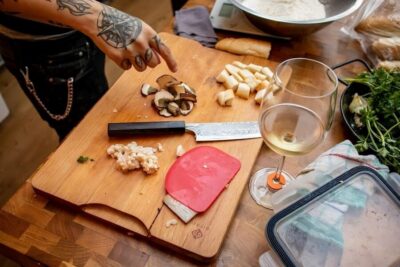
Most pierogi classes focus on one filling and call it a day. This one teaches pierogi with meat or vegetable fillings, and it also offers vegetarian and vegan options if you request them ahead of time.
This matters because fillings aren’t just flavor—they affect texture and how your dough performs once you fold and cook. If you choose meat, you’ll get a sense of how to balance the filling so it doesn’t steam out or leak. If you choose veg, you’ll learn how to work with flavors that can feel lighter but still need proper seasoning.
One detail I consider really important for anyone with dietary needs: the class can handle vegan and vegetarian in a way designed to avoid cross contamination. That’s especially reassuring if you’re trying to eat with confidence rather than hope.
If you’re traveling with someone who eats vegan/vegetarian, this is also a smoother compromise than many “everyone makes the same thing” cooking tours. You can all cook the pierogi style you actually want to eat.
Rolling, Sealing, and the Folding Tricks That Actually Work
Pierogi are simple ingredients—but the folding is where it becomes a real craft. This class spends real time on folding and sealing, including techniques that help dumplings stay closed during cooking.
You’ll get to practice a few approaches, and the instructors explain what to look for as you go—things like dough thickness, how much filling is too much, and how to press the edges so you don’t end up with open dumplings. Several reviews highlight that the instructors encourage your own creative folding too. That’s a nice touch: you learn the method, then you’re not punished for making it your own.
If you’ve ever tried pierogi at home, you already know the truth: your first batch can be ugly. That’s not the point. The point is learning the technique so the next batch gets easier.
Cooking and Boiling: When to Eat (and Not Before)
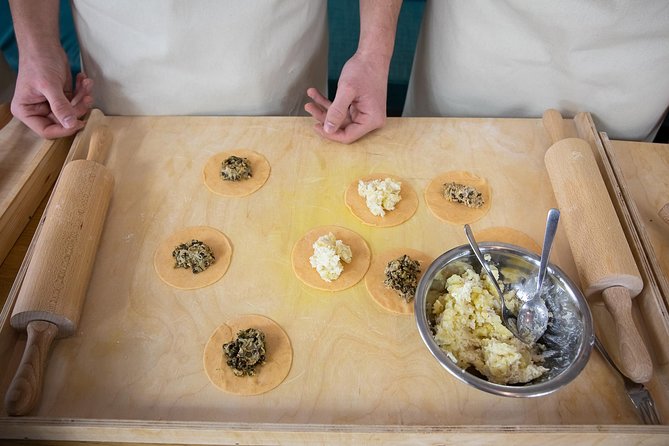
At some point after assembling, you’ll cook your dumplings—there’s a demonstration for boiling and then you’ll learn what to watch for so the pierogi are ready. You’re not left standing around with a mysterious pot and a hope-and-pray attitude.
The class ends with you eating what you produced. That’s a major advantage: you get immediate feedback. If a dumpling opened, you can recognize why. If the texture is off, you’ll remember what you did with dough rolling or filling portion size.
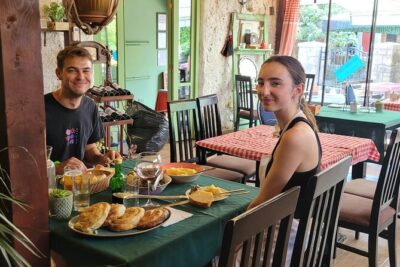
Also, the meal is served in a family-style setup, and you eat dumplings made by the whole class, not only your personal ones. That’s fun and social. The only drawback is if you’re very uncomfortable with shared food at a communal table setup. Otherwise, it’s part of the experience.
Polish Liqueur Tasting: A Fun Finish, Not a Hard Sell
The experience includes a Polish liqueur tasting at the end. Reviews describe it as a guided, light moment—one person even mentions a small game involving two liquors. It’s the kind of finish that turns your dinner into a real evening rather than a quick food lesson.
You don’t need to be a spirits expert to enjoy it. Think of it as a flavor comparison exercise: sweet vs herbal vs fruity notes, and how Polish liqueurs pair with rich dumplings and warm food.
Also, since it’s integrated into the class flow, it doesn’t feel like an extra cost add-on. You’re already cooking and eating—then they add a tasting as the final chapter.
Price and Value: What $77.97 Gets You in Warsaw
At $77.97 per person, you’re not just paying for ingredients. You’re paying for structured teaching, a meal, and the included liqueur tasting.
Here’s how I’d judge value:
- You’re in a small group (max 10), which usually improves coaching quality.
- You get full-time instruction: dough, filling, folding, and cooking.
- You finish by eating your own dumplings, which makes the lesson feel complete.
- You can request vegetarian/vegan options, so it’s not a one-size menu.
- Follow-up may include photos and a recipe afterward, plus tips for Warsaw.
If you’re the kind of traveler who likes to bring a skill home—not just photos—this price feels closer to a hands-on workshop dinner than a tourist gimmick.
Location and Getting There: Stawki 3 Is Convenient Enough
The meeting point is at PIEROGI & MORE warsztaty kulinarne at Stawki 3, 00-193 Warszawa. It’s near public transportation, and reviews also suggest it’s walkable to the Old Town area. In practice, that means you can pair this with a Warsaw evening plan without complicated logistics.
Since it ends back at the meeting point, you’re not charting a second location just to finish dinner. That keeps the evening smooth.
The Social Side: Meeting People Over Your Own Pierogi
I like that this class doesn’t feel like a lone-cooking lab. With a small group, you’re working near others, and then you sit together to eat. One review described it as a family meal vibe with strangers from different countries—exactly the kind of energy that makes food-focused tours so memorable.
If you travel solo, this can also be a low-pressure way to meet people because the activity forces conversation: what filling you chose, how your dough turned out, what folding shape you managed.
And if you’re traveling as a couple, it’s still fun because you’re sharing the same goal and then comparing results at the table.
Who Should Book This Pierogi Class (and Who Might Not)
This class is a strong fit for:
- Food lovers who want a real technique, not just a tasting
- Couples, small groups, and even solo travelers who enjoy shared meals
- Anyone who wants vegetarian or vegan pierogi with a real process
- Travelers who like leaving with a takeaway recipe and photos
It may be less suitable if:
- You’re bringing children under 8 years old (the class isn’t suitable for kids under 8)
- You dislike shared, family-style communal eating
- You’re very sensitive to warm indoor rooms while cooking
Also, keep in mind that some people come into these classes expecting to make every single component from scratch. One review noted a wish to make some fillings too. The format you’re buying is focused on dough, folding, and cooking—so that’s what you should expect to master.
Should You Book Warsaw’s No 1 Cooking Class for Pierogi and Liqueurs?
If you want an evening that’s equal parts skill-building, social dinner, and Polish flavor, I think you should book it. The biggest reason is simple: you get to make pierogi and then eat them while the lesson is still fresh in your head. That makes the experience useful, not just entertaining.
Book it especially if you care about technique—rolling dough, sealing dumplings, and using folding methods that hold up. And if dietary needs are part of your travel plan, the fact that vegetarian and vegan options are available on request (with attention to safe handling) is a serious advantage.
If you’re sensitive to heat, go in with water and a calm attitude. Otherwise, this is the kind of Warsaw experience that turns a Polish comfort food into a real takeaway you can repeat at home.
FAQ
How long is the Warsaw pierogi cooking class?
The class lasts about 2 hours (approx.).
Is the class offered in English?
Yes, the experience is offered in English.
Does the class include liqueur tasting?
Yes. A Polish liqueur tasting is included at the end.
Are vegetarian or vegan options available?
Vegetarian and vegan options are available on request.
How many people are in the class?
The class has a maximum of 10 travelers.
Is it suitable for children?
It is not suitable for kids under 8 years of age. If you bring a child, there must be at least 1 adult caring for the child during the class.
What is the cancellation policy?
You can cancel for free up to 24 hours in advance for a full refund. Canceling less than 24 hours before the start time isn’t refundable.