REVIEW · MILAN
Milan: Pasta & Tiramisu Cooking Class with Premium Products
Book on GetYourGuide →Operated by Milan Food Experience · Bookable on GetYourGuide
Fresh pasta, tiramisu, and a real home-kitchen feel in Milan. This 3-hour class teaches you the mechanics behind two pastas, Italian sauces, and dessert, then lets you eat everything family-style with wine.
What I love most is the focus on doing it yourself, not watching it happen. The small group (max 8) and English-led guidance from Chef Rafael make it personal and practical, and the tastings (olive oil, balsamic vinegar, artisan bread) give you flavor context while you cook.
One thing to consider: you’re cooking in a chef’s loft inside a private home, not a restaurant or formal cooking school, so it’s cozy and slightly hands-on in a real-life way.
In This Review
- Quick hits
- A chef’s loft in Milan: cozy, personal, and not “tour-schooled”
- Meeting point and the easiest way to show up ready
- Start with olive oil and balsamic: taste training before you cook
- Fresh pasta from eggs, flour, and a pasta machine
- Two sauces: tomato richness and Parmesan comfort
- Tiramisu: the dessert steps you can actually repeat
- The family-style meal and wine: your work becomes dinner
- Price and value: is $80 fair for 3 hours in a home loft?
- Who should book this class, and who might prefer something else?
- What to expect from Chef Rafael’s teaching style
- Should you book this Milan pasta & tiramisu cooking class?
- FAQ
- How long is the cooking class in Milan?
- How many people are in the group?
- Is the class taught in English?
- What dishes will I make during the class?
- What’s included with the meal?
- Where do I meet for the class?
Quick hits
- Chef Rafael’s loft: a private-home setting that feels welcoming, not staged
- Olive oil + balsamic tastings: you taste before you plate
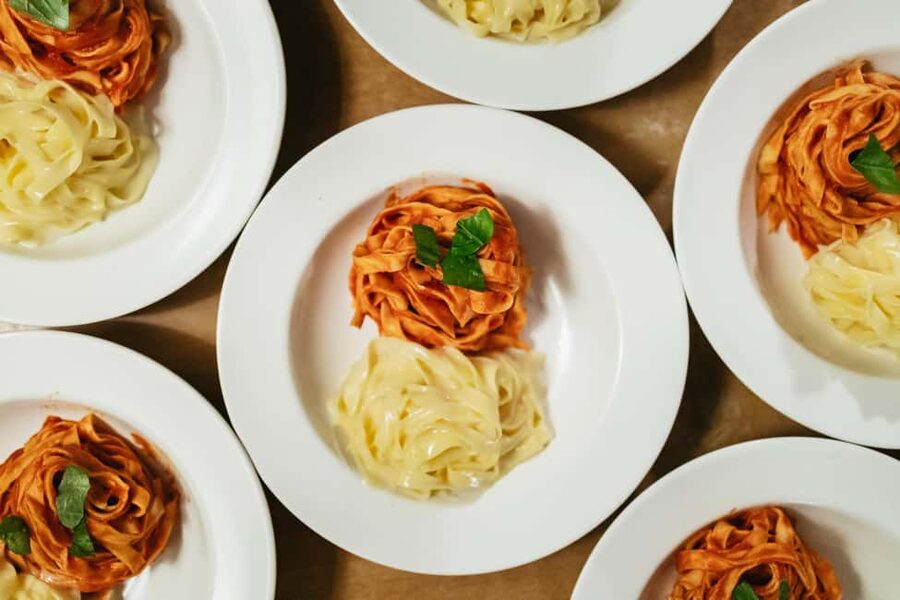
- Fresh pasta from scratch: eggs, flour, and a pasta machine included
- Two classic sauces: tomato sauce plus a Parmesan-based option
- Tiramisu method that makes sense: learn the steps and the why, not just the recipe
- Food with wine: you finish with a family-style meal and a bottle of Italian wine
A chef’s loft in Milan: cozy, personal, and not “tour-schooled”
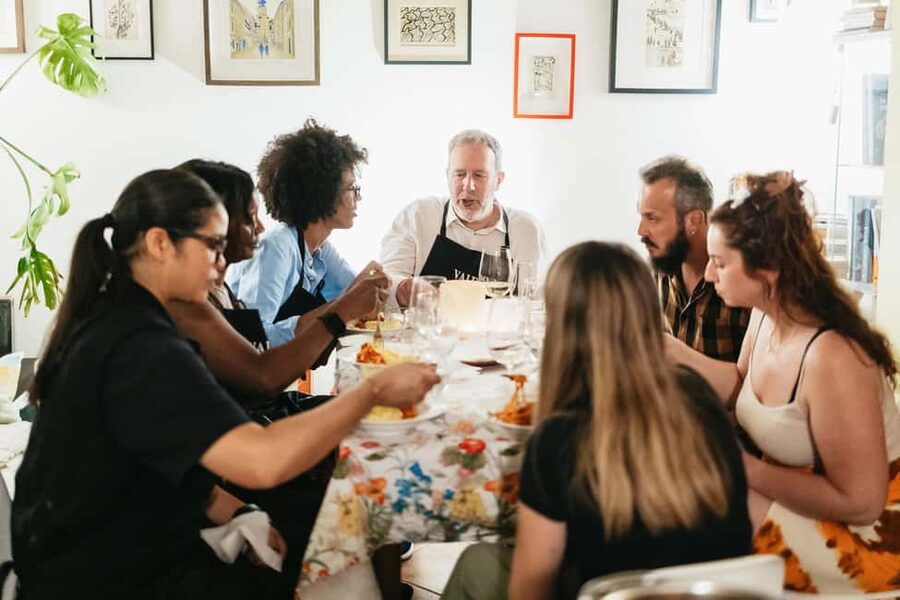
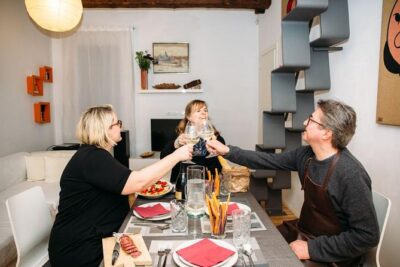
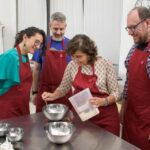
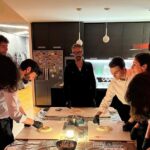
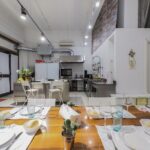
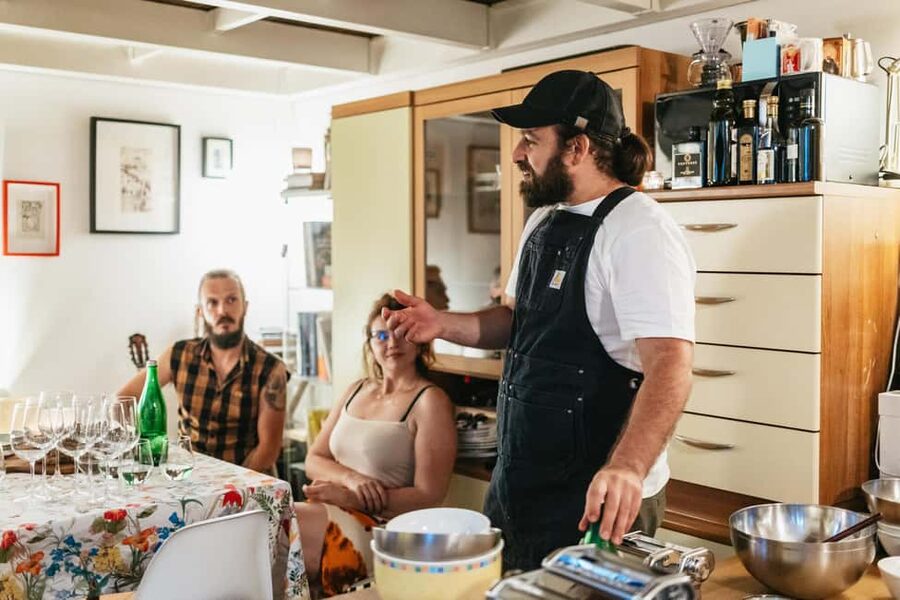
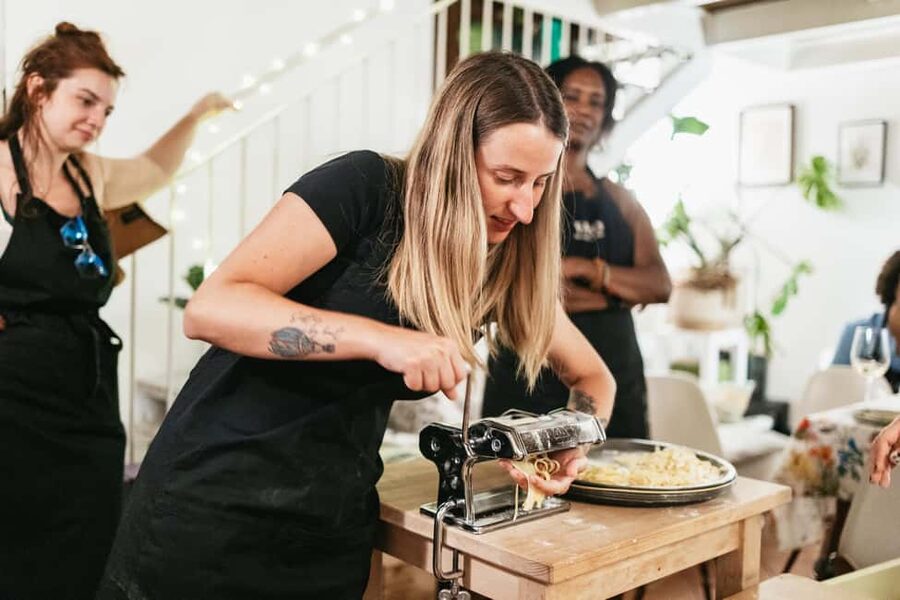
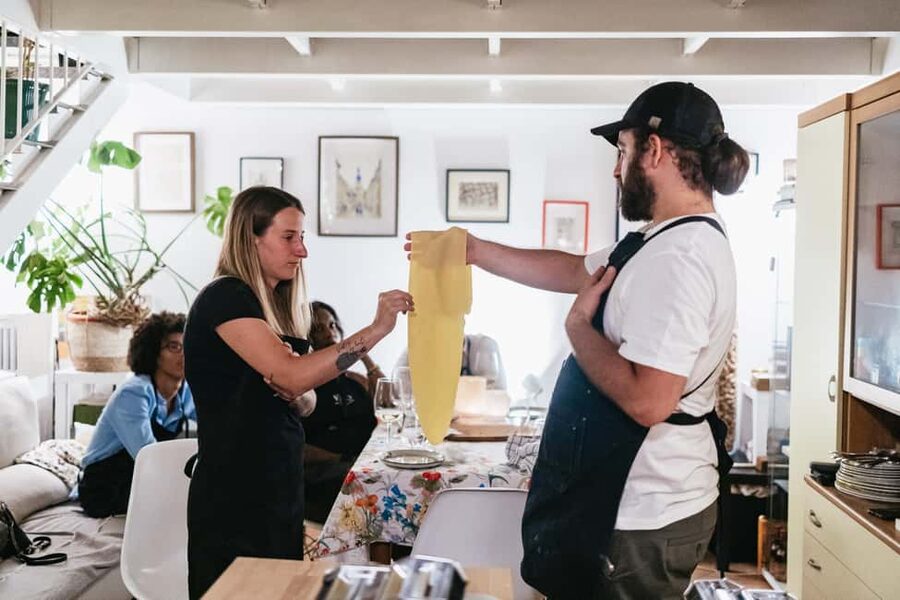
This class runs in Chef Rafael’s loft, in a private home. That sounds minor until you’re there. The energy is calmer than the big, shiny-kitchen vibe you see elsewhere. You’re not being ushered through a script. You’re working in a real domestic space where the chef can slow down, explain, and answer questions.
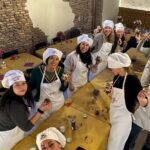
You’ll also feel the advantage of a small group of up to 8. In a crowded class, you spend more time waiting and less time learning. Here, you get enough attention to actually improve your technique while you’re in the middle of it.
And because the instructor is English-speaking, you won’t have to guess your way through dough, sauce, and dessert timing. That matters with pasta and tiramisu, where a small mistake is often the difference between good and great.
You can also read our reviews of more tours and experiences in Milan.
Meeting point and the easiest way to show up ready
You meet in front of the Brambilla Universal Shoes Store. One practical tip: build a few extra minutes into your arrival so you can settle in and start at a relaxed pace. When you walk into a home setting, the first minutes set the tone for the whole evening.
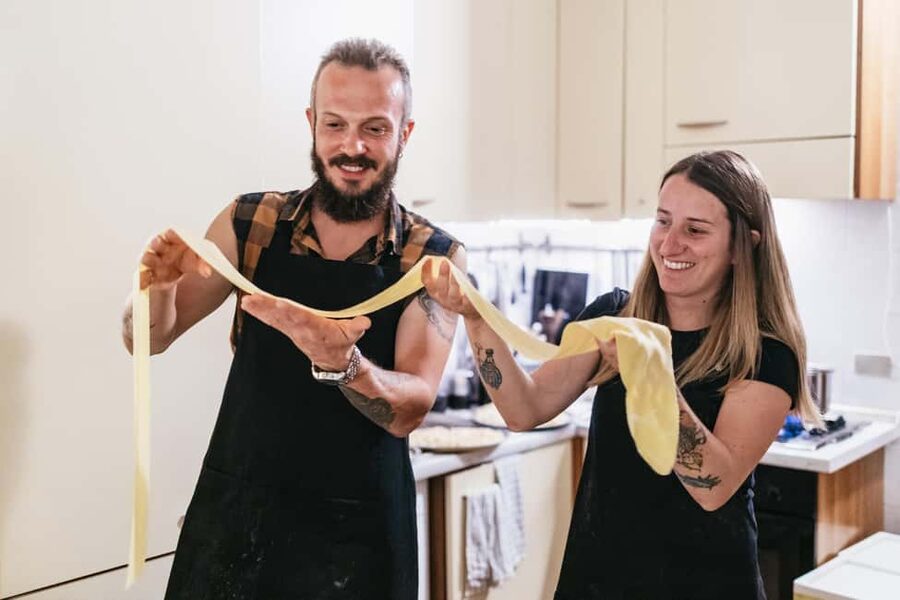
Also, expect this to be a full-on cooking workshop where you’ll get flour on your hands and you’ll be working close to tools like the pasta machine. Wear clothes you’re comfortable getting a little messy in.
Start with olive oil and balsamic: taste training before you cook
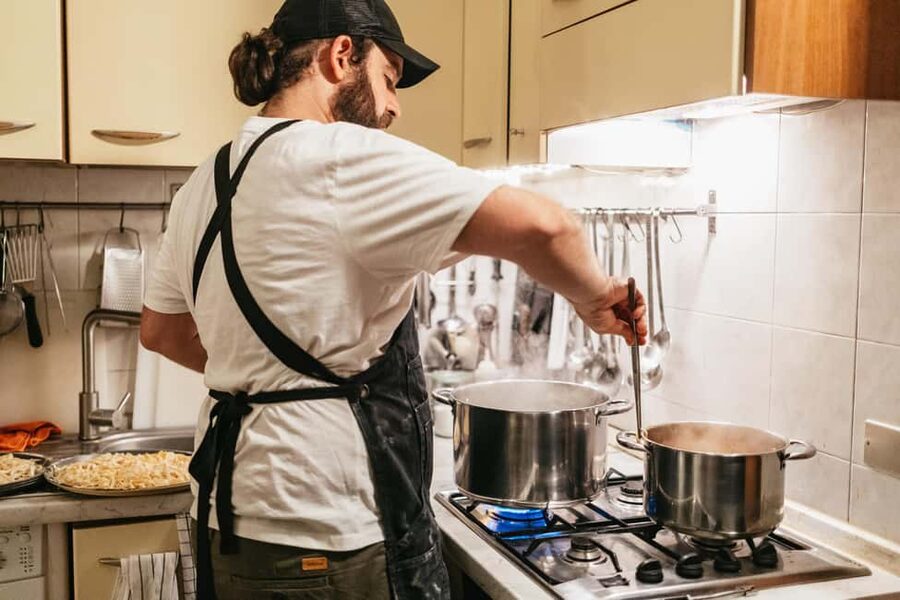
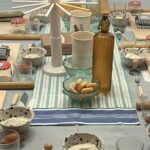
Before you start mixing anything, you’ll taste Italian products: olive oil and balsamic vinegar, plus artisan bread. This isn’t a “free snack” stop. It’s flavor training.
Here’s what that does for you while you cook:
- Olive oil teaches you what “good” tastes like, from fruitiness to peppery bite.
- Balsamic vinegar shows you how balance works, especially sweetness versus acidity.
- Artisan bread gives you a neutral base so you can notice how the flavors behave instead of getting distracted by a complex dish.
If you’ve ever cooked with ingredients you bought at home and wondered why the results didn’t taste like Italy, this is the missing link. You’re tasting the raw ingredients so your sauce choices and final plating decisions make sense.
Fresh pasta from eggs, flour, and a pasta machine
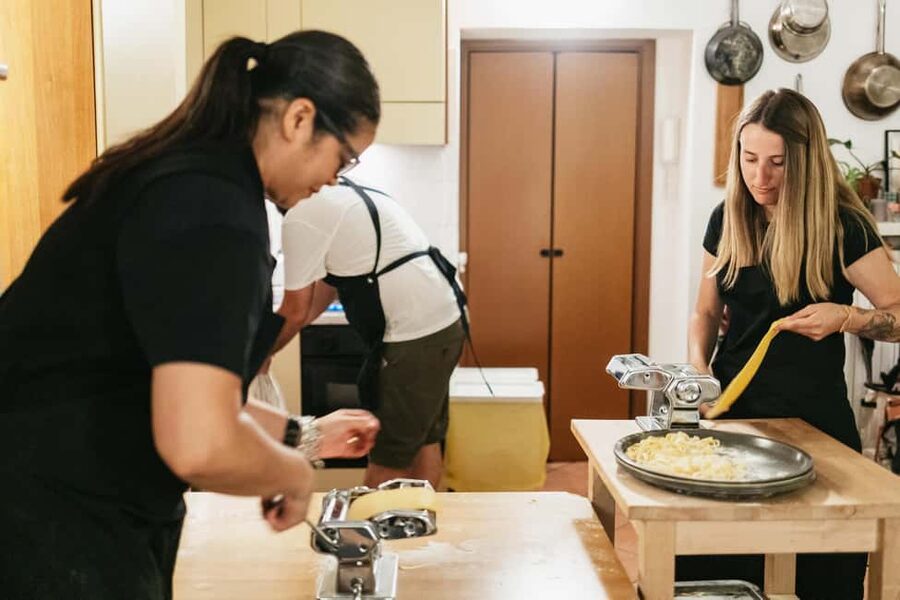
Making pasta is the center of the class, and the teaching approach stays practical: you learn the steps you need, in order.
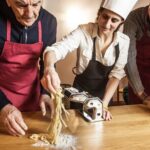
You’ll work with eggs and flour, learn how to knead the dough, and then shape it using a pasta machine. That’s important, because a pasta machine isn’t just a gimmick. It helps you get consistent thickness, and consistency is what gives fresh pasta that tender-but-structured texture.
What you’ll learn while kneading and shaping:
- How dough should feel as it comes together (not too dry, not too sticky).
- Why kneading matters for texture, not just for muscle.
- How thickness and shape affect how sauce clings later.
Even if you’re a beginner, this is one of those activities where confidence can flip fast. Once you see your dough transform and start behaving like the real thing, you stop thinking of pasta as a “special skill” and start treating it as a repeatable process.
Two sauces: tomato richness and Parmesan comfort
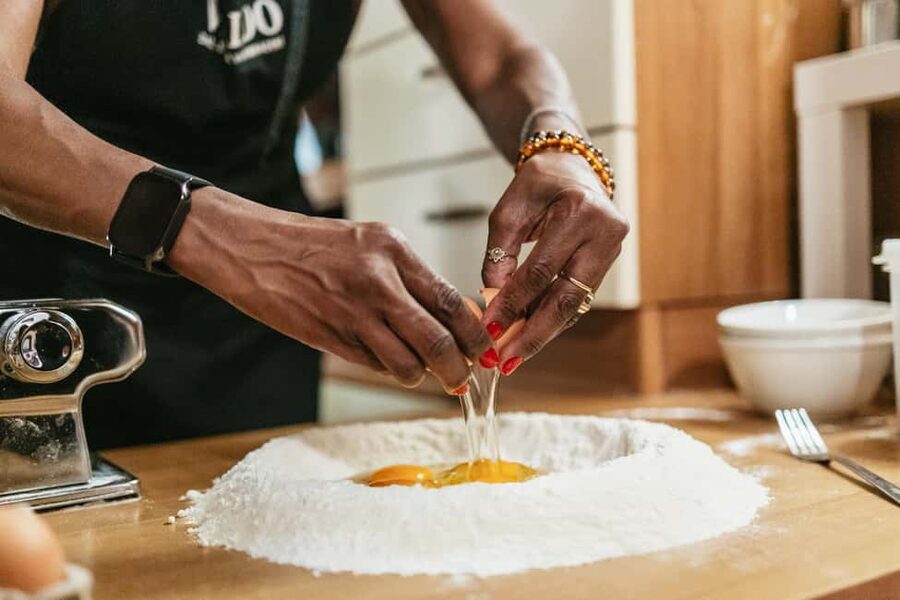
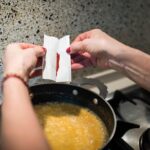
You’ll make two classic sauces to pair with your fresh pasta. One is a rich tomato sauce. The other is a creamy Parmesan-based sauce.
Why I like that setup for a class like this: it teaches contrast. Tomato sauce forces you to think about acidity, cooked flavor, and balance. The Parmesan sauce teaches a different kind of technique: creating creaminess and depth while keeping the sauce tasting clean rather than heavy.
You’re also learning in a way you can reuse later:
- If you want a tomato sauce that actually tastes like tomatoes (not just “red sauce”), you need to pay attention to the base and how you build it.
- If you want Parmesan sauce that tastes nutty and savory, not just salty, you need to understand how to manage the cheese flavor and texture.
This is exactly the kind of “repeatable Italian basics” that helps after the trip. You’ll know what you’re trying to achieve, not just the steps you followed once.

Tiramisu: the dessert steps you can actually repeat
Tiramisu often gets treated like a black box. People either get it right by luck or they end up with something that tastes off.
In this class, you learn the method behind tiramisu and then make it to perfection. You’ll get history and technique context while you cook, which helps you understand why the steps matter instead of treating it like assembly.
A few helpful things you’ll take away from this kind of teaching:
- How to handle ingredients so the dessert has the right texture.
- Why timing and layering matter for the final result.
- How to aim for balance in sweetness and cocoa notes.
Chef Rafael also brings the conversation side into dessert, which makes the process feel less like a test and more like learning from someone who cooks this food often.
The family-style meal and wine: your work becomes dinner
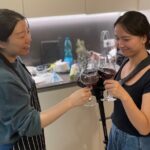
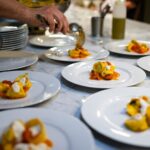
At the end, you sit down family-style to eat what you made, plus tiramisu. You also get a bottle of Italian wine (white or red) and water.
This ending is more than a reward. It’s how you check your learning. When you taste your pasta with your sauces, you can connect:
- dough texture to how the sauce sits on it,
- sauce balance to what you tasted in the olive oil and balsamic tasting earlier,
- dessert sweetness and texture to the steps you practiced.
And the wine adds to the atmosphere. It’s not about turning the class into a party. It’s about pairing, relaxing, and letting the experience become a real meal instead of a cooking “performance.”
Price and value: is $80 fair for 3 hours in a home loft?
At $80 per person for a 3-hour workshop, you’re paying for more than recipes. You’re paying for:
- a chef-led, hands-on setup (small group, up to 8),
- premium ingredients and tastings (olive oil, balsamic vinegar, artisan bread),
- the labor and instruction for multiple dishes (two pastas, two sauces, tiramisu),
- and the meal plus a bottle of wine.
In other words, you’re getting a full culinary experience with food at the end, not just a short “demo and snack.” If you’ve ever spent a similar amount on a restaurant meal in a tourist-heavy spot, this feels more like value because the ticket includes learning time plus ingredients plus dinner.
That said, this isn’t the cheapest option in Milan. It’s best viewed as a food-focused evening where you leave with skills you’ll use again, plus memories you’ll keep eating in your head.
Who should book this class, and who might prefer something else?
This class is ideal if you:
- want hands-on cooking, especially fresh pasta techniques,
- care about ingredient quality, not just plating,
- enjoy small-group settings and conversation,
- want a dessert that you can replicate at home (tiramisu).
It might be less ideal if you:
- prefer large, commercial kitchens with lots of space and strict “school-like” structure,
- hate any mess (this involves flour, dough, and active cooking),
- are looking for a quick tasting only rather than a full workshop.
What to expect from Chef Rafael’s teaching style
Chef Rafael’s teaching comes through in the feedback style: he explains ingredients and steps clearly, keeps the group relaxed, and makes the session feel like cooking with someone who genuinely loves the food.
You’ll likely notice two strengths:
- He guides you through how to choose quality ingredients, not just how to cook.
- He brings real conversation into the session, so the class feels warm and human, not robotic.
That tone is one reason the reviews are so consistently strong. It’s not just the dishes. It’s the atmosphere—cozy, encouraging, and focused on quality.
Should you book this Milan pasta & tiramisu cooking class?
If you’re in Milan and you like food experiences you can feel in your hands, I’d book this. For $80, you get a true skill-based evening: fresh pasta from eggs and flour, two classic sauces, tiramisu method, tastings of olive oil and balsamic, and a finished family meal with wine.
Choose it if you want an authentic home-kitchen feel and you’re excited to learn what makes Italian staples taste like themselves. Skip it if you only want a light tasting or you want a big, impersonal restaurant-style class.
If you want one practical decision rule: book it when you’d happily spend 3 hours learning how to make dinner from scratch. That’s exactly what this is.
FAQ
How long is the cooking class in Milan?
The class lasts 3 hours.
How many people are in the group?
It’s a small group limited to 8 participants.
Is the class taught in English?
Yes, the instructor teaches in English.
What dishes will I make during the class?
You’ll make fresh pasta, two sauces (tomato sauce and a Parmesan-based sauce), and tiramisu.
What’s included with the meal?
You’ll have a family-style meal with the pasta dishes and tiramisu, plus a bottle of Italian wine (white or red) and water.
Where do I meet for the class?
You meet in front of the Brambilla Universal Shoes Store.