REVIEW · SEVILLE
Seville: 3.5-Hour Spanish Cooking Class & Triana Market Tour
Book on GetYourGuide →Operated by Taller Andaluz de Cocina -Cooking School · Bookable on GetYourGuide
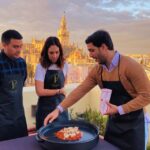
Triana Market turns ingredients into stories. This 3.5-hour experience starts inside the stalls of Triana Market, where guides like Ana or Clara explain what you’re seeing and what you’ll cook, then you move into the market’s cooking space with chefs such as Dom or Leo to make a real Spanish lunch hands-on. I love the market-first approach because it connects the flavors to the stalls, and I love the way the cooking class pushes you to actually do the work—chopping, stirring, and building dishes step by step.
One heads-up: the market tour runs only in the morning, so if you’re not a morning person or your schedule is locked later in the day, you’ll need to pick the right start time.
In This Review
- Key things to love about this Seville cooking class
- Triana Market starts your lunch before the first chop
- A 3.5-hour plan that balances walking, cooking, and eating
- Meet your chef’s station: 3 dishes, 1 dessert, and sangria in motion
- Salmorejo or Gazpacho: a chilled start you can recreate
- Spinach with chickpeas (and the smart menu swaps)
- Paella Valenciana with chicken, plus vegetarian paella support
- Inside the market kitchen: clean setup and real participation
- The meal: you eat what you made, with sangria and two drink options
- Price and value: what $88 covers and why it makes sense
- Who should book this, and who might prefer something else
- Tips to get the most from your 3.5 hours
- Should you book this Triana Market cooking class?
- FAQ
- Where is the meeting point?
- How long is the tour and cooking class?
- Is the market tour offered in the morning only?
- What dishes will we cook?
- Is the cooking class taught in English?
- Do you include vegetarian options?
- Is sangria included?
- What’s included in the meal?
- Are aprons and ingredients provided?
- What if someone has food allergies or restrictions?
- Is free cancellation available?
Key things to love about this Seville cooking class
- Triana Market, at stalls 75–77: you shop with context, not just a quick glance
- English-led, chef-run instruction: you’re taught in a way that makes cooking feel doable
- 3 savory dishes plus a light dessert: with menu swaps like Salmorejo vs Gazpacho
- Sangria while you cook and extra drinks with your meal, included in the price
- Vegetarian friendly: a separate vegetable paella if someone in your group is vegetarian
- Small-group energy is possible: some sessions end up with just a few participants
Triana Market starts your lunch before the first chop
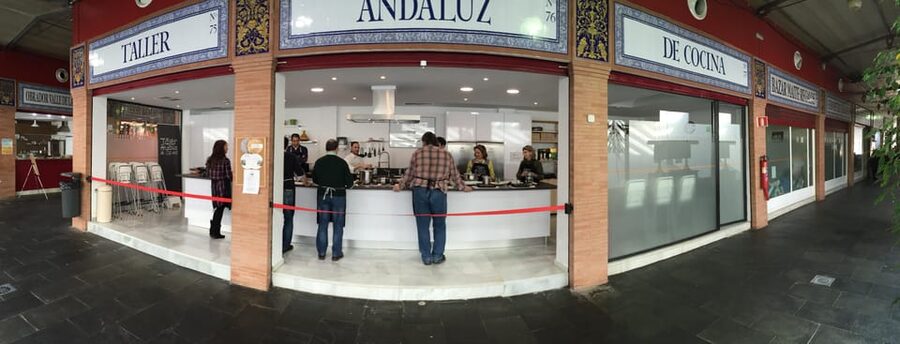
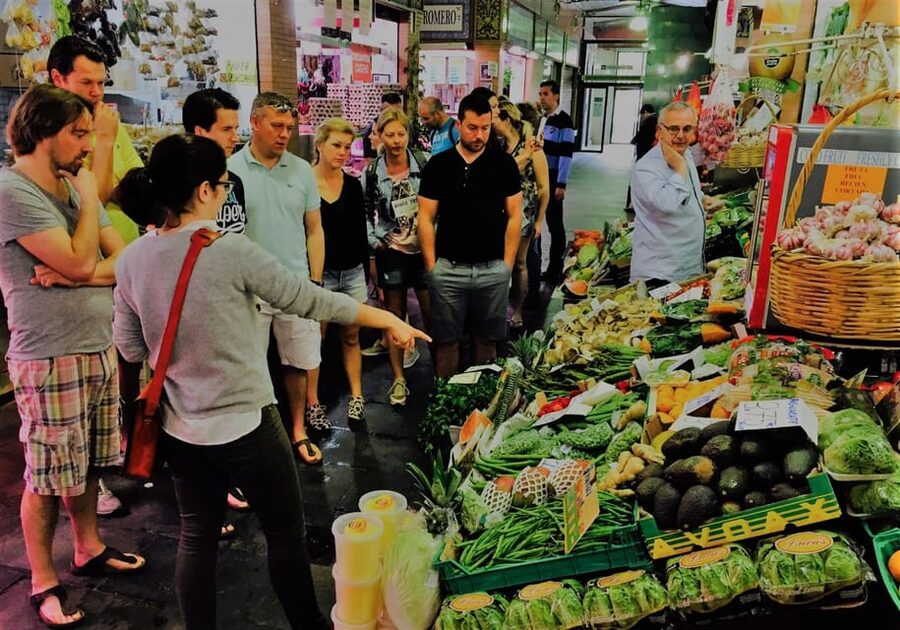
You meet at Triana Market, Plaza del Altozano, stalls 75–77. From the start, the vibe is practical: you’re not just looking at food, you’re learning what it is, where it comes from, and why it matters for the dishes you’ll make later. It’s also one of the reasons this class feels more authentic than a generic cooking tour. Instead of paying for a recipe transfer, you get a “why this ingredient, why this season” education right where locals shop.
A big win for me is that the market walk is guided in English. Guides named in recent sessions include Ana, Clara, Sabrina, Kai, and others, and the common thread is that you’ll get explanations you can actually use when you’re eating in Seville afterward. Expect a short history of the market and a guided look at products you’ll recognize in the cooking school menu.
Because the market tour is the first half of the morning, I recommend planning to arrive with a little breathing room. This is a real food market, and it can be busy—so you’ll have a smoother start if you’re not rushing in at the last second.
You can also read our reviews of more tours and experiences in Seville.
A 3.5-hour plan that balances walking, cooking, and eating
This is built as a tight 3.5-hour arc: market tour, then cooking and lunch. You’re done soon enough to still enjoy the rest of your day in Seville, but the class isn’t rushed in a way that leaves you hungry or lost. The format also helps you stay focused: you learn what to buy or identify, then you apply it in the kitchen while it’s still fresh in your head.
The cooking happens inside the cooking school located within Triana Market, so you don’t waste time commuting. That matters on a short trip because Seville’s streets are charming but not always efficient. Here, your “travel time” stays inside one area, and your time actually goes toward food.
Also, you get a real meal at the end. The included lunch is everything you cooked, not a separate buffet that feels unrelated. That’s a small detail, but it changes the whole experience. You leave with both recipes in your notebook (or phone) and the confidence that the finished dish tastes like it’s supposed to.
Meet your chef’s station: 3 dishes, 1 dessert, and sangria in motion
The class is professional-chef led and taught in English. You’ll prepare three dishes plus a light dessert, and the kitchen format is hands-on with guidance. From what people describe, chefs keep the instructions clear and encourage participation, with a humorous, relaxed energy that makes group cooking less intimidating.
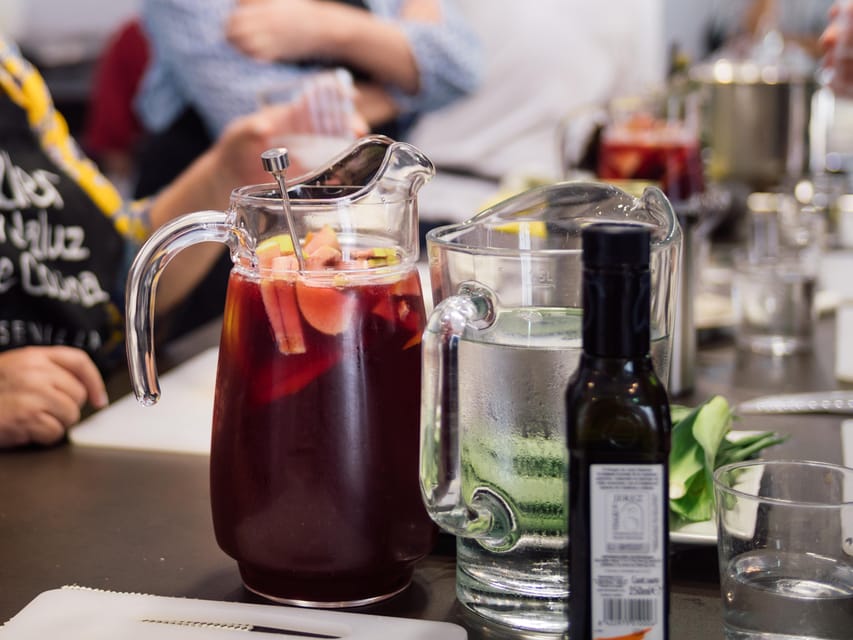
While you cook, sangria is made and served. Then, with your meal, you’re offered two additional drinks (local beer, white wine, or red wine). There’s also mention that you can get non-alcohol options such as soda during the experience, which is useful if you don’t drink.
The menu is not always identical across every class session. There are “sometimes” swaps, which you should treat as part of the fun:
- Salmorejo is common, but on some occasions it may be replaced with Gazpacho
- The course built around Spinach with Chickpeas may swap to Flamenco Eggs, Cod Fritters, Garlic Prawns, or other options
- Paella Valenciana is cooked with chicken and seasonal vegetables, but there’s a separate vegetarian paella if needed
Those variations mean you shouldn’t expect the exact same menu every time. But if you like flexibility and you’re happy cooking whatever’s on the day’s list, this setup works well.
Salmorejo or Gazpacho: a chilled start you can recreate
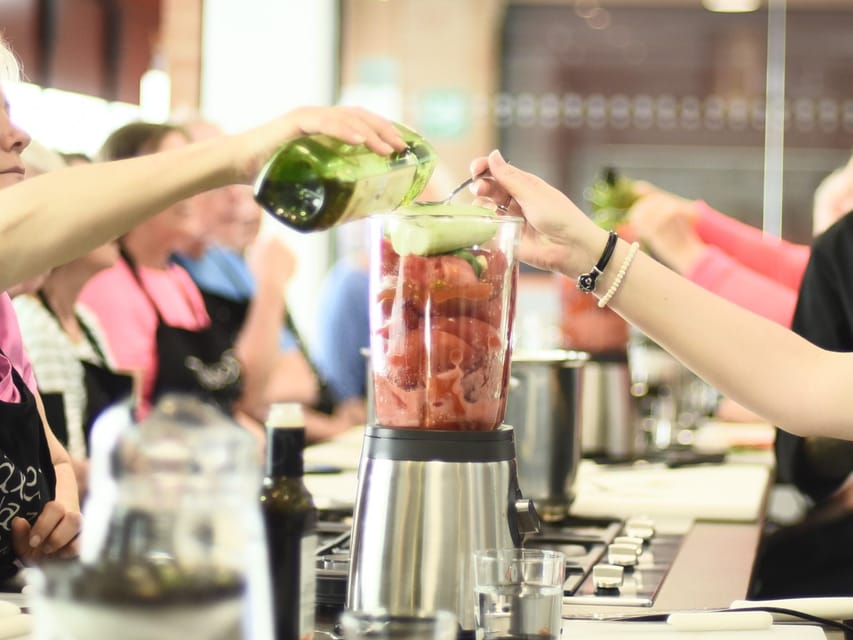
This class often begins with a classic cold Spanish base—either Salmorejo or Gazpacho. The exact choice can depend on the session, but the point is consistent: you’ll learn how texture and balance matter in Andalusian flavors. These dishes aren’t just “blend and hope.” You’re learning how to build a thick, satisfying result that still tastes fresh.
Why I like this kind of opener for a cooking class: it’s low drama in the sense that it doesn’t require oven timing chaos, and it teaches you core technique. Even if you’re not a confident cook, you can usually get a great outcome with the right guidance.
If you’re the type who likes to cook at home, this is also the section that tends to create the best memory. You’ll likely come away thinking, I can do this again. And because these dishes rely on ingredients you can find elsewhere, the skill translates beyond Spain.
Spinach with chickpeas (and the smart menu swaps)
The next savory dish centers on Spinach with Chickpeas, though the class may swap in alternatives like Flamenco Eggs, Cod Fritters, or Garlic Prawns. This is where the session gets more about hands-on technique—pan timing, seasoning, and getting a dish to come together without overcooking it.
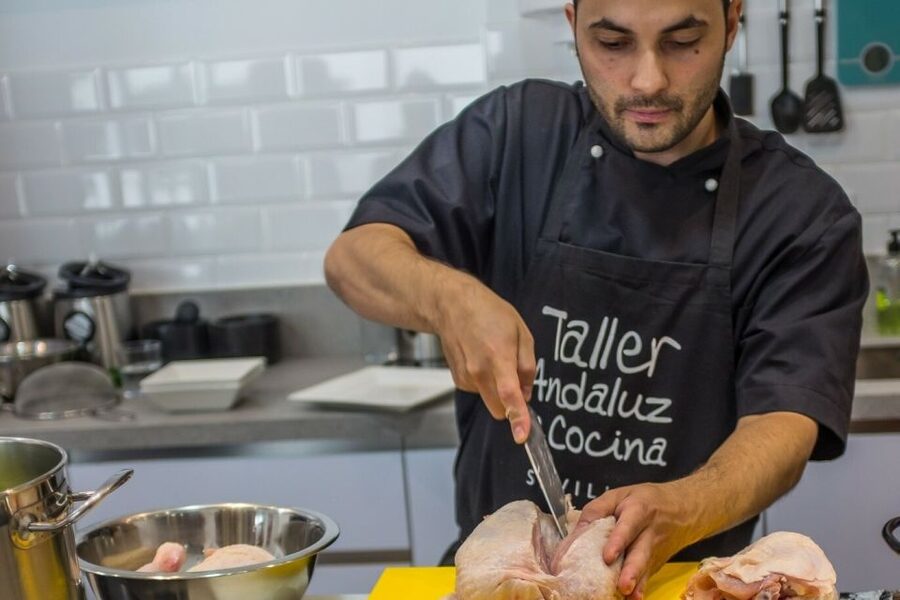
From the experience descriptions, participation is encouraged and you’re guided through each step. People also highlight learning practical kitchen tasks, like careful chopping and basic prep techniques. One participant even called out learning how to de-bone chicken—so don’t be surprised if you get hands-on prep work, not just stirring from a safe distance.
If you have dietary concerns, this part is a reason to mention them early. The operator asks you to inform them about allergies, intolerances, or restrictions. That’s not just a formality. It helps the kitchen plan ingredient choices and reduce stress for everyone.

Paella Valenciana with chicken, plus vegetarian paella support
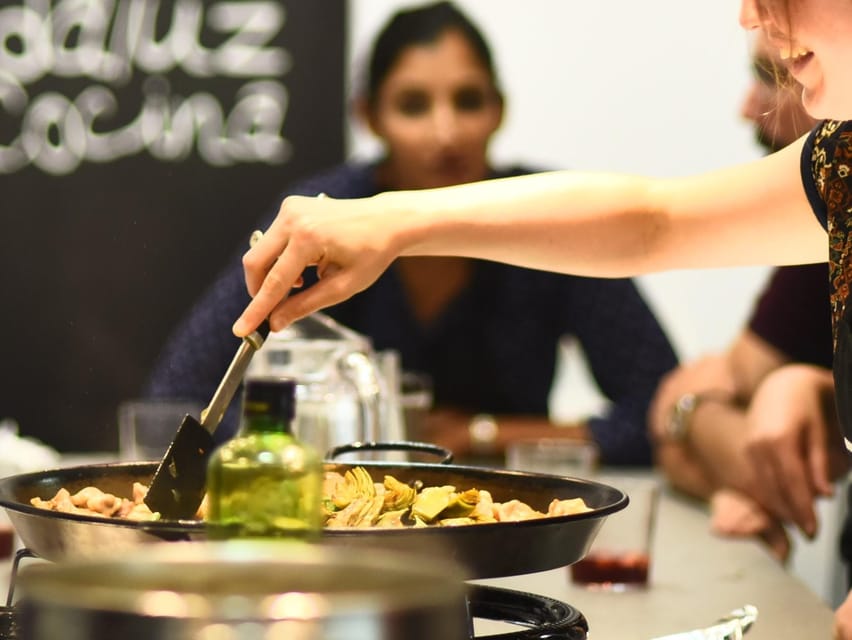
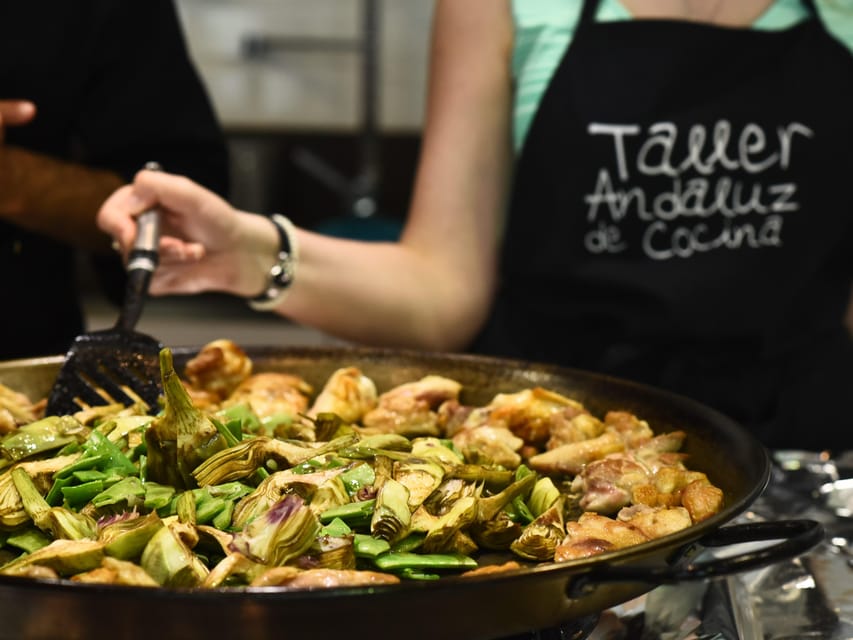
Paella is the big centerpiece in many people’s minds, and here it’s part of the class, not just a restaurant stop. You’ll make Paella Valenciana with chicken and seasonal vegetables. If there’s a vegetarian in your group, you’ll prepare a separate vegetable paella as part of the experience.
This is one of the strongest “value for money” features because paella takes time, coordination, and technique. A chef teaching you how it comes together means you’re getting the method, not just a dish. You also get to see how seasonal vegetables work with the rest of the plate.
If you’re cooking at home later, paella is also the dish that makes you feel like you leveled up. Even when you don’t replicate it exactly, you’ll understand the rhythm and how the dish is built.
Inside the market kitchen: clean setup and real participation
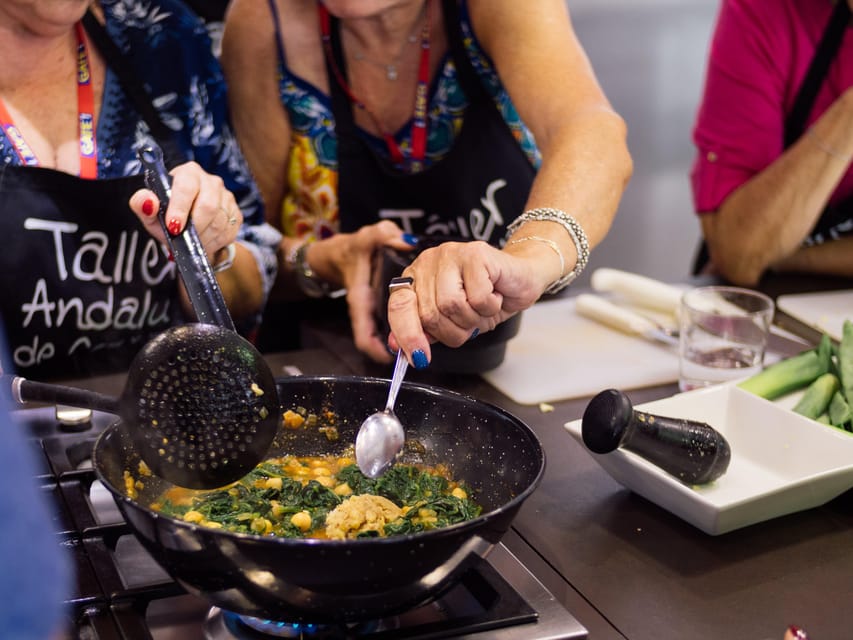
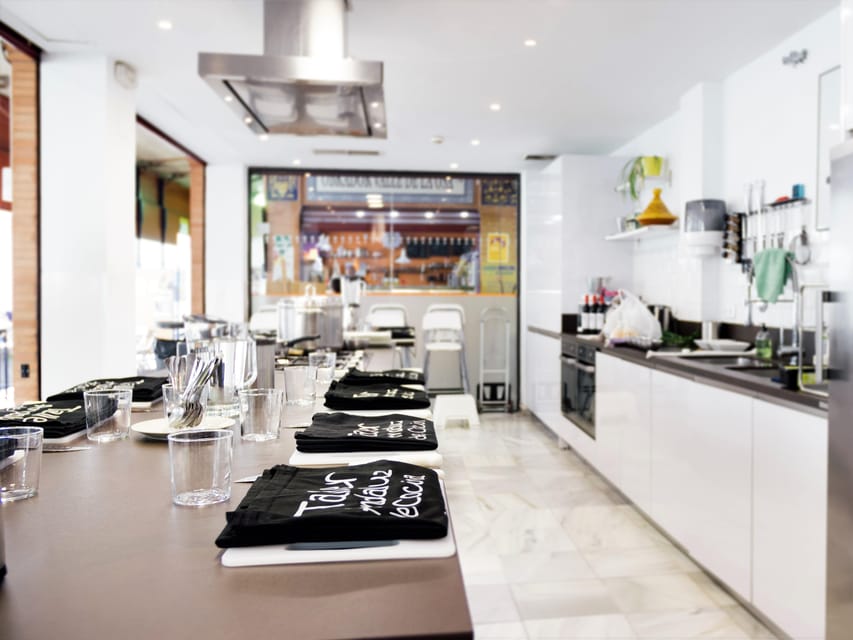
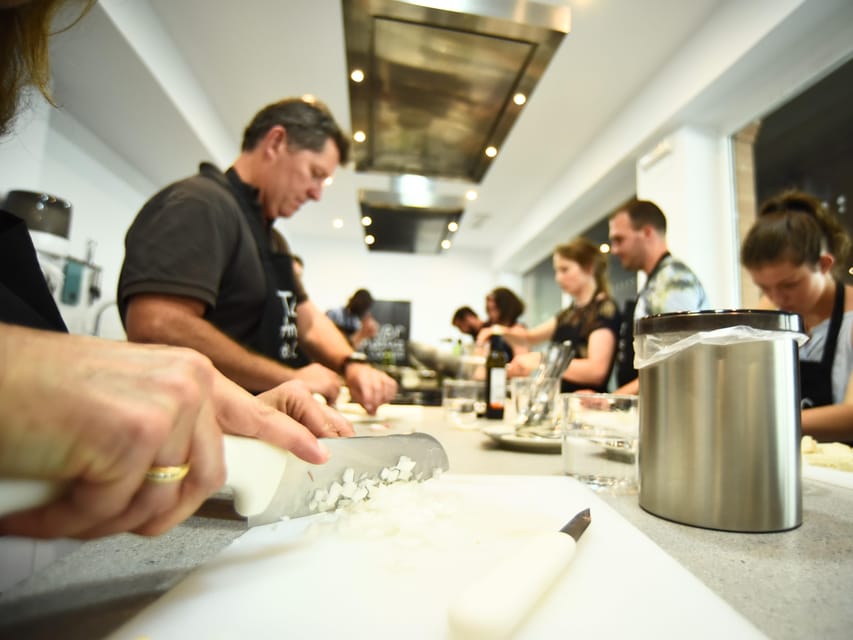
What stands out in the experience descriptions is how the kitchen area is set up for viewing and for group work. People mention a clean, spacious environment with good seating and clear visibility, which matters if you’re worried about being stuck behind someone else’s shoulder.
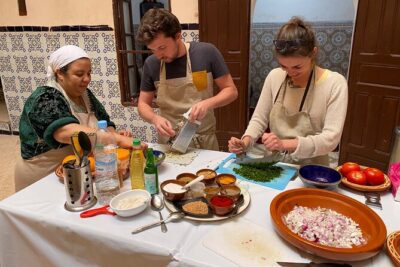
In a hands-on cooking class, there’s always a risk of feeling like you’re watching more than doing. Here, the structure pushes you toward participation at stations. People describe opportunities to do steps rather than hovering, with chefs giving encouragement and step-by-step help when needed.
This also means you’re likely to leave with practical “I can do that” confidence. You might even learn small but useful skills—like how finely to chop garlic, or how to handle chicken prep. Those details may not sound glamorous, but they’re exactly what makes cooking feel less intimidating later.
The meal: you eat what you made, with sangria and two drink options
After cooking, you sit down to enjoy the meal you prepared. That’s not just a nice ending. It’s part of the learning loop. You experience the final flavor and texture right away, so when you think back on what you did, you can connect cause and effect.
Drinks are built in. Sangria is part of the cooking time, and with lunch you’ll be offered two extra drinks, such as local beer or white/red wine. The description also notes that up to two drinks per person may be offered with the meal, including wine, beer, or soda-type options. Either way, the setup is designed to keep the energy friendly.
If you’re planning to drive after, or you simply prefer not to drink alcohol, you’ll want to think about pacing. Even if non-alcohol options are available, sangria is a big part of the atmosphere, so go at a comfortable pace and don’t feel pressured to match the group.
Price and value: what $88 covers and why it makes sense
At $88 per person for 3.5 hours, you’re paying for more than a cooking demonstration. You’re getting:
- an English-led market tour (guided, in Triana Market)
- chef instruction for multiple dishes
- all ingredients and prep materials
- an apron and a full meal
- sangria during cooking plus two drink options with lunch
Here’s how I see the value: the market portion would cost time and effort even if you did it on your own, and the cooking school component is the real training. You’re not just learning recipes on paper—you’re actively cooking and then eating them. That combination is rare at this time scale.
Is it for everyone? Not if you only want to watch. It’s meant for active participation. But if you like the idea of turning ingredients into dishes while someone explains the logic, $88 can feel like a fair deal.
Who should book this, and who might prefer something else
This experience is best if you want a practical Seville food day, not just sightseeing. I’d especially recommend it if you:
- want hands-on cooking skills tied to local market produce
- enjoy Spanish classics like salmorejo/gazpacho and paella
- travel with a partner, family, or small group and like interactive activities
- have at least some interest in understanding the “why” behind the flavors
It may feel less ideal if:
- your mornings are totally blocked
- you dislike alcohol-based hospitality even if alternatives exist
- you prefer ultra-custom menus (because dishes can swap session to session)
One more pro point: vegetarian needs are handled with a separate vegetable paella if someone in the group is vegetarian. That’s a meaningful accommodation in a paella-focused class.
Tips to get the most from your 3.5 hours
You’ll get the best experience if you treat it like a cooking workshop, not a passive show. Ask questions while you cook. If you have a known allergy or intolerance, tell the operator ahead of time so the kitchen can plan.
Wear comfortable clothes you don’t mind getting a little splatter from a real cooking environment. And since the market walk is on a busy morning schedule, keep your phone ready for short pauses to grab a couple of photos—one practical idea people suggest is a dedicated photo moment, so you can plan to ask if you want that kind of memory.
If you want to maximize the “I’ll make this later” payoff, pay attention during the dish that feels unfamiliar—often it’s things like artichoke prep or chicken handling, depending on the day. Those are the skills that usually stick long after the lunch is gone.
Should you book this Triana Market cooking class?
If you want Seville food with hands-on learning and a meal you can actually taste right away, I’d book this. The $88 price feels tied to real instruction, ingredients, and lunch, not just a short demo. And starting in Triana Market keeps the cooking grounded in the ingredients that make Andalusian food what it is.
If your schedule is only workable in the afternoons, or you strongly prefer low-interaction activities, you might choose a different class format. But if you can do a morning slot and you enjoy cooking in a guided, friendly kitchen, this is one of the most satisfying ways to spend half a day in Seville.
FAQ
Where is the meeting point?
The meeting point is Triana Market, Plaza del Altozano, stalls 75–77, Seville 41010.
How long is the tour and cooking class?
The experience lasts 3.5 hours.
Is the market tour offered in the morning only?
Yes. The market tour is only available in the morning.
What dishes will we cook?
You’ll prepare 3 dishes and a light dessert. Common options include Salmorejo (sometimes Gazpacho), Spinach with Chickpeas (sometimes alternatives like Flamenco Eggs, Cod Fritters, or Garlic Prawns), and Paella Valenciana with chicken and seasonal vegetables (with separate vegetable paella if needed).
Is the cooking class taught in English?
Yes, the class is in English.
Do you include vegetarian options?
If there is a vegetarian in the group, a separate vegetable paella is prepared.
Is sangria included?
Yes. Sangria is made and served during the cooking time, and you also get drink options with your meal.
What’s included in the meal?
Your meal includes all the dishes you cook, plus a light dessert.
Are aprons and ingredients provided?
Yes. All ingredients for the class and an apron are provided.
What if someone has food allergies or restrictions?
You should inform the tour operator in advance about allergies, intolerances, or restrictions.
Is free cancellation available?
Yes. You can cancel up to 24 hours in advance for a full refund.