REVIEW · HOI AN
Hoi An Cooking Class(Local market,Basket Boat,Fishing & Cooking)
Book on Viator →Operated by Hoi An Family Eco Cooking Tour · Bookable on Viator
A morning that smells like herbs and fresh fish sauce. This Hoi An experience strings together a local market lesson, a bamboo basket boat ride in the coconut forest, and a chef-led cooking class. It’s rural Hoi An in one half-day, with the kind of practical food know-how you can actually use later.
I especially like how it starts with shopping for ingredients, not just cooking. You learn what to look for in produce and how it ends up in classic central Vietnamese dishes. I also like the personal feel: the class runs with a maximum of 11 people, and hosts like Trâm (and other chefs such as Sonny and Duyên) keep things friendly and focused.
One consideration: some of the fun happens outdoors in the coconut-forest canals. If the weather is rough, the experience may be rescheduled or adjusted, so build in a little flexibility.
In This Review
- Key highlights you’ll care about
- Bay Mau Coconut Forest: where the day gets real
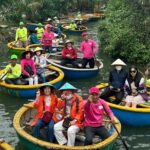
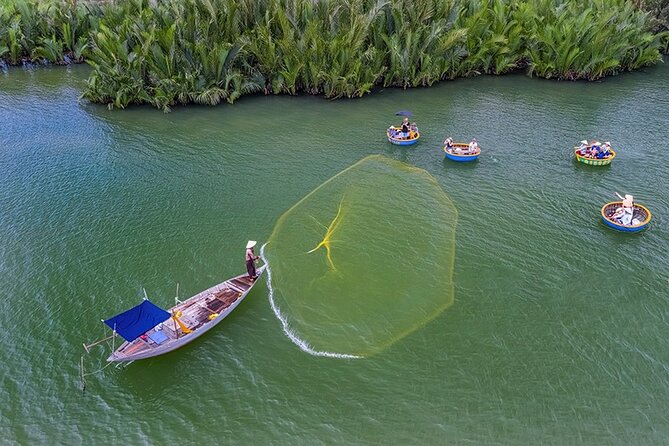
- The basket boat ride: more than a photo stop
- Crab fishing in the canals: fun, not guaranteed
- The local market stop: how to buy ingredients like a cook
- The coconut kitchen cooking class: stations, techniques, and patience
- What you’ll likely cook
- Lunch or dinner: same format, different energy
- Safety gear and weather reality
- Small group size: why it feels personal
- Price and value: is $28.21 fair for all this?
- The one cost to watch: Danang pickup
- Who should book this Hoi An cooking class
- Should you book it?
- FAQ
- How long is the Hoi An Cooking Class?
- Does the tour include pickup from my hotel?
- Can I choose lunch or dinner?
- Is there a maximum group size?
- What safety equipment is provided?
- Do I get to visit the local market?
- Is basket boat riding included?
- Is there an extra cost if I’m picked up in Danang?
- What if the weather is poor?
- Are free cancellations allowed?
Key highlights you’ll care about
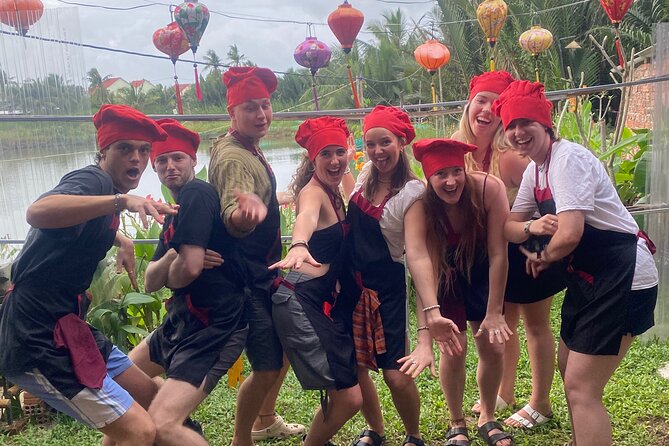
- Market-first produce shopping with guidance on choosing good ingredients you’ll taste in your meal
- Basket boat ride in the Bay Mau nipa palm area plus photo stops around the coconut village
- Crab fishing practice with safety equipment like a life jacket and raincoat
- Chef-led cooking on your timetable with a choice of lunch or dinner
- Small group size (up to 11) for real back-and-forth at your station
- Take-home recipe cards so you can recreate at least part of the menu after you’re home
Bay Mau Coconut Forest: where the day gets real
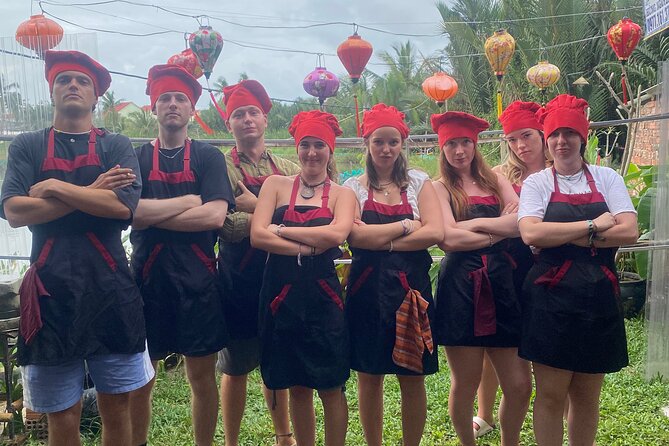
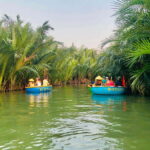
Most cooking classes in Hoi An stop at the kitchen door. This one starts earlier, out in the Bay Mau area in the nipa palm/coconut forest zone. You get out of the main tourist strip and into a quieter, greener side of central Vietnam where locals still work waterways.
You’ll be heading to an eco-village area connected to the anti-French and anti-American war narrative (it’s part of how the place tells its story). On top of that, you’re in the nipa palm forest environment that makes this region feel distinct from the rivers you see around town.
The setting matters because it changes how you cook later. When you spend time around coconut and palm-based village life, the food ingredients feel less abstract. You also see why basket boats are such a normal tool here, not a staged performance.
You can also read our reviews of more tours and experiences in Hoi An.
The basket boat ride: more than a photo stop
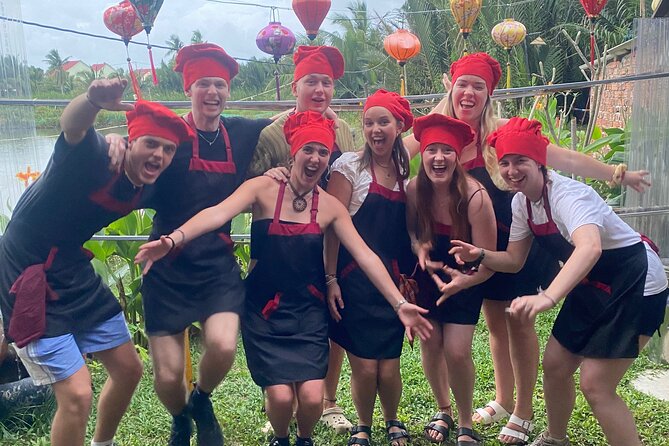
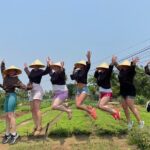
The bamboo basket boat segment is where the tour earns its keep. You’ll get to row and experience the style of boat travel used in the coconut villages. The day also includes time for photos at the coconut village, which helps if you want a simple way to document your experience without rushing.
What makes this section enjoyable is the mix of activity and entertainment. The local rhythm of basket-boat work is part of the show, but you’re not only watching. You’re out there doing the movements that make these boats work in narrow water lanes and changing conditions.
The tour also provides safety equipment, including a life jacket and raincoat (plus an umbrella/ticket set). That’s a big deal here because the waterways can be damp, and the weather can turn fast in central Vietnam. In the rain, the raincoat doesn’t just keep you dry. It keeps you from getting cold so you can still enjoy the ride.
Crab fishing in the canals: fun, not guaranteed
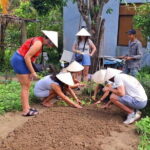
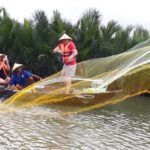
After the basket boat segment, you move into crab-fishing practice on the canals around the nipa palm zone. The tour frames it as you trying your skills and seeing if you can catch crabs. Translation: you’ll likely spend time dipping and feeling your way rather than expecting instant success.
This is one of the best parts for people who like hands-on experiences. Cooking can be a little “controlled.” Crab fishing is messier, more physical, and it changes minute to minute depending on water, wind, and how the locals do it.
Also, it’s not just about catching. You’ll learn the basics of fishing how-to in this environment and understand how the basket boat lifestyle connects to daily survival and local hospitality. Even if you catch nothing, you’ll come away with a better picture of why these villages developed the techniques they did.
The local market stop: how to buy ingredients like a cook
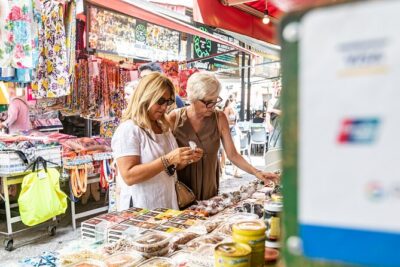
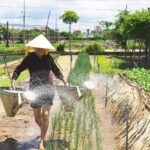
The market portion is where you can build real confidence. Instead of walking through a market like it’s a museum, you’re using it as a shopping lesson tied directly to the dishes you’ll cook.
You’ll learn how to recognize good produce and which ingredients actually matter for Vietnamese cooking. The guidance tends to focus on freshness and smell—things like herbs and vegetables that can look similar but taste very different when you put them in a dish.
This is one of the most praised parts of the experience for a reason. If you’ve ever eaten Vietnamese food and wondered why it tastes so balanced, the answer is often in the ingredients. By the time you reach the cooking station, you’ve already picked the “why” items that make the final plate work.
It’s also practical for your trip. Market shopping in Vietnam can feel chaotic. Having an English-speaking guide who’s also a chef helps you focus fast and avoid wasting money on ingredients that won’t perform in the recipes.
The coconut kitchen cooking class: stations, techniques, and patience
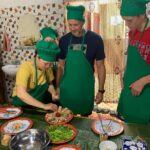
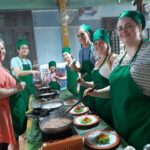
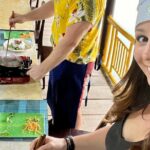
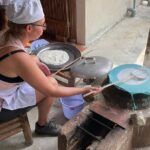
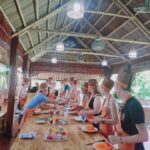
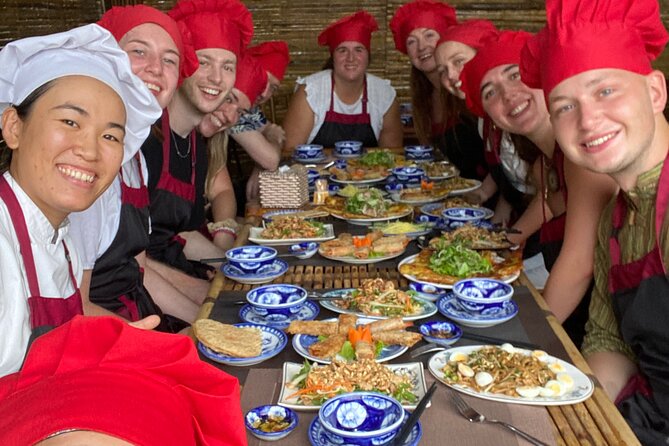
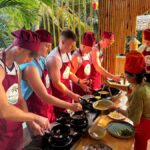
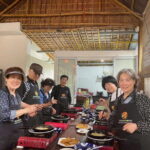
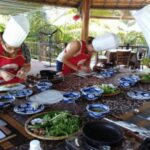
Once you’re back on the food side, you’ll join the cooking class at the coconut house/cooking area. You’ll typically spend about two hours cooking with the chef, then you eat what you make.
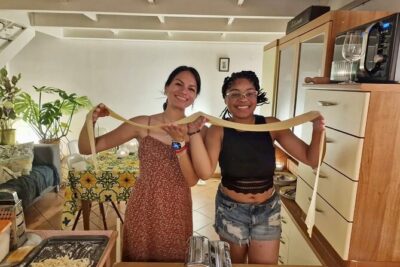
This is the part I like most for skill-building. The instruction isn’t just what to add. It’s how to handle techniques and why certain steps matter. Guests have specifically highlighted the chef’s teaching style and patience, and that shows up in the way the class flows at your station.
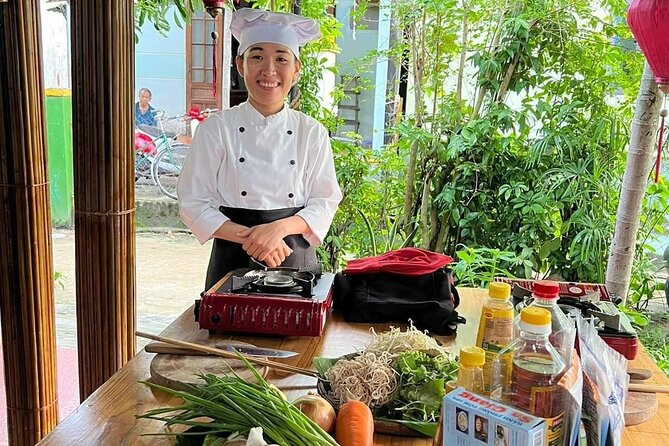
You may cook with Trâm, or with another chef/instructor such as Sonny or Duyên, depending on the day. The teaching approach stays chef-led and hands-on. You get feedback as you work, which is important if you’ve never cooked Vietnamese food before.
You’ll also get recipe cards after class. That’s valuable because Vietnamese cooking can be ingredient-sensitive. Having a written reference means you can repeat the dishes later without relying on memory (or guessing which herb was in the sauce).
What you’ll likely cook
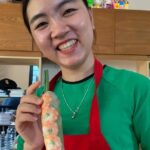
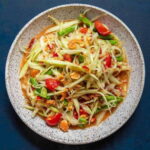
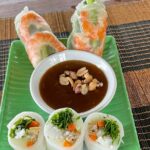
The tour description notes you’ll learn multiple Vietnamese recipes, and reviews mention dishes such as Bánh xèo. Expect a menu that’s familiar but still taught with real technique, not just assembly.
Because the exact menu isn’t listed in the info you shared, treat the menu as “classic Vietnamese dishes chosen for the class.” Your best strategy: pay attention to the ingredients you buy and the sauces/seasonings you prepare, since those are the transferable skills.
Lunch or dinner: same format, different energy
You can choose lunch or dinner. That changes the vibe more than the cooking itself.
Lunch tends to feel lighter and more social, especially after the market and boat ride. Dinner can feel more atmospheric if you catch the waterway and coconut forest late in the day. Either way, you’ll still end with a meal that you made yourself, and you’ll get dropped back at your start point/accommodation.
If you’re sensitive to heat, pick the time slot that matches your energy. The tour is active, so you’ll be happier if you don’t force it during the hottest part of your day.
Safety gear and weather reality
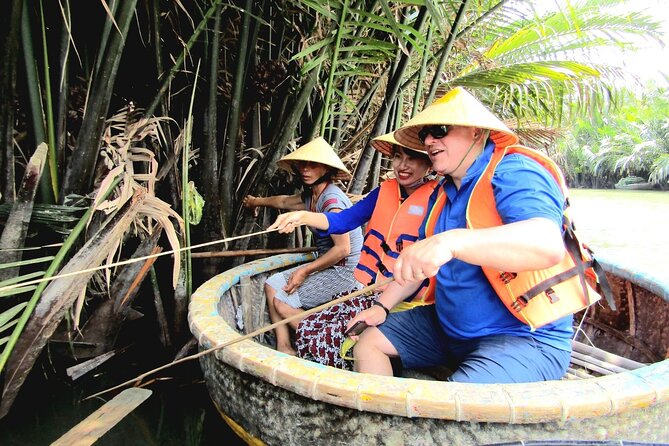
This is one of those tours where nature can be the boss. The tour includes life jacket and raincoat and an umbrella/ticket set, which makes a sudden rainstorm more manageable.
It’s also stated that the experience requires good weather. If it’s canceled due to poor weather, you’ll be offered another date or a full refund. In practice, it’s smart to book something earlier in your trip, so you have options if the weather shifts.
A minor planning note: you’ll be outdoors in a rural setting, so wear shoes you don’t mind getting damp. Bring a light layer if you run cold in rain.
Small group size: why it feels personal
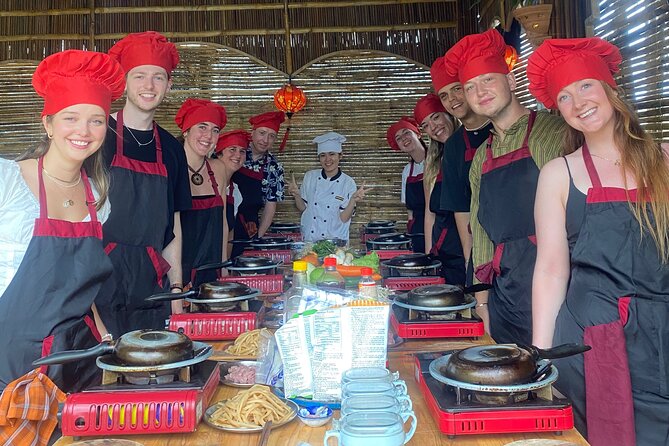
Up to 11 people changes everything. You’re not lost in a crowd. You can ask questions, get help with chopping or timing, and actually taste your own work before the next step.
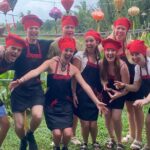
This personal feel shows up in the way chefs like Trâm host and instruct. Reviews mention lots of warmth, humor, and patient coaching, which is what you want when you’re learning new techniques with chopsticks and unfamiliar ingredients.
One extra benefit: the class is hosted by local operators, and you can feel that family-style approach. That often means small practical touches, like recipe cards and an effort to make sure you understand what you’re doing.
Price and value: is $28.21 fair for all this?
$28.21 per person is low for what you get here. You’re paying for a full half-day loop: hotel pickup/drop-off in Hoi An, market guidance, basket boat activity, crab fishing tryout, and a chef-led cooking class with a meal.
Where value really shows is the “multiple skills” mix. Many tours charge for either a market walk or a cooking class. This stacks them with the coconut forest boat portion. You’re basically buying an experience that teaches you food and teaches you the local setting that supports the ingredients.
Also, you get safety gear included (life jacket and raincoat), plus an English-speaking guide. That’s a practical add-on, especially if you’re not used to Vietnamese markets or the canal environment.
The one cost to watch: Danang pickup
If you start from Da Nang, there’s an extra $17 per person for pickup and drop-off. If you’re staying in Hoi An, that cost likely disappears, because pickup in Hoi An is included.
Who should book this Hoi An cooking class
This tour is a strong match if you want:
- Hands-on cooking with real guidance, not just tasting
- A market lesson so you know what to buy (and what to skip)
- A memorable local activity beyond the kitchen, like basket boat riding
- A small group experience with a chef-host style, often led by Trâm
It may be less ideal if you hate outdoor activities or you’re traveling with limited flexibility for weather changes. Since part of the day is on the canals and in open air, you’ll want to be comfortable with that.
Should you book it?
I think you should, especially if this is your “main food activity” in Hoi An. The biggest reason: you don’t just cook. You shop with purpose, then you connect that food to where the ingredients and local life come from in the coconut forest canals.
If you’re the type who likes to learn a system (what makes ingredients good, how techniques affect taste), this is a smart use of time. The chef instruction, take-home recipe cards, and the small group size help you get more out of the day than a standard cooking class.
If you’re choosing between experiences, pick this one when you want both food skills and a genuinely local countryside component. It’s not only about eating well. It’s about understanding the ingredients and the place that shapes them.
FAQ
How long is the Hoi An Cooking Class?
The tour runs about 4 hours 30 minutes.
Does the tour include pickup from my hotel?
Yes, pickup and drop-off are included for accommodation in Hoi An.
Can I choose lunch or dinner?
Yes, you can choose a lunch or dinner booking for flexibility.
Is there a maximum group size?
Yes. The class has a maximum of 11 travelers.
What safety equipment is provided?
The tour includes a life jacket and raincoat (and a rain umbrella/ticket set as part of the included items).
Do I get to visit the local market?
Yes. A local market stop is part of the experience, and you’ll learn how to pick good produce.
Is basket boat riding included?
Yes. You’ll go on a basket boat ride and also try fishing crabs.
Is there an extra cost if I’m picked up in Danang?
Yes. If pickup is from Danang, there is an extra $17 per person for pickup and drop-off.
What if the weather is poor?
This experience requires good weather. If it’s canceled due to poor weather, you’ll be offered a different date or a full refund.
Are free cancellations allowed?
Yes. You can cancel for a full refund up to 24 hours in advance. If you cancel less than 24 hours before the start time, it won’t be refunded.